The complex and often unwieldy landscape of B2B marketing technology is ripe for disruption, with agentic artificial intelligence emerging as a powerful catalyst for transformation. Heinz Marketing, a firm specializing in B2B marketing strategy and execution, has identified the evaluation and optimization of marketing technology stacks as a prime area where agentic AI can deliver significant leverage. By automating and streamlining what has traditionally been a laborious and time-consuming process, agentic AI promises to compress multi-week projects into mere days, uncover hidden redundancies, and shift tech stack rationalization from an infrequent scramble into a consistent, repeatable practice. This proactive approach to understanding and optimizing martech investments is becoming increasingly critical in an era where efficiency and data-driven decision-making are paramount for B2B success.
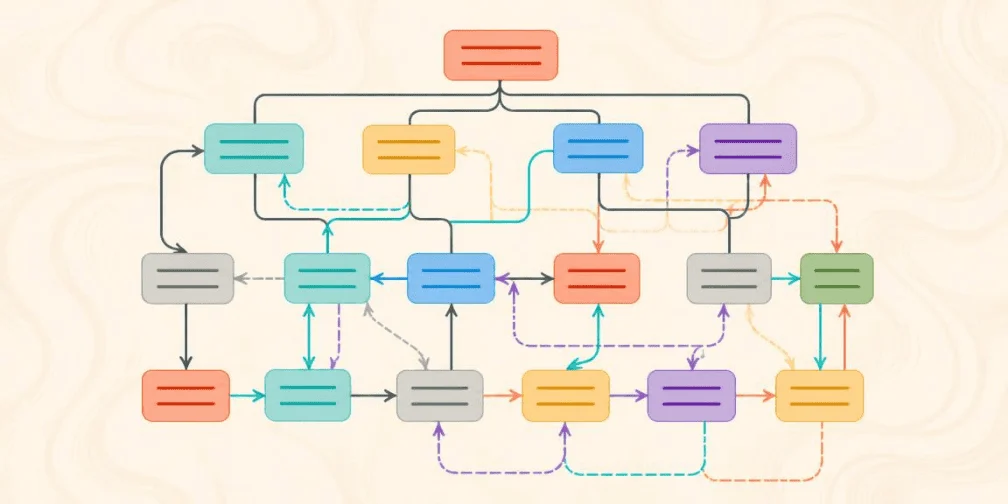
The current state of B2B marketing technology stacks is often a testament to a history of evolving needs and decisions, many of which may no longer align with current strategic objectives. These stacks can become a complex amalgamation of platforms adopted by past leadership, point solutions that largely duplicate existing functionalities, and integrations that have failed to deliver on their initial promise. This often leads to the perennial question that surfaces every six months: “What are we actually using, and what is it costing us?” The implications of this unaddressed inefficiency are substantial.
A recent Gartner survey, the 2025 Marketing Technology Survey, revealed a stark reality: the average organization is only utilizing a mere 49% of the capabilities within its marketing technology stack, a decline from 56% in the previous year. This statistic underscores a significant financial drain, with more than half of all expenditure on marketing technology generating no discernible active output. Historically, the process of auditing, mapping, and evaluating these stacks has been a resource-intensive undertaking, often spanning multiple weeks. The sheer scale of such projects frequently leads to their postponement, as teams grapple with the daunting task of initiating such a comprehensive review. However, Heinz Marketing’s development of AI agents specifically designed to tackle these challenges directly offers a compelling alternative.
The Agentic AI Advantage: Beyond Generative Capabilities
While generative AI tools have gained prominence for their ability to assist with tasks like drafting vendor evaluation emails, the true transformative power lies in agentic AI. Unlike generative AI, which assists human users, an AI agent is designed to perform tasks autonomously. In the context of marketing technology, an agentic AI would not merely help write an evaluation; it would perform the evaluation itself. This involves a deep dive into the existing toolset, analyzing their intended functions against their actual usage, identifying areas of overlap and integration failures, and pinpointing critical gaps. The outcome is a structured, actionable assessment that can guide strategic decision-making.
The significance of this capability for B2B marketers cannot be overstated. Strategic decisions regarding the marketing technology stack represent some of the highest-leverage moves a marketing leader can make. A well-aligned and optimized stack empowers a team to operate with speed, agility, and clarity. Conversely, a bloated, fragmented, or under-utilized stack can create drag, slowing down every campaign, hindering reporting accuracy, and impeding the onboarding of new talent. Prior to the advent of agentic AI, conducting a rigorous evaluation typically necessitated either engaging costly consulting services or diverting valuable team resources from core revenue-generating activities. Agentic AI fundamentally alters this economic and operational calculus. As previously highlighted in discussions on why B2B CMOs need to take agentic AI seriously, applying this technology to the tech stack itself presents one of the most concrete and immediate opportunities for tangible benefit.
Deconstructing the Agentic AI Tech Stack Assessment
Imagine an AI agent meticulously engineered to assess a B2B marketing organization’s technology and resource footprint in a systematic and repeatable manner. The core capabilities that would render such an agent profoundly valuable include:
- Comprehensive Inventory and Mapping: The agent would systematically identify and catalogue every piece of technology currently in use, documenting its purpose, vendor, cost, and integration points.
- Functional Overlap Analysis: It would pinpoint instances where multiple tools perform similar functions, highlighting potential redundancies and opportunities for consolidation.
- Usage and Efficacy Evaluation: By analyzing usage data (where accessible and permissible), the agent could assess how effectively each tool is being utilized and whether it is delivering on its promised value.
- Integration Health Check: The agent would evaluate the seamlessness of integrations between different platforms, identifying bottlenecks, data silos, and potential points of failure.
- Gap Identification: Crucially, the agent would identify areas where the current stack is deficient, lacking essential capabilities needed to support strategic marketing objectives.
- Cost-Benefit Analysis: A comprehensive review would include an assessment of the return on investment for each tool, flagging underperforming or obsolete technologies.
- Vendor Landscape Benchmarking: The agent could contextualize the current stack against industry best practices and emerging technologies, identifying potential areas for innovation or cost savings through alternative solutions.
- Risk Assessment: Potential risks associated with the current stack, such as vendor lock-in, security vulnerabilities, or compliance issues, would be flagged.
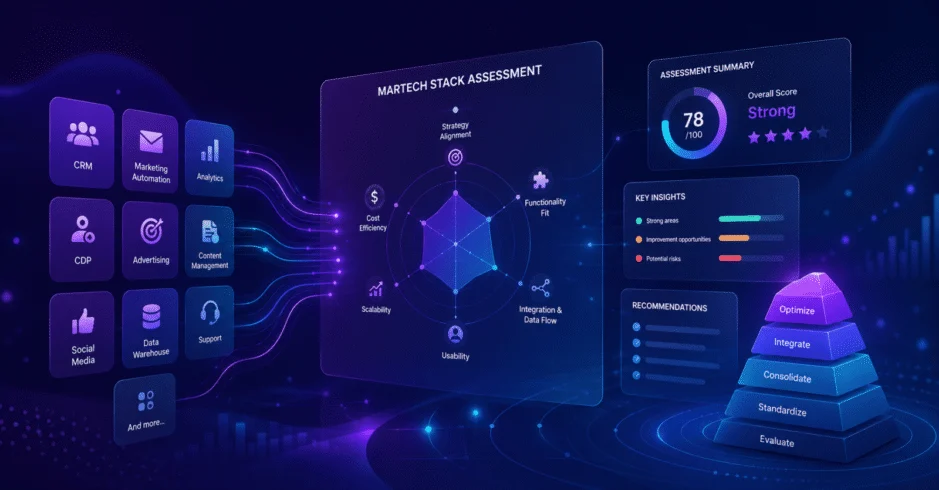
The output of such an agent would be a meticulously structured “Resources & Tech Assessment Brief.” This document would provide a clear inventory of the current stack, a function-by-function analysis of coverage, detailed identification of redundancies and gaps, an assessment of integration risks, and a prioritized list of actionable recommendations ready for presentation to a strategy team. This level of detail and structured insight would empower marketing leaders to make informed decisions with confidence.
The Profound Impact: Beyond the Software Bill
The true cost of a sprawling and unmanaged marketing technology stack extends far beyond the recurring software subscription fees. It manifests as a pervasive drag on operational efficiency, impacting every campaign, every reporting cycle, and every new hire. Teams often find themselves expending valuable cycles working around the limitations of their tools rather than working with them effectively. Reporting becomes a convoluted process as data is fragmented across multiple platforms, requiring extensive manual consolidation. Onboarding new team members transforms into an extended learning curve, with significant time spent deciphering a complex and often inconsistent toolchain, rather than contributing immediately to team goals.
Manual stack assessments, when undertaken, can consume weeks of dedicated effort. In contrast, a well-designed agentic AI tech stack approach has the potential to compress this timeline into a matter of days. The speed advantage is significant, but the consistency offered by an AI agent is equally critical. When a Chief Marketing Officer (CMO) presents a technology stack recommendation to a board, the ability to anticipate and address potential questions with a thoroughly researched and structured analysis is paramount. A comprehensive brief generated by an AI agent ensures that essential bases are covered, providing a defensible foundation for strategic proposals.
Furthermore, this approach establishes a crucial baseline that can be revisited and refined over time. Stack rationalization is not a singular event but rather an ongoing process that should be revisited quarterly or semi-annually as marketing strategies, team structures, and budgetary constraints evolve. With an AI agent performing the heavy lifting of data collection and initial analysis, such iterative reviews become feasible rather than remaining a perpetually aspirational goal.
Prerequisites for an Effective Agentic AI Tech Stack Agent
The creation of an AI agent capable of delivering truly useful tech stack analysis requires more than just sophisticated algorithms; it demands a nuanced understanding of B2B marketing operations and a meticulous design process. Several key elements would differentiate a genuinely impactful agent from one that merely produces superficially impressive, yet ultimately inaccurate, results:
- Robust Data Ingestion and Interpretation: The agent must be capable of securely and accurately ingesting data from diverse sources, including CRM systems, marketing automation platforms, billing records, and internal documentation. Crucially, it needs to interpret this data contextually, understanding the nuances of marketing workflows.
- Domain-Specific Knowledge Base: A deep understanding of B2B marketing functions, common technology categories (e.g., CRM, marketing automation, analytics, content management, sales enablement, social media management), and typical integration patterns is essential. This knowledge base would need to be continuously updated to reflect market trends and emerging technologies.
- Configurability and Customization: While a standardized framework is beneficial, the agent must be configurable to accommodate the unique structures and specific needs of different organizations. This might include allowing users to define custom technology categories or prioritize certain evaluation criteria.
- Explainable AI (XAI) Principles: For trust and adoption, the agent’s reasoning and recommendations should be transparent. This means providing clear explanations for why certain overlaps were identified, gaps were flagged, or recommendations were made, allowing human strategists to validate and understand the AI’s conclusions.
- Security and Privacy Compliance: Handling sensitive organizational data requires stringent adherence to data security protocols and privacy regulations (e.g., GDPR, CCPA). The agent must be designed with robust security measures to protect proprietary information.
- Iterative Learning and Refinement: The agent should be designed to learn from feedback and outcomes. As organizations use the agent and implement its recommendations, the AI can refine its analysis and improve its predictive accuracy over time.
Implications for Today’s Marketing Leaders
For CMOs and Vice Presidents of Marketing, the advent of agentic AI for tech stack assessment offers a powerful toolkit to address the escalating demands and scrutiny they face. The persistent questions surrounding technology expenditure, the integration of AI into existing workflows, and the need for consolidation are only growing louder. An agentic AI approach empowers leaders to provide concrete, data-backed answers to these critical conversations.
Imagine the ability to conduct a comprehensive, honest stack assessment within a single week, and then to revisit and refine that assessment quarterly. New team members could be handed a clear, concise brief that illuminates the technology landscape on their first day, accelerating their integration and productivity. During budget season, leaders could confidently defend investments in technologies that demonstrably earn their keep, while also identifying and divesting from those that do not.
For revenue operations and broader operational leaders, this technology also promises to clarify the often-troubled waters of data infrastructure. Many of the persistent pain points in attribution modeling and reporting are, in reality, manifestations of underlying tech stack inefficiencies. By explicitly surfacing these issues through an agentic AI assessment, organizations can take the crucial first step toward resolving them.
Agencies and consultants managing multiple clients stand to benefit significantly as well. Tech stack assessment work, which traditionally requires a dedicated, multi-week project, could become a more integrated and efficient component of ongoing client engagements. This would allow for greater analytical scalability and consistency without a proportional increase in headcount, leading to enhanced service delivery and profitability.
The Enduring Value of Human Ingenuity
It is crucial to emphasize that an agentic AI tech stack assessment tool, however sophisticated, would serve as an analytical engine, not a decision-making arbiter. The critical human element remains indispensable. Deciding whether to retire a beloved but underperforming tool championed by the sales team requires nuanced human judgment. Orchestrating effective change management, negotiating with vendors, and strategically sequencing complex stack migrations to avoid disrupting critical campaign cycles are all inherently human responsibilities. Moreover, understanding internal organizational politics and leadership’s attachment to specific platforms is a skill that AI cannot replicate.
What an agentic AI tech stack approach provides to strategists is an irrefutable starting point: a foundation of facts, a structured framework for analysis, and a clear framing for critical conversations. The essential elements of judgment, political astuteness, and the creative intuition required to navigate the realities of a specific organizational context remain firmly within the human domain. The most effective strategists do not wish to dedicate their valuable time to cataloging software licenses or endlessly comparing vendor features. Instead, they aspire to engage in higher-level thinking, provide insightful counsel, and drive innovative solutions. Agentic AI liberates them to do precisely that, creating the necessary space for strategic brilliance.
Heinz Marketing’s Vision and Future Direction
Heinz Marketing is not merely advocating for agentic AI from the sidelines; the firm is actively engaged in its development, testing, and refinement across its client engagements. The potential for agentic AI to deliver tangible leverage in tech stack assessment is recognized as one of the most promising applications of this evolving technology. The company’s deliberate approach stems from an understanding of the significant stakes involved; an agent that delivers inaccurate analysis would be counterproductive, potentially leading to costly missteps.
The conviction at Heinz Marketing is that marketing organizations poised for sustained success in the next three to five years will embrace an agentic AI-powered tech stack as core operational infrastructure, rather than treating it as a peripheral experiment. These forward-thinking organizations will be those capable of rapidly transitioning from identifying a question to formulating a well-grounded answer, a cycle they can repeat with increasing efficiency. Agentic AI is the enabler of this sustainable pace, and a clear-eyed, data-driven understanding of resources and technology is the foundational prerequisite for its successful implementation.
For marketing leaders, revenue operations professionals, and agencies contemplating the strategic integration of agentic AI into their marketing operations and technology stacks, Heinz Marketing invites a collaborative dialogue. By exchanging insights and exploring the practical applications of this transformative technology, stakeholders can collectively navigate the future of marketing efficiency and effectiveness.