

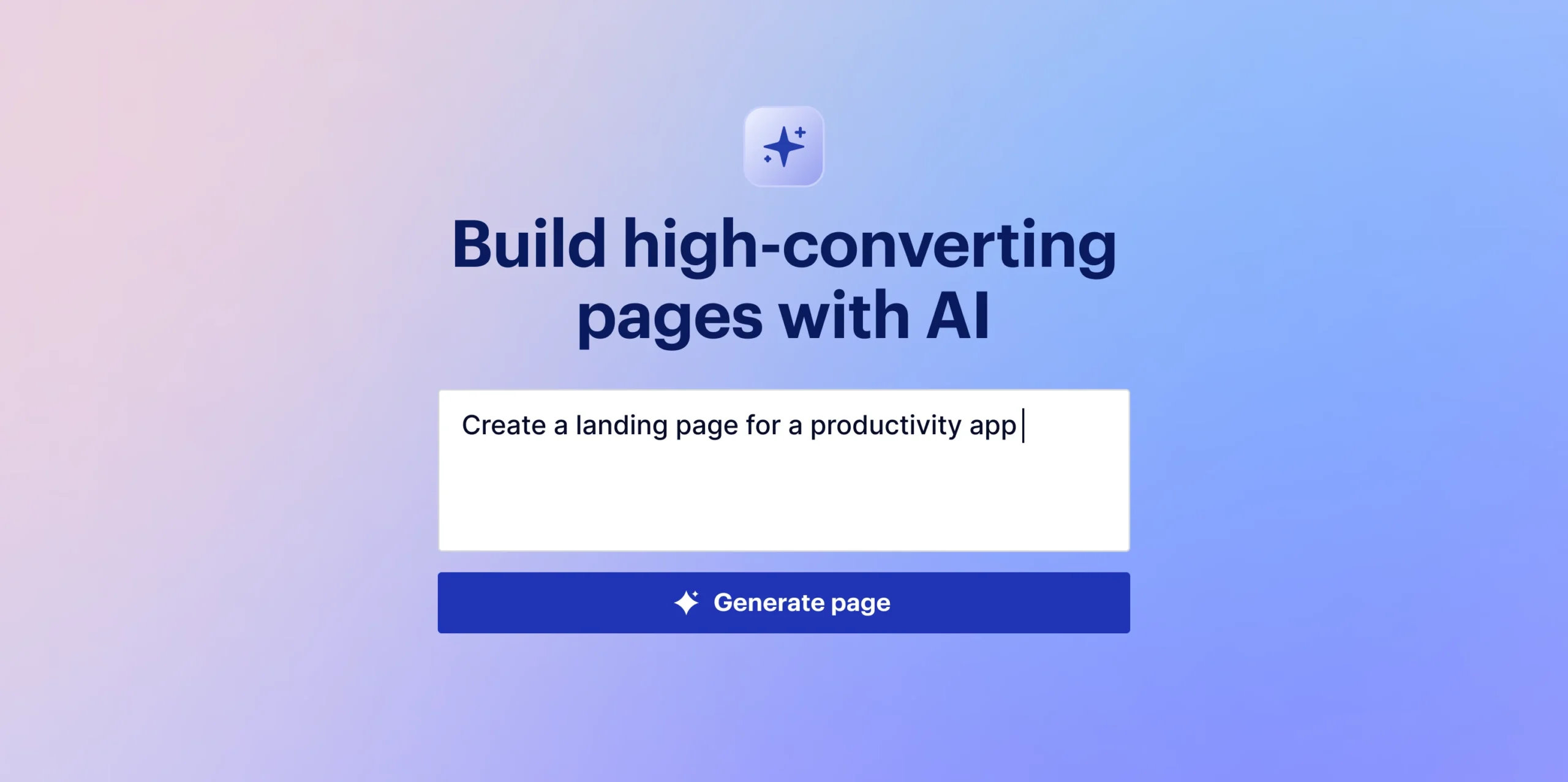
The digital marketing landscape has undergone a significant transformation with the announcement from Instapage regarding the launch of its comprehensive, AI-powered marketing platform. This move signals a strategic shift for the company, which has spent over a decade establishing itself as a leader in landing page technology. By integrating advanced artificial intelligence across the entire lifecycle of campaign creation, testing, and optimization, Instapage aims to address the persistent challenges of fragmented workflows and the "blank page" syndrome that often hampers marketing productivity.
Since its inception in 2012, Instapage has focused on refining the user experience for digital marketers. The company originally rose to prominence by developing what was widely regarded as the industry’s top-rated landing page builder. Over the subsequent years, the platform expanded its capabilities to include a full suite of Conversion Rate Optimization (CRO) tools, encompassing personalization, experimentation, analytics, and email marketing. The latest evolution of the platform represents a culmination of these efforts, embedding AI into the core of its architecture to provide an end-to-end solution for businesses seeking to scale their digital presence without a proportional increase in headcount.
Historical Context and Evolution of the Platform
To understand the significance of this release, it is necessary to examine the chronology of Instapage’s development. In 2012, the company entered a market where building high-converting landing pages required significant technical expertise or the use of rigid templates. Instapage disrupted this space by offering a pixel-perfect, drag-and-drop interface that empowered non-technical marketers to create professional-grade pages.
By the early 2020s, the company recognized that a landing page in isolation was no longer sufficient for modern marketing demands. This led to the expansion of the "Instapage Suite," which integrated website building, heatmaps, A/B testing, and dynamic text replacement for personalization. As artificial intelligence began to permeate the software-as-a-service (SaaS) sector, Instapage began incrementally embedding AI features, such as automated copy generation and experimentation suggestions. The 2026 product roadmap, which this latest release fulfills, marks the transition from a "tool with AI features" to a "platform powered by AI."
Addressing the Challenges of Standalone AI Generators
One of the primary focuses of the new Instapage update is the resolution of the friction points found in standalone AI page generators. Industry analysis suggests that while AI-driven design tools have become more prevalent, they often create a secondary problem: the "regeneration loop." In many current AI platforms, if a user is dissatisfied with a specific section of a generated page, they are often forced to regenerate the entire page from scratch. This process is not only time-consuming but also consumes significant computational resources and "tokens," leading to an inefficient back-and-forth between the user and the AI.
Instapage’s approach differentiates itself by combining generative AI with its legacy "pixel-perfect" builder. This hybrid model allows the AI to produce a complete, conversion-ready page in seconds based on a descriptive prompt, including layout, messaging, and optimized design. However, unlike standalone tools, the user retains full creative control to refine details using the drag-and-drop interface. This eliminates the need for repeated prompting to move a single section or change a specific design element, effectively bridging the gap between automated generation and manual precision.
The Integration of AI-Powered Email Workflows
Beyond page generation, the updated platform addresses the critical "follow-up gap" in lead generation. Marketing data consistently shows that the speed and relevance of a response significantly impact lead conversion rates. Despite this, many marketing teams struggle with "tool fatigue," often switching between a page builder, a lead management system, and a separate email service provider to manage follow-ups.
The new Instapage AI email generator is designed to live within the same ecosystem as the landing pages. When a lead is captured, the platform can immediately trigger tailored messaging written by AI. Users can define the goal, audience, tone, and length of the communication, allowing the AI to generate content that aligns with the specific context of the lead’s interaction. By housing pages, leads, and emails in a single environment, Instapage claims to eliminate the manual handoffs and data exports that often lead to missed opportunities in the sales funnel.

Supporting Data and Market Trends
The push toward AI-integrated platforms is supported by broader trends in the MarTech (Marketing Technology) industry. According to recent market reports, the global AI in marketing market is projected to grow at a compound annual growth rate (CAGR) of over 25% through the mid-2020s. This growth is driven by the increasing need for hyper-personalization and the demand for higher efficiency in the face of tightening marketing budgets.
In the current economic climate, characterized by leaner teams and higher performance expectations, the ability to automate the "heavy lifting" of campaign creation is becoming a necessity rather than a luxury. Instapage’s internal data suggests that businesses using AI-integrated workflows can reduce the time spent on initial campaign setup by up to 80%, allowing marketing personnel to focus on high-level strategy and data interpretation rather than technical execution.
Official Positioning and Strategic Vision
While official statements from Instapage leadership emphasize the continuity of their mission, the move clearly positions the company against both traditional landing page builders and emerging AI-first startups. "We are bringing the same thinking that made us the #1-rated builder to the world of AI," the company stated in its product announcement. The core philosophy remains centered on helping businesses grow "without adding headcount or stitching together a dozen tools."
The company acknowledges that most competing platforms "bolt on" AI as an afterthought—adding a subject line generator here or a copy tool there. Instapage’s strategy is to weave AI throughout the entire workflow. This "no-gap" approach is intended to serve as a competitive advantage in a market where CMOs are increasingly looking to consolidate their "tech stacks" to reduce costs and improve data integrity.
Analysis of Implications for the Marketing Industry
The broader implications of Instapage’s AI pivot are multifaceted. For the professional marketer, the role is shifting from "creator" to "curator." With the AI handling the initial layout and copywriting, the marketer’s value lies in their ability to prompt the system effectively and then use human intuition to fine-tune the output for brand alignment and emotional resonance.
Furthermore, the integration of AI Collections and experimentation features suggests a move toward "autonomous optimization." If the platform can not only build the page but also suggest and implement tests based on real-time performance data, the traditional A/B testing cycle—which can take weeks to yield actionable results—could be compressed into a matter of days or even hours.
However, the transition is not without its hurdles. Instapage has noted that select AI features are currently in beta and are being rolled out gradually to its user base. This cautious approach reflects the ongoing challenges in the AI space regarding accuracy, brand safety, and the need for human oversight to ensure that generated content meets regulatory and ethical standards.
Chronology of Key Milestones
- 2012: Instapage is founded, launching its flagship drag-and-drop landing page builder.
- 2015-2018: Expansion into the Enterprise market with the introduction of Collaboration tools and Global Blocks.
- 2019-2021: Launch of the Post-Click Automation (PCA) category, emphasizing the importance of the experience after the ad click.
- 2022-2024: Incremental introduction of AI writing assistants and basic optimization algorithms.
- 2025-2026: Full-scale launch of the end-to-end AI-powered platform, including AI Page Generation and AI Email Generation.
Conclusion and Future Outlook
As Instapage moves forward with its 14-day free trial offer for the new suite, the industry will be watching closely to see if this integrated approach becomes the new standard for MarTech platforms. The company’s focus on eliminating the "stitching" of disparate tools addresses a major pain point for small-to-medium businesses and enterprise teams alike.
In a world where digital noise is at an all-time high, the ability to rapidly deploy, test, and follow up on marketing campaigns is a critical differentiator. By embedding AI into every stage of the funnel—from the first glimpse of a landing page to the final follow-up email—Instapage is betting that the future of marketing lies not in more tools, but in smarter, more cohesive systems. For now, the platform remains a significant case study in how legacy SaaS companies are reinventing themselves to remain relevant in the age of generative artificial intelligence.







