Instapage, a global leader in landing page technology since 2012, has officially announced its transition into a fully integrated, end-to-end AI-powered marketing platform. This strategic evolution marks a significant milestone in the company’s history, moving beyond its roots as a high-performance landing page builder to offer a comprehensive suite that encompasses website creation, personalization, experimentation, email automation, and advanced analytics. By embedding artificial intelligence across every stage of the marketing funnel, Instapage aims to solve the persistent challenges of "SaaS sprawl"—the fragmentation of tools that often forces marketing teams to manually stitch together disparate data and workflows.
The announcement comes at a pivotal moment for the digital marketing industry. As businesses face tighter budgets and leaner team structures in 2026, the demand for "all-in-one" solutions that leverage generative AI to maintain high output without increasing headcount has reached a fever pitch. Instapage’s new ecosystem is designed to meet this demand, offering tools that not only generate content but also optimize performance through automated testing and lead nurturing.
A Chronology of Innovation: From Builder to Ecosystem
To understand the magnitude of this transition, one must look at the company’s trajectory over the past fourteen years. Founded in 2012, Instapage entered a market where creating a high-converting landing page required significant technical expertise or expensive development resources. The company’s original mission was to democratize the post-click experience, providing a "pixel-perfect" drag-and-drop builder that allowed marketers to bypass IT bottlenecks.
By 2018, Instapage had expanded its focus to include Conversion Rate Optimization (CRO) and personalization. This era saw the introduction of features like heatmaps, A/B testing, and dynamic text replacement, which allowed users to tailor content to specific audience segments. However, the limitation remained that once a lead was captured, the marketer still had to export that data to a third-party Email Service Provider (ESP) or a Customer Relationship Management (CRM) system to continue the journey.
Between 2022 and 2025, the company began its phased integration of machine learning. Initial forays included AI-assisted copywriting and basic predictive analytics. The latest 2026 release represents the culmination of this journey, where AI is no longer a peripheral feature but the foundational architecture of the platform.
Addressing the "Blank Page" Crisis through Generative Design
One of the primary friction points in digital marketing is the initial creative phase. Industry data suggests that the "blank page syndrome" can delay campaign launches by an average of 10 to 14 days as teams struggle to align copy, design, and technical layout. Instapage’s AI Page Generation seeks to eliminate this latency.
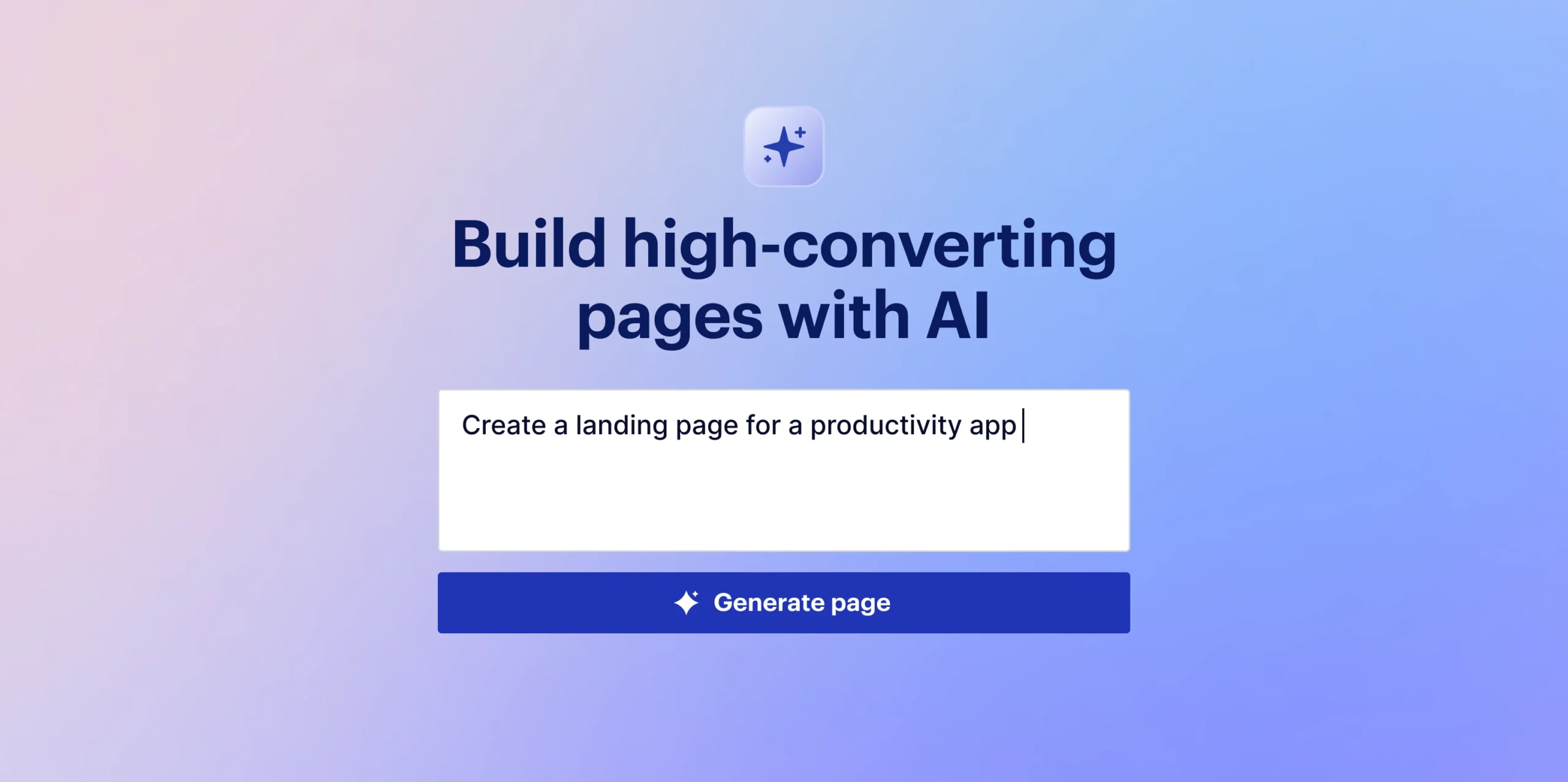
Unlike standard generative tools that provide static templates, Instapage’s AI uses natural language processing to interpret a user’s description of their goal, target audience, and brand voice. In seconds, the system generates a complete, conversion-ready page. This includes optimized layouts based on over a decade of conversion data, tailored messaging, and visual hierarchies designed to guide the user toward a specific call to action (CTA).
However, the company’s technical analysis revealed a common flaw in standalone AI generators: the lack of granular control. Many competing tools require users to re-prompt the entire AI if a single section needs adjustment, leading to an inefficient "back-and-forth" that consumes time and digital tokens. Instapage addresses this by marrying AI generation with its legacy pixel-perfect builder. Users can generate a page and then manually move any element, change a hex code, or swap an image without needing to regenerate the entire structure. This hybrid approach ensures that brand integrity is maintained while benefiting from the speed of automation.
Closing the Conversion Loop with Automated AI Communication
The second pillar of the updated platform is AI-powered email generation and automation. In traditional marketing workflows, the gap between lead capture and lead follow-up is where the highest "leakage" occurs. Research from Harvard Business Review has historically shown that companies that contact prospects within an hour of receiving a query are nearly seven times as likely to have a meaningful conversation with a key decision-maker compared to those who wait even 24 hours.
Instapage’s new AI Email Generator addresses this by living within the same environment as the landing pages. When a lead is generated, the platform can immediately trigger a tailored response based on the specific content the user interacted with. The AI can adjust the tone, length, and messaging of the email based on the lead’s profile, ensuring that follow-ups feel personal rather than automated. By eliminating the need for manual lead exports and third-party integrations, Instapage claims to reduce the "response gap" to near zero, significantly increasing the likelihood of conversion.

Market Context and the Shift Toward Unified Marketing Stacks
The move toward an end-to-end platform reflects a broader trend in the MarTech (Marketing Technology) landscape. According to industry reports, the average enterprise now uses upwards of 90 different marketing tools. This fragmentation leads to "data silos," where information gathered on a landing page is not effectively communicated to the email platform or the analytics suite.
Industry analysts suggest that the "Great Consolidation" is currently underway. Marketing leaders are increasingly favoring platforms that offer a "single source of truth." By integrating AI Collections—a feature designed to organize and scale high-performing assets—and AI Experimentation, Instapage is positioning itself as a central hub for marketing operations.
"The industry is moving away from ‘bolted-on’ AI," noted one senior marketing technologist familiar with the rollout. "In previous years, we saw companies add an AI button to a text field and call it an ‘AI platform.’ What Instapage is doing is different; they are using AI to bridge the gaps between the stages of the customer journey—from the first click on a page to the final conversion in an email thread."
Efficiency Metrics and the Economic Impact of AI Integration
The economic implications of this transition are substantial. Internal data from Instapage’s beta testing phase indicates that teams using the AI-powered suite can reduce the time spent on campaign creation by as much as 60% to 70%. Furthermore, by eliminating the need for multiple subscriptions to separate design, email, and analytics tools, businesses can potentially reduce their MarTech overhead by 30% or more.
In a climate where marketing departments are being asked to "do more with less," these efficiencies are critical. The platform’s AI Experimentation feature, for instance, can automatically identify which page variations are performing best and shift traffic accordingly, a task that previously required hours of manual monitoring and data analysis. This "self-optimizing" capability allows lean teams to compete with larger organizations that have dedicated data science departments.
Official Responses and Strategic Vision
While Instapage has not held a formal press conference, statements from the company’s product leadership emphasize a commitment to "frictionless growth." In a recent internal briefing, the company stated that its goal is to empower marketers to execute at the speed of thought.
"We built the #1-rated builder, and we’ve spent years understanding what makes a page convert," the company noted in its official communication. "Now, we are bringing that same thinking to AI. It’s not just about building faster; it’s about building smarter and ensuring that every lead is followed up with the same level of precision that went into the page that captured them."
The company also acknowledged the ongoing evolution of its tools, noting that several AI features remain in beta. This phased rollout is intended to gather user feedback and ensure that the AI models are calibrated for maximum conversion efficiency across various industries, from B2B SaaS to e-commerce.
Future Outlook: The End of "Stitched-Together" Marketing
As Instapage rolls out these features to its global user base, the long-term impact on the industry remains to be seen. However, the initial reception suggests a strong appetite for integrated AI solutions. The company is currently offering a 14-day free trial to allow businesses to experience the full end-to-end workflow, with a gradual rollout of beta features to existing customers.
The move signals a future where the distinction between "page builder," "email tool," and "analytics platform" becomes increasingly blurred. For marketers, this means less time spent on technical handoffs and more time spent on strategy and creative direction. For the broader tech industry, Instapage’s evolution serves as a blueprint for how legacy SaaS companies can reinvent themselves in the age of generative artificial intelligence, moving from a niche tool to an indispensable operational ecosystem.
With the 2026 marketing landscape defined by rapid iteration and data-driven precision, Instapage’s pivot to an AI-first model places it at the center of the next generation of digital growth tools. The company’s focus on eliminating the "gaps" between tools may well become the new standard for marketing efficiency in the years to come.


 Asro
Asro
 Dwi Wanna