

The digital marketing landscape is undergoing a profound transformation, driven by the rapid evolution of artificial intelligence and its integration into search engines. No longer are buyers solely scrolling through traditional Google results; a growing number are turning to generative AI platforms like ChatGPT, Perplexity, and Gemini for vendor recommendations, product comparisons, and detailed answers to complex queries. This pivotal shift necessitates a new approach to online visibility, moving beyond traditional Search Engine Optimization (SEO) to embrace Answer Engine Optimization (AEO). AEO focuses on optimizing a brand’s presence and characterization within AI-generated responses, making it a critical discipline for marketers seeking to maintain relevance and drive buyer engagement. The challenge for many organizations is not recognizing the importance of AEO, but rather selecting the appropriate tools to effectively track, measure, and improve their brand’s performance in this nascent yet rapidly expanding domain. Among the emerging solutions, HubSpot AEO and Peec AI stand out as prominent contenders, each offering distinct functionalities tailored to different operational needs and strategic objectives.
The Paradigm Shift: From SEO to AEO
The advent of large language models (LLMs) and their deployment in consumer-facing search interfaces has fundamentally altered how information is consumed and trusted online. Historically, SEO revolved around ranking high in organic search results, driving traffic to a brand’s owned properties. With AI search, the goal shifts: brands now need to ensure they are accurately and favorably represented within the AI’s synthesized answers, often directly presented to the user without requiring a click to an external website. This "zero-click" phenomenon means that a brand’s visibility hinges on how AI platforms characterize it, rather than just its ranking on a SERP.
The timeline of this shift has been remarkably swift. While rudimentary AI in search has existed for years, the public release of ChatGPT in late 2022 catalyzed mainstream awareness and accelerated development across the industry. Google responded with Gemini and AI Overviews, Perplexity AI emerged as an "answer engine," and other players like Anthropic’s Claude and Meta AI began integrating generative capabilities. This rapid adoption by users has compelled marketers to adapt, creating an urgent demand for tools that can monitor and influence these AI-driven interactions. AEO is not merely an extension of SEO; it is a distinct discipline requiring specialized insights into how AI models are trained, how they interpret brand signals, and how they construct responses. Without dedicated AEO strategies and tools, brands risk becoming invisible in the very conversations where purchasing decisions are increasingly being shaped.
Key Players in AEO: HubSpot and Peec AI – An Overview
HubSpot AEO and Peec AI represent two leading, yet fundamentally different, approaches to addressing the challenges of AI search visibility. Understanding their core philosophies is crucial for determining the best fit for an organization.
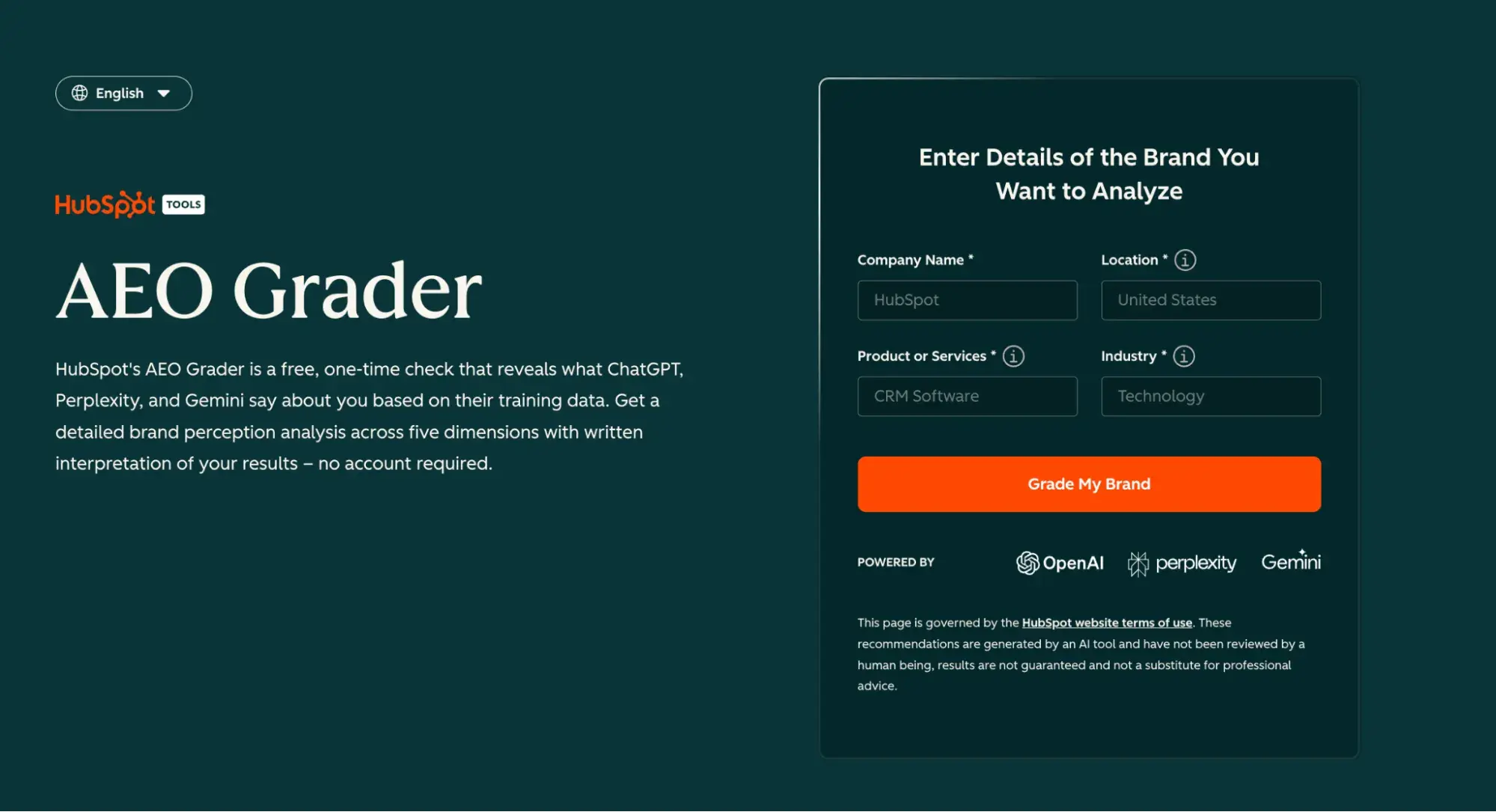
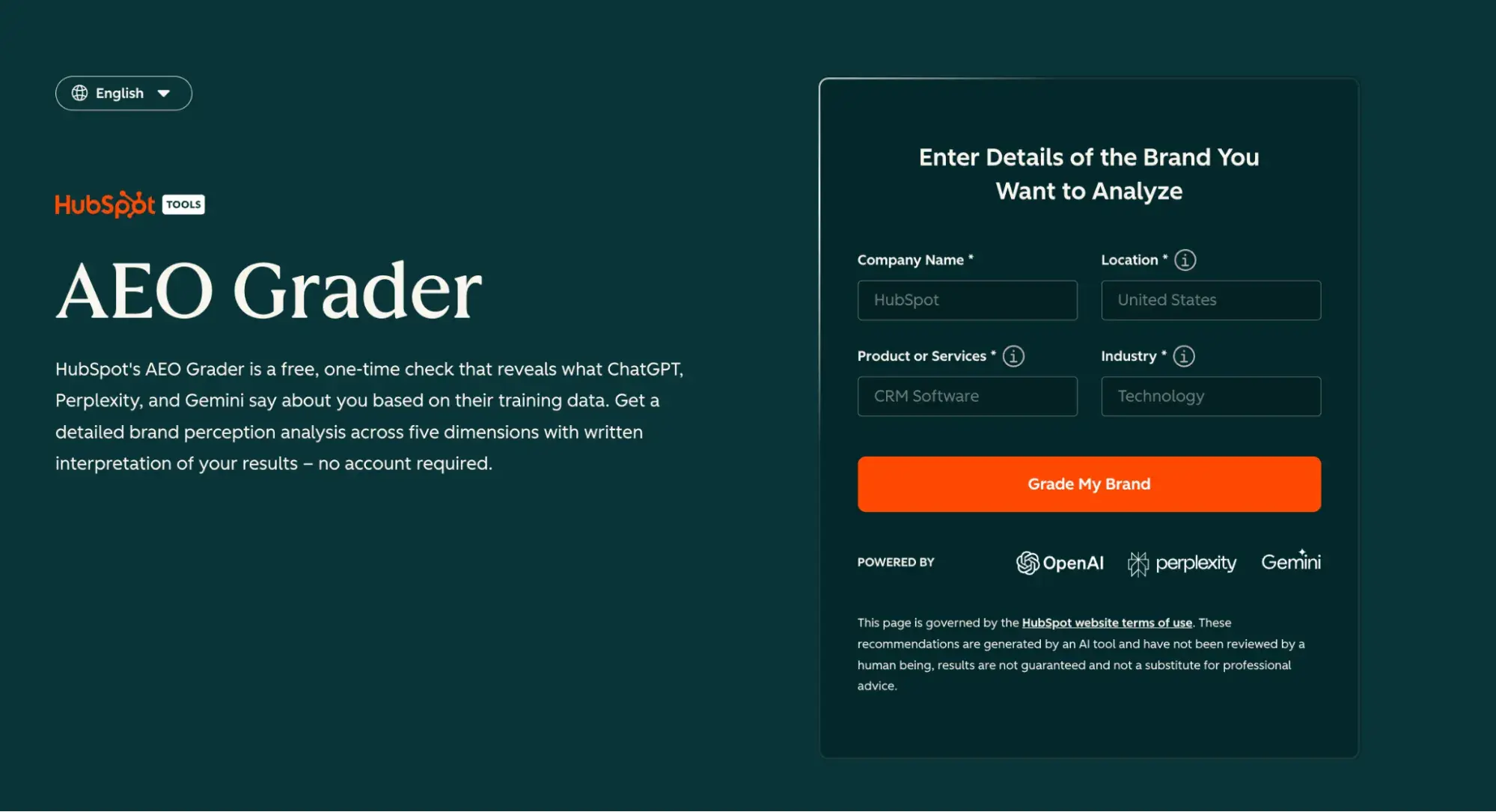
HubSpot AEO, deeply integrated within the broader HubSpot ecosystem, positions itself as a comprehensive solution that connects AI visibility insights directly to content creation and customer relationship management (CRM) workflows. It aims to provide not just data, but actionable recommendations that can be executed within a unified marketing and sales platform. Its free entry point, the HubSpot AEO Grader, serves as a low-friction diagnostic tool, offering a snapshot of a brand’s current AI characterization across key dimensions. The full HubSpot AEO platform then extends this with continuous monitoring and integration into HubSpot’s Marketing Hub, allowing teams to identify gaps and immediately create or update content to address them.
Peec AI, conversely, operates as a specialized, robust monitoring and reporting platform. Its strength lies in delivering deep, granular data on how brands appear in AI-generated responses across multiple engines. Peec AI prides itself on using UI scraping technology to simulate actual user interactions, ensuring its logged responses accurately reflect what real users encounter. While it provides extensive analytics and reporting infrastructure designed to feed external tools and agency dashboards, it deliberately stops at the execution boundary. Peec AI tells marketers what is happening and where improvements are needed, but the actual content creation and publishing are expected to occur in external systems.
The choice between these platforms often boils down to an organization’s existing technology stack, internal resources, and the desired level of integration between AEO insights and marketing execution.
Feature Deep Dive: What Each Platform Offers
A granular comparison of features reveals the distinct strengths of HubSpot AEO and Peec AI across several critical dimensions:
1. Engines Tracked:
HubSpot AEO offers consistent coverage across three primary answer engines: ChatGPT, Gemini, and Perplexity. These are included with every plan at no additional cost, reflecting HubSpot’s focus on the most prevalent B2B buyer touchpoints. While its prompt-level tracking is fixed to these three, HubSpot’s broader web analytics can also recognize AI referral clicks from other platforms like Copilot, Claude, and Meta AI, providing a more comprehensive attribution picture.
Peec AI provides a broader array of seven engines: ChatGPT, Perplexity, Google AI Overviews, Claude, Gemini, DeepSeek, and Grok. However, self-serve plans (Starter, Pro, Advanced) are limited to selecting only three of these seven options. Additional engines typically incur an add-on fee, and Claude is exclusively available on the custom-priced Enterprise tier. This flexible but tiered approach allows users to prioritize engines based on their specific audience, though it introduces a cost consideration for extensive coverage. For instance, a brand prioritizing Gemini would find it included in all HubSpot AEO plans, while with Peec AI, selecting Gemini might mean sacrificing one of the default three or paying extra.

2. Prompt Tracking and Capabilities:
The core functionality of any AEO tool revolves around prompt tracking. HubSpot AEO leverages its Smart CRM data—including products, Ideal Customer Profiles (ICPs), competitor names, and deal stages—to automatically generate prompt suggestions highly tailored to a brand’s actual business context. This CRM-connected approach ensures that tracking focuses on buyer-relevant queries from the outset, rather than generic industry templates. Prompt caps vary by plan: 10 prompts for the free trial, 25 for the standalone and Marketing Hub Professional plans, and 50 for Marketing Hub Enterprise. Expansion packs are available for additional prompts.
Peec AI suggests prompts based on search intent signals and allows for flexible organization by persona, funnel stage, or topic tags. It offers higher raw prompt volumes at each tier: 50 prompts for Starter, 150 for Pro, and 350 for Advanced. This volume-centric approach caters to teams requiring extensive tracking across a wide array of queries, offering a trade-off between sheer quantity and HubSpot’s deeper integration with CRM context.
3. Citation and Source Analysis:
Both platforms provide insights into which domains and pages are cited in AI-generated responses, but their utilization of these insights differs. HubSpot AEO connects citation analysis directly to content and campaign execution. It categorizes sources by type (e.g., owned content, competitor content, third-party reviews, news, industry reports). When a visibility gap is identified, HubSpot AEO surfaces prioritized recommendations and directly links them to HubSpot’s Marketing Hub content tools, enabling seamless content creation or updates within the same platform.
Peec AI, through its Sources feature, focuses on detailed monitoring and reporting. It shows the exact URLs cited by AI engines for each prompt, categorized by owned, competitor, or third-party sources. Its Gap Analysis feature scores sources that frequently cite competitors but not the user’s brand, generating a prioritized list for digital PR and authority-building outreach. Peec AI excels at identifying what needs attention from a source perspective, leaving the how of execution to external tools.
4. Update Frequency:
Both HubSpot AEO and Peec AI offer daily prompt tracking and data refreshes across their paid plans. HubSpot AEO operates on a 24-hour refresh cycle, with data updating automatically. Peec AI also tracks daily, and its UI scraping technology ensures that responses reflect real-user experiences, potentially capturing subtle formatting or citation differences that API-based tools might miss. In terms of cadence, both provide consistent, up-to-date information.
5. Exports, Reporting, and Integrations:
This is a significant area of divergence. HubSpot AEO keeps reporting native to the HubSpot ecosystem, integrating AEO data alongside CRM, marketing, and sales performance metrics within HubSpot’s dashboards. This eliminates the need for manual data stitching and supports a unified view of customer journey and campaign effectiveness. While direct Looker Studio integration is not native, HubSpot’s comprehensive reporting and API ecosystem allow for data extraction if needed.
Peec AI features a more open export architecture. CSV exports are standard across all plans. Looker Studio connectivity becomes available on Advanced plans, and API access is an Enterprise-only feature. Peec AI’s inclusion of MCP (Monitoring & Communication Protocol) integration on all paid plans is a key differentiator, enabling automated Slack alerts, n8n/Make workflows, and Claude-powered reports, catering to teams that require robust external reporting pipelines and custom data flows.
6. Alerting Systems:
HubSpot AEO surfaces visibility changes and competitive shifts through its dashboard, trend views, and a prioritized recommendation engine within Marketing Hub. When a drop in visibility or a gain in competitor share of voice occurs, a specific action-oriented recommendation appears, functioning as a proactive alert layer.
Peec AI offers more configurable alerting via its MCP integration. Teams can set sentiment thresholds that trigger automated Slack or email notifications when a brand’s sentiment score drops below a defined level, including the exact AI responses responsible for the shift. This provides immediate, granular alerts for critical brand reputation management.
7. Free Baseline vs. Paid Entry:
HubSpot offers its free AEO Grader, providing a one-time brand visibility check across five dimensions (Sentiment Analysis, Presence Quality, Brand Recognition, Share of Voice, Market Competition) without requiring an account or credit card. This establishes a tangible baseline score.
Peec AI does not offer a free baseline diagnostic or a free tier. Teams evaluating Peec AI begin with a paid subscription, though a 7-day free trial is available across all paid plans.
Strategic Actionability and Workflow Integration
The ultimate value of an AEO tool lies in its actionability. Both platforms have distinct workflows designed to turn insights into measurable improvements.
HubSpot’s Integrated Workflow: Track → Identify → Create → Publish → Monitor
HubSpot AEO is designed to streamline the entire AEO operational loop within a single platform.

- Track: Continuously monitors AI responses to CRM-generated prompts.
- Identify: Pinpoints visibility gaps, negative sentiment, or competitor gains.
- Create: Surfaces prioritized recommendations, directly linked to HubSpot’s content creation tools (blog, landing pages, social posts).
- Publish: Enables content creation and publishing within Marketing Hub.
- Monitor: Tracks the impact of new content on AI visibility.
This seamless integration minimizes friction, making it ideal for teams already using HubSpot for their content, marketing, and sales operations.
Peec AI’s Monitoring & Reporting Workflow:
Peec AI excels at the "Track" and "Identify" stages, providing deep analytics and reporting infrastructure.
- Track: Monitors how often a brand appears in AI-generated responses.
- Identify: Highlights visibility gaps, sentiment changes, and competitor strategies through detailed dashboards and source analysis.
- Report: Provides extensive export capabilities (CSV, Looker Studio, API) for integrating data into external BI tools and client dashboards.
- Inform: Offers actionable insights and recommended next steps (e.g., improve review profiles, invest in digital PR) but expects content creation and execution to happen in separate systems.
This workflow is particularly well-suited for agencies, large enterprises with existing, diverse tech stacks, or teams that prefer a best-of-breed approach where monitoring is handled by a specialist tool and execution by other platforms.
Pricing and Accessibility: A Cost-Benefit Analysis
Pricing structures, prompt caps, and seat models vary significantly, influencing the suitability of each platform for different organizational sizes and budgets.
Entry Pricing and Free Tiers:
HubSpot AEO offers two free entry points: the AEO Grader (one-time brand visibility check) and a 28-day free trial (10 prompts, ChatGPT only). The standalone HubSpot AEO plan is priced at $50/month ($45/month annually), including 25 daily prompts across ChatGPT, Gemini, and Perplexity, with up to 2,500 answers per month, requiring no additional HubSpot subscription.
Peec AI does not offer a free tier or a baseline diagnostic. It provides a 7-day free trial across all its paid plans. The Starter plan begins at $95/month, which includes 50 prompts daily across three chosen engines.
Tiered Pricing & Prompt Caps:
Peec AI generally offers higher raw prompt volume at each tier. For example, its Starter plan ($95/month) includes 50 prompts, while HubSpot AEO’s standalone plan ($50/month) offers 25. Peec AI’s Pro ($245/month) provides 150 prompts, and Advanced ($495/month) offers 350. HubSpot AEO’s prompt limits are 25 for standalone and Marketing Hub Professional, and 50 for Enterprise, with expansion packs available for higher volumes. This makes Peec AI more attractive for teams prioritizing sheer volume of queries. However, HubSpot AEO’s prompts are inherently connected to CRM context, potentially offering higher quality and actionability per prompt.
Seats and Collaboration:
Peec AI includes unlimited seats across all its paid plans, from Starter to Enterprise. This is a significant advantage for larger teams and agencies where per-seat pricing can create budgetary friction and administrative overhead.
HubSpot AEO’s seat model depends on the access method. The $50/month standalone plan offers open dashboard access. Marketing Hub Professional includes 3 core seats (additional seats at $45/month), and Enterprise includes 5 core seats (additional at $75/month). View-only seats are free on Marketing Hub plans, catering to stakeholders who need data visibility without editing permissions.
Multi-brand and Agency Considerations:
Peec AI is purpose-built for multi-client and multi-brand management. Its project structure allows each project to track a different brand, country, or language. Agency plans offer credit pooling across projects, and multi-project capabilities are available on higher-tier brand plans (e.g., 5 projects on Advanced). This infrastructure aligns directly with agency operational models.
HubSpot AEO currently operates as a single-brand, single-account tool. While multi-brand organizations on HubSpot Enterprise can leverage the HubSpot Brands add-on to manage brand-specific content execution, each brand would require its own AEO activation, and there isn’t a consolidated cross-brand dashboard for AEO insights. This can introduce operational friction for agencies or large conglomerates managing numerous independent brands.
Ease of Use and Adoption for Marketing Teams
The success of any new marketing tool hinges on its ease of use and the likelihood of consistent team adoption. Both platforms score well on initial accessibility but differ in their long-term integration with team workflows.
1. Set-up Speed and Guided Onboarding:
HubSpot AEO is designed for rapid onboarding, guided by CRM data. Users input basic company information, and the tool automatically generates relevant prompts based on existing CRM records (products, ICPs, competitors). This reduces upfront decision-making and ensures immediate relevance.
Peec AI also offers fast activation with a clean interface. Basic setup involves entering brand details and selecting engines/prompts. Initial AI visibility scores are available quickly. While straightforward, prompt selection relies more on the user’s existing knowledge of their buyer landscape or Peec’s intent-based suggestions. Both tools have minimal learning curves and do not require technical expertise for setup or interpretation.
2. Reporting Clarity and Stakeholder-friendly Outputs:
HubSpot AEO presents data in a centralized dashboard with headline metrics (Composite Score, Sentiment, Share of Voice) and plain-language interpretations. Because AEO data lives within Marketing Hub, it’s alongside other campaign and pipeline metrics, making it immediately accessible and understandable for stakeholders who already consume performance data there.
Peec AI provides a clean, information-dense dashboard with visibility into brand mentions, sentiment trends, competitive rankings, and source analysis. For external reporting, it supports CSV exports, Looker Studio connectivity (Advanced+), and MCP-powered automated summaries (e.g., to Slack or email), catering to detailed external reporting needs.
3. Non-technical Team Guidance and Simplicity:
AEO is a new discipline for many marketers. HubSpot AEO addresses this by guiding users from insight to action through its "Recommendations" tab, which surfaces prioritized next steps (e.g., "create a blog post on [topic]," "update [existing page]") with clear reasoning. HubSpot Academy also offers a free AEO Certification Course, providing structured training.
Peec AI maintains an accessible interface while offering analytical depth. Its "Actions" feature (in beta) suggests directional next steps like improving review profiles or investing in digital PR. These recommendations are designed for teams that already have established content production processes.
4. Adoption Fit by Team Resources and Workflow Complexity:
- Solo Marketer / Small Team (1-3 people): HubSpot AEO’s free Grader, trial, and $50/month standalone plan, coupled with its built-in execution capabilities, make it ideal for resource-constrained teams needing fast time-to-value and minimal tool juggling.
- Mid-market Team (5-15 marketers):
- HubSpot-native: HubSpot AEO, integrated into an existing Marketing Hub, offers zero-friction adoption.
- Non-HubSpot content stack: Peec AI’s standalone monitoring and flexible exports integrate well without platform migration.
- Agency Teams (Multi-client, reporting-heavy): Peec AI’s agency-specific tiers, credit pooling, unlimited seats, and robust external reporting capabilities make it the stronger choice for managing multiple client brands efficiently.
- Enterprise Teams (50+ marketers, RevOps integration): HubSpot AEO (included with Marketing Hub Enterprise) offers native Smart CRM integration for deep governance, attribution, and pipeline connectivity. Peec AI’s Enterprise tier provides extensive engine coverage, custom APIs, and white-labeling but requires manual integration for pipeline and attribution.
Broader Implications for Digital Marketing
The choice between HubSpot AEO and Peec AI carries significant implications for a brand’s overall digital marketing strategy:
- Content Strategy: HubSpot AEO’s direct link to content creation within Marketing Hub encourages a highly responsive and data-driven content strategy, where AI visibility gaps immediately translate into content priorities. Peec AI informs content strategy by highlighting competitive gaps and sentiment issues, but the implementation remains external.
- Budget Allocation: The pricing structures influence budget allocation. HubSpot AEO’s lower standalone entry point and inclusion in existing Marketing Hub subscriptions can make it a cost-effective choice for many. Peec AI’s tiered pricing and add-ons require careful consideration of desired prompt volume and engine coverage.
- Future of Search and Brand Visibility: Both tools acknowledge and address the fundamental shift in search. Brands that effectively leverage AEO tools will gain a competitive advantage by shaping their narrative directly within AI responses, thereby influencing buyer perceptions and decisions at an earlier stage of the journey. Neglecting AEO, regardless of the tool chosen, means ceding control of brand representation in an increasingly AI-driven information ecosystem.
Conclusion
Ultimately, the decision between HubSpot AEO and Peec AI is not about identifying an objectively "better" tool, but rather about selecting the platform that best aligns with an organization’s existing workflows, technology stack, team structure, and strategic priorities.
If a brand’s content workflows, campaign management, and buyer data are already centralized within HubSpot, then HubSpot AEO offers an unparalleled advantage. Its native integration transforms AI-generated insights into actionable content, streamlining the entire process from identification to publication within a single, familiar environment. This holistic approach minimizes friction and maximizes the likelihood of consistent adoption and execution.
Conversely, if an organization’s content creation and publishing tools reside outside of HubSpot, or if the primary need is for robust, scaled monitoring, extensive external reporting, and flexible multi-client management, then Peec AI presents a compelling solution. Its specialized focus on deep analytics, broad engine coverage, and open export architecture allows it to feed crucial AI visibility data into diverse existing systems, empowering teams to act on insights within their preferred operational framework.
The core question for marketers navigating this new era of AI-driven search remains: Where does your team do its best work? AI visibility is no longer a theoretical concern; it is measurable, scoreable, and improvable. The tools and frameworks are in place. What distinguishes successful teams is their ability to choose a tool that fits their workflow seamlessly and commit to its consistent utilization. Investing in the right AEO solution is not merely a technological upgrade; it is a strategic imperative for maintaining brand relevance and competitive advantage in the evolving digital landscape.








