

In an era where digital marketing efficiency is paramount, Instapage, a leading platform in post-click automation and landing page creation, has announced a significant expansion of its feature set designed to empower marketers to scale operations and reduce manual overhead. The latest update introduces a robust Campaign Scheduling tool and a specialized category of Website Page Templates, alongside the launch of the Instapage Early Access Program. These developments signal a strategic shift for the company as it moves beyond traditional landing page utility toward a more comprehensive, automated web presence solution for businesses of all sizes.
The announcement comes at a critical juncture for the MarTech (Marketing Technology) industry. As digital advertising costs continue to rise across platforms like Google and Meta, brands are under increasing pressure to maximize the conversion potential of every click. By automating the deployment and removal of content, and by providing more versatile building blocks for full-site construction, Instapage aims to address the primary bottlenecks in the modern marketing workflow: time-to-market and technical resource constraints.
Strategic Automation Through Campaign Scheduling
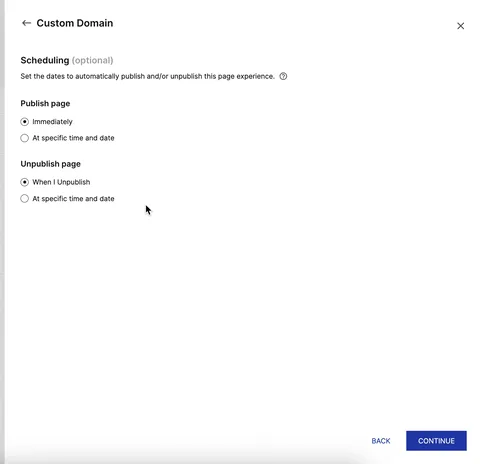
The cornerstone of this update is the new Scheduling feature, now available to users on select subscription plans. This tool allows marketing teams to automate the lifecycle of their landing pages by setting specific dates and times for publishing, unpublishing, and updating content. In the fast-paced world of digital commerce, where seasonal promotions, flash sales, and time-sensitive product launches are the norm, the ability to pre-program these transitions is a significant operational advantage.
Historically, marketers have been forced to manually manage the "go-live" and "expiration" moments of their campaigns. This often required staff to be available at odd hours—such as midnight on a holiday or the start of a weekend—to ensure that promotional pricing or event-specific messaging was synchronized across all channels. The new Scheduling feature eliminates this manual dependency. By entering the desired parameters into the Instapage dashboard, the platform handles the execution automatically, ensuring that the customer experience remains consistent and that no expired offers remain active to confuse potential leads.
Beyond the logistical benefits, scheduling serves as a risk mitigation tool. Manual updates are prone to human error, particularly when managing dozens of concurrent campaigns across different time zones. The automation of these tasks reduces the likelihood of "broken" user journeys where an ad remains active but the corresponding landing page has been prematurely taken down, or vice versa.
Bridging the Gap Between Landing Pages and Full Websites
While Instapage has built its reputation as a premier landing page builder, internal data and user feedback have revealed a growing trend: a significant portion of the user base is utilizing the platform’s no-code builder to construct entire websites. Recognizing this evolution in user behavior, the company has officially launched a new "Website Pages" template category.
This expansion provides users with pre-customized templates tailored for nine specific industries, including Consumer Products, Beauty, and Real Estate. Unlike standard landing pages, which are typically designed for a single conversion goal (such as a sign-up or a purchase), these website templates are structured to handle broader informational needs. They include layouts for "About Us" pages, service overviews, and contact hubs, all while maintaining the high-speed performance and conversion-centric design principles that define the Instapage ecosystem.
The shift toward providing full website capabilities reflects the broader "No-Code" revolution. Small to medium-sized businesses (SMBs) and even enterprise-level marketing departments are increasingly seeking ways to bypass traditional web development queues. By providing a drag-and-drop environment that can now handle multi-page site structures, Instapage is positioning itself as a viable alternative to more complex Content Management Systems (CMS) for brands that prioritize agility and conversion optimization over deep backend customization.
The Instapage Early Access Program: A Community-Driven Roadmap
To ensure that future product development remains closely aligned with the actual needs of its users, Instapage has also unveiled the Early Access Program (EAP). This initiative creates a formal pipeline for feedback, allowing a select community of users to test and influence new features before they reach the general market.
The EAP is a strategic move to foster "Product-Led Growth" (PLG). By involving power users in the beta stages of development, Instapage can iterate more rapidly and ensure that new tools—like the recently released Carousels, Popups, and the overhauled Dashboard—are intuitive and effective. Members of the program gain a first-mover advantage, utilizing cutting-edge tools to optimize their campaigns while providing the qualitative data necessary for Instapage to refine its software.
Industry analysts suggest that such programs are vital for maintaining customer loyalty in the competitive SaaS (Software as a Service) landscape. When users feel they have a stake in the product’s direction, retention rates typically improve, and the resulting product is more likely to solve the "pain points" that are unique to the current marketing climate.
Chronology of Innovation and Market Context
The release of Scheduling and Website Templates is the latest in a series of aggressive updates from Instapage over the past year. The company’s timeline of recent enhancements includes:
- The New Dashboard Release: A complete UI/UX overhaul designed to provide better data visualization and easier navigation between multiple workspaces.
- Enhanced Popup Functionality: Advanced triggers and targeting options to capture leads without disrupting the user experience.
- Carousel Widgets: Enabling interactive content displays that allow for more storytelling within the limited real estate of a mobile or desktop screen.
These updates occur against a backdrop of shifting digital standards. With the impending phase-out of third-party cookies and the rise of privacy-centric browsing, the "post-click" experience has become the most controllable variable in a marketer’s arsenal. Data from industry reports indicates that while the average conversion rate across all industries is roughly 2.35%, the top 10% of companies are seeing conversion rates of 11.45% or higher. The difference often lies in the relevance, speed, and timing of the landing page—areas where Instapage’s new features are specifically targeted.
Analysis of Implications for the Marketing Industry
The implications of these updates extend beyond the Instapage user base. By integrating scheduling and website-building capabilities, Instapage is blurring the lines between specialized conversion tools and general-purpose web platforms.
For agencies, these features represent a path to increased profitability. By reducing the number of billable hours required for manual campaign management, agencies can scale their client load without a proportional increase in headcount. The ability to schedule "sunset" dates for client promotions ensures that service-level agreements (SLAs) are met with mathematical precision.
For internal marketing teams, particularly those in the SMB sector, the availability of industry-specific website templates lowers the barrier to entry for professional-grade digital branding. A real estate firm or a beauty brand can now deploy a cohesive, high-converting web presence in a fraction of the time it would take to hire a developer or navigate the complexities of a traditional CMS.
Furthermore, the emphasis on scheduling highlights a growing trend toward "Agile Marketing." As market conditions change—driven by social media trends or global events—the ability to pivot quickly and schedule those pivots in advance allows brands to remain relevant and responsive.
Conclusion and Future Outlook
Instapage’s commitment to "turning ad clicks into conversions" remains the central theme of its product evolution. The introduction of Scheduling and Website Page Templates addresses the dual needs of operational efficiency and expanded digital footprint. As the platform continues to grow its Early Access Program, the market can expect a steady stream of features that prioritize automation, user autonomy, and high-performance design.
For businesses currently navigating the complexities of digital advertising, these tools offer a way to regain control over their time and their creative assets. Instapage has invited interested parties to explore these new features through their standard 14-day free trial, providing a risk-free environment for marketers to test the impact of automated scheduling and new template designs on their specific conversion goals.
As the MarTech landscape continues to consolidate, the platforms that succeed will be those that provide the most value with the least amount of friction. With this latest update, Instapage is making a strong case for its position as an indispensable tool in the modern marketer’s stack, moving closer to a future where the bridge between a click and a customer is fully automated and expertly designed.







