


Instapage, a leading provider of landing page solutions, has announced the launch of AI Collections, a new suite of tools designed to eliminate the manual bottlenecks traditionally associated with large-scale digital marketing personalization. While the marketing industry has long recognized that personalized content significantly boosts conversion rates and return on ad spend (ROAS), the practical execution of such strategies has historically been hindered by the labor-intensive nature of creating unique pages for diverse audience segments. AI Collections seeks to resolve this "execution gap" by allowing marketing teams to generate, manage, and deploy personalized landing pages up to three times faster than manual methods. By integrating artificial intelligence directly into the page-building workflow, the platform enables the creation of hundreds of tailored experiences from a single template, effectively transforming how performance marketers approach high-volume campaigns.
The introduction of AI Collections comes at a critical juncture for the digital advertising landscape. As privacy regulations tighten and the efficacy of third-party cookies diminishes, marketers are increasingly turning to first-party data and post-click optimization to maintain performance. Industry data suggests that personalization is no longer an optional luxury; according to a report by McKinsey & Company, 71% of consumers expect companies to deliver personalized interactions, and 76% get frustrated when this doesn’t happen. Despite this demand, many organizations struggle to move beyond generic landing pages because the process of duplicating pages, editing copy, and managing individual URLs across dozens of ad groups is prone to human error and scaling limitations. AI Collections addresses these pain points by replacing manual spreadsheets and repetitive editing with an automated, table-based content management system.
The Architecture of AI Collections and the Content Table
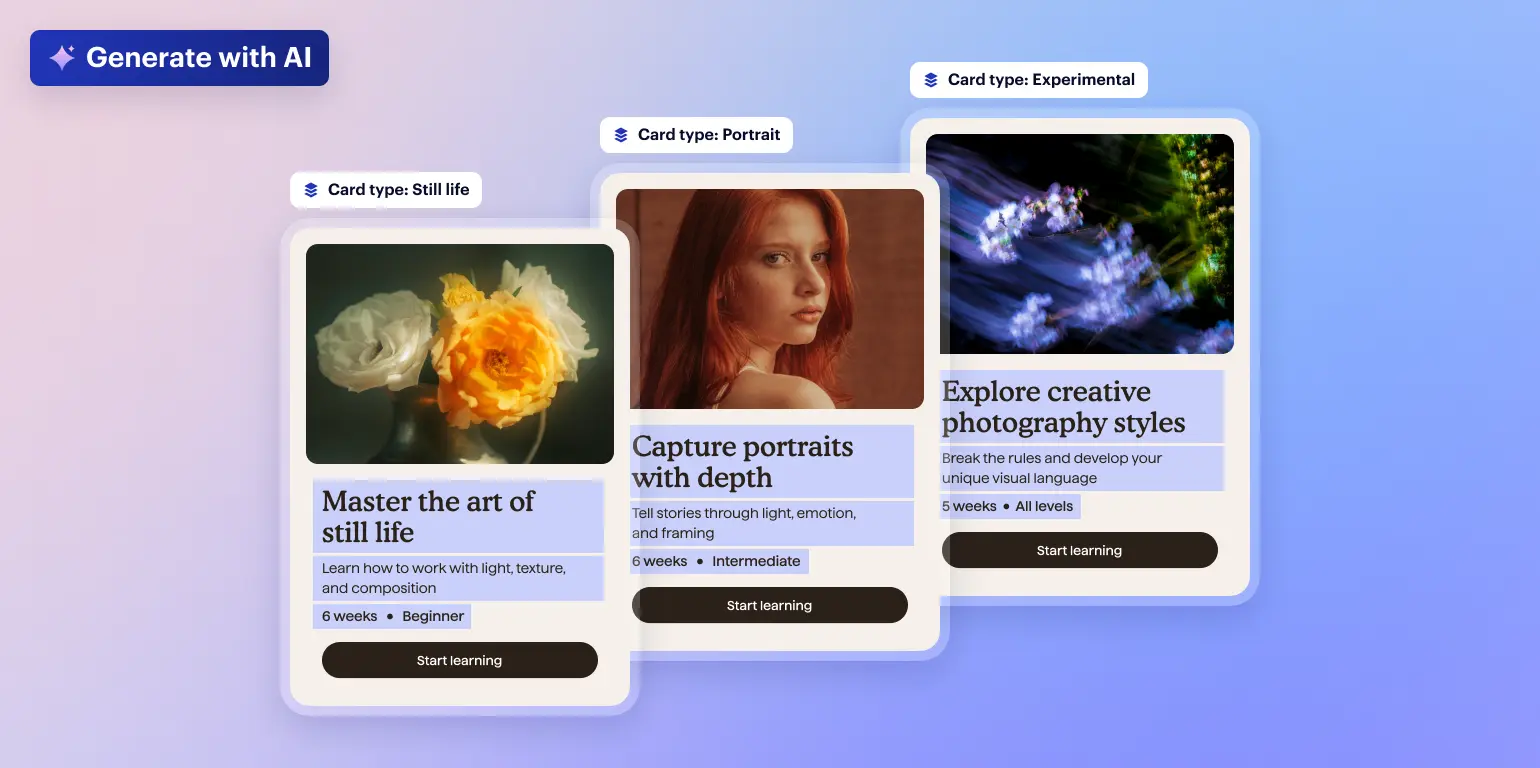
At the core of the AI Collections feature is a centralized content table that functions as the brain of the personalization engine. In this environment, each row in the table represents a unique landing page within a collection, while each column represents a dynamic content variable—such as headlines, body copy, images, or calls to action. This structured approach allows marketing teams to manage large groups of pages from a single dashboard rather than navigating through a fragmented list of individual page files.
The workflow begins with the creation of a "Collection Template." Marketers design a primary page layout that serves as the visual foundation for all subsequent variations. By utilizing the built-in content table, users can map specific elements of the page to dynamic placeholders. This structural shift is significant because it moves landing page management away from a design-centric task and toward a data-centric task. Instead of a designer spending hours on manual tweaks, a growth marketer or content strategist can input variations into the table, and the AI handles the rendering of those variations across the entire collection.
Automated Placeholder Identification and Design Intelligence
One of the most innovative aspects of AI Collections is the AI-driven placeholder identification system. Traditionally, setting up dynamic text replacement or personalized elements required a developer or a highly technical marketer to manually tag specific sections of a page with code or unique identifiers. Instapage’s AI simplifies this by analyzing the design of the landing page to automatically identify optimal locations for dynamic content.
When the AI analyzes a page layout, it recognizes headings, subheadings, and paragraph blocks that are likely to benefit from personalization. It then generates these placeholders automatically, allowing the user to review and refine them. This automation reduces the "setup friction" that often prevents teams from pursuing personalization. Once the placeholders are established, they are linked directly to the content table. If a marketer decides to change a value in the table—for instance, changing a city name for a local search campaign—that change is instantly reflected across the corresponding page in the collection without the need to open a visual editor.
Generative AI for Dynamic Content Creation
Beyond organizing and placing content, AI Collections leverages generative AI to actually write the copy for the personalized pages. Within the content table, marketers can provide specific prompts or context for each entry. For example, if a company is running a campaign targeting different industry verticals—such as healthcare, finance, and retail—the marketer can provide a brief description of the target audience for each row. The AI then generates publish-ready content tailored to those specific sectors, ensuring that the messaging resonates with the unique pain points and goals of each audience segment.
This capability is further enhanced when paired with Instapage’s "fluid grid blocks." One of the historical challenges of dynamic content is that different lengths of text can break a page’s layout; a three-word headline fits differently than a ten-word headline. Fluid grid blocks allow the layout to automatically adjust and reflow based on the volume of content generated by the AI. This ensures that even when the AI produces variations of different lengths, the visual integrity of the landing page remains intact across desktop and mobile devices. By providing as much context as possible—such as brand voice, target keywords, and conversion goals—marketers can ensure the AI-generated content is both high-quality and strategically aligned.
A Brief History of Landing Page Evolution
To understand the impact of AI Collections, it is necessary to view it within the context of the evolution of landing page technology. In the early 2000s, landing pages were largely static HTML files that required manual coding for every change. The 2010s saw the rise of drag-and-drop builders, which democratized page creation but still required significant manual effort to scale. As digital advertising platforms like Google Ads and Meta became more sophisticated, they allowed for more granular targeting, but the "post-click" experience (the landing page) failed to keep pace with the "pre-click" experience (the ad).
The "Execution Gap" became a well-known phenomenon in marketing departments: a brand might have 500 different ad groups but only five different landing pages. This lack of relevance leads to lower Quality Scores, higher costs per click, and lower conversion rates. AI Collections represents the third generation of landing page technology—the "Autonomous Era"—where the focus shifts from ease of design to the speed of intelligence and scale.
Industry Implications and Economic Impact
The launch of AI-driven personalization tools is expected to have a measurable impact on the economics of digital advertising. For many agencies and in-house teams, the cost of labor is the primary barrier to high-performance marketing. By reducing the time required to build personalized pages by 66% (the "3x faster" metric), AI Collections effectively lowers the cost of experimentation. Teams can now test more hypotheses, target more niche keywords, and iterate on messaging without the prohibitive overhead of manual production.
Furthermore, this technology levels the playing field for mid-sized enterprises that may not have the massive creative departments of global conglomerates. With AI handling the repetitive tasks of duplication and copy variation, a small team can manage a level of campaign complexity that previously required a much larger headcount. From a strategic perspective, this allows marketers to focus on high-level strategy, creative direction, and data analysis rather than the "busy work" of manual page editing.
Expert Analysis and Market Response
Early feedback from the marketing community suggests that the integration of AI into the workflow is a welcome departure from standalone AI writing tools. While tools like ChatGPT can generate copy, the challenge has always been getting that copy into a live, functional, and well-designed landing page. By embedding the AI within the CMS (Content Management System), Instapage is closing the loop between content generation and deployment.
Market analysts note that this move by Instapage puts pressure on competitors in the landing page space to offer similar automation features. As AI becomes a standard component of the marketing tech stack, the differentiation will lie in how well these tools integrate with existing workflows and how accurately the AI can maintain brand voice across hundreds of pages. The inclusion of a 14-day free trial for AI Collections indicates Instapage’s confidence that once marketers experience the efficiency gains, they will find it difficult to return to manual workflows.
Conclusion and Future Outlook
The introduction of AI Collections marks a significant step toward the realization of hyper-personalization at scale. By automating the identification of placeholders and the generation of tailored content, Instapage is providing a solution to one of the most persistent problems in digital marketing. As the technology continues to evolve, it is likely that we will see even deeper integrations, such as AI that automatically optimizes page layouts based on real-time user behavior or AI that can predict which personalized elements will perform best for a specific demographic.
For now, the focus remains on speed, efficiency, and relevance. In an era where consumer attention is a scarce commodity, the ability to deliver a landing page that speaks directly to a user’s needs—instantly and at scale—is a powerful competitive advantage. AI Collections is not just a tool for building pages; it is a tool for building relevance, and in the modern digital economy, relevance is the ultimate currency. Marketing teams looking to stay ahead of the curve must now decide how they will integrate these autonomous capabilities into their broader growth strategies to ensure they are not left behind in the manual past.







