Muslim
The release of OpenAI’s GPT-6.1 Terra marks a significant milestone in the evolution of specialized artificial intelligence, signaling a strategic shift toward high-utility, low-cost models designed specifically for agentic workflows. While flagship models often capture headlines for their creative prowess or general-purpose reasoning, Terra is engineered for the pragmatic demands of the modern enterprise: coding, data manipulation, and complex file-based tasks. Unlike its predecessors, which frequently struggled with the precision required for editable outputs, GPT-6.1 Terra demonstrates a refined ability to interact with external tools, ensuring that its contributions are not just conversational but structurally sound and ready for production environments.
The architectural philosophy behind Terra emphasizes "practical reasoning"—a middle ground where the model prioritizes accuracy in execution over the broader, more expensive cognitive breadth of the GPT-6 Astra flagship. This specialization makes it a primary candidate for developers, data analysts, and administrative professionals who require an AI capable of handling spreadsheets, repairing scripts, and managing logistics without the prohibitive costs associated with larger models.
The Evolution of the GPT-6 Series: Context and Background
To understand the positioning of GPT-6.1 Terra, one must look at the broader trajectory of OpenAI’s development cycle. Following the GPT-5 era, which focused heavily on multimodal integration and expanded context windows, the GPT-6 generation has bifurcated into distinct categories. Astra serves as the high-reasoning "frontier" model, while Terra represents the "efficiency" tier.
The transition from GPT-5.6 Terra to the 6.1 iteration was driven by feedback regarding the reliability of tool-use. Early iterations of the model could often describe how to fix a bug or organize data but frequently failed when asked to generate a functional file that adhered to strict formatting standards. GPT-6.1 Terra addresses these shortcomings by integrating more robust "agentic" capabilities, allowing it to navigate multi-step processes where the output of one step serves as the input for the next. This is particularly evident in its handling of "sandbox" environments where code can be executed and verified before the final result is presented to the user.
Empirical Evaluation: Testing Terra’s Practical Utility
In a series of rigorous hands-on tests, GPT-6.1 Terra was subjected to five distinct scenarios designed to push the boundaries of its file-handling and reasoning capabilities. These tests moved beyond simple text generation to assess the model’s ability to produce "live" documents—files that remain useful long after the chat session has ended.
1. Financial Data Engineering and Excel Automation
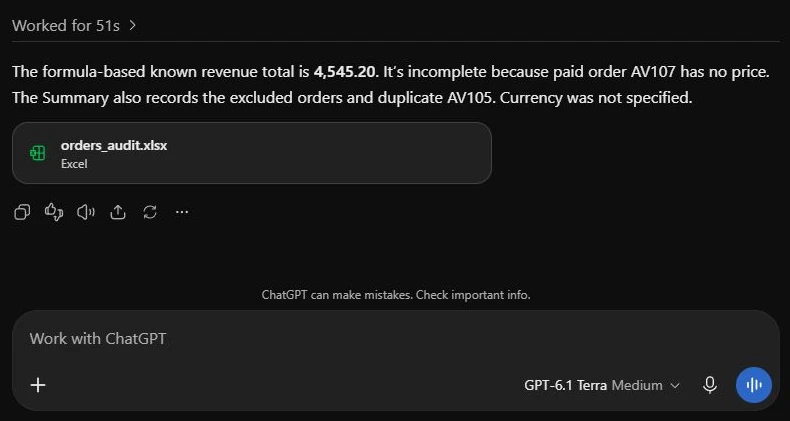
The first test involved the transformation of a messy CSV ledger into a structured, audit-ready Excel workbook. The challenge was not merely to copy the data but to apply logic: deduplicating specific entries, filtering for paid orders, and handling missing data points without making assumptions.
Terra’s performance in this area was notable for its "clean-room" approach. By creating a multi-sheet workbook (Raw, Cleaned, and Summary), it maintained data integrity while providing transparency. Crucially, the model used actual Excel formulas—such as IF statements for revenue calculation—rather than hard-coding the results. This ensures that the workbook remains a living document where a user can adjust a discount percentage or a price, and the totals will update automatically. While the model currently treats the cleaning process as a snapshot rather than a dynamic filter, the resulting file provides a clear maintenance boundary that is superior to the static tables produced by earlier LLMs.
2. Software Maintenance and Edge-Case Debugging
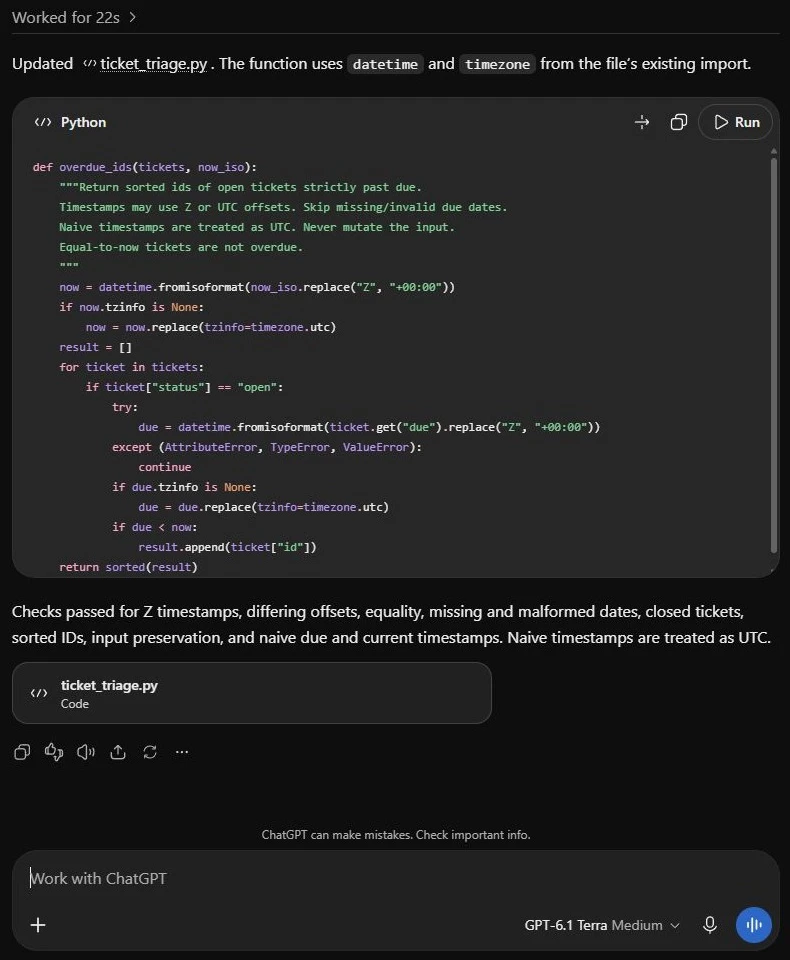
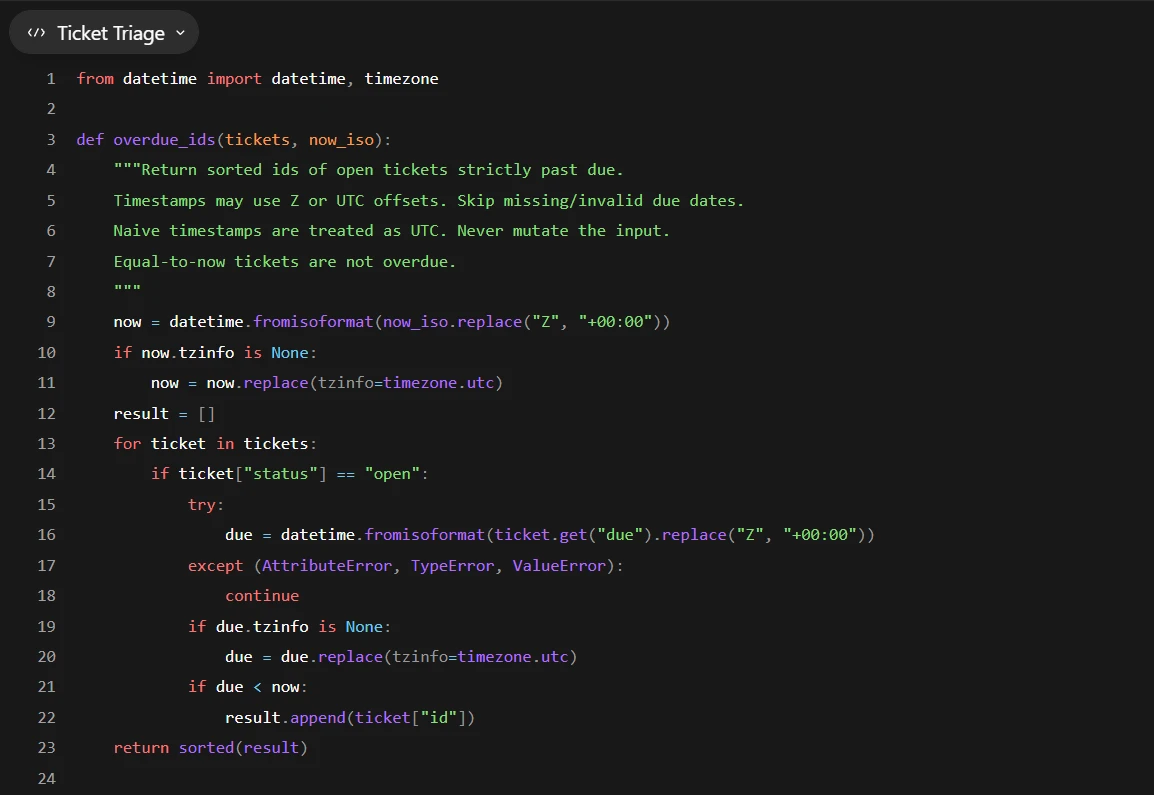
Coding remains the primary battlefield for AI utility. Terra was tasked with repairing a Python script (ticket_triage.py) that managed support ticket deadlines. The original code was riddled with common developer oversights: it used inclusive comparisons that ignored the "due exactly now" state and lacked error handling for malformed timestamps.
Terra’s intervention was twofold. First, it implemented a minimal, non-invasive patch that aligned with the function’s docstring. Second, it utilized its internal execution environment to run a battery of tests against the code. It successfully handled UTC offsets and "Z" (Zulu) timestamps, a frequent source of bugs in global applications. By explicitly documenting its assumption that timezone-naive dates are treated as UTC, Terra demonstrated a level of professional transparency that reduces the risk of "silent failures" in production code.
3. Knowledge Distillation: From Academic Research to Educational Material
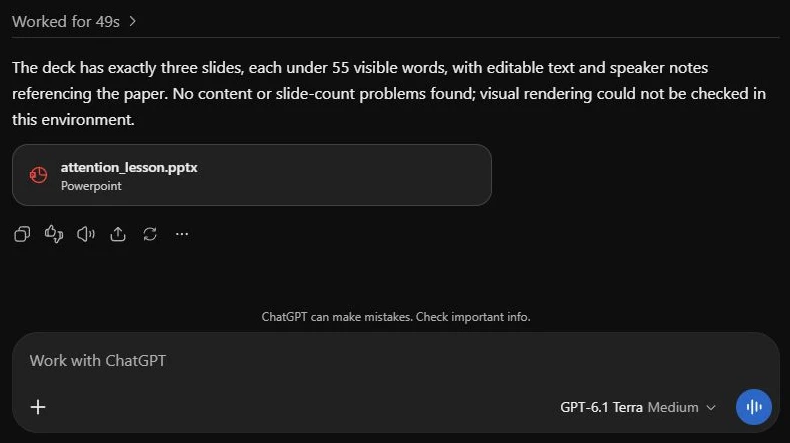
The third test assessed Terra’s ability to digest dense technical information—specifically the seminal "Attention Is All You Need" paper—and convert it into an editable PowerPoint presentation. This required the model to balance brevity with mathematical accuracy.
The resulting three-slide deck adhered to strict word counts while preserving the scaled dot-product attention equations. By including detailed speaker notes that referenced specific sections of the source PDF, Terra functioned as a sophisticated research assistant. This capability is vital for corporate and academic environments where information must be rapidly synthesized into shareable formats without losing the underlying technical rigor.
4. Logistics and Multi-Timezone Coordination
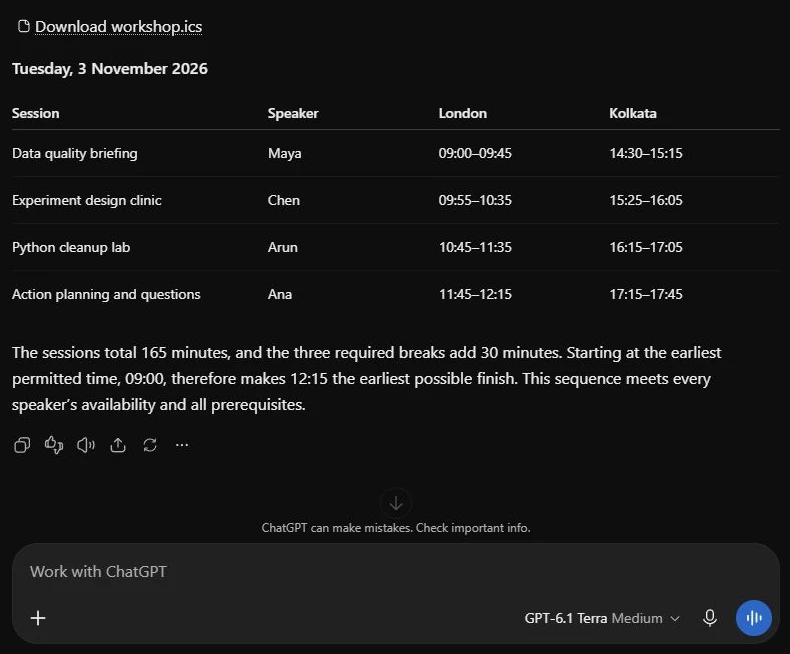
Scheduling remains a high-friction task for human assistants, particularly when four speakers across London, Kolkata, Singapore, and New York are involved. Terra was asked to find the earliest possible finish for a workshop while respecting availability, prerequisites, and mandatory breaks.
The model’s logic was tested through the generation of an ICS (iCalendar) file. It correctly identified the sequence of talks (A-C-B-D) that minimized downtime, resulting in a 195-minute elapsed schedule. The export passed all standard format checks, including unique identifiers and UTC-synchronized timestamps. This demonstrates Terra’s potential as a reliable backend for automated scheduling agents.
5. Advanced Signal Processing
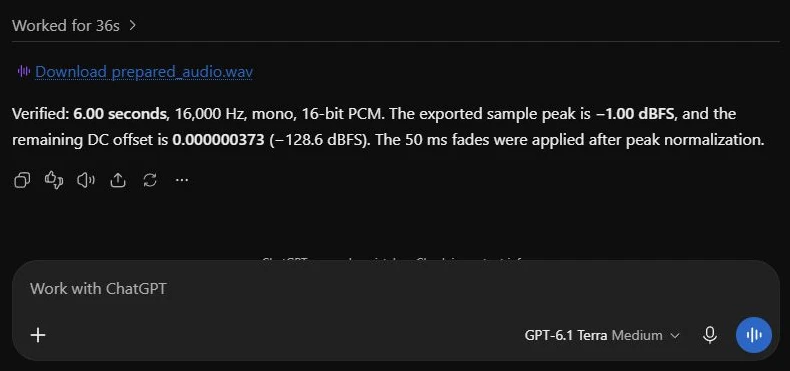
The final test moved into the realm of binary file manipulation. Terra was tasked with processing an eight-second stereo WAV file into a mono format suitable for an audio pipeline. This involved removing a DC offset, resampling to 16,000 Hz, and normalizing the peak to -1 dBFS.
Rather than "listening" to the audio, Terra treated the task as a mathematical signal-processing problem. It used code to measure the root-mean-square error and verify the transformation. The output matched the requested specifications with a 0.022% error margin relative to a human-reconstructed reference. This level of precision confirms that Terra is capable of handling technical media tasks that were previously the sole domain of specialized software.
Benchmarking Performance: OpenAI’s Official Data
Beyond individual tests, OpenAI’s internal benchmarks provide a broader view of where Terra stands in the competitive landscape.
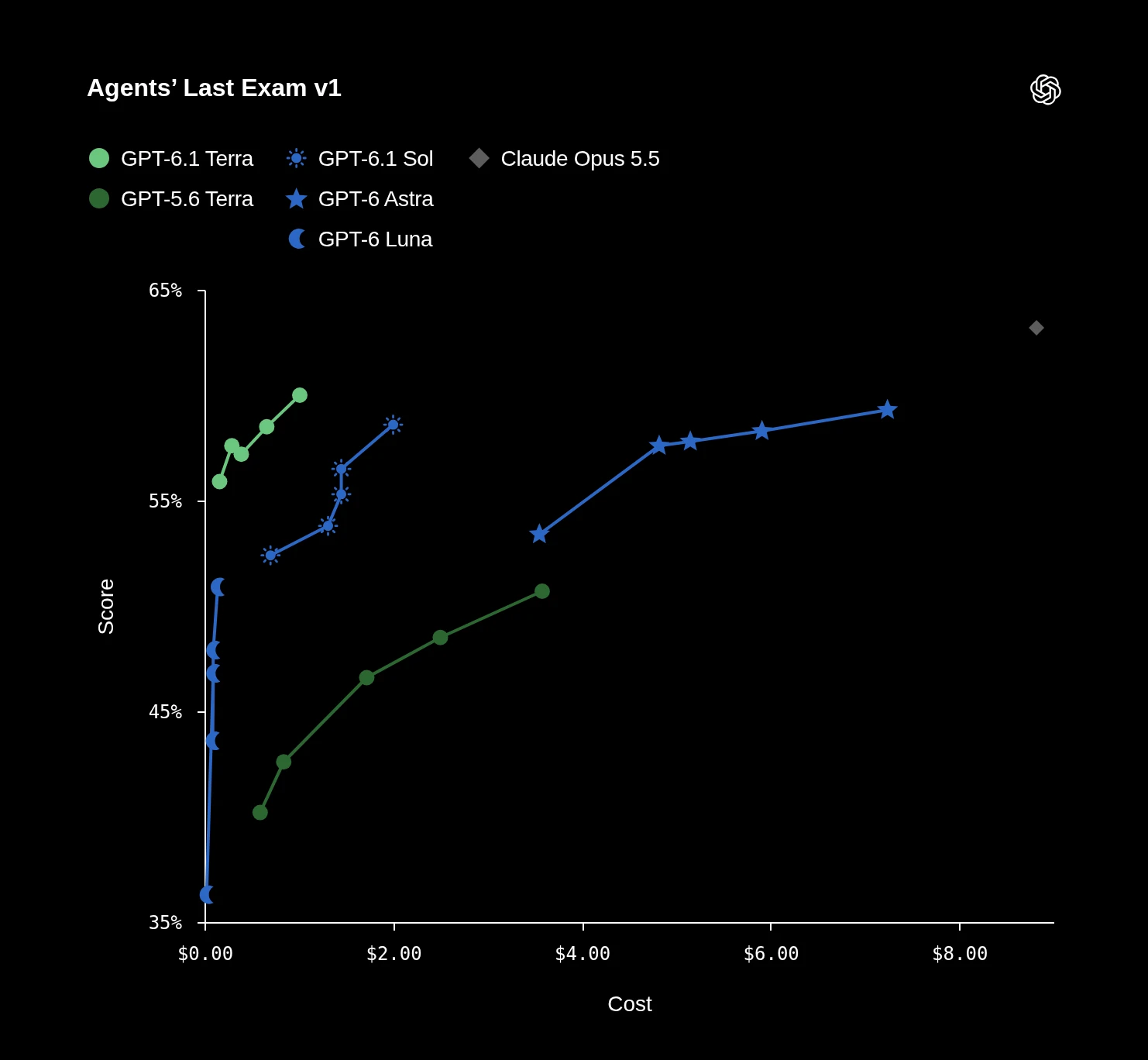
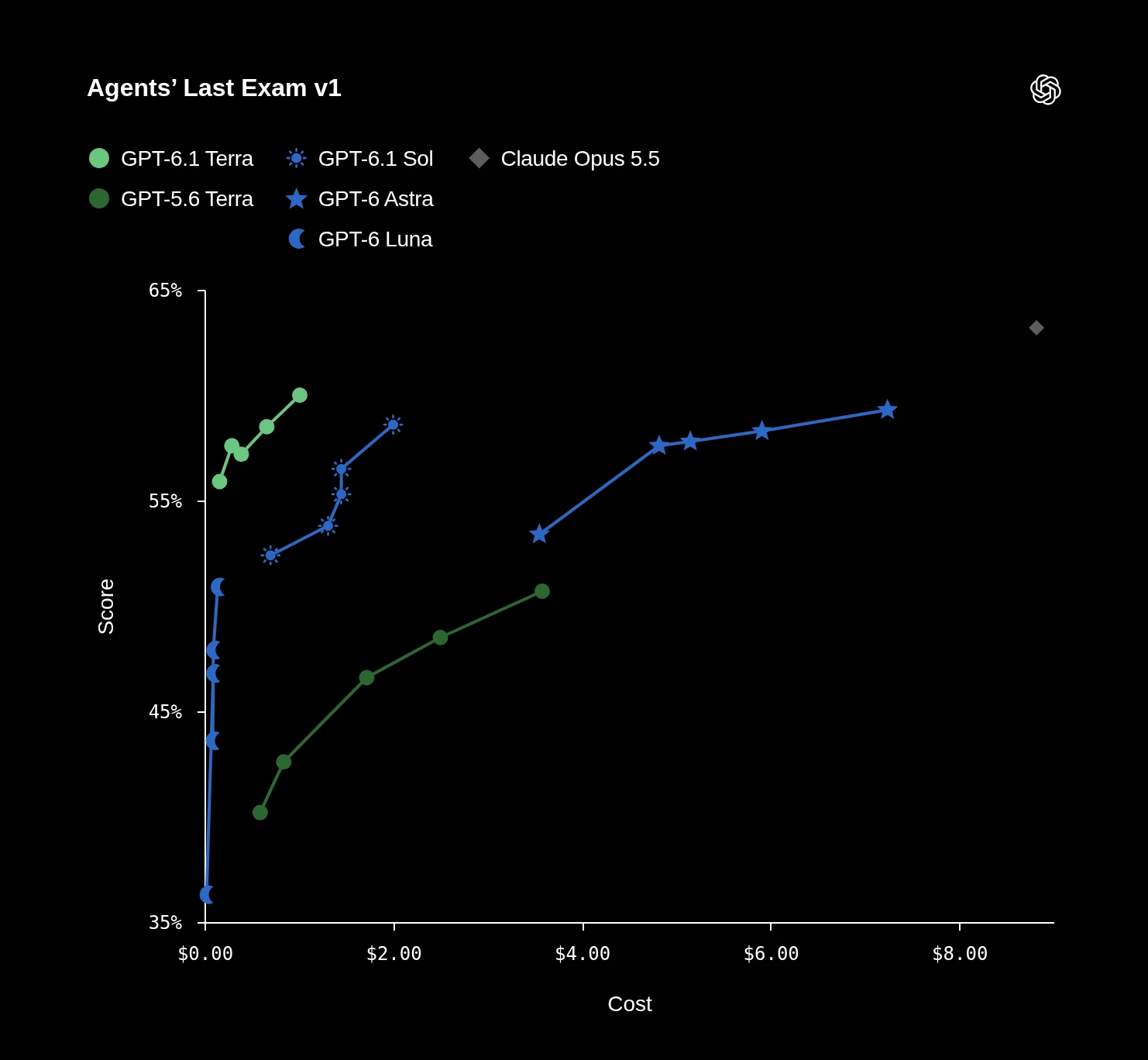
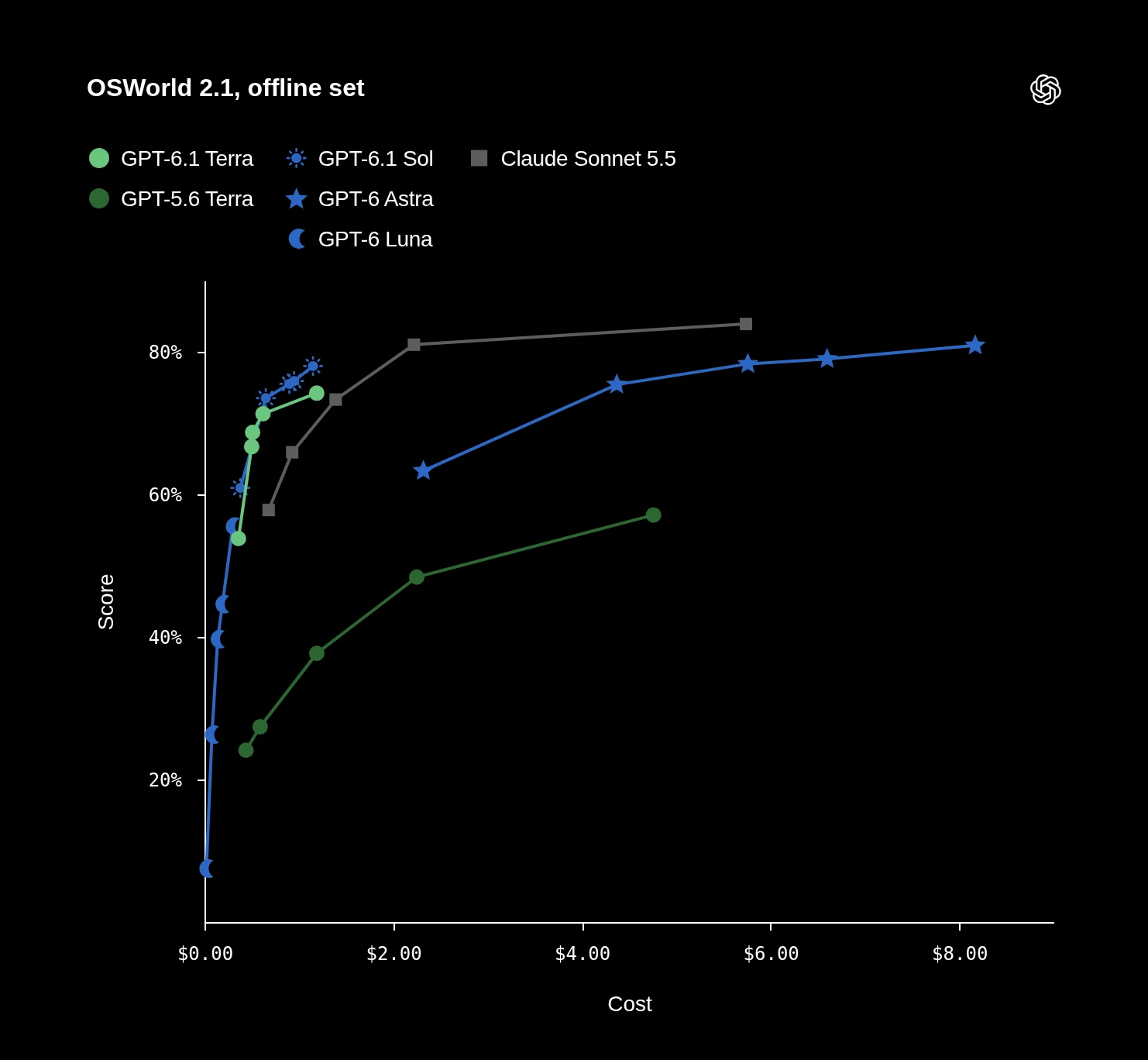
- Agents’ Last Exam: In this benchmark, which simulates professional computer tasks like reviewing animations or interpreting technical drawings, Terra achieved a 57.6% score at medium reasoning effort. This places it on par with the flagship GPT-6 Astra but at a fraction of the cost—roughly $0.29 per task compared to Astra’s $4.82.
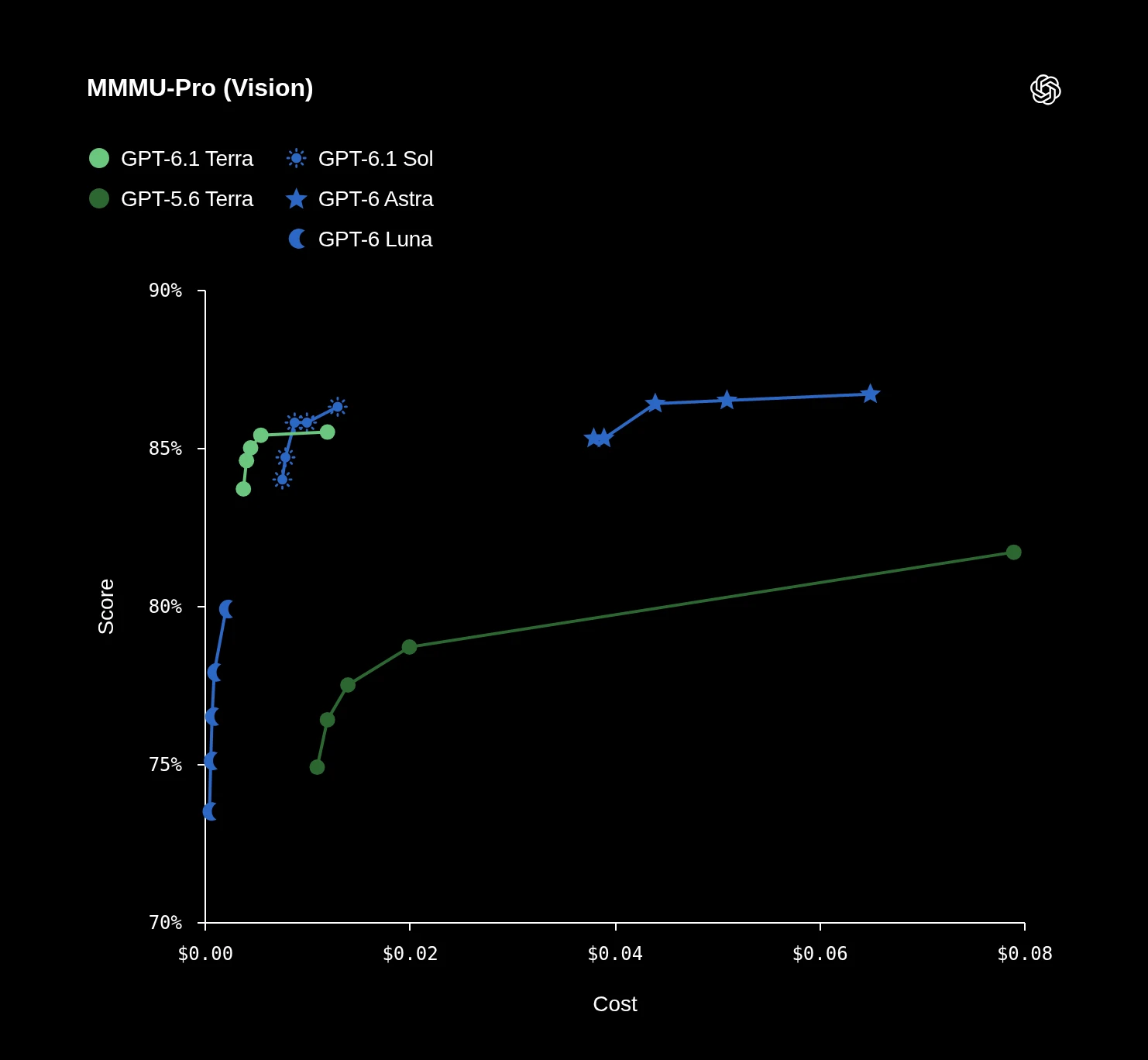
- MMMU-Pro: In visual reasoning, Terra scored 85.5% at maximum effort, trailing the top-tier Sol and Astra models by less than 1.5%. This suggests that for most visual tasks, the "economy" model provides diminishing returns for its more expensive siblings.
- Factual Reliability: One of the most significant improvements is the reduction in factual errors. On a set of prompts designed to induce hallucinations, Terra’s error rate dropped from 53.6% (in GPT-5.6) to just 4.3% at maximum effort. This leap in reliability is essential for the model’s adoption in fields where accuracy is non-negotiable.
The Economics of Intelligence: Token Pricing Analysis
The primary value proposition of GPT-6.1 Terra is its cost-to-performance ratio. OpenAI has priced the model at $1 per million input tokens and $5 per million output tokens. To put this in perspective, a standard workload of 100,000 tokens costs approximately $0.18 on Terra. The same workload on GPT-6 Astra would cost $1.80—a 10-fold increase.
This pricing structure is designed to encourage high-volume, automated workflows. For enterprises running thousands of daily tasks—such as ticket triage, automated reporting, or code linting—the shift to Terra could represent hundreds of thousands of dollars in annual savings without a significant sacrifice in quality.
Strategic Implications and Industry Impact
The arrival of GPT-6.1 Terra signals a maturation of the AI market. We are moving away from a "one size fits all" approach where the largest model is used for every task. Instead, we are entering an era of "right-sized" intelligence.
For the developer community, Terra provides a tool that is fast enough for real-time coding assistance but cheap enough to be integrated into CI/CD (Continuous Integration/Continuous Deployment) pipelines. For the broader business world, it offers a path toward "Agentic Process Automation," where AI doesn’t just suggest actions but executes them by interacting with spreadsheets, calendars, and file systems.
However, the tests also highlight the continued necessity of human oversight. Whether it was the handling of a missing price in an Excel audit or the assumption of UTC in a Python script, Terra’s outputs are "opinionated." These opinions are documented and logical, but they may not always align with a specific organization’s internal policies. Therefore, the most effective use of Terra is as a "co-pilot" that handles the heavy lifting while leaving the final strategic decisions to a human operator.
Conclusion and Future Outlook
GPT-6.1 Terra represents a successful synthesis of economy and capability. By focusing on the "boring" but essential tasks of file management, coding, and data processing, OpenAI has created a workhorse that may ultimately be more impactful for day-to-day productivity than its more "brilliant" counterparts.
As AI agents become more prevalent, the ability of a model to produce accurate, editable, and verified files will be the primary metric of success. While Terra is a small sample of the potential of the GPT-6 ecosystem, its performance in these tests suggests that the gap between "affordable AI" and "useful AI" is closing rapidly. For organizations looking to scale their automation efforts, Terra offers a compelling, cost-effective entry point into the next generation of digital labor.

 Asro
 Nila Kartika Wati