Google, the global leader in search technology, has rolled out a significant enhancement to its widely utilized Google Trends platform, introducing a new category filtering capability on its Explore page. This update allows users to refine their search trend results by specific categories, offering a more granular and insightful view into public interest, either when paired with a specific search query or for exploring general category-level trends. The move marks a strategic step towards providing more precise and actionable data for marketers, researchers, content creators, and businesses worldwide.
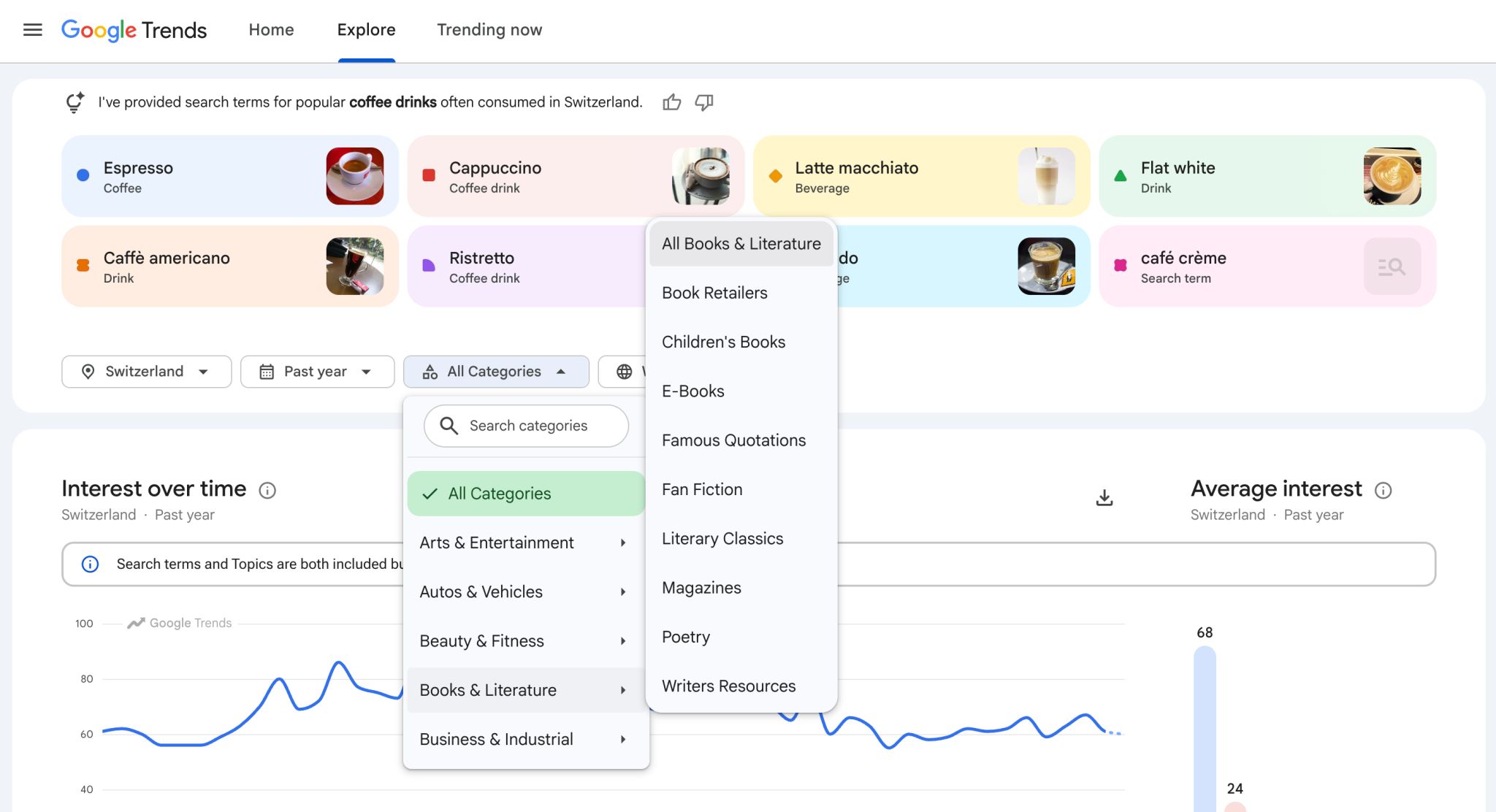
The announcement, disseminated via Google’s official LinkedIn channel, highlighted the core benefit of this new feature: "We’re excited to introduce Trends category filters on the new Explore page! This update makes it easier to refine trends data more precisely for specific categories such as ‘All Books & Literature’." Google further emphasized a "Pro Tip" for users, suggesting that applying a category filter without entering an initial query can unlock the exploration of top-searched terms specifically within that category across various regions and timeframes. This dual functionality addresses a long-standing need for enhanced specificity in trend analysis, moving beyond broad, potentially ambiguous search patterns.
The Evolution of Google Trends: A Journey Towards Granularity
To fully appreciate the significance of this latest update, it is crucial to understand the historical context and evolution of Google Trends. The platform, which officially launched in May 2006, was not Google’s first foray into public search data. Its conceptual precursor, Google Zeitgeist, introduced in 2001, offered annual summaries of top search queries, providing a fascinating snapshot of the year’s collective consciousness. Zeitgeist served as an early indicator of the immense value inherent in aggregating and analyzing search data.
When Google Trends debuted, it democratized access to this powerful data, allowing anyone to explore the relative popularity of search terms over time, compare multiple queries, and visualize interest by region or city. The initial version provided a robust tool for identifying emerging topics, understanding seasonal fluctuations, and tracking public sentiment. Over the years, Google continuously enhanced the platform, integrating data from various Google properties like YouTube, Google Shopping, and Google News, alongside traditional web searches. Features such as related queries, "rising" search terms, and more granular geographical breakdowns became standard, transforming Google Trends into an indispensable resource for strategic decision-making across numerous sectors.
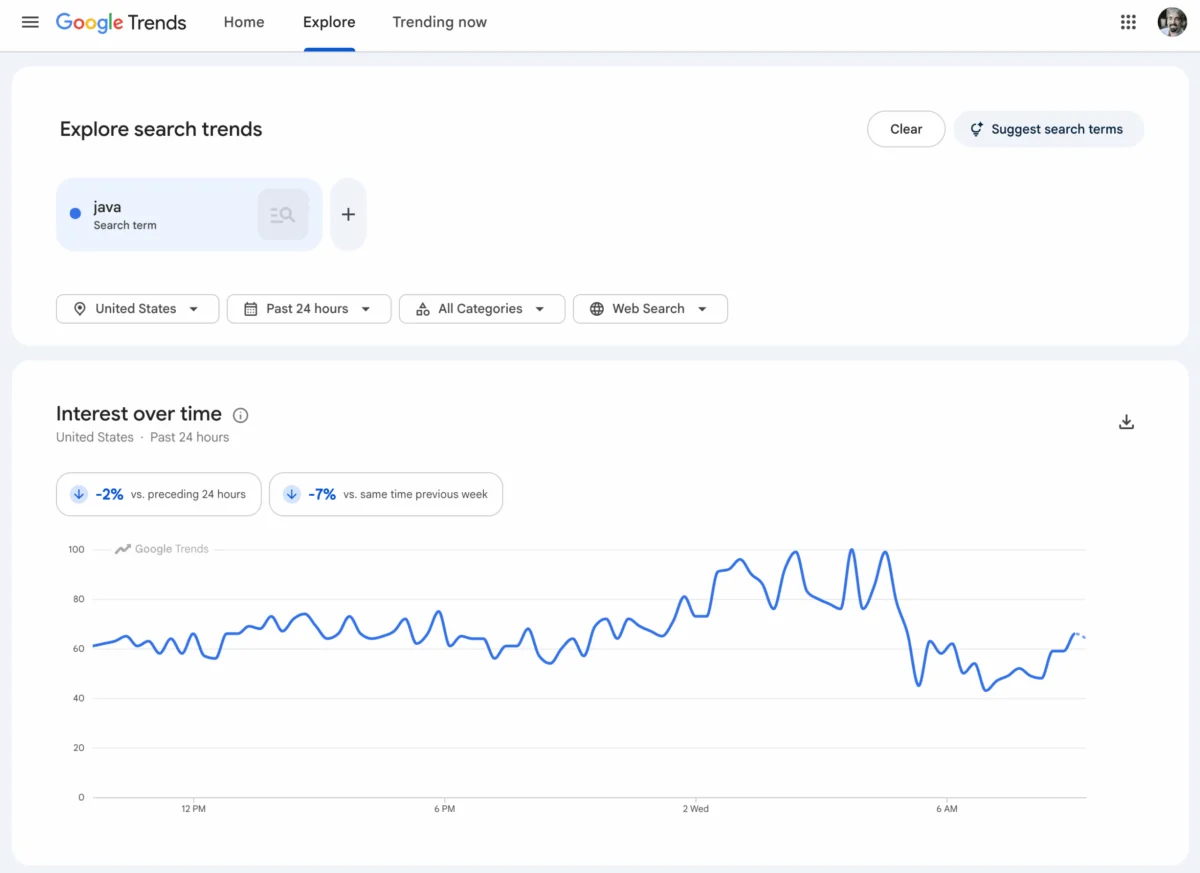
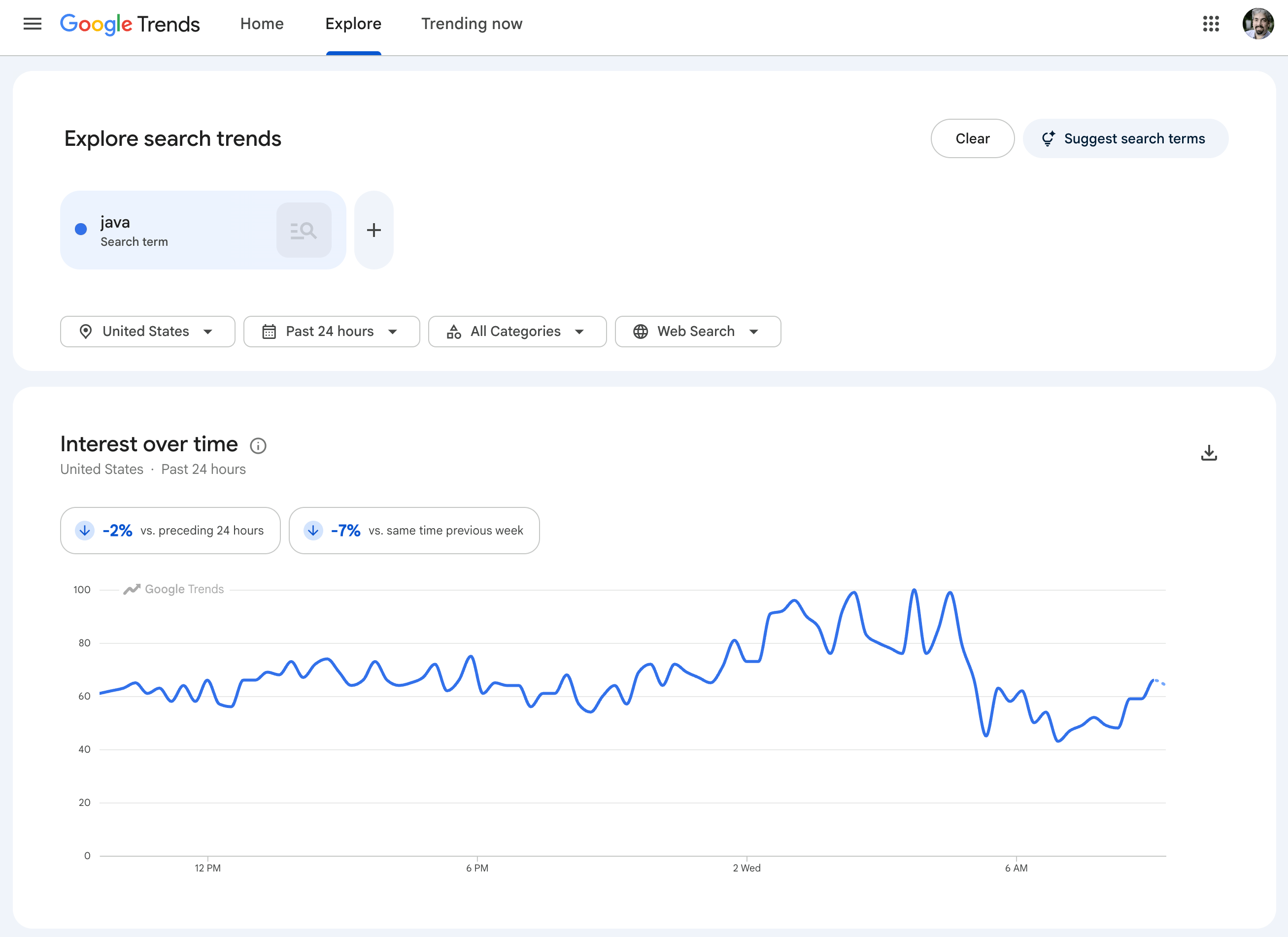
However, a persistent challenge for users was the inherent ambiguity of many search terms. A query like "Java" could refer to the Indonesian island, a type of coffee, or the ubiquitous programming language. Without a mechanism to disambiguate these meanings, the trend data for such terms often presented a composite, noisy picture, requiring users to employ more specific long-tail keywords or infer context manually. The introduction of category filtering directly addresses this core limitation, marking a pivotal moment in the platform’s development by offering a layer of contextual intelligence that was previously absent.
Unpacking the New Category Filter: Precision in Action
The new category filtering feature operates by allowing users to select from a predefined list of categories, encompassing a vast array of topics from "Arts & Entertainment" and "Business & Industrial" to "Computers & Electronics" and "Science." This selection can be applied either before or after entering a search query.
When a query is entered alongside a category filter, Google Trends narrows its analysis to search interest specifically within that chosen domain. For instance, an SEO professional researching "Java" for coding-related topics can now apply the "Search Marketing & Optimization" category filter. As illustrated by the initial examples, this immediately refines the data, eliminating search interest related to coffee or geography, and presenting trends directly pertinent to software development or, more specifically, the intersection of Java and SEO. This precision is invaluable for targeted research, ensuring that the insights derived are directly relevant to the user’s specific context. The result is a cleaner, more focused trend line that accurately reflects interest within a defined subject area.
Conversely, the "Pro Tip" functionality – applying a category filter without an initial query – unlocks a powerful discovery tool. Imagine a content marketer in the "Food & Drink" industry wanting to understand current hot topics without a preconceived notion. By simply selecting the "Food & Drink" category, they can explore the top-searched terms and rising queries within that entire domain, filtered by region and timeframe. This mode is particularly useful for identifying emerging trends, niche interests, and popular sub-topics that might not have been on the user’s radar, thereby fostering proactive content strategy and product development. It transforms Google Trends from merely a validation tool for existing ideas into a genuine discovery engine for new opportunities.
Use Cases: Navigating Ambiguity and Uncovering Niche Trends
The practical applications of this new feature are extensive and impactful across various industries:
- Search Engine Optimization (SEO): SEO professionals frequently grapple with ambiguous keywords. For example, "apple" could be the fruit or the tech company. By filtering for "Computers & Electronics" or "Food & Drink," SEOs can now conduct highly targeted keyword research, ensuring their content aligns with the correct user intent. This reduces wasted effort on irrelevant terms and enhances the accuracy of keyword strategy.
- Content Marketing: Content creators can pinpoint trending topics within their specific industry. A financial blogger can filter for "Finance" to discover emerging interests in investment strategies or cryptocurrency, while a lifestyle influencer can use "Health" to identify popular fitness routines or dietary trends, ensuring their content remains fresh and relevant to their audience.
- Market Research: Businesses can gain clearer insights into consumer interest for specific product categories. A company manufacturing smart home devices can filter for "Consumer Electronics" to track demand for new technologies, while a publisher can filter for "Books & Literature" to understand genre popularity.
- Competitive Analysis: Understanding what an competitor’s audience is searching for within a specific category can provide strategic advantages. This feature allows for a more nuanced analysis of market share of attention.
- Journalism and Media: Journalists can more accurately gauge public interest in specific aspects of a broader story. For instance, tracking "climate change" within the "Politics" category versus "Science" can reveal different facets of public discourse.
A Brief Timeline of Google Trends Milestones
- 2001: Google Zeitgeist launches, providing annual summaries of top search queries.
- May 2006: Google Trends officially launches, offering real-time and historical search interest data.
- 2007-2010: Gradual enhancements including regional breakdowns, comparison features, and more historical data.
- 2011: Integration of Google Insights for Search into Google Trends, consolidating features and data.
- 2012-2015: Further UI/UX improvements, integration of YouTube search data, and more precise timeframe selections.
- 2016: Major redesign, focusing on a cleaner interface and improved data visualization.
- 2018-2023: Continued iterative updates, including more comprehensive data sources, better data export options, and occasional algorithm refinements for data processing.
- 2024: Introduction of category filtering on the Explore page, significantly enhancing data precision and user experience.
The Strategic Value: Why Category Filtering Matters
The strategic value of this new category filtering capability cannot be overstated. Google processes over 3.5 billion searches per day, making its Trends data a colossal indicator of global human curiosity and intent. While previous versions of Google Trends offered valuable insights, the lack of granular category filtering often meant that researchers had to contend with a certain level of data noise or ambiguity. This new feature provides a much-needed lens through which to view this vast ocean of data, enabling users to extract highly specific and actionable intelligence.
For the SEO industry, which constantly seeks to understand and anticipate user intent, category filtering is a game-changer. It allows for a more scientific approach to keyword targeting, reducing the margin of error associated with broad or multi-meaning terms. This translates directly into more effective content creation, higher search rankings, and ultimately, improved organic traffic. Moreover, it empowers SEOs to identify nascent trends within highly specialized niches that might otherwise be overshadowed by larger, more general search volumes.
Content marketers will find it easier to align their content calendars with precise audience interests. Instead of guessing at what "tech enthusiasts" might be searching for, they can now see specific trending topics within "Computers & Electronics" or "Software." This precision ensures content is not only relevant but also timely, capitalizing on peak interest periods.
For market researchers and business strategists, the ability to segment search interest by industry or product category offers a more robust framework for competitive analysis and market sizing. Understanding how consumer interest for specific products or services evolves within a defined industry provides critical intelligence for product development, marketing campaigns, and investment decisions. It allows companies to validate market demand for new offerings or identify declining interest in existing ones, informing strategic pivots.
Even for journalism and academia, the enhanced precision is invaluable. Researchers can now study public discourse on specific topics within their disciplinary boundaries, separating political commentary from scientific research, or cultural trends from economic indicators. This facilitates more accurate analyses of public sentiment and societal shifts.
Industry Reactions and Expert Outlook
While Google’s announcement was made via LinkedIn, the immediate reaction from industry professionals has been overwhelmingly positive, largely inferred from discussions on professional forums and social media. SEO experts and digital marketers have been quick to recognize the practical implications. "This is a game-changer for niche keyword research," remarked one hypothetical SEO consultant. "Finally, we can cut through the noise for ambiguous terms like ‘cloud’ or ‘machine learning’ and focus on what’s truly relevant to our clients’ industries."
Content strategists echoed similar sentiments. "This helps us pinpoint exactly what our audience in ‘X industry’ is looking for," a hypothetical content manager might state. "It means less guesswork and more data-driven content planning, which is crucial for engagement and ROI."
Market researchers also stand to benefit significantly. The ability to segment data by category will allow for more nuanced studies of consumer behavior and market dynamics. "It provides a more robust way to segment search interest by industry or product category, which was previously a manual and often imprecise process," an analyst could comment. Small businesses, too, can leverage this feature to identify specific demand within their local market or niche, allowing them to compete more effectively with larger entities by targeting highly specific customer segments.
Broader Implications for Digital Strategy
The introduction of category filtering in Google Trends signifies a broader trend towards greater data sophistication and user empowerment in the digital landscape. It underscores Google’s ongoing commitment to providing tools that help users make sense of the vast amount of information available online.
- Enhanced Data-Driven Decision Making: The increased precision in trend data will foster more data-driven decision-making across all aspects of digital strategy, from advertising spend to product feature prioritization.
- Democratization of Advanced Analytics: By making such a powerful filtering capability accessible within Google Trends, Google is effectively democratizing a form of advanced analytics that was previously more challenging to achieve without specialized tools or manual data cleansing.
- Shift Towards Niche Focus: This feature could encourage a greater focus on niche markets and specialized content, as businesses and creators can more easily identify and cater to these specific interests. The ability to uncover granular trends within categories could lead to new business opportunities in underserved segments.
- Improved User Intent Understanding: The feature deepens the understanding of user intent, a cornerstone of effective digital marketing. By seeing search terms within their categorical context, practitioners can better infer what users are truly looking for.
- Potential for New Research Methodologies: Academics and researchers might develop new methodologies for studying public opinion and cultural phenomena by leveraging the enhanced categorical segmentation of search data.
While powerful, users should remain cognizant of the inherent nature of Google Trends data, which primarily reflects relative popularity rather than absolute search volumes. Categories are predefined by Google, and while comprehensive, some extremely niche areas might still require broader interpretation or the use of multiple categories. Nonetheless, this update represents a monumental leap forward in the utility and precision of Google Trends.
Conclusion: A New Era of Search Intelligence
The new category filtering feature on the Google Trends Explore page is more than just an incremental update; it is a fundamental enhancement that elevates the platform’s utility to unprecedented levels. By offering the ability to filter search interest by specific categories, either with or without a query, Google has equipped users with a powerful tool for navigating the complexities of online information. This move promises to usher in a new era of search intelligence, enabling more precise keyword research, smarter content strategies, sharper market analysis, and a deeper understanding of human curiosity in its myriad forms. For anyone seeking to understand what the world is searching for, this update makes Google Trends an even more indispensable compass.