The disconnect within marketing teams, often masked by seemingly unified leadership, can lead to catastrophic project failures and hinder operational efficiency. Recent analyses of marketing leadership teams using self-assessment tools reveal a persistent phenomenon: divergent perceptions of how work actually gets done, pointing to the existence of multiple, coexisting operating models within a single organization. This widespread issue, often addressed with superficial fixes like improved intake forms, ultimately exacerbates the problem, according to insights from marketing operations experts. The root cause lies not in a lack of effort, but in a failure to understand and reconcile the distinct operational realities experienced by different leaders.
A stark example of this disconnect can manifest during critical project phases. Imagine a high-stakes product launch, meticulously planned and nearing completion, suddenly derailed by an executive objection to a key element. The immediate fallout is not merely a brief period of inconvenience, but the complete unraveling of the launch. This catastrophic outcome occurs not because the objection is insurmountable, but because the single individual holding the complete project plan is unavailable, perhaps due to international travel. Crucially, no one else on the team can readily access the full sequence of tasks, the comprehensive asset list, or clearly identify who is responsible for each stage. While the plan was ostensibly shared and discussed in numerous meetings, its actual location and the precise ownership of its components remain a mystery to most. The single point of failure highlights a systemic issue where knowledge and control are siloed, leading to an inability to adapt when a key stakeholder is out of reach.
This scenario, or variations thereof, is not an isolated incident but a recurring pattern observed across numerous marketing organizations. The introduction of a marketing orchestration self-assessment tool has provided a unique window into these internal dynamics. When CMOs and their entire leadership teams independently complete such assessments, a common pattern emerges: their scores on critical areas, such as strategic alignment and planning, can differ by more than two points on a five-point scale. This significant disparity, within the same company and the same operational structure, indicates that leaders are not operating from a shared understanding of their collective reality. The composite score, often calculated as an average, presents a seemingly reasonable figure that, in reality, reflects the experience of virtually no one on the team.
The Illusion of Averages: Masking Deeper Operational Divides
The natural inclination when presented with assessment data is to focus on the composite score, which offers a clean benchmark and a seemingly straightforward target for improvement. However, this approach inadvertently obscures the most crucial findings. The averages smooth over the very discrepancies that reveal how marketing work is truly executed.
Consider the divergent descriptions provided by leaders within the same marketing department. Some leaders articulate an organization with robust planning capabilities: a well-defined intake process for new requests, clear protocols for managing unforeseen demands, and established mechanisms for adapting to shifting priorities. In stark contrast, other leaders within that same organization describe a far more reactive environment. In this model, a senior leader’s immediate request can, in real-time, supersede existing priorities during a meeting, prompting a scramble to comply.
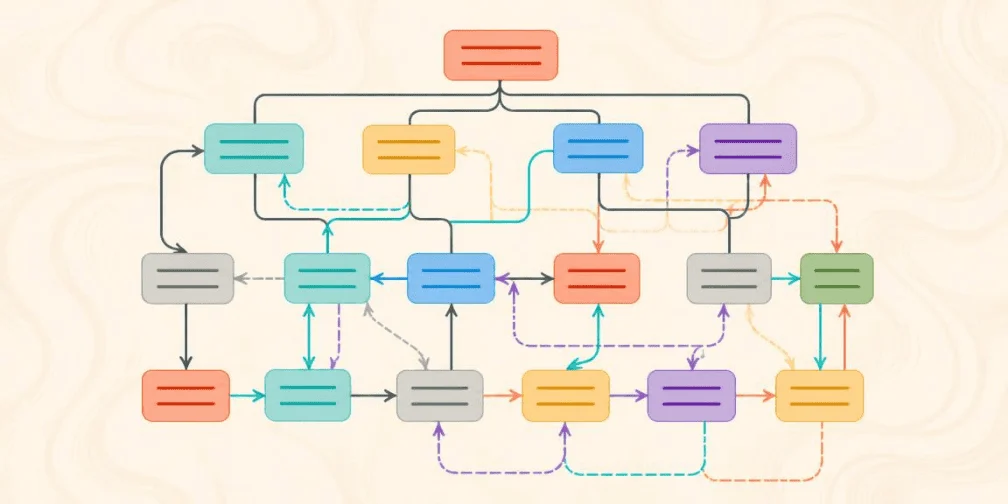
Both sets of leaders are likely providing accurate accounts of their respective experiences. The divergence arises because they are observing and participating in different operational realities. When these responses are aggregated, the data clusters into two distinct groups, not a gradual gradient. One cluster represents leaders experiencing a relatively mature and predictable operating model, while the other represents those navigating a far more chaotic and reactive system. This situation effectively means two distinct operating models are running concurrently within a single marketing department, with leadership often unaware of this fundamental duality.
The "Pessimist" with the Broadest View: Scope as a Predictor of Perception
Intriguingly, leaders who tend to score their organization’s operations lower often do so because they have a wider scope of responsibility. Conversely, those accountable for smaller, more contained areas within the marketing function tend to report higher scores. This inverse correlation suggests that a leader’s perceived negativity is often directly proportional to the breadth of their operational purview.
When conducting such assessments, an important first step for leadership teams is to recognize this pattern. The individual who consistently identifies problems might not be inherently pessimistic, but rather possesses a vantage point that allows them to see the systemic "seams" where processes fray and breakdowns occur. Their broader view, encompassing more touchpoints and potential points of failure, naturally leads to a more critical assessment of the overall operational health. Dismissing such feedback without considering the scope of the leader’s responsibilities would be a significant oversight.
The Paradox of High Collaboration Scores: A Sign of Underlying Strain
In many marketing organizations, collaboration and communication metrics often emerge as surprisingly strong, with minimal disagreement among leadership. This finding, while seemingly positive, is paradoxically one of the most concerning. The consensus often arises because individual team members are perceived as dedicated and diligent. Subject matter experts reliably participate, teams engage in communication, and there’s no overt description of fundamental communication breakdowns between peers.
However, this high collaboration score can mask a significant underlying issue: the burden placed on individuals to manually reconstruct information. In numerous companies, leaders describe the arduous process of piecing together campaign status updates by sifting through disparate Slack threads, recalling details from meetings, and then corroborating this fragmented information with individual owners before reporting up. While the necessary information exists, it lacks a centralized, reliable repository, forcing teams to expend considerable time and effort in its reconstruction. This manual reconstruction, while often performed effectively by diligent individuals, still introduces inefficiencies and potential inaccuracies.
The true cost of this apparent collaboration lies in the "attention tax." In a scenario where infrastructure and standardized processes are lacking, teams are forced to absorb this deficit through sheer human effort. Attention, unlike additional personnel, does not scale. Every new hire can potentially exacerbate this tax, as the complexity of coordinating and extracting information increases, rather than diminishes. Research from Gartner indicates that a staggering 84% of marketers experience significant "collaboration drag" as cross-functional work becomes more intricate. When nearly everyone is struggling with this drag, it can begin to feel like the standard operating procedure.
The Ineffective Fix: Why Intake Forms Aren’t the Panacea
When confronted with collaboration drag, nearly every company the author has encountered defaults to a similar, yet often ineffective, initial strategy: implementing a more robust intake process. The rationale is sound: a structured intake system would theoretically allow new requests to be properly weighed against existing commitments, rather than being decided ad hoc in meetings.
While the intent behind this fix is commendable, its consistent failure stems from a fundamental misdiagnosis of the problem. An intake process can only be truly effective if it can answer a crucial question: "What would need to move to accommodate this new request?" This requires a clear understanding of current team capacity and the status of ongoing projects. Such clarity, in turn, necessitates consistency in how work is structured and tracked, which ultimately depends on well-defined ownership below the team level.
Many leaders report that accountability primarily resides at the team level, where individuals can truthfully state they completed their assigned tasks, yet the work stalls in the inter-team gaps. Furthermore, campaigns are often built from scratch or heavily adapted from existing templates, lacking standardization. Consequently, when an intake process is prioritized without addressing these foundational issues, it fails to provide the necessary visibility. Within a quarter, such a process often becomes a mere formality, a form that no one bothers to fill out.
This pattern has been observed repeatedly, even in large marketing organizations that have attempted to revamp their workflows multiple times. By the time these attempts are made, the initial problem is no longer the process gap itself, but the pervasive "change fatigue" that has set in.
The successful strategies, in contrast, do not begin with a new tool or an additional form. Instead, they commence with a deep dive into how work actually flows through the organization. This involves meticulously documenting the planning-to-execution workflow, identifying and clarifying communication touchpoints, and clearly defining ownership and responsibilities at each stage. Only then is the project management platform configured to align with this established workflow. Centralized intake, the initial objective for many, often becomes a subsequent enhancement, implemented only after the foundational understanding and alignment are achieved.
These successful interventions typically involve pilot programs with small teams and specific types of work. Regular retrospectives are conducted to identify and address issues, and the refined approach is then scaled. The tangible results, while seemingly modest on paper, have profound practical implications. Capacity becomes a quantifiable asset rather than a subject of guesswork. Requests are routed more consistently, service levels become measurable, and new teams can adopt the process without needing to reinvent it. This leads to improved time-to-market, and, crucially, a boost in morale – an outcome often overlooked in business cases but deeply felt by the entire team.
The Solution Within: Leveraging Internal Best Practices
Perhaps the most striking observation from these assessments is that the gaps identified by lower-scoring respondents are frequently already addressed within the higher-scoring segments of the same organization. One team may have campaign status readily available without the need for direct human intervention, while another possesses a mature project management process with robust governance. Another group may have clearly defined expectations at each project stage and has even integrated AI strategically into its workflow, rather than leaving its adoption to individual habits.
Essentially, best practices for addressing nearly every identified operational gap already exist internally. The challenge, however, is that no single leader or department has the mandate or the established framework to elevate one team’s effective pattern into a company-wide best practice. This is a problem of diffusion and adoption, rather than a deficiency in capability.
The reason these internal solutions remain siloed is often because the work in question crosses team boundaries. When responsibility is diffuse, no single leader has a singular incentive to champion the standardization of a process that benefits multiple departments. Furthermore, when immediate crises arise, the effort to formalize and disseminate these best practices is often the first casualty.
The path forward is less about intricate strategic maneuvers and more about direct engagement. Involving the individuals who perform the work at the earliest stages, actively listening to their insights on where processes falter, and co-creating new approaches with them, rather than imposing solutions from above, is crucial. The people on the ground, performing the day-to-day tasks, inherently possess the most accurate understanding of where the operational breakdowns occur.
Practical Application: Testing Your Own Operational Maturity
The effectiveness of these assessments stems from their scenario-based approach, rather than relying on subjective opinions. Each answer option represents a distinct level of operational maturity, prompting respondents to select the scenario that most accurately reflects their daily experience. This method ensures honesty and objectivity, as individuals are not asked to self-rate, but to describe their reality.
To illustrate, consider three representative questions from such assessments:
-
Campaign Status Retrieval: When you need the current status of a campaign, what is your actual process? Options typically range from reconstructing the information through fragmented Slack messages and personal recollection, to directly asking the individuals most likely to know, to accessing a shared system and retrieving the status in under a minute.
-
Mid-Quarter Unplanned Requests: A senior leader requests a task that was not part of the original plan midway through the quarter. What is the immediate outcome? Responses can vary from the decision being made ad hoc during the meeting itself, to the request being properly scoped against existing commitments, with any necessary tradeoffs explicitly identified.
-
Messaging Updates: Your organization’s core messaging shifts mid-quarter. How long does it typically take for in-flight campaigns to incorporate the new messaging? Answers can range from days to weeks, or even never, with older campaigns continuing to run with the outdated messaging.
The Assessment as a Tool for Clarity and Consensus
The marketing orchestration self-assessment tool is freely accessible and designed to provide clarity and foster consensus within leadership teams. The recommendation is for multiple leaders within the same department to complete the assessment independently. The subsequent review should focus initially on the areas of disagreement between leaders, rather than solely on the composite score.
The divergence between the most and least optimistic leader’s assessment of the organization’s operations will often reveal more about the true nature of how the marketing department functions than any averaged figure ever could. This gap, when explored collaboratively, can serve as a powerful catalyst for understanding, alignment, and ultimately, actionable improvement.