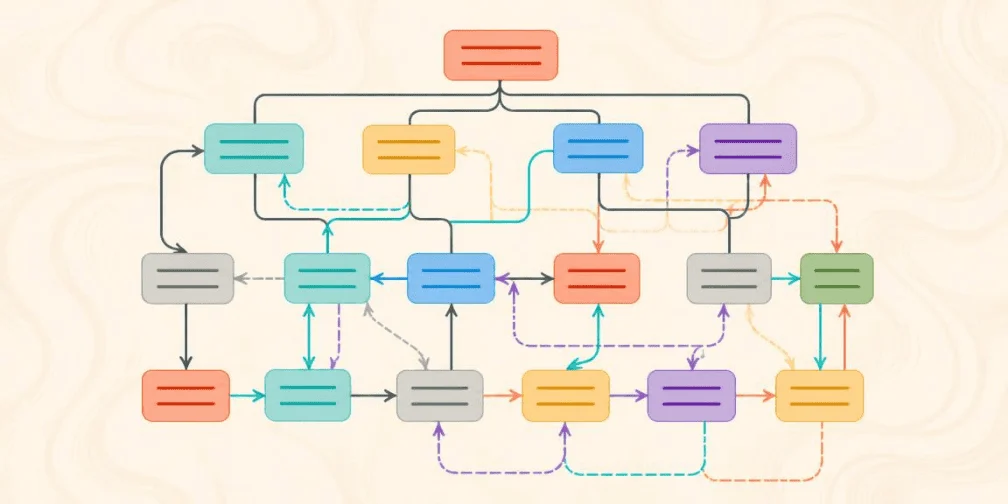
The organizational charts that dictate how work gets done within many companies are rarely the product of deliberate, strategic design. Instead, they are often the unintended consequence of a series of reactive decisions, a mosaic of historical circumstances and tactical adjustments. From absorbing teams when a key manager departs to maintaining functions long after their original purpose has faded, these structures can become misaligned with the actual flow of work. This drift, while often stemming from reasonable individual decisions, can lead to significant inefficiencies, including duplicated efforts, stalled decision-making processes, and breakdown in critical handoffs. Lisa Heay, Vice President of Business Operations at Heinz Marketing, delves into these pervasive issues and offers a framework for leadership to begin aligning their organizational charts with their operational realities.
The genesis of many organizational structures can be traced back to anecdotal narratives rather than strategic blueprints. When asked about the rationale behind a team’s setup, leaders often recount stories of past exigencies. A common scenario involves a manager already burdened with a full workload taking on additional reports due to an unexpected departure, with no subsequent effort to re-evaluate the optimal placement of those individuals. Similarly, new roles might emerge organically when a single employee excels at a particular task, leading to a reporting structure that no longer logically aligns with the broader departmental function. Even teams created to support now-defunct product lines can persist due to inertia, becoming an inherited legacy rather than a purposeful component of the current business model. These incremental adjustments, each seemingly logical at the time, accumulate over years, resulting in an organizational chart that bears little resemblance to the dynamic reality of how work is actually accomplished.
This phenomenon mirrors the individual job description drift that Heay previously discussed. Just as AI can automate aspects of a role, leading to a disconnect between a formal job description and an employee’s actual duties, structural drift creates a similar disconnect at the organizational level. Team boundaries can blur, and reporting lines may no longer reflect the individuals who genuinely need to collaborate to achieve objectives. This is not a failure of individual performance but a systemic issue where the organizational structure has failed to keep pace with the evolving demands and workflows of the business.
The tangible costs of this structural misalignment manifest in various ways. Overlapping responsibilities between departments are a frequent symptom, arising from a lack of clarity regarding where one team’s mandate ends and another’s begins. Decision-making can become a protracted ordeal, with approvals stalled because the individual with formal authority no longer possesses the contextual understanding of the work, a crucial element that may have been shifted to another role during an incomplete or ad-hoc reorganization. Furthermore, previously straightforward handoffs can become unnecessarily complex, routing through multiple individuals who have each inherited a piece of a responsibility once held by a single person.
Consider a hypothetical demand generation function. Initially, this department might have been established with a single individual managing email campaigns and web form submissions. Over time, as needs evolved and competent individuals were available, this role could expand to encompass lead scoring, event follow-up, and even sales enablement content creation, simply because the existing demand generation team had the capacity and expertise. These expansions often occur without a formal discussion about whether demand generation is the most appropriate home for these new responsibilities. The work simply lands there due to proximity and perceived capability.
The problem is exacerbated when this expanded function reports to a director whose primary expertise lies elsewhere, perhaps in brand management rather than lifecycle marketing. If a significant portion of the team’s key stakeholders reside within sales operations—a department with which they have no formal reporting relationship—it creates inherent friction. Consequently, quarterly priorities might be dictated by whichever manager exerts the most influence, rather than by what strategically drives pipeline growth. This scenario, born from organic growth and reactive adjustments, highlights how a lack of intentional structural design can lead to suboptimal outcomes, particularly when business growth outpaces a willingness to periodically reassess and redraw organizational boundaries.
The advent of artificial intelligence tools, while promising increased efficiency, can inadvertently accelerate the exposure of these underlying structural weaknesses. AI can rapidly generate initial drafts or analyses, but if the approval workflows remain mired in an outdated organizational structure, these faster inputs simply create larger backlogs at existing bottlenecks. Increased speed cannot compensate for a foundational structural flaw that was never designed to accommodate current operational demands. The technology highlights the inefficiencies inherent in a misaligned structure, rather than solving them.
The Strategic Imperative: Re-evaluating Structural Foundations
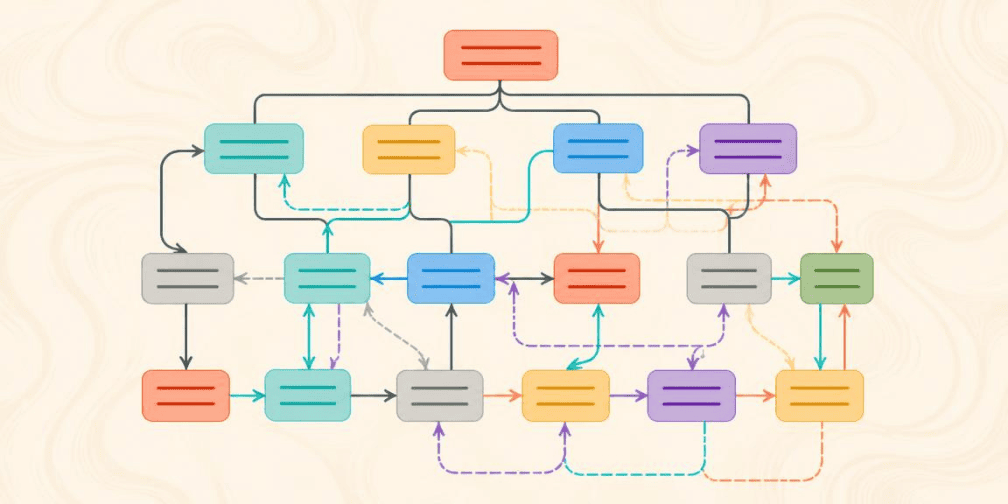
The critical question for leadership is not simply who currently oversees a particular function, but rather: "If we were building this function from scratch today, with a full understanding of its current requirements, would we design it this way?" For many organizations, the honest answer to this question is a resounding "no." The discrepancy between this candid assessment and the existing organizational chart represents the true problem that warrants focused attention.
A more effective approach begins by mapping desired outcomes to specific teams, rather than merely assigning individuals to predefined boxes. Once the intended results for each team are clearly delineated, the optimal structure required to achieve those outcomes becomes far more apparent. This perspective immediately highlights where the current organizational design falls short.
It is crucial to emphasize that this diagnostic process is not about assigning blame. Structural drift is a natural consequence of businesses operating at high velocity. The demands of daily operations often overshadow the need for periodic strategic re-evaluation of organizational design. The urgency of immediate tasks can lead to important, albeit less pressing, structural considerations being deferred indefinitely.
Moreover, addressing these structural misalignments does not necessarily necessitate a complete organizational overhaul. Often, significant improvements can be achieved by rectifying a single, problematic handoff between two teams or by redesigning a function that has outgrown its original departmental confines. Regardless of the scale of the intervention, an honest assessment of the current structure’s alignment with actual work is a vital precursor to implementing any new initiatives, especially those involving advanced technologies like AI.
A Framework for Structural Diagnosis
To initiate this crucial self-assessment, leadership can focus on one function that currently exhibits the most pronounced signs of entanglement or inefficiency. Within that chosen function, three targeted questions can be posed:
- What is the core outcome this function is responsible for delivering? This question forces a focus on the ultimate purpose and value proposition of the team.
- Who are the critical internal stakeholders that this function must collaborate with to achieve that outcome? This probes the necessary interdependencies and communication pathways.
- Where does the work of this function begin and end, and where does it interface with other teams? This aims to clarify boundaries and transition points, identifying potential friction areas.
These questions consistently reveal a common pattern: work that has outgrown the boundaries established long ago, by individuals addressing a different set of problems or priorities. Identifying this mismatch between past design and present reality serves as the authentic starting point for improvement. The goal is not an immediate, sweeping reorganization, but rather a clear-eyed examination of where the current organizational shape no longer aligns with the work being performed.
For organizations where team structures feel more like inherited artifacts than intentional designs, a guided diagnostic process can be invaluable. Engaging with experts who can facilitate an honest assessment of current operational friction can illuminate pathways to greater alignment and efficiency. This proactive approach ensures that organizational structures evolve in tandem with business objectives, preventing the silent accumulation of inefficiencies that can ultimately hinder growth and innovation.
The implications of a misaligned organizational structure extend beyond mere operational friction. In a competitive global marketplace, agility and efficiency are paramount. Companies that allow their internal structures to become outdated risk falling behind competitors who have invested in optimizing their operational frameworks. As businesses increasingly rely on data-driven decision-making and advanced technological tools, the clarity and coherence of their organizational design become even more critical for unlocking the full potential of these resources. A well-structured organization acts as a multiplier, amplifying the effectiveness of its people and its technology, whereas a poorly structured one can act as a drag, stifling progress and innovation. Therefore, the periodic, honest examination of organizational charts is not a bureaucratic exercise, but a strategic imperative for sustained success.