rifanmuazin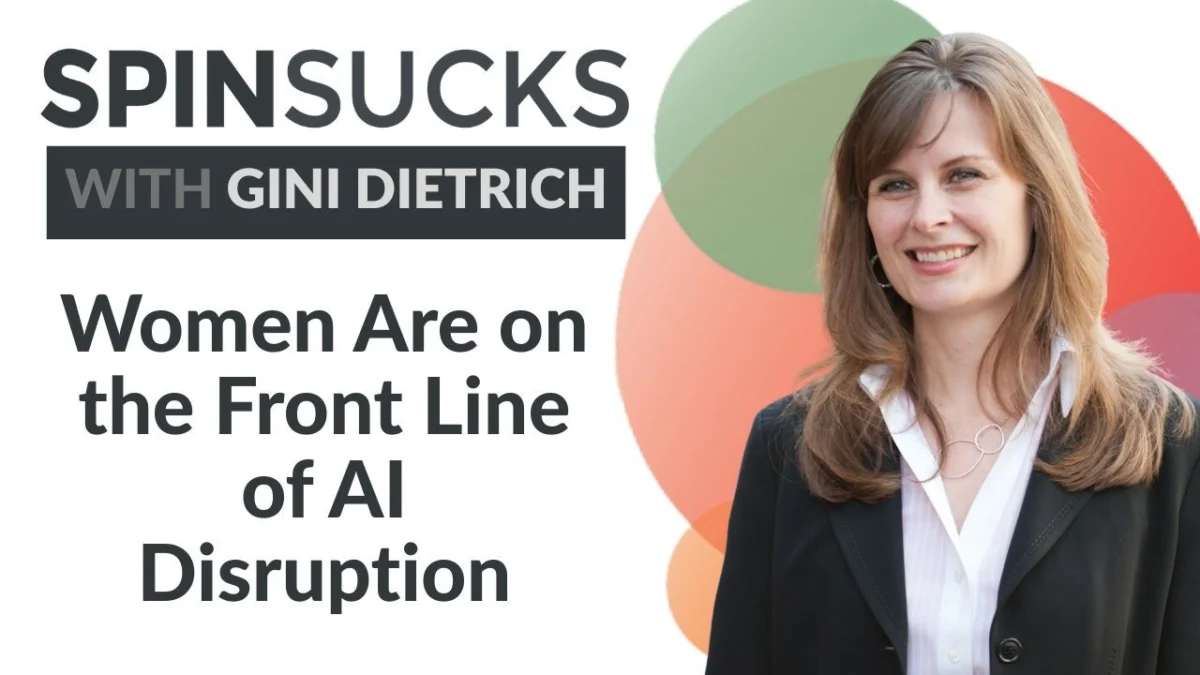
The rapid evolution of generative artificial intelligence (AI) has moved beyond the realm of technical curiosity and into the sphere of socio-economic restructuring, with recent public statements from technology leaders highlighting a targeted disruption of the white-collar workforce. Alex Karp, the CEO of Palantir Technologies, a company valued at over $200 billion and a primary contractor for the United States national security apparatus, has provided a stark assessment of how AI will redistribute economic and political power. In a series of public appearances, Karp explicitly stated that the rise of AI will likely diminish the influence of highly educated, humanities-trained professionals—a demographic that is predominantly female—while simultaneously bolstering the economic standing of vocationally trained, often male, working-class individuals. These comments have sparked an industry-wide debate regarding the structural vulnerabilities of roles in communications, marketing, and administration, and the urgent need for a strategic shift in how these professions demonstrate value.
A Chronology of Public Declarations
The discourse surrounding this shift was catalyzed by two significant public appearances by Karp in early 2026. The first occurred in January during the World Economic Forum in Davos, Switzerland. In a conversation with BlackRock CEO Larry Fink, Karp was blunt about the future of the liberal arts in the age of automation. He asserted that AI “will destroy humanities jobs,” warning that those who studied philosophy or similar disciplines at elite institutions might find their skills difficult to market in the near future. He went as far as to suggest that those failing to anticipate these disruptions were out of touch with reality, framing the obsolescence of humanities-based roles as an inevitability of technological progress.
The second, and perhaps more controversial, statement came in March 2026 during a televised interview with CNBC. Occurring during Women’s History Month, the interview saw Karp describe a future where AI specifically erodes the leverage of “highly educated, often female” voters who align with the Democratic party. He contrasted this with an expected rise in the economic power of “vocationally trained, working-class, often male” voters. Karp’s framing did not present this as a sociological challenge to be mitigated but rather as a fundamental outcome of the technology his company and others are currently deploying. By naming the humanities as the specific discipline targeted for disruption, Karp highlighted a direct threat to the sectors that rely on critical thinking, persuasive writing, and institutional accountability.
Structural Exposure: Why Women Are on the Front Line
The predictions made by technology executives are supported by emerging data from international labor organizations. The vulnerability of women in the AI era is not incidental; it is a result of long-standing structural distributions within the global workforce. According to research from the International Labour Organization (ILO), women are nearly three times more likely than men to occupy roles with high exposure to generative AI automation. In high-income nations like the United States, the risk of high automation potential for women has reached approximately 9.6%, compared to just 3.5% for men.
This disparity is driven by the fact that approximately 70% of working women are employed in white-collar roles, whereas the figure for men is roughly 50%. Generative AI is uniquely suited to automate text-heavy, strategy-driven, and administrative tasks. Consequently, professions such as public relations, content marketing, social media management, and corporate communications—which are disproportionately female-dominated—are the first to face budget compressions and “restructuring.” While manual trades in construction and manufacturing remain difficult to automate due to the physical requirements of the work, the “knowledge work” that has traditionally provided a path to economic mobility for educated women is now being commodified.
The Targeted Devaluation of the Humanities
Karp’s focus on the “humanities-trained” worker is particularly significant for the communications industry. The humanities provide the foundational skills for modern strategy: the ability to question power, analyze complex narratives, and apply ethical reasoning to institutional decisions. By suggesting that AI makes these skills less valuable, the tech industry is essentially arguing that a prompt-based algorithm can replace human judgment and ethical oversight.
This shift is often presented to corporate boards as a way to “do more with less,” a euphemism for reducing headcount and lowering salary floors. The prevailing assumption among some executives is that AI can perform 80% of the work currently handled by mid-level strategists and content directors. While industry experts argue that AI lacks the nuance and “conscience” required for high-level reputation management, the immediate danger lies in the perception of the decision-makers who control departmental budgets. If the leadership believes a chatbot can replace a communications professional, the economic power of that professional is diminished regardless of the tool’s actual efficacy.
The Gendered Adoption Gap and the “Setup” for Displacement
Adding to the risk of displacement is a documented gap in how AI tools are being introduced to the workforce. A report by McKinsey & Company, “Women in the Workplace,” revealed a troubling discrepancy in managerial support for AI adoption. The study found that only 21% of entry-level women reported being encouraged by their managers to utilize AI tools, compared to 33% of their male counterparts.
This suggests that women are facing a dual threat: they are more likely to work in roles targeted for automation, yet they are less likely to receive the institutional support needed to master the very tools that could augment their positions. This “adoption gap” creates a self-fulfilling prophecy where women may appear less prepared for the technological shift, further justifying the reduction of their economic leverage. Without proactive intervention, the transition to an AI-driven economy risks reversing decades of progress in closing the gender pay and power gaps in white-collar industries.
The Paradox of Ethical Oversight
One of the most profound ironies of the current AI trajectory is the simultaneous devaluation of the very people needed to govern it. Ethics in AI is not a technical problem; it is a humanities problem. It requires an understanding of context, relational impact, and the long-term consequences of automated decision-making. Research from the Markkula Center for Applied Ethics at Santa Clara University indicates that women disproportionately occupy AI ethics roles globally. This is often attributed to the concentration of women in disciplines like sociology, philosophy, and communications—fields that prioritize stakeholder impact over raw efficiency.
By marginalizing these voices, the technology sector risks removing the “brakes” from systems that lack a moral compass. AI systems do not possess an inherent conscience; they reflect the data and the morality of their creators and governors. When executives like Karp suggest that the power of the humanities-trained professional should be reduced, they are effectively advocating for a world where “can we build it?” always supersedes “should we build it?” The reduction of female influence in these spheres could lead to a significant decline in corporate accountability and ethical transparency.
Strategic Defense: Moving from Tactical to Measurable Value
In response to these challenges, communications and marketing professionals are being urged to move beyond tactical execution and toward strategic, measurable outcomes. The primary defense against automation is the ability to demonstrate a direct link between communications activities and business growth. This is where frameworks like the PESO Model® (Paid, Earned, Shared, Owned) become essential.
To remain indispensable, professionals must transition from being “cost centers” to “revenue drivers.” This involves:
- Measurable Strategy: Shifting focus from “vanity metrics” (like impressions or likes) to qualified leads, search authority, and community conversion.
- AI Integration: Actively leading the implementation of AI within their departments to increase efficiency while maintaining human oversight of the “last mile” of judgment.
- Ethics and Governance: Positioning themselves as the essential gatekeepers of corporate reputation and ethical AI usage—roles that algorithms cannot fulfill.
- Data Literacy: Developing the ability to interpret and present data in a way that aligns with the financial objectives of the C-suite.
By proving that an earned media strategy or an owned content ecosystem provides a measurable return on investment (ROI) that exceeds the capabilities of a standalone AI tool, professionals can protect their strategic relevance.
Implications for the Future of Work
The statements made by Alex Karp serve as a bellwether for the broader intentions of the technology industry. They suggest that the disruption of the white-collar workforce is not a “bug” in the development of AI, but a deliberate feature of its deployment. The goal of reducing the power of a specific demographic—highly educated, humanities-trained women—is a business plan disguised as a prediction.
The future of the communications profession depends on its ability to reject the premise of its own obsolescence. While AI can undoubtedly process information and generate text at a scale humans cannot match, it cannot navigate the complexities of human emotion, corporate ethics, or strategic persuasion. The challenge for the modern professional is to reclaim the narrative, ensuring that the “human” in the humanities remains the most valuable asset in the corporate world. As the technology continues to scale, the insistence on ethics, judgment, and critical analysis will not be a hindrance to progress, but the only thing ensuring that progress serves society as a whole.