
 rifanmuazin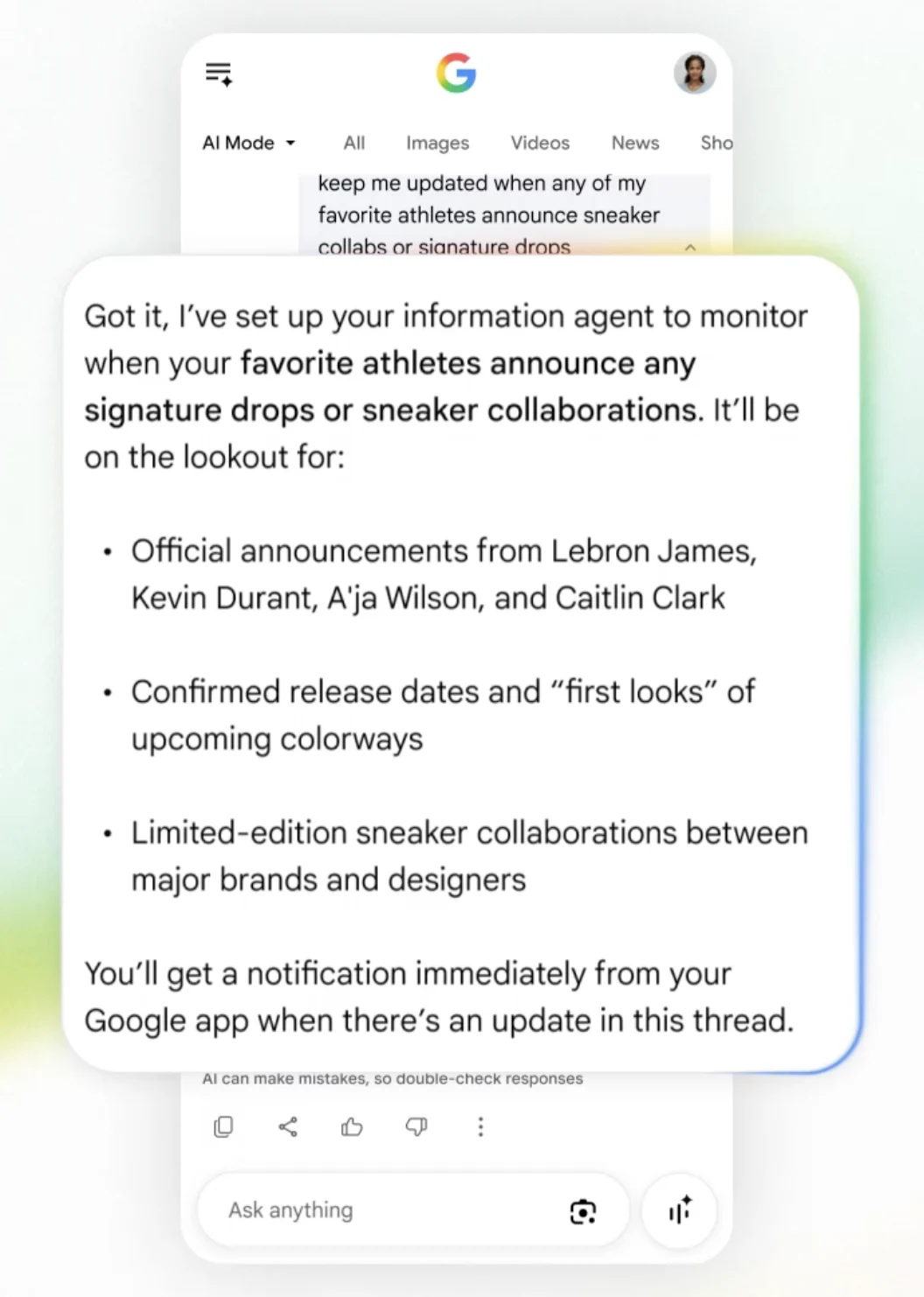
The annual Google I/O developer conference, held this week, has unequivocally confirmed a seismic shift in how users interact with search and online commerce. The long-anticipated convergence of artificial intelligence with Google’s core search functionalities is no longer a distant prospect but a rapidly materializing reality. While not a complete overhaul to an AI-only mode, the three major product announcements unveiled at the event—Information Agents, Agentic Booking, and Universal Cart—collectively point towards a future where AI agents proactively manage user needs, prompting significant reevaluations for SEO strategies, website architecture, and the very nature of the customer journey. These developments necessitate immediate consideration by search engine optimization (SEO) professionals and businesses alike.
The Dawn of Proactive Information Agents
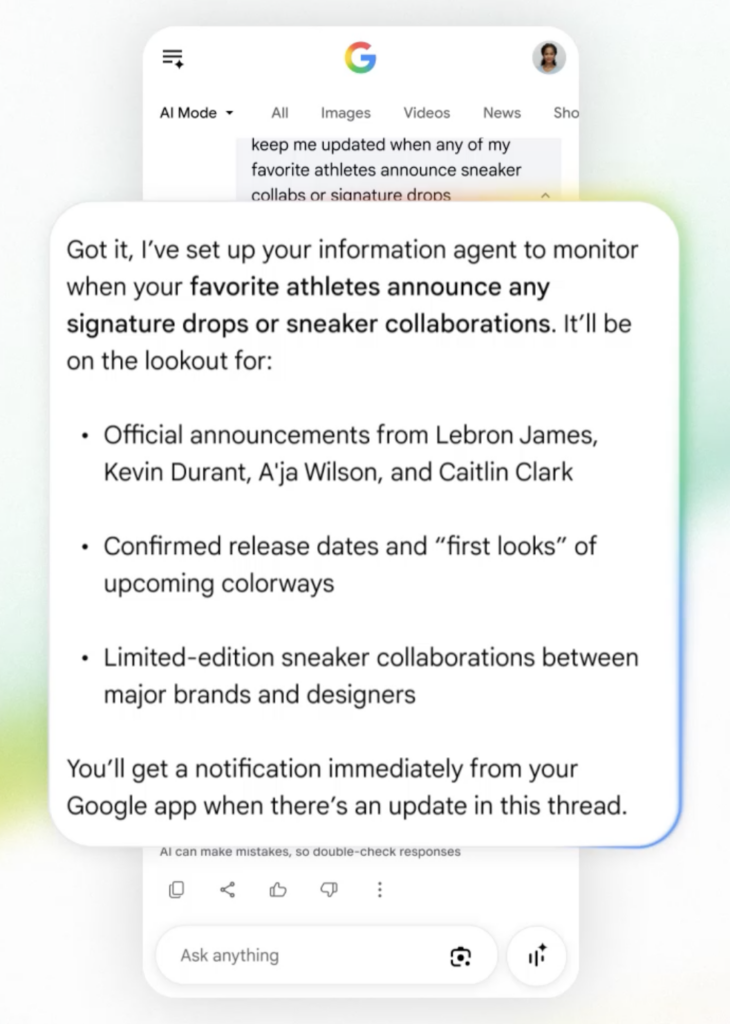
The centerpiece of this AI-driven transformation is the introduction of “Information Agents.” These AI-powered entities operate autonomously within a user’s Google account, functioning around the clock without requiring explicit user searches. A user can establish a single, comprehensive brief—such as detailing criteria for a rental property including location, price range, and specific features—and the agent then takes over the task of monitoring the digital landscape.
These agents continuously scan a vast array of sources, including news outlets, blogs, social media platforms, and real-time data feeds for pricing and availability. Upon identifying information that aligns with the user’s brief, the agent synthesizes a concise update, complete with recommendations, which is then delivered through the Google App. This process involves the agent actively watching, reasoning, and notifying the user, potentially circumventing the need for the user to ever visit a specific website directly.
The implications for traditional search metrics are profound. A single, standing brief effectively replaces potentially dozens of individual queries that would have previously generated distinct, trackable search signals over weeks or months. This fundamentally alters the meaning of search volume as a measure of demand. Instead of reflecting active user queries, search volume may soon underrepresent the true extent of interest in a given topic or product.
Consequently, impressions are poised to become a more critical metric. If a website’s content is consistently leveraged by these agents in their synthesized updates, it signifies that the content is reaching users effectively, even in the absence of direct clicks. While clicks will undoubtedly continue to occur, albeit potentially at a more qualified rate, the impression serves as a crucial indicator that content is being discovered and utilized by AI agents.
This paradigm shift raises urgent questions regarding measurement and attribution. Will Google Search Console provide insights into which URLs are being cited in agent-synthesized updates? How will impressions and clicks generated through notifications within the Google App be tracked and attributed? The industry faces a significant challenge in developing robust attribution models for this emerging agent-driven search environment.
Agentic Booking: Automating Transactions
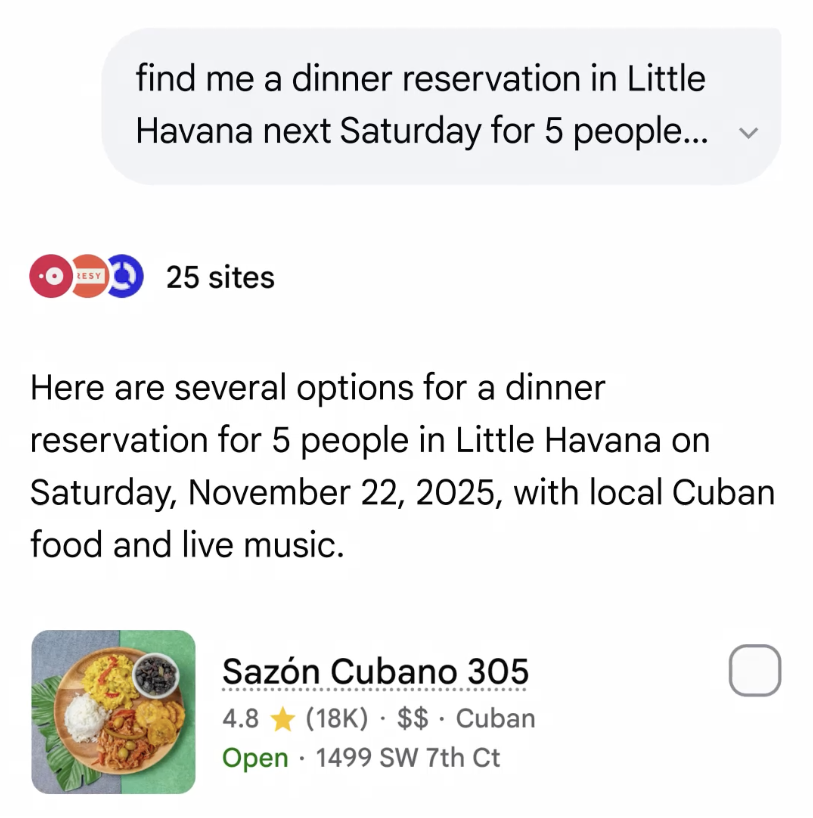
The same foundational principle—AI agents acting on behalf of users—is being applied to transactional processes through “Agentic Booking.” Instead of merely synthesizing information, these agents are empowered to complete bookings directly. They identify suitable restaurants, events, or services based on user preferences, verify availability, and execute the reservation.
For businesses operating in service-oriented sectors where bookings represent a key conversion point, this raises a critical question: can an AI agent successfully complete a booking on their website? For many, the candid answer is likely no, primarily due to how contemporary websites are architected.
Most websites are designed with the assumption of human navigation, often accommodating complex pathways to purchase. AI agents, however, interact with websites in a fundamentally different manner. They interpret the underlying code of a webpage. If a booking form is only rendered after a user clicks a button and a piece of JavaScript executes, an agent might fail to recognize or interact with it. Any critical actions that rely on JavaScript to function can effectively become invisible to an agent attempting to complete a task.
To be “agent-ready” for transactional purposes, websites must ensure that essential information and actionable elements—such as prices, availability, booking steps, and contact details—are accessible within the raw HTML code. Furthermore, structured data, which provides machine-readable markup explaining the content of a webpage, must be accurate, comprehensive, and implemented with diligence, rather than as a mere compliance exercise.
Beyond these fundamental requirements, a broader ecosystem of standardized protocols is emerging to define full agent readiness. The Web Model Context Protocol (Web MCP) enables websites to communicate their capabilities directly to agents, eliminating the need for agents to navigate the site as a human customer would. AP2 and APC are payment protocols designed to facilitate agent-driven transactions on behalf of customers without requiring their direct involvement at the point of sale. The Agent-to-Agent (A2A) protocol allows agents across different services to seamlessly hand off tasks, while the Universal Cart Protocol (UCP) integrates these various protocols into a cohesive system. Collectively, these protocols aim to enable end-to-end fulfillment of user intent, from discovery to payment, with minimal direct user intervention. While many websites are not yet adhering to these standards, they represent the future trajectory of online interaction, and early adopters of these foundational principles will be better positioned to capitalize on these advancements. Cloudflare’s “IsItAgentReady.com” offers a valuable diagnostic tool for assessing a site’s current compliance with these emerging criteria. The shift is from AI that suggests to AI that acts, a transition most vividly illustrated by Google’s innovations in the shopping domain.
Universal Cart: Consolidating the E-commerce Experience
Google’s “Universal Cart” represents a significant evolution in the online shopping landscape, introducing a cross-surface shopping cart that transcends individual retailer websites. The core concept is to consolidate items into a single, persistent cart residing within a user’s Google account, accessible across all their devices and interactions. Users can add products while browsing Google Search, discover complementary items on YouTube, find desired goods within Gmail, or even discuss purchases with Gemini, with all selections converging in one unified location. Google then proactively monitors prices across various merchants, identifies deals, and alerts users when optimal purchasing conditions arise.
For e-commerce brands, Universal Cart fundamentally redefines the competitive arena. Success will no longer hinge solely on a webpage’s ranking for specific queries but rather on the completeness and machine-readability of product data. This ensures that Google’s agents can accurately identify, compare, and feature these products.
In practical terms, this necessitates that availability, pricing, promotional offers, and specific product attributes are consistent and up-to-date across a brand’s website, its structured data, and its Google Merchant Center feed. Universal Cart is explicitly designed to identify and present deals, making the “deal signal” a powerful discovery mechanism. Brands that consistently communicate promotions, price reductions, and special offers are likely to benefit significantly, as agents are programmed to seek out such opportunities.
For premium or high-priced brands that compete on factors beyond price, such as quality, craftsmanship, or unique features, a critical challenge emerges: how to effectively communicate their distinct value proposition within a system inherently optimized to surface the most economical options. This question is inextricably linked to the broader shift Universal Cart signifies in consumer behavior. Akin to information agents in search, Universal Cart encourages a more passive consumption model. Users express their intent once, and the system then monitors for opportune moments to fulfill that intent.
This evolution directly impacts forecasting models for SEO teams. If a substantial portion of demand is now being expressed through standing agent instructions rather than active search queries, traditional search volume data may increasingly undercount market interest. This necessitates a potential recalibration of forecasting methodologies, perhaps shifting towards product-level impression signals or topic-level demand metrics, rather than relying solely on raw keyword volumes. The entire framework for forecasting and measurement requires adaptation.
Furthermore, personalization plays a pivotal role. Google’s advanced personal intelligence enables agents to match not only products to queries but also to individual shoppers, taking into account their unique context, preferences, and past behavior. This places a premium on the specificity of product data. It’s not enough to simply state that a brand sells “trainers”; detailed information about specific models, their intended use, and their price points becomes crucial. While the precise methods for effectively communicating this specificity are still under exploration, structured data and entity optimization centered around individual products are identified as the logical starting points.
Strategic Implications for SEO
The ramifications of these three pivotal announcements from Google I/O 2026 converge on three key strategic pillars for SEO teams:
Measurement Evolution: Beyond Clicks to Impressions and Attribution
As a greater proportion of the customer journey transitions from direct search interactions to management by AI agents, the significance of impressions as a performance metric is set to surge. The traditional reliance on click-through rates may diminish in importance, necessitating a fundamental reevaluation of how success is measured. The development of robust attribution models capable of accurately reflecting the influence of AI agents on conversions and brand awareness within this evolving ecosystem is paramount. This includes understanding how content is leveraged by agents even without direct user engagement.
Site Architecture for Agent Readiness: Embracing Structured Data and Raw HTML
The concept of “agent readiness” demands a significant overhaul of website architecture. This involves ensuring that structured data is not only accurate and comprehensive but also serves as a robust foundation for AI interpretation. Key functionalities and actionable elements on a website must be readily accessible within the raw HTML, rather than being solely dependent on JavaScript execution. A thorough understanding of the emerging protocol infrastructure that defines full agent readiness is essential for future-proofing websites and ensuring seamless interaction with AI agents. This includes implementing standards like Web MCP, AP2/APC, A2A, and UCP where applicable.
Product Data Optimization: The New Frontier of E-commerce Competitiveness
With Universal Cart, the competitive landscape for e-commerce shifts from page rankings to the quality and specificity of product data. AI agents don’t find pages; they find products. Therefore, the consistency and detail of product information across a brand’s website, structured data, and Google Merchant Center will be the decisive factors in whether an agent can effectively discover, compare, and present those products to consumers. This emphasizes the need for highly granular and accurate product attributes, enabling agents to make informed recommendations based on individual shopper profiles and preferences.
In conclusion, Google’s strategic direction, clearly articulated at I/O 2026, signals a future where AI agents are integral to how users discover information and make purchases. For businesses and SEO professionals, this necessitates a proactive and adaptive approach, focusing on evolving measurement strategies, re-architecting websites for agent compatibility, and meticulously optimizing product data to thrive in this new era of intelligent, automated commerce.










