Google is currently rolling out and testing an innovative new feature within its personalized content feed, Google Discover, dubbed "Dive deeper." This experimental functionality marks a significant shift in how users might interact with trending topics and discover related web content, moving away from direct publisher links to an AI-generated intermediary overview. The announcement, made by Robby Stein from Google late on a Friday, indicated the company’s intention to enhance topic exploration and content discovery, though it has simultaneously ignited a fresh wave of discussion among content creators, publishers, and SEO professionals regarding its potential implications for web traffic and content monetization.
Understanding the "Dive Deeper" Mechanism
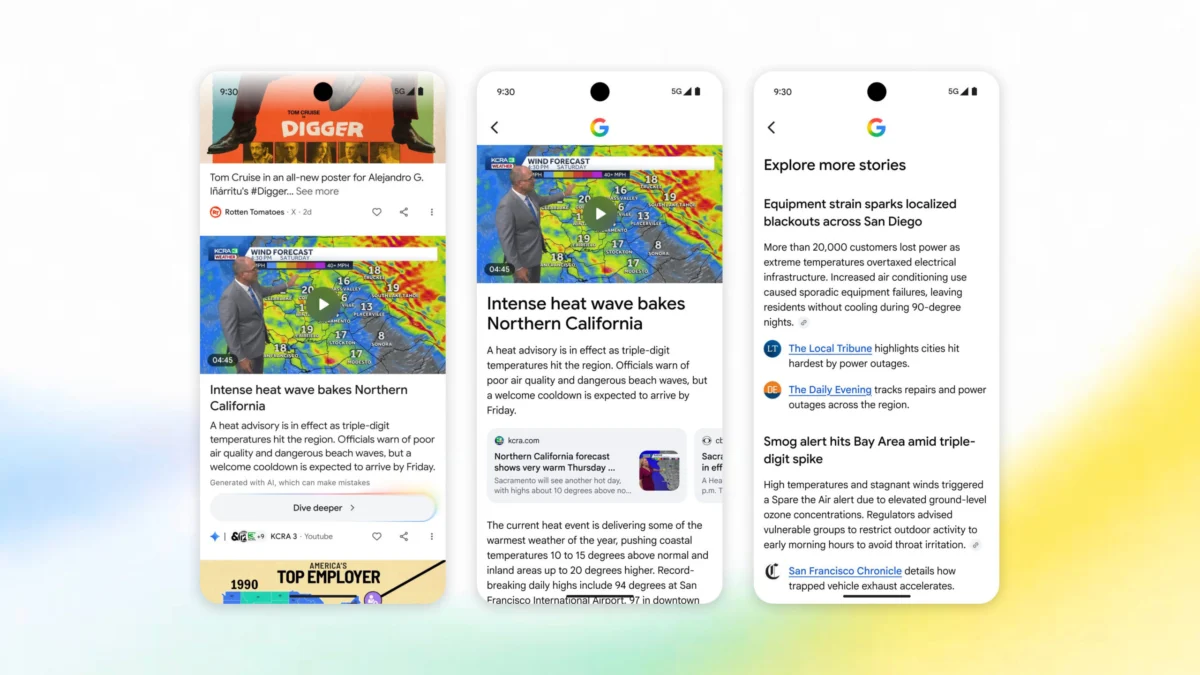
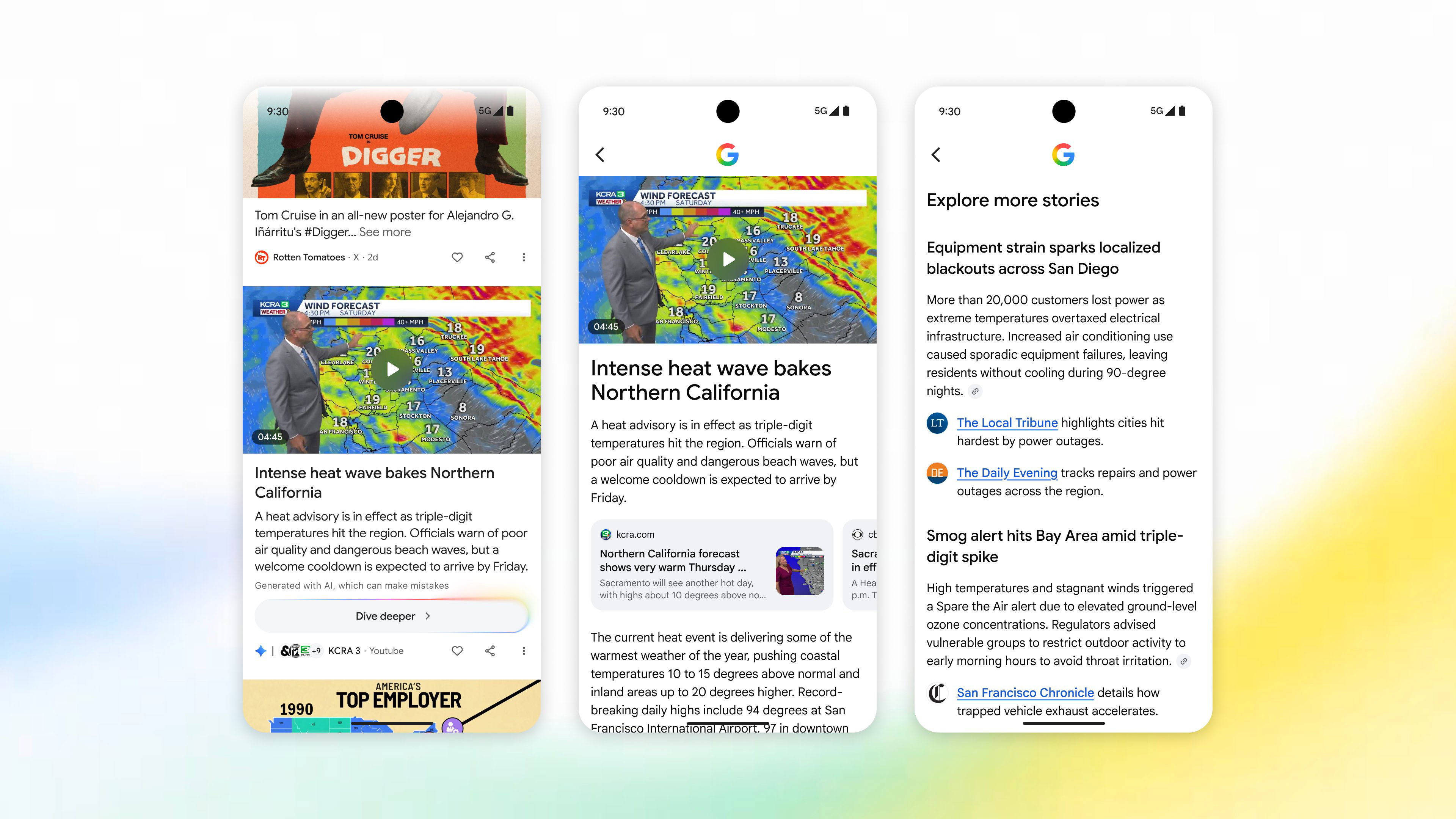
The core functionality of "Dive deeper" introduces an AI-generated short topic overview to the user. Instead of immediately navigating to a publisher’s full article upon clicking a Discover card, users are first presented with a concise summary of the topic, which Google explicitly labels as "generated with AI" and accompanied by a disclaimer that it "can make mistakes." This initial overview is designed to provide immediate context, allowing users to grasp the essence of a topic without leaving the Google Discover environment.
Crucially, this AI-generated summary is not an endpoint but rather a gateway. It features prominent links to a curated selection of related stories from various publishers, community reactions, and original reporting. Only by engaging further with these embedded links would a user be directed to external websites. Robby Stein elaborated on this, stating, "Today we’re experimenting with a new way to make exploring a topic and discovering related web content easier in Discover. By tapping ‘Dive deeper,’ you’ll see a short topic overview with prominent links to related stories, community reactions & original reporting."
The initial testing phase for this feature is focused on video content, with Google planning to experiment with multiple design iterations in the coming weeks to ascertain the most effective user experience. This phased rollout suggests a careful approach to integrating AI summarization into one of its key content discovery platforms.
The Evolution of Google Discover: A Contextual Background
Google Discover, formerly known as Google Feed, has evolved significantly since its inception. Launched in 2017, it provides users with a highly personalized feed of news, articles, videos, and other content based on their search history, location, app usage, and other signals. Unlike traditional search, which requires an explicit query, Discover proactively pushes content that it anticipates users will find interesting. It operates on the principle of intent prediction, aiming to surface relevant information before a user even thinks to search for it.
Discover has grown into a substantial platform, reportedly serving hundreds of millions of users globally, making it a critical source of referral traffic for many publishers. Its appeal lies in its convenience and its ability to keep users informed about topics they care about without active searching. For publishers, inclusion in Google Discover can translate into significant audience reach and engagement, making any changes to its core mechanics a matter of considerable interest and often, concern.
The introduction of "Dive deeper" can be viewed within Google’s broader strategy of enhancing user experience through AI-driven summarization and information synthesis. This trend is already evident in the company’s experimental Search Generative Experience (SGE), which provides AI-powered overviews directly within search results. These initiatives reflect a strategic pivot towards making Google an "answer engine" that provides immediate, comprehensive information, rather than solely a "link engine" that directs users to external sources.
Statements and Official Rationale
Robby Stein’s announcement on X (formerly Twitter) served as the primary official communication regarding the "Dive deeper" feature. His emphasis on "making exploring a topic and discovering related web content easier" highlights Google’s user-centric rationale. The company appears to believe that providing an immediate, digestible summary will help users quickly understand a topic’s breadth and then guide them more effectively to diverse, in-depth sources. This approach aims to combat information overload by front-loading critical context, potentially streamlining the user’s journey through complex or multifaceted subjects.
The decision to start testing with video content is also noteworthy. Video consumption patterns often differ from text-based articles, with users frequently seeking quick summaries or key takeaways before committing to watching an entire clip. An AI-generated overview could serve this purpose, providing a synopsis of the video’s content and then linking to the video itself, related articles, or community discussions. The mention of iterating on "multiple designs in the weeks ahead" underscores the experimental nature of the feature, indicating that Google is actively seeking user feedback and data to refine its implementation.
Publisher Concerns and Industry Implications
While Google positions "Dive deeper" as a user experience enhancement, the feature has immediately raised red flags within the publishing industry. The central concern revolves around a potential reduction in referral traffic from Google Discover to publisher websites. For many online publishers, traffic from platforms like Google is a lifeblood, directly impacting advertising revenue, subscription conversions, and overall audience engagement.
The core of the apprehension lies in the AI-generated summary. If a user can obtain sufficient context and key information from Google’s internal summary without clicking through to an external article, the incentive to visit the publisher’s site diminishes significantly. This scenario could lead to a decrease in page views, lower ad impressions, and ultimately, reduced revenue for content creators. The question posed by many industry observers is: "Why would a user click through if Google has already provided the full context?"
This is not an isolated concern but rather a continuation of a long-standing tension between Google and content publishers. Historically, changes to Google’s algorithms and features have often led to shifts in traffic patterns, sometimes benefiting, and other times challenging, publishers. Initiatives like Google News Showcase and the Google News Initiative have been attempts by Google to foster a more symbiotic relationship with publishers, often involving direct financial contributions. However, features that abstract content or reduce direct clicks are frequently met with skepticism.
SEO and Content Strategy in an AI-Driven Landscape
The "Dive deeper" feature introduces new complexities for Search Engine Optimization (SEO) and content strategy. Publishers traditionally optimize their content to rank highly in Google Search and appear prominently in Discover feeds, aiming for direct clicks. With an AI intermediary, the optimization goals might shift.
- Visibility in Summaries: The new challenge could be optimizing content to be selected and accurately summarized by Google’s AI. What factors will Google’s AI prioritize when generating these overviews? Will it favor clear, concise language, specific data points, or a particular content structure?
- The "Click-Through" Imperative: Publishers will need to ensure that even if their content is summarized, the summary itself provides enough intrigue or highlights unique value propositions that compel users to click through for the full experience. This might involve crafting headlines and introductory paragraphs that are particularly enticing, even when stripped down by AI.
- Beyond Traffic Metrics: Publishers might need to re-evaluate their key performance indicators (KPIs). If direct traffic declines, what other metrics become important? Brand mentions in AI summaries, presence in "related stories" links, or the perception of authority derived from being cited by Google’s AI could become new measures of success.
- Diversification of Traffic Sources: The reliance on a single platform for traffic becomes riskier. Publishers might intensify efforts to diversify their audience acquisition strategies, focusing more on direct traffic, social media, email newsletters, and other channels they control.
The "Dive deeper" feature reinforces the trend that content creators must now consider not just human readers, but also how AI systems interpret and present their work. This necessitates a nuanced understanding of natural language processing and the evolving algorithms that power these summarization tools.
Ethical Considerations and AI Accuracy
Google’s explicit disclaimer that the AI-generated content "can make mistakes" is a critical point. The accuracy and potential for bias in AI-generated summaries are significant ethical considerations. If these overviews contain inaccuracies or misinterpretations, it could lead to the spread of misinformation, potentially damaging the reputation of both Google and the original content creators.
- Attribution: While the feature promises links to original reporting, the initial presentation of information through an AI lens raises questions about proper attribution and the risk of content decontextualization.
- Bias: AI models are trained on vast datasets, and if these datasets contain inherent biases, the summaries they produce could inadvertently perpetuate those biases. Google will face the challenge of ensuring its AI systems are robust, fair, and objective.
- Trust and Authority: Users rely on Google for accurate information. If the AI summaries prove unreliable, it could erode user trust in Discover as a credible news source.
The Broader Landscape of AI in Content Consumption
The "Dive deeper" feature is not an isolated experiment but part of a larger, industry-wide movement towards AI-powered content consumption. Platforms are increasingly using AI to personalize feeds, summarize articles, generate creative content, and even conduct basic research.
- Generative AI Impact: The rise of large language models like GPT-4 has demonstrated the capabilities of AI in text generation and summarization, setting new expectations for how information can be processed and presented.
- Information Overload Solution: Proponents argue that AI summaries are a necessary tool in an era of unprecedented information overload, helping users efficiently sift through vast quantities of content to find what is most relevant.
- Competitive Landscape: Google’s move also reflects a competitive drive. As other platforms and AI tools offer increasingly sophisticated ways to consume content, Google must innovate to maintain its dominant position in information access.
Conclusion: An Evolving Digital Ecosystem
Google Discover’s "Dive deeper" feature represents a pivotal moment in the ongoing evolution of digital content consumption and distribution. While Google emphasizes the enhancement of user experience through efficient topic exploration, the publishing industry braces for potential shifts in traffic dynamics and revenue models. This development underscores the growing influence of artificial intelligence in mediating information access and highlights the continuous need for publishers to adapt their strategies in an ever-changing digital ecosystem.
As Google continues to test and refine this feature, the industry will closely monitor its impact on publisher traffic, content monetization, and the broader relationship between search engines and content creators. The success or challenges of "Dive deeper" will likely inform future AI integrations across Google’s suite of products, shaping how information is discovered, consumed, and valued in the years to come. The dialogue between technology platforms and content producers will undoubtedly intensify, striving for a balance that serves both user convenience and the sustainability of quality journalism and content creation.