The digital era has ushered in an unprecedented demand for content, fueled by the proliferation of blogs, social media platforms, and search engine optimization (SEO) imperatives. From individual bloggers to multinational corporations, the imperative to publish regularly and maintain an authoritative online presence is paramount. This constant need, however, often collides with the creative valleys of writer’s block, leaving content creators staring at blank screens, struggling to conjure new ideas. Historically, overcoming this inertia relied heavily on individual willpower, brainstorming sessions, or serendipitous inspiration. Today, the landscape is significantly enriched by sophisticated AI tools like Large Language Models (LLMs) and specialized platforms such as the Yoast AI Content Planner, which offer data-driven pathways to ideation. Yet, these technological advancements are complemented by a robust array of traditional and practical strategies that tap into audience insights, competitor analysis, and personal experience, collectively forming a comprehensive arsenal against creative stagnation.
The Digital Toolkit: AI and Analytics Driving Content Strategy
The evolution of content creation has been inextricably linked to advancements in digital analytics and artificial intelligence. These tools are no longer mere supplements but have become integral to a proactive and data-informed content strategy, offering unprecedented insights into audience needs and market gaps.
Google Search Console: Unlocking Audience Intent
At the core of data-driven content ideation lies Google Search Console (GSC), a free yet powerful tool that offers a direct conduit to understanding user behavior. Launched in 2015 as a rebrand of Google Webmaster Tools, GSC provides webmasters with vital information about their site’s performance in Google Search results. Its Performance Report is particularly invaluable, detailing the exact search queries people use to discover a website, along with metrics such as clicks, impressions, and average ranking positions. This data moves beyond theoretical keyword research, providing concrete evidence of what an existing audience is actively seeking.
By meticulously analyzing these queries, content strategists can identify topics where their site appears in search results but perhaps doesn’t offer a comprehensive answer. For instance, if a parenting blog consistently ranks for queries like "how to keep toddlers busy without screens" but lacks a dedicated, in-depth article on the subject, it signals a clear content gap and a high-demand topic. This direct feedback mechanism from Google’s search algorithm ensures that new content is inherently relevant and addresses proven user needs.
The integration of GSC data directly into content management systems, such as WordPress via Yoast SEO with Google Site Kit, streamlines this process significantly. This synergy allows creators to access critical performance metrics and top search queries within their familiar dashboard, eliminating the need to toggle between multiple platforms. While more comprehensive SEO suites like Ahrefs or Semrush offer deeper competitive analysis and broader keyword discovery, GSC remains a foundational, free, and highly reliable source of first-party data, essential for grounding content decisions in real user intent. According to a 2023 survey by Search Engine Journal, 78% of SEO professionals reported using GSC daily or weekly for performance monitoring and content ideation, underscoring its indispensable role.
Yoast AI Content Planner: Proactive Ideation
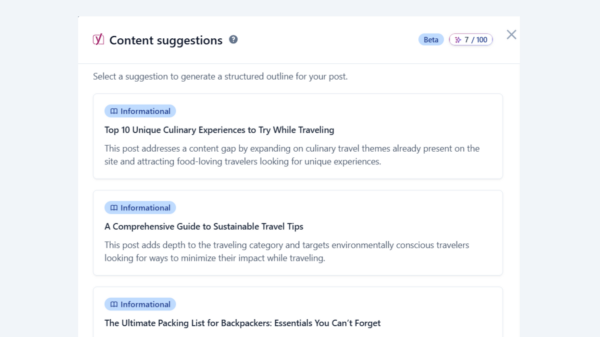
Building on the principles of data analysis, specialized AI tools are emerging to proactively assist content creators. The Yoast AI Content Planner, a feature integrated into Yoast SEO Premium products, exemplifies this shift. It addresses the common challenge of deciding "what to write about" by leveraging existing site content and identifying logical extensions or missing pieces.
When a user initiates a new post, the Yoast AI Content Planner analyzes the site’s current content landscape. Based on this analysis, it generates up to five highly relevant blog post ideas tailored to the specific niche and audience. These are not generic suggestions but intelligent proposals derived from what the audience is already consuming and what critical information might be absent from the blog. For example, a food blog that extensively covers meal preparation but has yet to delve into "quick vegetarian lunches" might receive this as a prime suggestion, indicating an opportunity to expand on a related, unaddressed topic.
Once an idea is selected, the tool goes a step further by creating a structured draft, complete with a suggested title, relevant headings, and even a meta description. This comprehensive outline provides a significant head start, transforming a blank page into a structured framework, allowing writers to dive directly into content creation. The ability to generate new batches of ideas with a single click ensures flexibility and continued inspiration. This feature represents a significant step towards automating the initial ideation phase, empowering regular publishers to maintain consistency and relevance without succumbing to creative blocks. Industry analysts suggest that AI-powered content planning tools could reduce ideation time by up to 40%, significantly boosting overall content velocity for publishers.
Leveraging General AI and Chatbots for Inspiration
Beyond specialized tools, the rapid proliferation of general-purpose AI chatbots like ChatGPT, Claude, and Gemini has fundamentally reshaped how creators approach ideation. These generative AI models, which gained widespread prominence in late 2022 and early 2023, offer a versatile platform for brainstorming and refining content concepts.
However, the effectiveness of these tools hinges on the specificity of the user’s prompts. Generic queries like "Give me blog ideas about parenting" often yield uninspired, commodity content. To maximize their utility, users must provide rich context about their blog’s niche, target audience, and desired tone. For instance, instead of a broad request, a more effective prompt would be: "My blog focuses on sustainable parenting for eco-conscious families. Give me five unique blog post angles on reducing plastic waste with toddlers, emphasizing practical, actionable tips."
AI can also be used to refine vague ideas or explore specific angles. If a broad topic like "traveling with pets" is on the table, an AI could be prompted to narrow it down: "Suggest specific blog post ideas for traveling with an anxious dog, focusing on car travel and short trips." Furthermore, AI can be employed for competitor analysis. By feeding an AI a competitor’s blog URL and asking, "Analyze this blog’s recent content and suggest five topics they haven’t covered but would align with my niche on healthy eating for busy professionals," creators can identify strategic content gaps.

A critical caveat, frequently voiced by content strategists and AI ethicists, is the risk of producing "commodity content" – ideas that are generic or overdone. The true value of AI in ideation lies in its ability to spark a starting point, which must then be enriched with human perspective, unique experiences, proprietary data, or a distinctive voice. For example, an AI-generated "10 tips for better sleep" could be transformed into "My 3-month sleep experiment: How tracking my circadian rhythm transformed my energy levels," adding a personal, data-backed dimension that AI alone cannot replicate. A 2024 report by Gartner predicted that by 2027, 30% of new content will be created with AI assistance, but human oversight will remain critical for quality and distinctiveness.
Strategic Content Discovery: Beyond the Algorithm
While digital tools offer powerful advantages, a holistic content strategy also embraces methods that tap into broader online trends, cultural moments, and the collective wisdom of online communities.
Audience-Centric Approaches: The Power of Direct Feedback
Direct engagement with one’s audience remains an indispensable source of inspiration. Blog comment sections and contact forms are not merely channels for feedback but active repositories of questions, challenges, and interests. While many comments might be simple affirmations or criticisms, specific queries often emerge that demand more detailed answers than a quick reply can provide. These questions, whether off-topic or requiring extensive elaboration, are prime candidates for dedicated blog posts.
Furthermore, proactive outreach through questionnaires or surveys can yield a wealth of input. By directly asking readers what challenges they face, what topics they want to learn more about, or what existing content they found most useful, creators can gather invaluable first-party data. Maintaining a running list of these audience-generated questions creates a robust backlog of relevant topics, ensuring a wellspring of ideas even when personal inspiration wanes. According to a recent survey by HubSpot, content that directly addresses audience questions sees a 2x higher engagement rate compared to generic content.
Deep Dive Keyword Research: Unearthing User Intent
Beyond simply identifying high-volume keywords, effective keyword research involves a deep dive into user intent. A keyword document is a goldmine of potential blog ideas, but merely picking a term is insufficient. Understanding why people search for a particular phrase—are they looking for a "how-to" guide, a comparison, an opinion piece, or product information?—is crucial.
Tools like Google’s autocomplete suggestions, "People Also Ask" sections in SERPs, and Yoast SEO’s Semrush integration provide layers of insight into search intent. Increasingly, checking Google’s AI Overviews or AI Mode answers for target keywords offers a glimpse into how AI is synthesizing information, which can inform content structure and focus.
Consider the keyword "best running shoes for flat feet." A deep dive would prompt further questions: What are the specific challenges faced by runners with flat feet? What brands are known for supporting this condition? Are there specific types of shoes (e.g., stability, motion control) that are best? Each of these questions can spin off into dedicated posts: "The Ultimate Guide to Stability Running Shoes for Flat Feet," "Comparing Top Brands: Brooks vs. Saucony for Flat-Footed Runners," or "Beyond the Shoe: Exercises to Support Flat Feet While Running." This approach ensures content not only targets a keyword but genuinely answers the precise questions users are asking. Integrating rank tracking tools like Wincher with Yoast SEO allows creators to monitor the performance of these intent-driven posts over time, validating the strategy.
Visual and Trend Spotting Platforms: Pinterest
For visually-driven niches such as food, DIY, fashion, travel, or home decor, Pinterest remains a powerful discovery engine. More than just a social media platform, Pinterest functions as a visual search engine, where users actively seek inspiration and solutions. Searching for broad terms like "[niche] blog post ideas" or "[niche] content inspiration" can reveal popular themes and emerging trends. Examining top-pinned posts or boards within a niche can highlight high-engagement topics and identify potential gaps in one’s own content. However, creators must exercise caution: Pinterest can be a "clickbait heaven," making it easy to prioritize quantity over quality. Maintaining focus on valuable, in-depth content rather than superficial trends is key to harnessing its power effectively. With over 460 million active users, Pinterest’s influence on visual content trends is significant, as reported by Statista in 2023.
Leveraging Cultural Moments: Days Of The Year
The website "Days Of The Year" offers a unique and often humorous avenue for inspiration. This extensive calendar of official, unofficial, and often bizarre holidays provides an endless stream of potential content hooks. From "Unicorn Day" to "Towel Day," there are celebrations for nearly every niche imaginable. A travel blogger could explore "10 Essential Towel Hacks for Globetrotters" on Towel Day, or a lifestyle blogger might delve into "How to Keep Your Towels Luxuriously Soft: A Guide." This strategy allows for the creation of timely, engaging, and often lighthearted content that can capitalize on trending hashtags and seasonal interest, providing a fresh perspective on evergreen topics.
Other Blogs and Fellow Bloggers: Community and Competitive Analysis
The broader blogging community itself is a rich source of inspiration. Following other bloggers, especially those in adjacent niches or who offer different perspectives, can spark new ideas. Scrolling through their content feeds or engaging with their posts can reveal trending topics, unexplored angles, or even areas where one’s own blog could offer a unique, more in-depth take. Participating in niche-specific Facebook groups or blogger forums facilitates discussions that often lead to collaborative brainstorming and idea generation. However, a strict ethical guideline must be adhered to: inspiration should never cross the line into plagiarism. All content must be original, and if a concept is adapted, proper attribution is essential. This practice fosters a healthy, collaborative ecosystem while ensuring unique value.
Traditional Creativity and Personal Insight: The Human Element
Despite the advent of sophisticated digital tools, the human element—personal experience, observation, and creative cultivation—remains paramount in generating truly unique and resonant content.
Drawing from Lived Experience: Personal and Professional Narratives
One of the most authentic wellsprings of blog ideas comes from daily life, both personal and professional. Situations encountered in one’s work, challenges faced by clients or colleagues, or personal triumphs and failures can serve as rich narrative fodder. If a common problem arises within one’s professional sphere, it is highly probable that others are encountering similar issues and actively seeking solutions or insights. A financial advisor might blog about "Three Common Mistakes I See Clients Make When Planning for Retirement," or a web designer could write "Overcoming Scope Creep: Lessons from a Recent Client Project."
Crucially, when drawing from real-life situations, respecting privacy is non-negotiable. Anonymizing clients, colleagues, or friends, and obtaining explicit permission where necessary, is vital. A therapist sharing mental health tips, for example, must meticulously alter names, locations, and specific details to protect client confidentiality and uphold professional ethics. This approach ensures authenticity while maintaining professional integrity.
The Power of Observation and News: Connecting Current Events
Current events offer a dynamic source of inspiration, provided they can be meaningfully connected to a blog’s niche and audience. The art lies in translating breaking news into relevant, value-driven content that resonates with readers. A parenting blog, for instance, could transform a new study on childhood screen time into "Beyond the Headlines: What the Latest Research on Screen Time Means for Your Family." A personal finance blog might analyze a shift in interest rates through the lens of "How the Federal Reserve’s Latest Decision Impacts Your Mortgage and Savings." The key is to move beyond merely reporting the news to providing expert analysis and actionable advice tailored to the audience’s specific concerns.
To stay abreast of relevant news, setting up Google Alerts for industry-specific keywords is highly effective. This ensures that pertinent developments land directly in the creator’s inbox, prompting timely content ideation. When approaching sensitive topics, content creators must exercise extreme caution, focusing on offering thoughtful guidance and solutions rather than exploiting trends. The goal is always to add value and maintain the blog’s purpose, avoiding superficial or controversial content for the sake of clicks. Studies show that timely, news-related content can generate up to 5x more social shares in the first 24 hours of publication.
Mindset and Workflow: Clearing the Head for Fresh Ideas
Prolonged periods of focused work, especially when grappling with a creative block, can be counterproductive. Staring at a blank screen often exacerbates the problem, draining mental energy without yielding results. Stepping away from the desk and engaging in activities that shift focus can be remarkably effective. A short walk, household chores, or even a brief meditation session allows the mind to disengage from the problem and enter a more relaxed, divergent thinking state. Often, the most innovative ideas surface when the pressure to produce is momentarily lifted. Neuroscience research, such as studies published in Nature Neuroscience, indicates that breaks and periods of diffuse thinking are crucial for problem-solving and creativity.
For those who benefit from structured breaks, a "brainstorming sprint" can be transformative. Setting a timer for ten minutes and rapidly generating ideas without self-censorship can unlock unexpected concepts. Prompts like "List twenty blog ideas about [your topic]: five weird, five practical, and ten in between" encourage diverse thinking. Once the timer ends, selecting the most intriguing idea and freewriting about it for another five minutes can further develop the concept. This exercise forces a departure from habitual thought patterns, frequently leading to novel angles and renewed focus.
The Content Backlog: Maintaining an Idea Repository
Perhaps the simplest yet most effective long-term strategy is maintaining an organized list of content ideas. Inspiration is often cyclical: some days overflow with ideas, while others are barren. By consistently documenting every fleeting thought, question, or potential topic in a dedicated list—whether on a mobile app, a digital document, or a physical notebook—creators build a valuable repository. On days when inspiration is low, this "content backlog" becomes an invaluable resource, providing ready-made starting points and alleviating the pressure of generating ideas from scratch. This practice contributes significantly to consistent publishing schedules and reduces the stress associated with content planning.
Expert Perspectives and Industry Implications
The evolving landscape of content ideation reflects a broader industry trend towards efficiency, personalization, and data-driven decision-making. "The synthesis of AI tools with human creativity is not about replacing writers, but empowering them," notes Sarah Chen, a content strategy consultant. "AI can handle the grunt work of analysis and initial idea generation, freeing up human creators to focus on narrative, unique insights, and emotional resonance."
The implications are significant for content marketing. Brands can now achieve higher consistency in their publishing schedules, ensure greater relevance for their target audiences, and potentially scale their content operations more effectively. However, the rise of AI also brings ethical considerations. The imperative to avoid "commodity content" and maintain a distinct brand voice becomes even more critical. "Authenticity will be the ultimate differentiator," emphasizes Mark Thompson, a digital marketing professor. "As AI makes content creation easier, the value of genuine human connection, original thought, and unique perspectives will only increase." The balance between leveraging AI for efficiency and preserving the human touch for impact will define successful content strategies moving forward.
Conclusion
The pervasive challenge of writer’s block in the high-demand world of digital content is no longer a solitary struggle. By embracing a multi-faceted approach that integrates advanced AI tools, rigorous data analysis, strategic audience engagement, and time-tested creative practices, content creators can ensure a continuous flow of fresh, relevant ideas. Whether through the precise insights of Google Search Console, the proactive suggestions of the Yoast AI Content Planner, the expansive brainstorming capabilities of general AI chatbots, or the simple act of stepping away for a mental break, a wealth of resources exists to break through creative barriers.
The most effective strategy combines structured, data-informed planning with spontaneous, human-driven creativity. This synergistic approach allows creators to not only overcome momentary lapses in inspiration but also to build a robust, sustainable content pipeline that consistently delivers value to their audience. The next time the blank screen looms, the solution is not to push harder, but to strategically engage with the diverse toolkit available, ensuring that consistency, quality, and originality remain the hallmarks of compelling digital content.