rifanmuazin
The Architectural Foundation of Claude Design
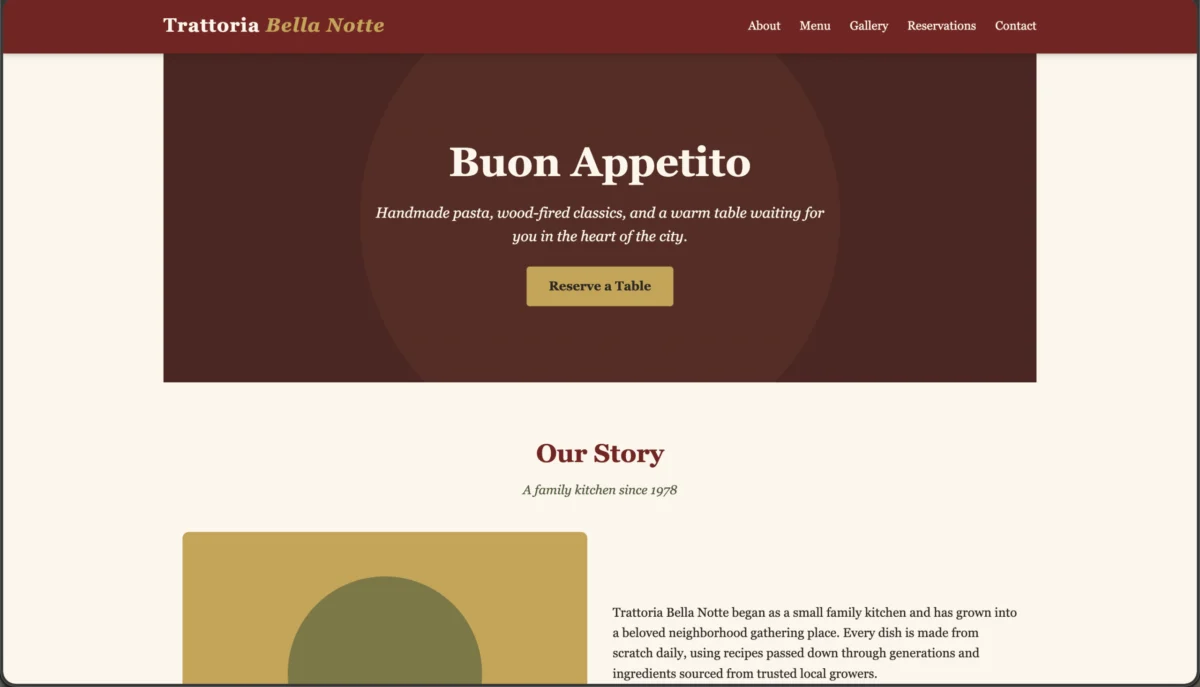
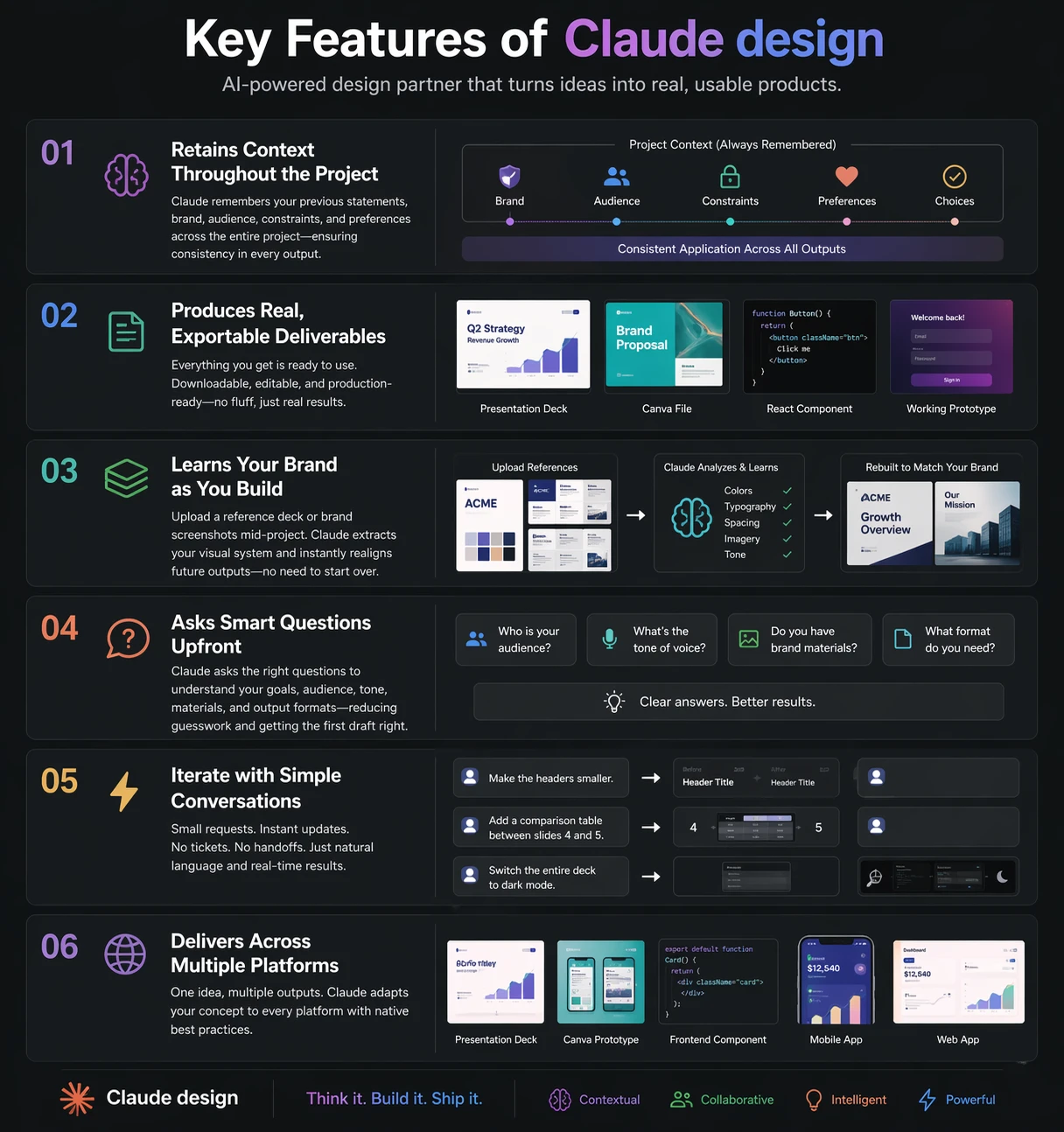
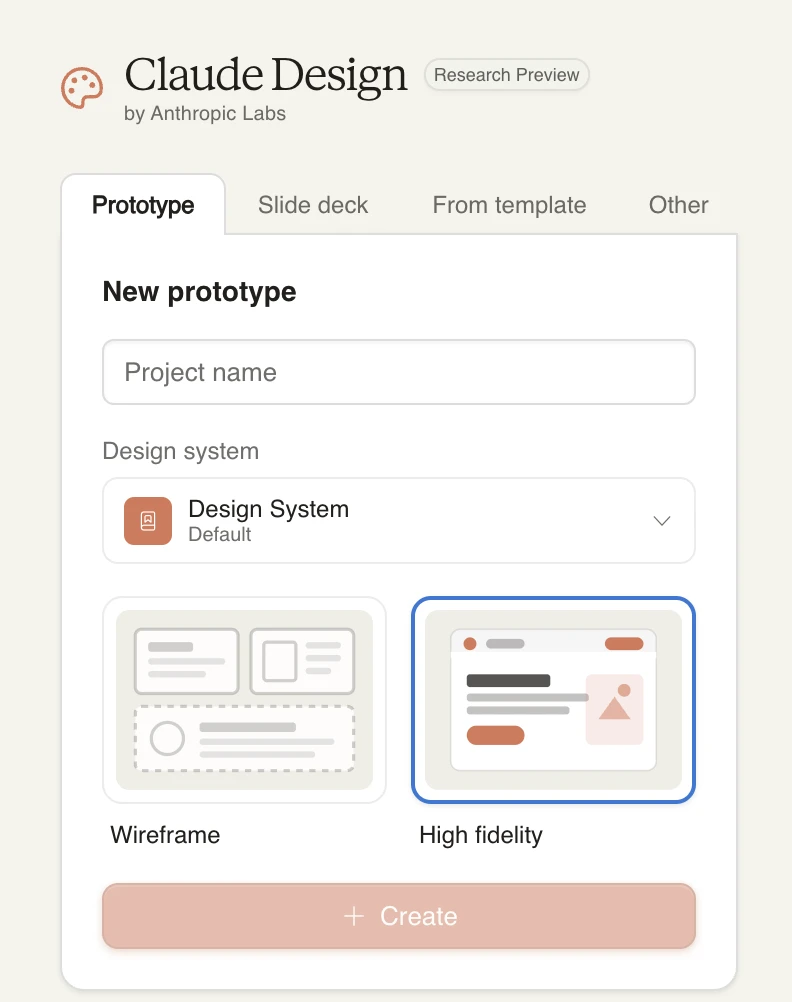
Unlike conventional AI tools that function primarily as text-based consultants, Claude Design is engineered to execute. While most generative AI platforms offer suggestions or static image generations, Claude’s framework is built to produce real visual and functional assets. This includes the generation of animated presentation decks, the export of user interface (UI) designs directly to platforms like Canva, and the creation of full-stack React applications complete with sophisticated features such as authentication protocols and payment gateways.
The system operates through a sophisticated "three-layer" cognitive architecture. The first layer is the Strategic Layer, where the AI evaluates the core problem and user intent. The second is the Visual Layer, which governs the aesthetic composition, typography, and layout consistency. The third is the Functional Layer, where the AI generates the underlying code—often in React or Tailwind CSS—to ensure the design is interactive. By operating concurrently across these three layers, the system avoids the "silo effect" that typically plagues human-led design teams, where the visual designer might create a layout that is technically unfeasible for the developer to build.
Chronology of the Design Automation Movement
The integration of AI into the design process has followed a rapid timeline of technological breakthroughs. To understand the significance of Claude Design, one must view it within the context of the broader industry trajectory:
- The Generative Explosion (2022-2023): The rise of DALL-E and Midjourney introduced the world to text-to-image synthesis, primarily focused on artistic and marketing imagery rather than functional UI.
- The Integration Phase (Early 2024): Legacy design tools like Adobe and Figma began integrating "Co-pilot" features to automate repetitive tasks like resizing or background removal.
- The Execution Era (Mid-2024 to Present): With the release of Anthropic’s "Artifacts" feature and the refinement of Claude 3.5 Sonnet, the industry moved toward "Text-to-UI." This allowed users to generate live-previewing code and interactive components in real-time, effectively collapsing the distance between a design mockup and a working prototype.
This chronology suggests a future where the "handoff"—the traditionally arduous process of a designer giving files to a developer—is replaced by a continuous, AI-mediated stream of production.
Case Study 1: Enterprise Education and Workflow Automation
The practical utility of Claude Design is best observed through specific enterprise applications. In a recent demonstration of the system’s capabilities, the platform was used to bridge a communication gap within a technical organization regarding "Plugins" in enterprise workflow automation.
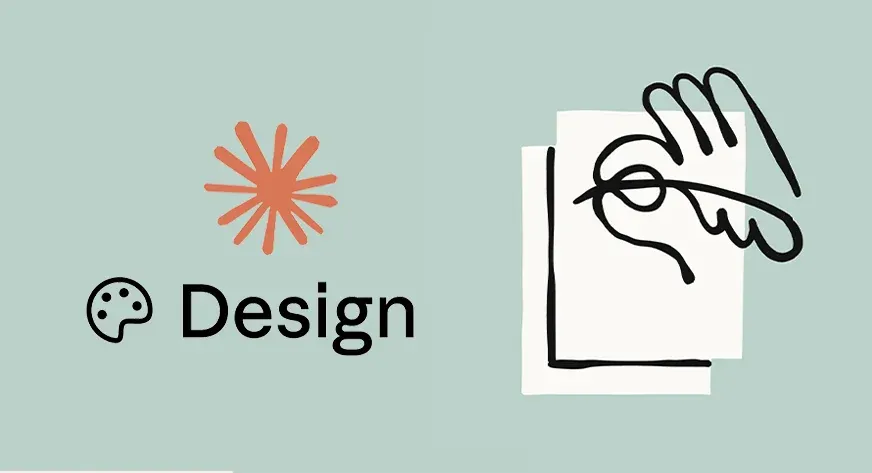
The objective was to create a 25-minute teaching deck to explain complex technical concepts that existing documentation failed to clarify. The challenge lay in the nuance: teams struggled to differentiate between Plugins, MCP Connectors, and Skills. Using Claude, the user followed a structured workflow:
- Defining the Objective: Establishing the need for an educational course on enterprise automation.
- Prompting and Generation: Instructing the AI to generate a 15-slide deck in a "dark mode" developer aesthetic, including speaker notes for the presenter.
- Structural Refinement: The AI systematically included sections on primitives, marketplace guides, installation flows, and sandbox security protocols.
- Branding Application: By feeding the AI prior brand assets, the final output maintained consistent colors, fonts, and logos, ensuring the deck was ready for an executive-level presentation immediately upon generation.
This workflow illustrates how the AI assumes the role of a senior designer, managing both the micro-details of typography and the macro-details of pedagogical structure.
Case Study 2: Rapid Prototyping for the Mental Health Sector
In a second application, Claude Design was utilized to move from a conceptual app idea to a live Canva prototype for a mental health application targeting Gen Z users. The concept involved a journaling app that utilizes mood tracking, voice input, and AI-generated weekly summaries.
The process began with the AI identifying the target demographic—young adults who find traditional therapy apps unengaging. Claude then mapped the user experience (UX), differentiating between the needs of a first-time user during onboarding and the requirements of a returning user. Within minutes, the AI generated six core screens, including:
- Onboarding: A streamlined entry point focused on privacy and ease of use.
- Mood Check-in: An interactive "mood ring" interface.
- Voice Journaling: A functional layout for audio transcription.
- Weekly Summaries: Data visualization screens that reflect user progress.
The final stage involved structuring these screens so they could be exported as editable frames into Canva. This allows a human designer to perform the "last mile" of creative refinement, ensuring that the AI’s structural work meets the brand’s specific emotional resonance.
Supporting Data and Market Implications
Recent industry surveys indicate that the design-to-development handoff is one of the most significant bottlenecks in software engineering. According to data from the 2024 Design Systems Report, teams spend approximately 35% of their time on "rework"—fixing designs that were misunderstood by developers or building components that were already designed but not documented.
Tools like Claude Design aim to reduce this percentage by providing a "single source of truth." When the AI generates the code alongside the visual design, the ambiguity that leads to rework is virtually eliminated. Furthermore, the speed of iteration is increased by an estimated 800%. A process that previously required a strategist to write a brief, a designer to create a Figma file, and a developer to code a CSS prototype—a cycle typically taking 5 to 10 business days—can now be condensed into a single afternoon session.
Critical Analysis: The Human-AI Interface
Despite its technical prowess, the rise of Claude Design does not signal the obsolescence of human professionals. Rather, it shifts the value proposition of the designer. A SWOT-style analysis of the current state of Claude Design reveals critical nuances:
Advantages
- Cross-Disciplinary Synthesis: Claude treats visual, content, and functional design as a single unit, preventing the fragmentation seen in traditional teams.
- Scale and Consistency: The AI can apply brand guidelines across hundreds of screens instantly, a task that would take a human designer weeks of manual labor.
- Lowering Entry Barriers: Small startups without the capital to hire a full design agency can now produce "Grade A" prototypes to secure seed funding.
Limitations and Risks
- The "Context Gap": AI may lack the deep cultural context or "brand soul" that a human designer brings. It is excellent at following patterns but rarely creates entirely new visual paradigms.
- Production Readiness: While the code generated is functional for prototyping, it often requires optimization for performance, security, and accessibility before it can be deployed to a production environment with millions of users.
- Lack of User Validation: The AI can build what it is told, but it cannot (yet) walk into a room of users and observe their emotional frustrations. Human judgment remains the final arbiter of product-market fit.
Broader Impact and Future Outlook
The implications of Claude Design extend beyond the design department and into the realm of business strategy. We are entering an era of "Just-in-Time Design," where prototypes are not static documents but living, breathing entities that evolve during a meeting.
In the corporate world, this will likely lead to a reduction in "PowerPoint culture," where ideas are pitched via static slides. Instead, stakeholders will walk into meetings with working, interactive models. This "show, don’t tell" approach reduces the risk of project failure, as stakeholders can interact with the product’s logic before significant capital is invested in full-scale development.
Furthermore, the integration with platforms like Canva suggests an ecosystem where AI acts as the "connective tissue" between specialized tools. By bridging the gap between high-level LLM reasoning and professional design software, Anthropic is positioning Claude as an operating system for creativity.
Conclusion
Claude Design represents a pivotal moment in the democratization of digital product creation. By automating the routine bottlenecks of wireframing, basic coding, and layout adjustments, it allows human creators to focus on the elements of design that truly matter: empathy, authenticity, and strategic problem-solving. As the technology matures, the distinction between "designer" and "developer" may continue to blur, giving rise to a new generation of "Product Architects" who use AI to build complex digital systems with the same ease as writing a memo. The routine work is disappearing; what remains is the challenge of deciding what is worth building in the first place.
Frequently Asked Questions
Q1: How does Claude Design differ from standard AI image generators?
Claude Design goes beyond static pixels by generating functional code, interactive UI elements, and structured content. It understands the underlying logic of a user interface, allowing it to build prototypes that can be clicked, tested, and exported into developer environments.
Q2: Will this technology replace junior designers?
While it automates many tasks typically assigned to junior designers, such as creating variations or basic layouts, it also empowers them to perform at a more senior level. The focus of the role will likely shift from "pixel pushing" to "AI orchestration" and "design critique."
Q3: Can the code generated by Claude be used in a live app?
The code is generally suitable for high-fidelity prototyping and internal testing. However, for large-scale, public-facing applications, a professional developer should review and optimize the code for security, scalability, and integration with existing backend systems.