While Etsy has long been a favored platform for creators to showcase and sell their unique products, its limitations as a long-term brand-building solution are becoming increasingly apparent. As creators mature and seek greater control over their online presence and audience engagement, alternative platforms like Fourthwall are emerging as compelling contenders. This analysis delves into the distinct offerings of Fourthwall and Etsy, comparing their features, pricing, and strategic advantages to help creators make informed decisions about scaling their businesses.
The Evolving Landscape of Creator Commerce
The creator economy has witnessed exponential growth, with platforms like Etsy experiencing significant traction. Reports indicate that "Pattern by Etsy," a tool designed to help sellers establish their own branded websites, saw a 44% growth in the last eighteen months, underscoring the demand for accessible e-commerce solutions. These platforms offer a quick and convenient pathway to connect with potential buyers, often at an affordable price point, making them ideal for creators just starting out or those with eye-catching products and immediate market demand.
However, the very nature of a marketplace, while offering immediate visibility, inherently limits a creator’s autonomy. As businesses evolve, the desire for greater control over branding, customer data, and product diversification becomes paramount. This is where platforms like Fourthwall differentiate themselves, positioning themselves not just as marketplaces, but as comprehensive brand-building ecosystems.
Fourthwall: A Brand-Centric Ecosystem
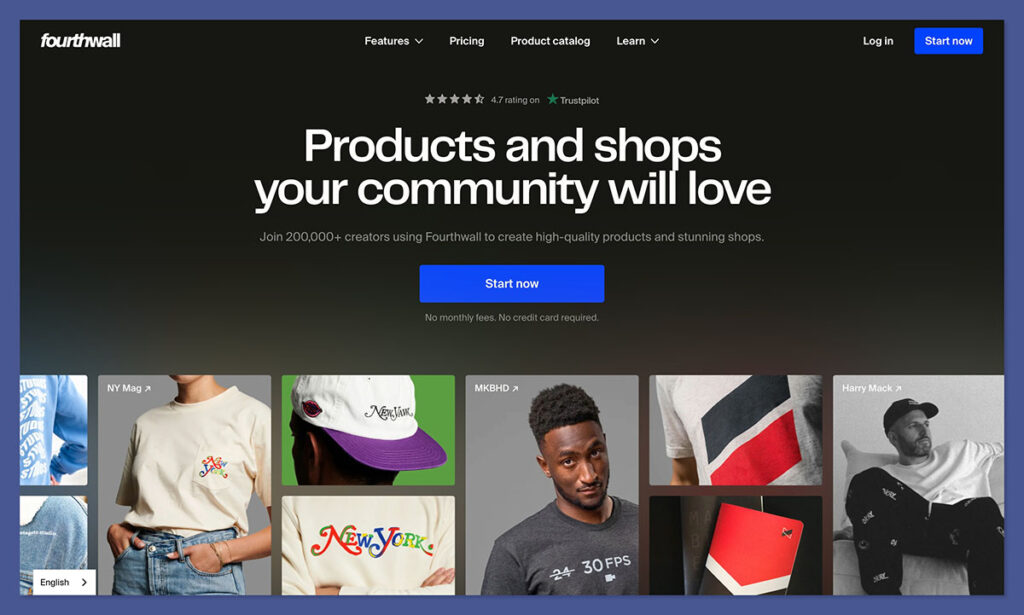
Fourthwall is designed to empower creators to build and scale their own independent brands. It offers a fully customizable website with a custom domain, allowing creators to establish a distinct online identity. The platform supports a wide array of products, from custom print-on-demand (POD) items to digital products, memberships, and even custom-sourced physical goods. A key differentiator is Fourthwall’s role as the Merchant of Record, providing integrated support for customer service for POD products and handling tax complexities, thus alleviating significant administrative burdens for creators.
Etsy: The Marketplace Advantage
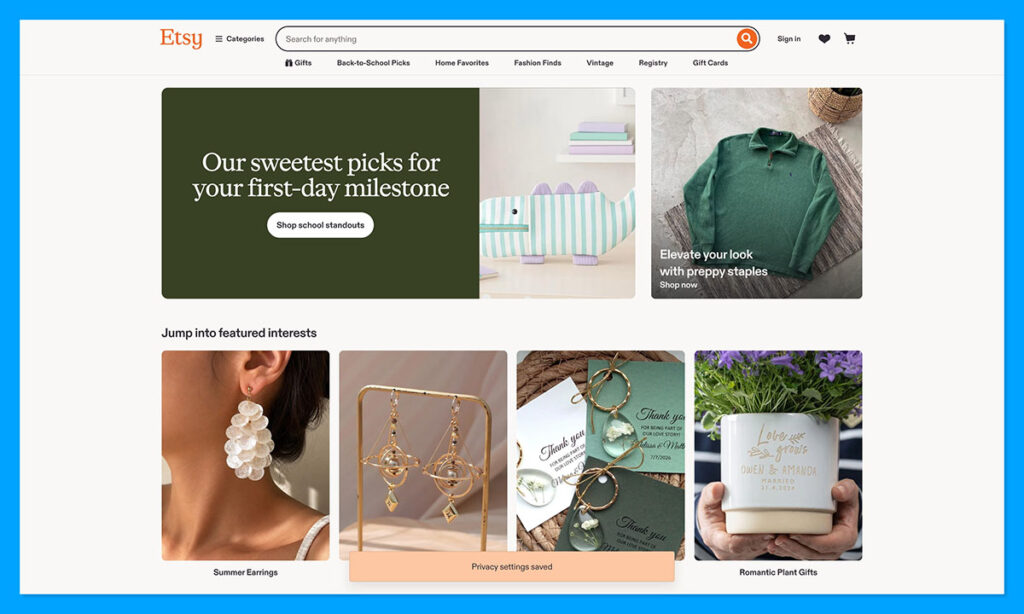
Etsy operates as a vast marketplace connecting millions of buyers with sellers of handmade, vintage, and craft supplies. Its primary strength lies in its built-in buyer traffic. Creators listing products on Etsy benefit from exposure to a substantial and active customer base, which can be invaluable for initial customer acquisition and market validation. The platform is particularly effective for creators who have a unique product with demonstrable demand but may not yet have an established audience.
Key Differentiators: A Comparative Overview
To understand the strategic implications of choosing between Fourthwall and Etsy, a detailed comparison of their core features is essential:
| Factor | Fourthwall | Etsy |
|---|---|---|
| Platform Model | Full brand-building ecosystem | Marketplace for creative products |
| Built-in Buyer Traffic | No | Yes |
| Custom Domain | Yes | No |
| Storefront Design | Completely customizable website | Limited branding options within Etsy’s fixed structure |
| Product Types | POD, own stock, digital, memberships, custom | Handmade, vintage, craft supplies, digital (within rules) |
| Memberships/Video | Yes | No |
| Customer Data | Available to the seller | Owned by Etsy |
| Fulfillment | Fourthwall POD, partner, or seller | Seller or specific production partners |
| Merchant of Record | Yes | Etsy can act as; seller usually handles |
Pricing and Fee Structures: Understanding the True Cost
Both platforms offer accessible entry points, but their fee structures diverge significantly, impacting the long-term cost-effectiveness for creators.
Fourthwall’s Pricing Strategy:
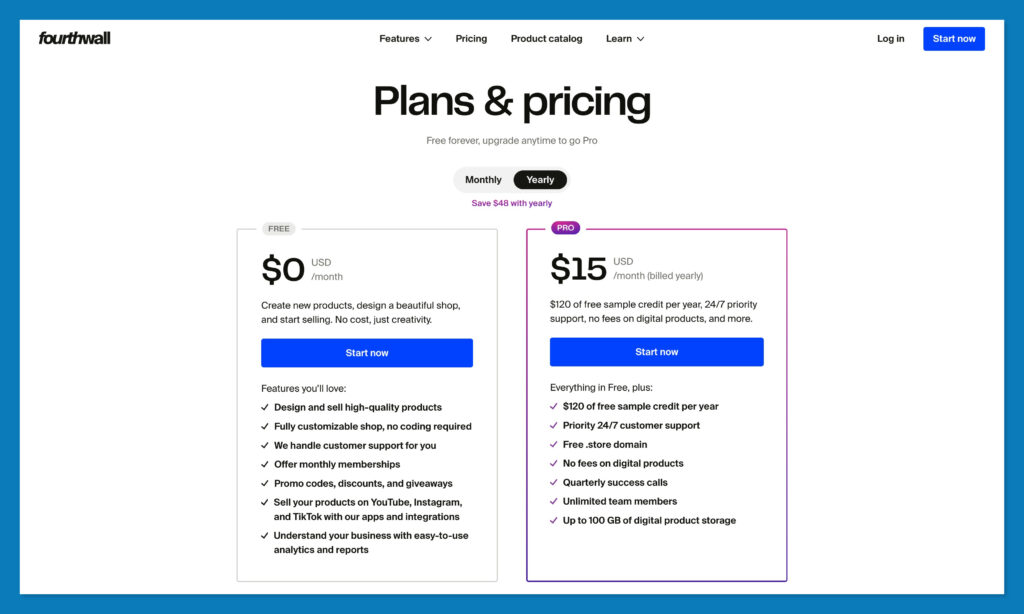
Fourthwall offers a free plan, making it exceptionally budget-friendly for those starting out. On this free tier, there are no selling fees for physical products, though a 5% fee applies to digital products and memberships. The base cost of POD items is also passed through. For creators seeking advanced features, the Pro plan is available at $19 per month or $180 annually ($15/month). This premium tier includes a complimentary .store domain, waives fees on digital products, offers unlimited team members, additional digital product storage, $10 in monthly sample credit for POD items, and priority support. This model offers a predictable cost structure, especially for businesses focused on physical product sales, and avoids the per-transaction fees that can erode margins on other platforms.
Etsy’s Pricing Strategy:
Etsy’s pricing model is more complex, with multiple fees layered onto each sale. While opening a shop is free, each product listing incurs a $0.20 fee, which renews every four months or upon sale. A 6.5% transaction fee is applied to the final sale price, including shipping costs. Additionally, a payment processing fee of 3% plus $0.25 applies to US sellers. For those listing a high volume of products, Etsy Plus offers added benefits like listing credits and advertising credits for $10 per month, but it does not fundamentally alter the marketplace model or its associated fees. Pattern by Etsy, a website builder, starts at $15 per month, removing some listing and transaction fees but still operating within the broader Etsy ecosystem. While Etsy’s fees can be absorbed by higher product prices, the cumulative effect on profitability, especially for lower-margin items, can be substantial.
Storefronts, Discovery, and Integrations: Building a Brand Identity
The fundamental difference in platform models—marketplace versus independent store—dictates the approach to storefront customization, customer discovery, and system integration.
Fourthwall’s Brand Control:
Fourthwall empowers creators with a fully customizable website accessible via a custom domain. Its no-code site builder allows for extensive design flexibility, enabling creators to fully align their online store with their brand identity. Crucially, the customer data collected through a Fourthwall store belongs to the creator. This enables direct engagement through newsletters, social media promotions, and personalized marketing campaigns, fostering deeper customer relationships essential for brand loyalty. Integrations with tools like YouTube Shopping, TikTok Shop, Mailchimp, and Klaviyo further enhance its ability to facilitate a creator’s overall digital marketing strategy.
Etsy’s Discovery Engine:
Etsy’s strength lies in its inherent discoverability. Millions of shoppers actively browse the platform, providing a ready-made audience. While creators can customize their shop banners and organize products, the overall aesthetic and functionality are constrained by Etsy’s platform-wide identity. This makes it challenging to establish a unique brand presence that truly stands out. Furthermore, Etsy retains ownership of customer data, limiting a creator’s ability to build direct marketing lists or engage with customers beyond the platform’s messaging system. While Etsy Plus offers enhanced storefront customization options like collage and carousel banners, it still operates within the confines of the marketplace.
Product Diversification: Expanding Revenue Streams
Fourthwall offers unparalleled flexibility in terms of what creators can sell, supporting a multifaceted revenue strategy.
Fourthwall’s Product Versatility:
Creators can seamlessly integrate various product types within a single Fourthwall store. This includes leveraging Fourthwall’s catalog for print-on-demand merchandise, sourcing and selling their own physical inventory, offering digital products like e-books or templates, and even launching subscription-based memberships with HD video content. The platform also facilitates accepting community donations. This comprehensive approach allows creators to diversify their income streams and experiment with new product offerings without the need to migrate to different platforms.
Etsy’s Product Restrictions:
Etsy maintains stricter guidelines on what can be sold, emphasizing handmade, vintage (over 20 years old), and craft supplies. While digital products are permitted if they align with these categories, and print-on-demand is allowed with disclosure of production partners and a clear design ownership, the scope is more limited. The platform’s "human touch" requirement generally excludes generic dropshipped items. Crucially, Etsy does not support memberships or digital subscriptions, a significant limitation for creators aiming to build recurring revenue models.
Creator Support and Administrative Burden: Streamlining Operations
The level of support and administrative assistance provided by a platform can significantly impact a creator’s operational efficiency.
Fourthwall’s Integrated Support:
Fourthwall aims to minimize the administrative load on creators. For POD products sourced through their catalog, Fourthwall’s team handles customer service inquiries and fulfillment logistics. They also assist in finding suppliers for custom products. The platform’s Merchant of Record status simplifies tax compliance. Upgraded plans offer premium support, including success calls, further enhancing the creator’s experience.
Etsy’s Seller Responsibility:
On Etsy, creators are largely responsible for their own customer service and fulfillment logistics, even when utilizing third-party production partners. While Etsy can act as a Merchant of Record, this is not always the default or primary model for all sellers. The platform provides self-help resources and customer support, but the operational burden remains more heavily on the seller.
Recent Developments: AI and Enhanced Features
Both platforms are actively investing in technology to enhance the creator experience, with a particular focus on AI integration and new feature rollouts.
Fourthwall’s Business-Focused AI:
Fourthwall has integrated an AI assistant capable of performing a range of business-oriented tasks. Creators can leverage this tool to generate promotional campaigns, adjust product pricing across their catalog, analyze sales data, and even adapt a single design across a broader collection of merchandise. Additional recent updates include custom gift card options, a partnership with Throne for crowdfunding and private wishlists, and a Design Community to connect with merchandise partners.
Etsy’s Marketplace-Optimized AI:
Etsy’s AI developments are primarily geared towards improving the marketplace experience for both buyers and sellers. Their AI assistant focuses on seller support, offering help with listing optimization and administrative queries. Recent enhancements to the Seller app include improved order filtering and buyer history access. Etsy is also testing a "Stats Assistant" to provide insights into store performance and is integrating its listings into major AI shopping assistants like ChatGPT, Gemini, and Copilot. Sellers can also utilize AI for drafting messages.
Strategic Recommendations: Choosing Your Path
The optimal platform choice hinges on a creator’s current stage of development and long-term aspirations.
For New Creators and Product Introduction:
Etsy remains an excellent starting point for creators with innovative products but limited established audiences. Its marketplace structure provides immediate visibility and access to a vast pool of potential buyers. The platform’s ease of use and low administrative overhead make it ideal for validating product-market fit and generating initial sales. The built-in traffic is a significant advantage for those who are not yet adept at driving their own external traffic.
For Brand Building and Audience Engagement:
Fourthwall is the superior choice for creators who have already cultivated an audience or possess a robust strategy for attracting customers to their own channels. Its comprehensive brand-building tools, custom domain, and complete ownership of customer data are instrumental in developing a loyal customer base and establishing a strong brand identity. The platform’s flexibility in product offerings and integrated support systems are crucial for scaling a business beyond the limitations of a marketplace.
The Hybrid Approach:
Many successful creators adopt a hybrid strategy, utilizing Etsy as a discovery engine to introduce their products to new customers while simultaneously leveraging Fourthwall for direct sales to their established audience. This approach allows creators to benefit from Etsy’s built-in traffic while retaining higher profit margins and direct customer relationships through their own branded store. It’s a pragmatic way to maximize reach and profitability.
Conclusion: A Platform for Every Stage
Etsy continues to be a powerful entry point for creators, offering unparalleled access to buyers and a streamlined initial setup. However, as businesses mature and the desire for brand autonomy and direct customer relationships intensifies, Fourthwall emerges as a more robust and scalable solution. While Etsy excels at putting products in front of strangers, Fourthwall empowers creators to build lasting brands and own the entire customer journey. The decision between the two, or the strategic integration of both, ultimately depends on a creator’s current business objectives and their vision for long-term growth in the dynamic creator economy. The evolution of platforms like Fourthwall signals a significant shift towards empowering creators with the tools and control necessary to build sustainable and thriving businesses independent of marketplace constraints.