In the rapidly evolving landscape of e-commerce solutions, the claims made by AI-powered tools often blur the lines between direct competitors and complementary services. This analysis delves into DropMagic and PagePilot, two prominent AI tools designed to assist online merchants. A close examination of their functionalities, pricing, and marketing reveals that while both leverage artificial intelligence, they serve distinct purposes, leading to significant disagreements on their comparative value and capabilities. The core of the discrepancy lies in the fundamental nature of their offerings: DropMagic positions itself as an AI store builder, while PagePilot focuses on generating individual product and landing pages.
The competitive narrative surrounding DropMagic and PagePilot is largely manufactured by the companies themselves, with each platform creating content that disparages the other. PagePilot’s self-graded comparison assigns "Limited" or "Basic" scores to DropMagic across nine categories, while DropMagic’s response is framed as a "takedown dressed as a review." This adversarial approach has led to direct contradictions regarding crucial details such as pricing, plan names, currency, and AI image counts, indicating that at least one company is misrepresenting the facts.
The underlying issue, however, is a misunderstanding of their intended roles. The question is not which tool "wins" in a head-to-head battle, but rather which tool best addresses a specific need within the e-commerce workflow. PagePilot is engineered to create high-converting product pages, ideal for driving traffic from paid advertising. In contrast, DropMagic aims to establish an entire online store from a single product link, providing a foundational e-commerce presence. This distinction is critical for merchants seeking to understand which solution aligns with their immediate business objectives.
To provide clarity, this analysis draws upon publicly available information, including live pricing pages, Shopify App Store listings, vendor documentation, and independent reviews. While the author did not build or publish a store using either tool, the research aims to reconcile conflicting claims and present an objective comparison.
Key Takeaways
- Distinct Core Functions: DropMagic builds entire five-page Shopify stores, whereas PagePilot generates individual product and landing pages.
- Pricing Discrepancies: Entry-level pricing and tier structures differ significantly, with PagePilot appearing more affordable for initial setup.
- AI Image Allocation: Contested claims exist regarding the number of AI images included in PagePilot’s plans.
- Editor Functionality: Marketing claims of "true drag and drop" for PagePilot are disputed by independent reviews, which describe a more constrained block-based editor.
- Free Plan Limitations: Both platforms offer free tiers that allow content generation but prohibit publishing, acting as demos.
- Additional Features: PagePilot integrates ad creative generation and product research, features absent in DropMagic.
How DropMagic and PagePilot Compare at a Glance
The fundamental difference in what each tool generates is the most significant differentiator. DropMagic aims to create a complete, albeit templated, five-page Shopify store from a single product link. This includes essential pages like the homepage, product pages, collections, and potentially about us or contact pages. PagePilot, on the other hand, focuses its AI capabilities on crafting a single, highly optimized product page or landing page. This distinction is akin to comparing a home builder with a window installer; both are essential to construction, but their scopes are vastly different.
| Feature | DropMagic | PagePilot |
|---|---|---|
| What it generates | Full Shopify store, fixed 5-page structure | Single product and landing pages |
| Entry price to publish | $79/mo (Pro) | $39/mo (Lite) |
| Number of paid tiers | 1 | 3 ($39 / $59 / $99) |
| Free plan | Unlimited generation, cannot publish | Free trial, generate and preview, cannot publish |
| AI images included | 30 credits/mo on Pro | 50 / 200 / unlimited by tier |
| Stores per plan | Unlimited on Pro | 1 / 3 / 5 by tier |
| Editor | Drag and drop bounded by a 57-section library | Block editor, no free positioning, no code access |
| Built-in ad tools | None found | AI ad copy plus creatives, 10+ variations |
| Product research | None found | 10 AI-curated winning products daily |
| Shopify App Store rating | 4.9/5 (~53 reviews) | 4.8 to 4.9/5 (72 to 150 reviews) |
| Trustpilot | No rating found | 4.7 to 4.8/5 (170 to 194 reviews) |
| Best for | Getting a first store live fast | Building pages you can run ads to |
The "fight" between these two tools has several contested points, highlighting the marketing battleground.
| Contested claim | Who says it | What was found |
|---|---|---|
| "PagePilot caps AI images at 5/month on every plan" | DropMagic’s comparison page | False. Live pricing shows 50, 200, and unlimited AI images by tier. |
| "A true drag and drop editor" | PagePilot’s marketing | Overstated. Independent reviews describe block editing with fixed positions. |
| "DropMagic is free" | DropMagic’s marketing | Generation is free, publishing is not. Real entry price is $79/month. |
| "DropMagic creates theme conflicts" | PagePilot’s comparison page | Unverified. DropMagic generates designs, not modifies existing themes. |
How I Checked These Numbers
The data presented here is compiled from direct examination of live sources, including pagepilot.ai/pricing, dropmagic.ai, both companies’ Shopify App Store listings, PagePilot’s documentation, and six independent e-commerce tool reviews.
Certain limitations exist in this research. Direct access to Trustpilot was blocked by an HTTP 403 error, meaning those figures are sourced from search snippets. A Trustpilot rating for DropMagic could not be found through any accessible channel. Video transcripts were not retrievable, and no documented instances of merchants using both tools concurrently were identified.
The following sections address the four contested claims by examining nine criteria.
1. What Each Tool Actually Builds: Product Pages vs. Full Stores
The most significant differentiator is the output of each tool. If a merchant is starting from scratch without an established online presence, DropMagic is the only option that can provide a complete store. Conversely, for those with an existing store seeking to enhance conversion rates from paid traffic, PagePilot is specifically designed for this purpose.
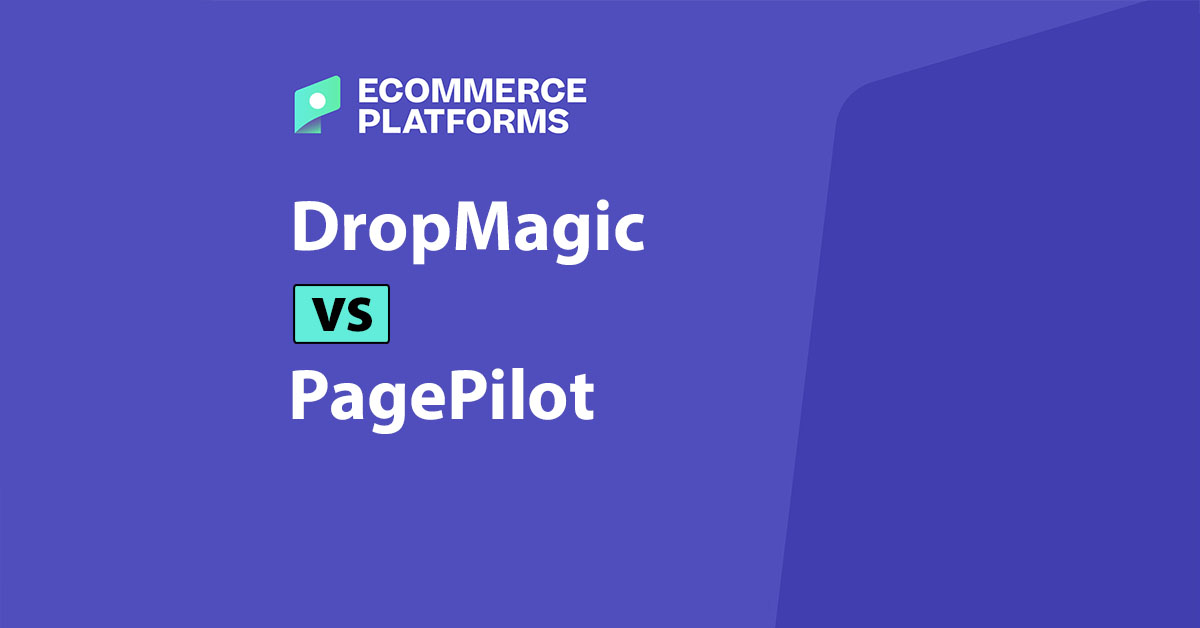
DropMagic takes a product link from platforms like AliExpress, Amazon, Shopify, or Alibaba and generates a full five-page Shopify store. This includes a homepage, product pages, collection pages, and other essential components to establish an initial online presence.
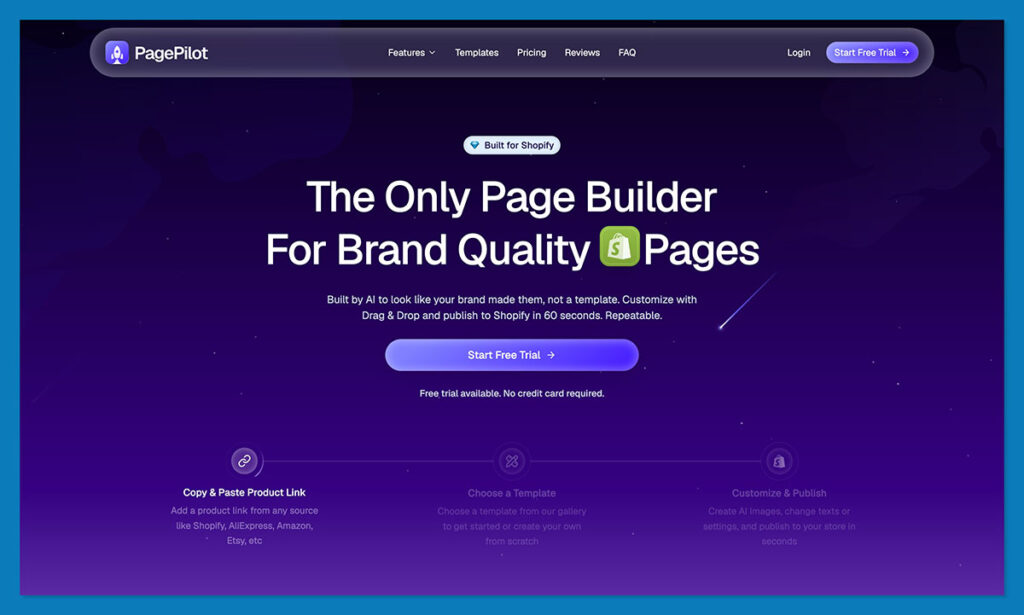
PagePilot, on the other hand, focuses on generating a single, high-converting product page or landing page. While it may be an excellent page, it does not provide a comprehensive storefront, lacking a homepage, navigation, or collection browsing capabilities. Independent reviews suggest that PagePilot can generate a page in approximately 45 to 75 seconds, which can then be imported into a Shopify store with two clicks. Each paid tier offers access to a base kit including templates, sections, blocks, language support, SEO fields, and cart upsells.
Crucially, neither tool handles the entirety of the e-commerce operation. They do not manage:
- Order fulfillment: Both require integration with third-party apps like DSers for dropshipping.
- Payment processing: Standard Shopify checkout functionality is utilized.
- Customer service: Separate tools or manual processes are needed.
- Shipping and logistics: These remain outside the scope of the AI generation.
DropMagic’s own launch tutorials indicate that store generation is just step two of a five-step process, with subsequent steps involving fulfillment and customer service handled by external solutions. This transparency from the vendor is valuable, distinguishing it from a competitor’s claims.
Best for: DropMagic is ideal for new businesses needing to establish a store quickly. PagePilot is suited for existing stores looking to optimize individual pages for marketing campaigns.
Skip if: you expect DropMagic to manage your entire business post-launch, or if you want PagePilot to function as a complete storefront builder.
2. Pricing: What DropMagic and PagePilot Really Cost to Launch
A critical aspect of adopting any new software is understanding the true cost of implementation. PagePilot offers a lower entry point at $39 per month, while DropMagic’s effective starting price for publishing is $79 per month, as its free tier does not permit live store deployment.
There are notable discrepancies in how PagePilot’s pricing is presented across different sources. While PagePilot’s live pricing page lists three tiers at $39, $59, and $99 per month, independent reviews and DropMagic’s comparison page cite different figures and plan names, with some indicating a top tier at £79 or $79. The most authoritative source remains PagePilot’s official pricing page.
DropMagic’s pricing structure is simpler, featuring a single paid tier, "Pro," at $79 per month. This plan offers unlimited store generation and includes 30 AI image credits. While this might seem less expensive at first glance compared to higher-tier PagePilot plans, it’s essential to consider what each price point offers:
| What you are paying for | DropMagic | PagePilot |
|---|---|---|
| Cheapest plan that can publish | $79/mo | $39/mo |
| One year, billed annually | $948 | $390 (Lite, 2 months free) |
| Stores included at entry price | Unlimited | 1 |
| AI images at entry price | 30 credits/mo | 50/mo |
| Cheapest way to run 3 stores | $79/mo | $59/mo (Starter) |
The pricing information from third-party reviews, such as a euro-denominated sheet, suggests different page caps and pricing structures that do not align with PagePilot’s current official offerings. It is advisable for potential users to verify the most current pricing directly on pagepilot.ai/pricing. DropMagic’s assertion that PagePilot limits AI images to five per month on all plans is demonstrably false based on their own pricing page.
Overall, PagePilot presents a more cost-effective option for initial launch and offers more flexible pricing tiers, except for the number of stores included at the entry price, where DropMagic’s unlimited offering stands out.
3. Free Plans and Trials: What You Get Before You Pay
Both DropMagic and PagePilot offer free tiers that function as demonstrations rather than fully functional products. Users can generate content—stores with DropMagic and pages with PagePilot—without charge. However, the critical limitation is the inability to publish this generated content to a live Shopify store without subscribing to a paid plan.
DropMagic’s free plan allows for unlimited store generation and previewing. The exact number of AI image credits available on the free tier is not clearly stated on their website, with one third-party source mentioning two credits. Merchants should not rely on this figure for planning purposes.
PagePilot’s free trial is advertised as "100% FREE! No credit card required." During this period, users can create pages and connect a Shopify store. However, publishing these pages necessitates a paid subscription, making its free offering functionally similar to DropMagic’s. Some Shopify App Store reviews indicate that the preview functionality on PagePilot’s free tier is "extremely limited."
Essentially, the free plans on both platforms provide the opportunity to:
- Generate content: Create a store or page using the AI.
- Preview the output: See how the generated design looks.
- Familiarize with the interface: Understand the user experience.
The most effective way to evaluate these tools before committing financially is to run the same product URL through both free tiers. This hands-on experience is the best indicator of their performance and suitability.
4. The Editors: How Much Design Control You Actually Get
The marketing surrounding the editors of both DropMagic and PagePilot presents a point of contention, with independent reviews offering a more nuanced perspective. PagePilot promotes a "true drag and drop editor," while DropMagic’s comparison page characterizes PagePilot’s editor as text-based and dependent on Shopify’s theme editor for significant design changes.
Independent assessments suggest that PagePilot employs a block-based editor, similar in concept to platforms like Notion. Users can edit text, swap images, adjust colors, and incorporate pre-defined sections. However, the ability to freely position elements or access code is not available. As one reviewer succinctly put it, "It’s not drag-and-drop, and you can’t place elements wherever you want."
DropMagic’s editor is technically described as drag-and-drop but operates within strict boundaries. It is limited to selecting and arranging elements from a library of 57 sections within a fixed five-page structure. This constrained approach leads to the observation that "the 5-minute build time is the product, and the 5 minutes is also the depth ceiling."
| Can you… | DropMagic | PagePilot |
|---|---|---|
| Move elements freely | No | No |
| Add or remove sections | Yes, from a 57-section library | Yes, from 35+ preset blocks |
| Rewrite copy with AI | Yes, unlimited on Pro | Yes |
| Change colors and images | Yes | Yes |
| Access code | Not documented | No |
| Change page structure | Within a fixed 5-page structure | Within the block order |
| Language support | Not documented | 30+ per the pricing page |
The consensus from independent reviews is that neither editor offers the free-form design capabilities found in platforms like Wix or Webflow.
Best for: DropMagic is suitable for quickly rearranging an entire store’s layout. PagePilot offers more granular control over individual page elements.
Skip both if: you have a precise, custom design in mind. In such cases, investing in a dedicated Shopify theme and a robust page builder would be a more appropriate solution.
5. AI Copy and AI Images: Credits, Limits, and Who Writes Better
PagePilot demonstrably includes a more generous allocation of AI images across its pricing tiers compared to DropMagic. At the entry-level $39/month plan, PagePilot provides 50 AI images, whereas DropMagic’s $79/month Pro plan includes 30 AI credits. This directly contradicts DropMagic’s claim that PagePilot caps AI images at five per month.
The verified AI image allowances are as follows:
- PagePilot: 50 images/month (Lite), 200 images/month (Starter), Unlimited images/month (Scaler).
- DropMagic: 30 credits/month (Pro).
In terms of AI-generated copy, DropMagic’s approach is more sophisticated. It offers persona-based copywriting, allowing users to input details about the target audience’s age, interests, lifestyle, and desired tone. This enables the generation of tailored headlines and marketing angles for different market segments, which is particularly useful for A/B testing and audience segmentation. DropMagic’s claim that its copywriter is "trained on 8-figure brand copy" is a marketing assertion that lacks independent verification. PagePilot integrates copy generation as part of its overall page creation process and includes a separate ad copy generator.
One independent review from buildyourstore.ai, a competing store builder, describes DropMagic’s generated product pages as "sectioned and content-heavy," suggesting they may require manual refinement before launch. While potentially biased, this feedback offers directional insight.
For merchants solely requiring product descriptions, Shopify Magic offers this functionality for free within their existing Shopify plan. Similarly, standalone AI image generators can fulfill image needs without the additional cost of a page builder subscription.
6. Publishing to Shopify: Theme Compatibility and What Customers Actually See
A significant concern for PagePilot users is the potential for a mismatch between the previewed page and its appearance on the live Shopify store. Independent reviews indicate that "Imported pages may display differently in Shopify than in preview due to theme variations." While PagePilot claims compatibility with any Shopify theme, the rendering can vary. For optimal results, the free Sense or Dawn themes are recommended. DropMagic’s assertion that PagePilot exclusively works with Dawn or Sense themes appears to be an overstatement of the actual limitation. Merchants using heavily customized premium themes are advised to test a page using the free tier before committing to a paid plan.
DropMagic operates differently, generating a store design from scratch rather than building upon an existing theme. This fundamentally alters the context of PagePilot’s accusation of theme conflicts. Any potential conflicts would arise from integrating a generated store into an already themed environment, not from modifying a theme itself. No concrete evidence of theme-breaking behavior for either tool was found during this research.
One user reported encountering leftover app code after uninstalling PagePilot, which they believed caused payment issues. This is a single anecdote and not indicative of a widespread problem.
The general advice for publishing to Shopify with either tool is consistent: test on a free theme first to understand how the output behaves before deploying it on a production theme.
7. Beyond the Page: Ad Creatives, Product Research, and Cart Upsells
PagePilot distinguishes itself by offering integrated features beyond basic page generation, including AI-powered ad creative generation, a daily feed of product research, and a cart drawer with upsell capabilities. These features can potentially allow merchants to reduce subscriptions to separate ad creative tools and upsell apps.
PagePilot’s bundled features include:
- AI Ad Copy: Generates ad copy variations for marketing campaigns.
- AI Creatives: Produces visual assets for ads.
- Daily Product Research: Provides a curated list of potentially "winning" products.
- Cart Upsells: Integrates a cart drawer with options for additional purchases.
While these features are documented by PagePilot, independent evaluations of the quality of the ad creatives and the accuracy of the product research feed are lacking. The value of a "winning product" list is entirely dependent on its efficacy, which remains unverified.
DropMagic offers no direct equivalents to these features. Its primary advantage, as noted earlier, lies in its ability to generate an entire store, unlimited stores on its Pro plan, and a complimentary .store domain.
Best for: Merchants actively engaged in paid advertising who are currently using separate tools for ad creatives or upsells.
Skip if: your primary traffic sources are organic, as these specific features may not significantly impact your economics.
8. Ratings, Support, and Company Track Record
Both DropMagic and PagePilot maintain high ratings on the Shopify App Store, generally ranging from 4.8 to 4.9 stars. However, both have also received support complaints that warrant attention. PagePilot possesses a longer operational history and a larger volume of user reviews.
It is important to note that many of the comparative scores found online are self-assigned by the vendors themselves, rather than being based on independent user feedback.
| Signal | DropMagic | PagePilot |
|---|---|---|
| Shopify App Store rating | 4.9/5 | 4.8 to 4.9/5 |
| App Store review count | ~53 | 72 to 150 (depending on the source) |
| Trustpilot | No rating found | 4.7 to 4.8/5 (170 to 194 reviews, search-snippet sourced) |
| Support complaint on record | 16-day wait for response, refund requested | "Team will be back in less than 1 hour" banner, user waiting hours later |
| Company signals | Newer, smaller review base | Founded 2023 by Robert Pop and Alex Minecan |
| Side products | None found | StorePilot (affiliate funnel) |
The App Store ratings, while positive, are based on relatively small sample sizes. Fifty-three reviews for DropMagic, for instance, indicate positive experiences for those who chose to review, but may not reflect the tool’s performance across a broader user base.
The absence of a confirmed Trustpilot rating for DropMagic is notable. The Trustpilot figures for PagePilot are derived from search snippets due to direct access limitations. Scamadviser flags dropmagic.ai as legitimate and safe, which is a security indicator rather than a measure of customer satisfaction.
PagePilot’s "StorePilot" is an affiliate funnel, not a distinct product. It offers a free store builder on the Dawn theme and provides referral commissions for sign-ups. DropMagic’s accusation regarding this is factually correct, though its significance as a competitive disadvantage is debatable.
Merchants should anticipate potentially slower support than advertised and ensure their product data can be exported.
Alternatives and Combined Use
For merchants needing only product descriptions, Shopify Magic is a free, built-in solution. The need for paid AI tools arises when generating structured content or entire store layouts.
Other alternatives exist that do not involve either DropMagic or PagePilot:
- Shopify Magic: Free on all Shopify plans, useful for product descriptions, email, and blog content.
- Manual Shopify Theme Building: Using free themes like Dawn or Sense and investing time offers full layout control at zero cost.
- StorePilot: A free option that provides a generated store as an affiliate funnel, allowing a preview of AI-generated sites.
- Hiring a Designer or Premium Theme: A one-time investment for a unique, non-generated store appearance.
Shopify Magic’s limitations lie in content generation; it populates existing structures rather than creating them. Its store-setup feature produces a basic template requiring manual refinement.
The possibility of using DropMagic and PagePilot together is plausible. DropMagic could build the store shell, and PagePilot could generate ad landing pages. However, no documentation, case studies, or vendor guides exist for this combined workflow. Such a stack would cost approximately $118 per month before generating any sales, making it a significant investment for a new store. Starting with one tool and adding the second only when a specific, unmet need arises is the more prudent approach.
The Bottom Line: Which One Should You Buy?
The core conclusion is that DropMagic and PagePilot are not direct competitors. They serve different roles in the e-commerce ecosystem. The choice between them hinges on the merchant’s specific requirements:
DropMagic: What Works
- Rapid Store Creation: Generates a complete five-page Shopify store quickly.
- Unlimited Stores: The Pro plan allows for the creation of an unlimited number of stores.
- Integrated Domain: Offers a free
.storedomain with each generated store. - Persona-Based Copywriting: AI copy adapts to target audience profiles.
DropMagic: What Does Not
- No Free Publishing: The free tier prevents live store deployment.
- Limited Editor: Design control is constrained by a fixed section library.
- No Integrated Ad Tools: Lacks features for ad creatives or product research.
- Higher Entry Price: $79/month is the minimum to publish.
PagePilot: What Works
- High-Converting Pages: Designed to generate product and landing pages for ad traffic.
- Lower Entry Price: Starts at $39/month for publishing.
- Integrated Ad Features: Includes AI ad copy and creatives, plus product research.
- Cart Upsells: Bundles upsell functionality.
PagePilot: What Does Not
- Single Page Focus: Does not build a complete storefront.
- Constrained Editor: Lacks true free-form drag-and-drop functionality.
- Potential Display Issues: Imported pages may vary from preview due to theme conflicts.
- Contested Claims: Marketing often overstates editor capabilities and AI image limits.
Three areas remain unverified and should be considered before subscribing: the absence of a Trustpilot rating for DropMagic, the lack of documented use cases for running both tools concurrently, and the vendor policies regarding generated content upon subscription cancellation. It is recommended to inquire about data portability upon cancellation and obtain the response in writing.
Frequently Asked Questions
Is DropMagic or PagePilot better for beginners?
The better choice depends on the beginner’s specific needs. If a merchant has no existing store and needs a homepage, navigation, and branding, DropMagic is the only option of the two that provides this. If the merchant already has a store and needs to create optimized pages for advertising, PagePilot is the more suitable tool.
How much does DropMagic cost?
DropMagic has a single paid tier, Pro, priced at $79 per month. This plan includes unlimited store generation, unlimited AI copywriting, and 30 AI image credits monthly. The free plan does not allow publishing to Shopify, making $79 the effective entry cost for a live store.
Is PagePilot’s editor really drag and drop?
PagePilot claims to have a "true drag and drop editor," but independent reviews describe it as a block-based editor. Users can modify text, images, and sections, but they cannot freely reposition elements or access code. As one reviewer noted, "you can’t place elements wherever you want."
Can I use DropMagic and PagePilot together?
While there is no documented workflow for using them together, it is plausible. DropMagic could build the store’s foundation, and PagePilot could generate specific landing pages. However, this combined approach would cost approximately $118 per month, which may be prohibitive for new businesses.
Does PagePilot work with any Shopify theme?
PagePilot claims broad theme compatibility. However, independent reports suggest that imported pages might render differently than in previews due to theme variations. Using free themes like Sense or Dawn is recommended for optimal results. Merchants with highly customized themes should test a page for free before subscribing.
Do DropMagic or PagePilot handle fulfillment, checkout, or SEO?
Neither tool handles fulfillment or checkout. PagePilot offers basic SEO fields for meta titles and descriptions. DropMagic’s own documentation positions store generation as an early step, with fulfillment and customer service managed by other applications, indicating that both are components within a larger e-commerce strategy.