A comprehensive new report, the sixth annual Trends Report from eComFuel, based on data from 300 eCommerce store owners representing a combined $3.5 billion in revenue, indicates significant shifts in the industry, challenging long-held assumptions about paid traffic, Amazon’s dominance, AI adoption, and operational strategies. The report, compiled from insights shared within the eComFuel Community and the Operators Network, suggests that traditional eCommerce playbooks may be outdated, necessitating a strategic re-evaluation for businesses aiming for sustained growth and profitability in 2026 and beyond.
The findings, released following a period of dynamic market fluctuations including ongoing tariff impacts and rapid technological advancements, present a nuanced picture of the eCommerce ecosystem. Rather than a singular narrative of growth or decline, the report highlights divergent paths and the critical importance of operational efficiency and strategic financial management.
"Something in this report always changes how I think," stated an unnamed spokesperson for eComFuel, reflecting on the study’s impact. "I’ve spent years side-eyeing heavy paid traffic dependency, convinced it was a margin trap. This year’s data changed my mind. My hope is something in here challenges your thinking, too." This sentiment underscores the report’s core theme: the need for continuous adaptation in a rapidly evolving digital marketplace.
Part 1: The New Blueprint – Challenging Established eCommerce Narratives
The initial section of the report directly confronts conventional wisdom across several key areas, suggesting that what was once considered best practice may no longer be the most effective strategy.
Paid Traffic: Table Stakes, Not a Margin Death Sentence
One of the most striking revelations from the report is the re-evaluation of paid traffic strategies. Contrary to the long-standing belief that heavy reliance on paid advertising inevitably erodes profit margins, the data indicates that businesses heavily invested in paid traffic are not only achieving topline growth but are also experiencing significantly higher net income growth.
According to the report, stores that lean most heavily into paid traffic are seeing net income grow by an impressive 71.7%, dwarfing the 18.0% growth reported by other businesses. This counterintuitive finding suggests that paid traffic, rather than being a margin drain, can be a powerful engine for profitability when integrated into a well-structured business model.
The key differentiator, the report argues, lies not in Return on Ad Spend (ROAS), but in the underlying business economics. Brands that excel with paid traffic demonstrate significantly higher gross margins (63.7%) and substantially lower overhead costs (16.6%) compared to their peers. For instance, those identified as paid traffic experts manage Cost of Goods Sold (COGS) at 39.1% of revenue and overhead at 16.6%. In contrast, other businesses face higher COGS at 55.1% and overhead at 21.7%. This substantial difference in product economics and operational efficiency, rather than a superior ROAS (which was actually lower for the top performers at 2.5x versus a survey-wide average of 4.0x), appears to be the true driver of profitability.
"Like it or not, it’s a paid traffic world now," the report concludes. "And the operators with lean, high-margin business models are the ones who get to make money playing in it." This suggests that while organic traffic remains valuable, a strategic and economically sound approach to paid acquisition is now a necessity for significant financial gains.
Amazon’s Diminishing Dominance: A Supplemental Channel
The report signals a significant shift in the role of Amazon within the eCommerce landscape for U.S. sellers. Amazon’s share of community revenue has receded to 20.1%, a level not seen since the report’s inception in 2017. This decline is particularly noteworthy given that the proportion of sellers utilizing Amazon has actually increased over the years, reaching an all-time high. This indicates a transition for Amazon from a primary growth engine to a more supplementary sales channel.
In stark contrast, Direct-to-Consumer (DTC) models are outperforming Amazon on multiple fronts. DTC-primary operators are experiencing revenue growth 65% faster than their Amazon-primary counterparts (30.2% versus 18.3%). Furthermore, DTC businesses command higher gross margins, averaging 52.7% compared to 41.9% on Amazon.
The sentiment among sellers also reflects this divergence. A resounding 91% of operators who engage in DTC report satisfaction, while only 17% feel positively about their Amazon presence, with a significant 39% expressing active dislike. This trend is further solidified by emerging sellers; newer operators with less than six years of experience are less inclined to prioritize Amazon, opting instead for DTC-first strategies from the outset.
While acknowledging Amazon’s "customer obsession," the report suggests that years of increasing fees and a perceived indifference towards seller concerns have contributed to this strategic pivot. The findings imply that brands are increasingly seeking to build direct relationships with their customers and control their brand experience outside of the Amazon ecosystem.
AI Adoption: Excitement Outpaces ROI (For Now)
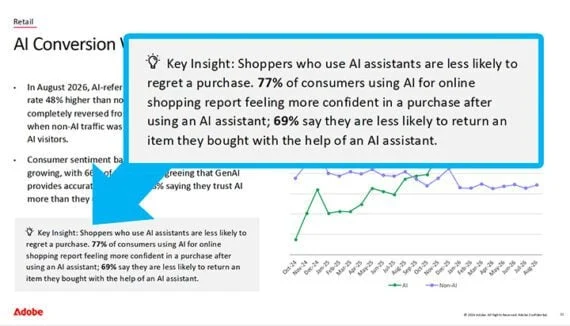
The rapid advancements in Artificial Intelligence (AI) have captured the imagination of the business world, with 72% of eCommerce store owners reporting adoption of AI tools. However, the report’s data reveals that this widespread adoption has not yet translated into measurable financial returns.
Revenue growth among AI adopters is virtually identical to that of non-adopters, with 26.7% growth for adopters versus 27.8% for those not using AI. Net margins and team sizes also show no significant difference. Surprisingly, non-adopters are currently growing profits faster, with a 55.3% net income growth compared to 32.7% for AI adopters.
The report attributes this lag to the significant time and effort required to stay abreast of AI advancements, learn new tools, and integrate them effectively into existing workflows. While the technology’s potential is undeniable, the immediate financial benefits have yet to materialize for the majority.
Interestingly, AI adoption is not solely a domain of younger entrepreneurs. Operators in their 50s are adopting AI at higher rates (80%) than those in their 30s (66%). Furthermore, individuals aged 40-55 are more likely to be leveraging AI for coding purposes than their younger counterparts. This suggests that the perceived complexity and potential benefits of AI may resonate more strongly with experienced operators facing intricate operational challenges.
"We believe the edge is coming," the report states, "But over the last twelve months, it hasn’t shown up." This indicates a cautious optimism regarding AI’s future impact, while acknowledging its current lack of demonstrable ROI.
Margin Divergence: Fatter Product Margins, Thinner Profits
A persistent narrative in eCommerce conferences has been the impact of rising advertising costs on profit margins. However, the eComFuel report challenges this singular focus, presenting data that highlights a significant divergence between product margins and overall profitability.
Despite record-high gross margins averaging 49.5%, driven by a surge in manufacturing and proprietary product development, net profit margins have fallen to their lowest point on record at 10.6%. This creates a nearly 39-point spread, the widest observed since tracking began in 2017.
The report identifies product economics and overhead, rather than advertising spend, as the primary culprits. When controlling for advertising expenditure, profitability remains surprisingly consistent. Businesses achieving net margins of 20% or higher demonstrate significantly lower COGS (38% less) and fixed costs (30% less) compared to those with profit margins below 5%.
The increasing complexity of modern eCommerce, including tariff pressures, intensifying global competition, and the sheer operational demands of running a brand in 2025, is cited as squeezing this profit spread from the bottom.
A notable bright spot within this trend is the $25 million to $50 million revenue tier. This segment emerges as a profitability sweet spot, netting an average of 13.8%, a significant advantage over other revenue tiers which hover around 10%. This tier is largely populated by well-managed manufacturers who have achieved scale without succumbing to the complexity tax that appears to affect businesses exceeding $50 million in revenue.

The Warehouse Myth: Owning Physical Space Slows Growth
The traditional playbook for scaling eCommerce operations often involved acquiring physical warehouses and building in-house teams to manage inventory and fulfillment. However, the report indicates that this approach is becoming a significant impediment to growth.
Businesses that own their warehouses experienced revenue growth of a mere 3.9%, a stark contrast to leasers who saw 33.5% growth and those outsourcing fulfillment entirely, who achieved 22.2% growth. This disparity persists even when controlling for business size within the $1 million to $10 million revenue bracket.
Warehouse owners carry a substantially larger inventory burden, maintain less remote workforces, and express the lowest levels of future optimism among all cohorts. The data reinforces the benefits of flexibility and reduced fixed assets.
The trend towards remote work further underscores this point. Remote-first teams (defined as over 75% remote) reported net income growth of 51.8%, significantly higher than in-office teams at 26.9%. These leaner, remote operations employed an average of 10.5 individuals, compared to 30.5 for in-office teams, while achieving nearly double the median revenue per employee ($1.25 million versus $583,000).
While owning a warehouse might offer certain advantages in terms of business durability, particularly for niche leaders with extensive SKU selections, the measurable data overwhelmingly favors models that minimize fixed physical assets and embrace operational flexibility.
Part 2: The Real Landscape – Broader Forces Shaping eCommerce
The second half of the report shifts focus to the overarching trends and external pressures that are defining the current eCommerce environment.
Business Model Shift: A Surge Towards Manufacturing
The migration towards manufacturing proprietary products has accelerated dramatically. The proportion of store owners producing their own goods has surged by nearly 50% in the past few years, climbing from 41% to 58%. This trend is directly correlated with the rise of "proprietary product" as the number one cited competitive advantage, which has increased from 26% to 35%.
Concurrently, nearly all other business models and competitive advantages have contracted. Reselling, drop shipping, and a focus on lowest cost strategies are all showing declines. The increasing difficulty of selling undifferentiated products in a competitive global market, coupled with rising advertising costs, necessitates higher margins, which manufacturing directly addresses.
International stores are performing as well as, if not better than, their U.S. counterparts across most metrics. Despite 74% of respondents being U.S.-based, the report highlights that smaller businesses (under $1 million in revenue) are disproportionately struggling. This suggests that economies of scale and escalating customer acquisition costs are creating significant structural disadvantages for smaller players.
Tariffs: Brands Absorb Majority of Costs
Businesses have shouldered a substantial portion of the financial burden imposed by tariffs. Among brands reporting income declines due to tariffs, only 42% passed costs onto consumers through price increases, absorbing the remaining 58% as a direct hit to their margins. A notable 40% of U.S. brands did not implement any price adjustments.
The stated objective of re-shoring manufacturing to the United States appears to be making slow progress. Of brands not already manufacturing domestically, only 4% have initiated plans to actively relocate their supply chains to the U.S.
Perhaps more revealing is that tariffs ranked as only the fourth-largest struggle for business owners. More significant challenges included margins and rising costs, growth and scaling, and hiring and talent acquisition. While eCommerce brands are proving resilient to tariff impacts, the report implies that the inherent difficulties of the sector are so substantial that tariffs do not rank among the top three existential threats.
Financial Fluency: The Underrated Edge
The report underscores the critical, yet often overlooked, importance of financial expertise. Owners who self-rated their financial mastery on a 1-to-5 scale demonstrated significantly higher net margins, greater cash reserves, faster income growth, and more robust capital extraction.
The impact of achieving a "5/5" rating in financial expertise is profound. This level of mastery translated to a 37% increase in net margins (from 9.4% to 12.9%), nearly double the financial runway (from 48 months to 109 months), and substantially faster income growth. This pattern held true even when controlling for business size, indicating that financial knowledge independently predicts better business outcomes across the board.
A striking 80% of owners rated themselves below a perfect 5/5, suggesting a vast majority of eCommerce entrepreneurs stand to benefit significantly from deeper investment in their financial education. This aligns with the observation that many owners do not see substantial financial rewards until reaching mid-seven figures in revenue, with 53% taking modest salaries or nothing at all.
The report also explores capital extraction, noting that it is particularly challenging for fast-growing or sub-$1 million businesses. Among companies growing at 50% or more, only 13% take significant dividends, and for sub-$1 million fast growers, this figure drops to zero. These businesses are typically reinvesting all profits into working capital and infrastructure.
A "sweet spot" identified involves a combination of salary and small distributions. This cohort reported the highest net income growth (+45.3%), above-average margins (12.0%), and the highest levels of optimism. The data suggests that small, consistent distributions do not impede growth and contribute to wealth diversification, operational discipline, and overall well-being. The report concludes that while aggressive capital extraction and rapid growth are mutually exclusive, making small distributions a regular habit offers a triple win.
The Future: Optimism Fueled by Lean Operations and AI Investment
Despite facing a barrage of challenges, including tariff pressures, a rapidly evolving AI landscape, and margin squeezes, a remarkable 80% of eCommerce owners remain optimistic about the future of their businesses, with an average hopefulness rating of 7.8 out of 10.
The key differentiator for optimists appears to be operational leanness. This group exhibits lower fixed overhead (19% vs. 24% of revenue), lighter inventory levels (11.9% vs. 14.6% of revenue), and a greater propensity to lease rather than own warehouses.
Looking ahead to 2026, AI and automation emerge as the top investment priority, cited by more owners than any other category. Marketing and advertising follow as the second highest priority, with operational simplification and SKU reduction ranking third. This indicates a clear understanding among operators of the value of maintaining lean operations.
Both younger founders and larger enterprises exhibit significantly higher levels of optimism. Younger entrepreneurs may have fewer past challenges to contend with, while larger businesses benefit from greater resources and resilience. Nevertheless, the report concludes that the eCommerce community as a whole demonstrates remarkable resilience in the face of ongoing industry transformation.
The eComFuel 2026 Trends Report, produced by the private community for seven- and eight-figure store owners, offers invaluable insights and actionable takeaways for navigating the complexities of the modern eCommerce landscape. The data suggests a future where strategic financial management, operational agility, and a nuanced approach to technology adoption will be paramount for sustained success.