rifanmuazin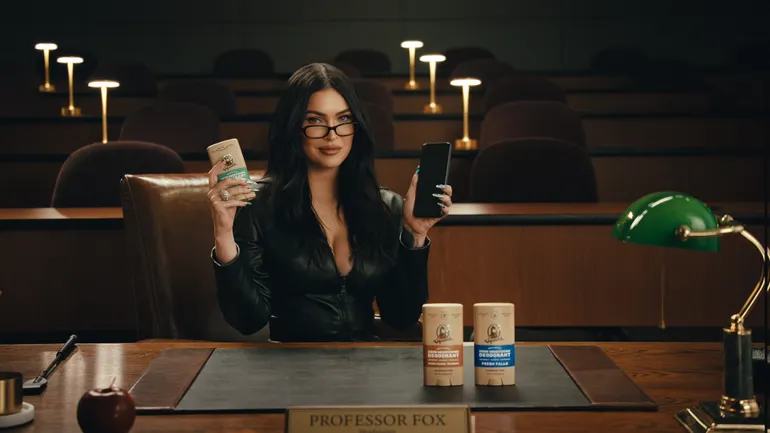
Dr. Squatch, the men’s grooming brand known for its distinctive, often edgy marketing approach, is making a significant foray into the deodorant category with its latest large-scale campaign. In a strategic move to capture market share and educate consumers, the Unilever-owned company has partnered with acclaimed actress Megan Fox for a series of advertisements that blend product benefits with the brand’s signature humor, often laced with suggestive undertones. This campaign marks a deliberate departure from Dr. Squatch’s usual focus on ephemeral products like soap and body wash, venturing into a category where consumer loyalty and product performance are paramount.
The multi-faceted campaign positions Fox as Professor Fox, the authoritative yet playful head of the fictional Dr. Squatch Foundation for Odor Excellence. Across six distinct advertisements, Fox introduces the brand’s two new deodorant offerings, delivering lines that aim to be both memorable and provocative, such as the assertion, "your crush since puberty." The overarching tagline, "Let Your Stick Do The Talking," encapsulates the campaign’s confident and direct messaging. This initiative underscores Dr. Squatch’s commitment to innovation and its understanding of evolving consumer preferences in the increasingly competitive men’s grooming landscape.
Strategic Shift to a High-Consequence Category
The decision to heavily promote its deodorant line is a calculated one, as highlighted by John Ludeke, who was elevated to Chief Brand Officer at Dr. Squatch in February. Ludeke articulated the brand’s strategy, emphasizing the need for bold marketing in a crowded marketplace. "The reality is, when you’re not a mega brand with hundreds of millions to spend in marketing, you have to take a little bit of risk to get things that really stand out and cut through, because you don’t have the ability to just spend huge sums of money to create that repetition that burns the message into the audience base over time," he stated. This approach reflects a recognition that in the absence of massive advertising budgets, creativity and impact are key differentiators.
Deodorant, unlike more transient personal care items, carries a higher perceived consequence for consumers. Ludeke elaborated on this point: "Deodorant, for a lot of men, is higher consequence [than soap]. If it doesn’t work, it’ll lead to embarrassment. It’ll lead to pit stains on my shirt. It’ll lead to problems." This heightened importance of efficacy and reliability in deodorant necessitates a marketing strategy that builds trust and clearly communicates product benefits. Furthermore, the enduring nature of deodorant fragrances makes them a personal choice that consumers are less likely to change frequently. "Guys tend to be pretty loyal toward fragrance profiles that they like, because deodorant fragrance is certainly something that’s going to be on you for for the full day," Ludeke added.
Campaign Creative and Competitive Landscape
The campaign, comprising a mix of 30- and 60-second spots, will be disseminated across Dr. Squatch’s owned channels, including organic and paid social media. The creative execution features Fox in various settings, from academic environments to locker rooms, often wielding a riding crop, a visual cue that adds to the brand’s provocative and playful persona. Her dialogue frequently incorporates sexually suggestive innuendo, such as the line, "Men can’t stop sending me their stick pics," designed to generate buzz and engagement.
Notably, the campaign subtly references key competitors, particularly Procter & Gamble’s Old Spice, a brand that has historically leveraged humor and a distinctive male persona in its advertising. These nods manifest in visual cues, such as a generic red-and-white deodorant stick, and verbal references to an "old and spicy deodorant spray," framing it as an outdated product that should be superseded by more modern alternatives. This competitive framing is a familiar tactic within the men’s grooming sector, with fellow Unilever brand Axe having previously employed a similar scholarly approach to address young men’s grooming habits and the overuse of fragrances.
Dr. Squatch’s campaign aims to elevate its deodorant products by highlighting their natural ingredients in contrast to the synthetic components found in many competitor offerings, including the butane used in aerosol sprays. Ludeke explained the broader objective: "We wanted to do a larger-scale campaign to help educate guys on the different products that are now available and the different alternatives that are out there in the natural, better-for-you space. Hopefully, we can convert more of them from more conventional products over toward the better-for-you category." This educational component is crucial for a brand seeking to penetrate a market often dominated by established players with long-standing consumer relationships.
A Legacy of Disruptive Marketing
Dr. Squatch has built its brand reputation on a foundation of unconventional marketing that often utilizes humor to address men’s health and well-being. This approach is not new for the company. In 2024, Dr. Squatch notably cast actress Sydney Sweeney as a "Body Wash Genie" in a series of advertisements that gained significant traction. This strategic use of a prominent personality with sex symbol status to deliver a product message has been a recurring theme, allowing the brand to leverage cultural relevance and public attention.
Ludeke elaborated on the brand’s philosophy of engaging with cultural norms: "We usually try to take cultural contracts and either embellish them or flip them on their head a little bit to drive interest and engagement." Regarding the choice of Megan Fox, he added, "Megan is an icon, but a lot of times, it’s guys who are looking at her, so we really wanted to take Megan and to put her in a position of power." This strategic repositioning aims to subvert traditional gender dynamics and create a fresh, empowering narrative around the brand and its products.
Rethinking the Advertising Playbook
The effectiveness of this campaign in resonating with consumers, whether through its nuanced commentary on gender roles or simply through Megan Fox’s captivating presence and suggestive dialogue, remains to be seen. However, it clearly continues Dr. Squatch’s established formula of integrating humor, education, and entertainment to achieve cultural penetration. The campaign’s multi-part structure also reflects a broader shift in how brands are adapting to changing consumer behavior and attention spans.
Ludeke expressed a critical view of traditional advertising strategies: "The traditional playbook just doesn’t work that well anymore. People get creative fatigue really quickly, and people get tired of things really quickly. Brands are optimizing with the assumption that their creative isn’t really going to be something people want to watch, so the guidelines are usually you need to have your logo or your product in the first two seconds. Well, that’s as long as it takes for someone to realize they’re watching an ad, and then after that, they just don’t really care."
In response to this challenge, Dr. Squatch prioritizes the creation of diverse content that offers varied perspectives and messaging, all unified under a central campaign theme. The campaign is designed to extend beyond video advertisements, encompassing materials for social media, out-of-home placements, and e-commerce channels. This integrated approach ensures a consistent brand presence across multiple consumer touchpoints.
The ultimate goal, as articulated by Ludeke, is not a singular, impactful launch, but sustained engagement: "The goal is not to have a great launch, and then people get tired of it. The goal is to have different touch points throughout the entire campaign, so there’s always something new for people to experience, so it becomes more of a world-build versus a standard advertising approach." This long-term vision suggests a commitment to building a comprehensive brand narrative that fosters deeper consumer connection and loyalty, moving beyond ephemeral advertising trends to create a lasting brand presence. The campaign’s multi-pronged strategy and innovative creative execution signal Dr. Squatch’s ambition to not only compete but to redefine the advertising landscape in the men’s grooming sector.