
 rifanmuazin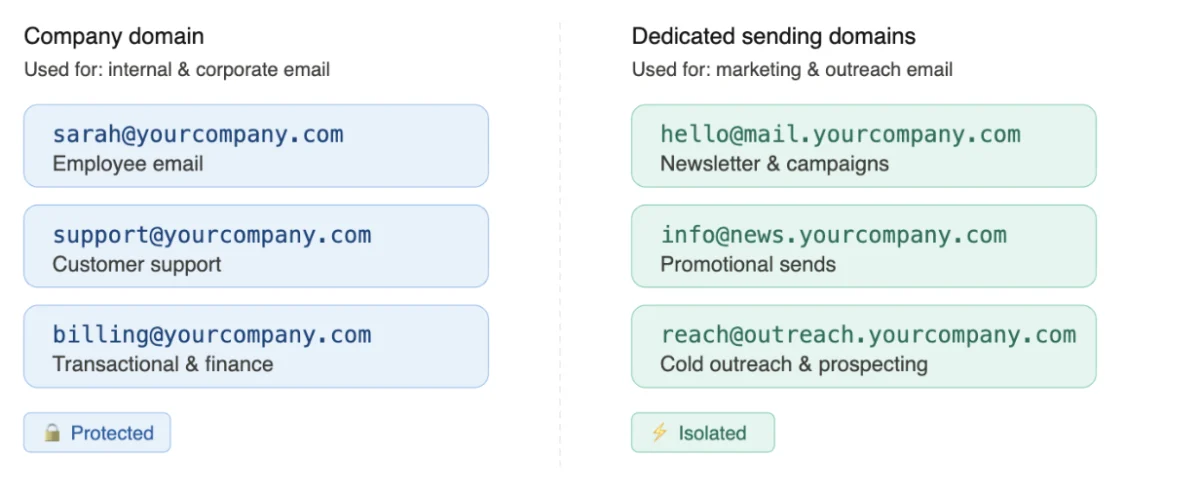
In an era where digital communication is paramount, the efficacy of an email campaign extends far beyond compelling copy and captivating design; its true success hinges on the unseen, intricate mechanics of email infrastructure, the sophisticated plumbing that dictates whether a meticulously crafted message reaches its intended recipient or languishes in the digital abyss of a spam folder. The stakes are higher than ever, with major mailbox providers like Google and Yahoo implementing stringent new requirements for bulk senders, transforming what was once considered best practice into an absolute necessity. Neglecting this foundational layer is no longer an option for businesses aiming to connect with their audience and drive measurable results.
Understanding the Core: What Constitutes Email Infrastructure?
At its heart, email infrastructure is the complex technical ecosystem responsible for the transmission, routing, and ultimate delivery of electronic mail. This encompasses a suite of interconnected components, including the sending domain itself, the dedicated servers that facilitate delivery, the critical security protocols designed to verify sender legitimacy, and the sophisticated monitoring tools that provide oversight and insight into performance. Without a meticulously constructed and maintained foundation in these areas, even the most innovative and engaging email content is destined for obscurity.
The evolution of email from a simple inter-office communication tool to a cornerstone of global commerce and marketing has been paralleled by the escalating sophistication of spam and phishing attempts. Early email systems were relatively open, with minimal checks on sender identity. However, as the volume of unsolicited and malicious email surged, internet service providers (ISPs) and mailbox providers (MBPs) were compelled to develop increasingly complex filtering mechanisms. This historical context underscores why robust infrastructure is no longer a mere technicality but a strategic imperative. The battle against spam has led to a highly regulated environment where sender reputation and authenticity are continuously scrutinized, making proper infrastructure the gatekeeper to the inbox.
Pillar 1: The Strategic Imperative of Choosing the Right Email Service Provider (ESP)
Your Email Service Provider (ESP) functions as the central engine driving your entire email marketing operation. The decision of which ESP to partner with, or whether to migrate from an existing one, carries significant long-term implications and can profoundly impact deliverability, scalability, and overall campaign effectiveness. This choice extends beyond mere feature sets; it delves into the ESP’s commitment to deliverability, its infrastructure, and its ability to adapt to an ever-changing email landscape.
When evaluating an ESP, several critical questions must be addressed to ensure alignment with your program’s long-term objectives. Does the platform offer robust sender reputation management tools, including options for dedicated IP addresses if your sending volume warrants it? What are their internal deliverability monitoring capabilities, and do they provide proactive advice or support for inbox placement issues? Scalability is another vital factor: can the ESP comfortably handle your anticipated email volumes, both now and as your business grows, without compromising performance? Furthermore, consider their compliance with international data privacy regulations such as GDPR and CCPA, as adherence to these standards is crucial for maintaining legal standing and recipient trust. An ESP with a proven track record of high deliverability rates, transparent reporting, and expert support can be the difference between a thriving email program and one consistently hampered by technical hurdles. Industry data frequently highlights that leading ESPs, through their optimized infrastructure and proactive reputation management, can help clients achieve deliverability rates significantly higher than those attempting self-managed solutions or partnering with less reputable providers.

Pillar 2: Establishing a Dedicated Sending Domain for Reputation Protection
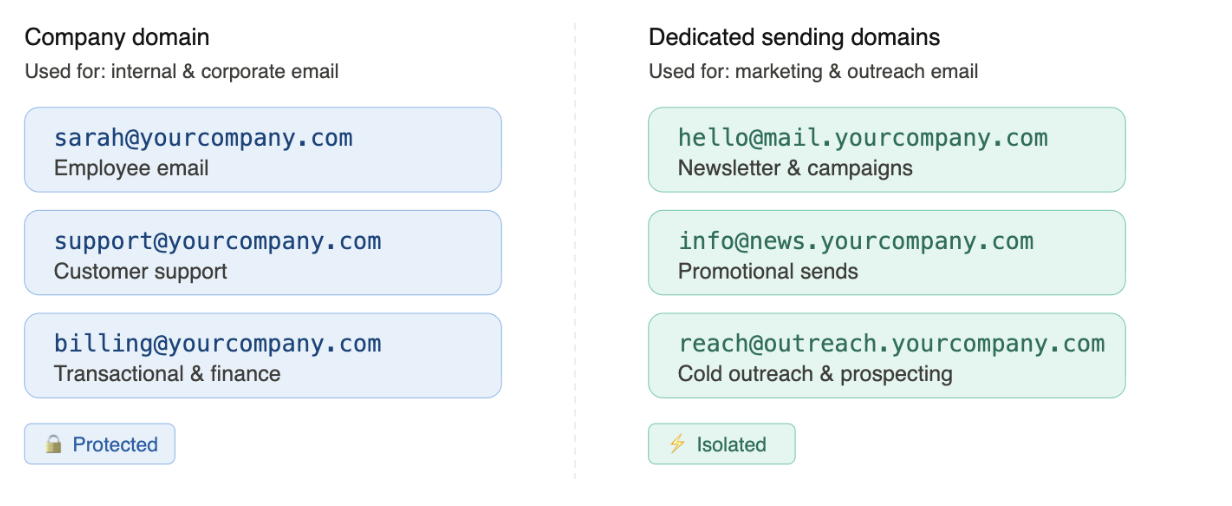
A fundamental principle of sound email infrastructure is the isolation of your marketing email traffic from your primary corporate communications. Sending marketing emails from the same domain that powers your business email (e.g., yourcompany.com) exposes your entire brand to unnecessary risk. Should a marketing campaign inadvertently trigger a surge in spam complaints, result in a blocklisting by a major provider, or encounter other deliverability issues, the negative repercussions could compromise your ability to conduct essential business communications, potentially causing severe operational disruption.
To mitigate this risk, it is strongly recommended to establish a dedicated domain or subdomain specifically for marketing outreach. For instance, if your core business domain is yourcompany.com, you might configure a subdomain like marketing.yourcompany.com, newsletter.yourcompany.com, or even an entirely separate domain such as yourcompany-news.com for all promotional and transactional email sends. This strategic separation creates a controlled environment where you can meticulously build and manage a sender reputation without imperiling your primary domain. A dedicated sending domain allows for focused reputation management, where any issues can be addressed within the confined scope of marketing activities, leaving your corporate communications pristine and unimpeded. This practice is widely endorsed by deliverability experts as a crucial step in safeguarding brand integrity and ensuring business continuity.
Pillar 3: The Non-Negotiable Imperative of Email Authentication Protocols
What was once merely a "best practice" has now evolved into an absolute mandate for all bulk email senders: email authentication. The landscape shifted dramatically in early 2024 when major mailbox providers, notably Gmail, Yahoo, and Microsoft, made robust authentication protocols mandatory for senders sending more than 5,000 emails per day. Failure to comply with these requirements no longer simply leads to underperformance; it almost certainly results in emails being blocked outright, never reaching the inbox. This stringent enforcement reflects the industry’s collective effort to combat the pervasive threats of phishing, spoofing, and spam, thereby protecting users and maintaining the integrity of the email ecosystem.
The implementation of these protocols typically falls within the purview of your IT department or domain administrator. The three primary authentication mechanisms are:
-
Sender Policy Framework (SPF): SPF allows a domain owner to specify which mail servers are authorized to send email on behalf of their domain. This is achieved through a special DNS TXT record that lists the IP addresses of authorized sending servers. When a recipient’s mail server receives an email, it checks the SPF record to verify if the sending server’s IP address is on the approved list. If not, the email may be flagged as suspicious or rejected, helping to prevent unauthorized senders from impersonating your domain.
-
DomainKeys Identified Mail (DKIM): DKIM provides a method for an organization to associate a domain name with an email message by cryptographically signing it. This digital signature is added to the email header and can be verified by the recipient’s mail server using a public key published in the sender’s DNS records. DKIM ensures the email has not been tampered with in transit and confirms that the message genuinely originated from the claimed sender, thereby bolstering trust and message integrity.
-
Domain-based Message Authentication, Reporting, and Conformance (DMARC): DMARC builds upon SPF and DKIM by allowing domain owners to publish a policy in their DNS records that tells recipient mail servers how to handle emails that fail SPF or DKIM authentication. This policy can instruct servers to take no action, quarantine the message (send it to spam), or outright reject it. Crucially, DMARC also provides reporting mechanisms, sending aggregate and forensic reports back to the domain owner, offering invaluable insights into authentication failures and potential abuse of their domain. This feedback loop is essential for monitoring and refining authentication strategies, allowing senders to gain a comprehensive understanding of how their emails are being handled across the internet.
These protocols, when correctly configured, form a robust shield against impersonation and significantly enhance sender credibility. Mailbox providers interpret their presence as a strong signal of legitimacy, making them indispensable for ensuring optimal deliverability in today’s demanding email environment.
Pillar 4: The Patient Art of Domain Warming and Reputation Cultivation
A newly established sending domain begins its life with zero reputation in the eyes of mailbox providers. Attempting to send a large volume of emails from a fresh domain right out of the gate is one of the most direct routes to being immediately flagged as spam. Mailbox providers view such behavior with extreme suspicion, often interpreting it as a hallmark of malicious activity. The correct approach is to build a positive sender reputation gradually and patiently through a process known as domain warming.
A robust domain warming strategy involves starting with a minimal volume of emails and incrementally increasing that volume over several weeks. A common recommendation is to begin by sending approximately 500 to 1,000 emails per day during the initial few days. Crucially, these initial sends should be directed only to your most engaged contacts – individuals who have recently interacted with your brand by clicking on links or opening previous emails. This ensures high engagement rates, which send positive signals to mailbox providers. Every couple of days, assuming your bounce rates and spam complaint rates remain exceptionally low, you can roughly double your sending volume. However, if these critical metrics show an upward trend, it’s a clear signal to pull back, stabilize, and potentially reduce volume before attempting further increases.
This process is not a sprint; it’s a marathon that typically spans several weeks, if not longer, depending on the target volume and the domain’s performance. The patience exercised during this phase is an investment, as the positive sender reputation carefully cultivated through a meticulous warmup schedule forms the bedrock upon which all future email marketing success rests. Rushing this critical step can lead to blacklisting, permanent damage to your sender reputation, and a prolonged struggle to achieve consistent inbox placement.
Pillar 5: Vigilant Deliverability Monitoring and Proactive Analytics
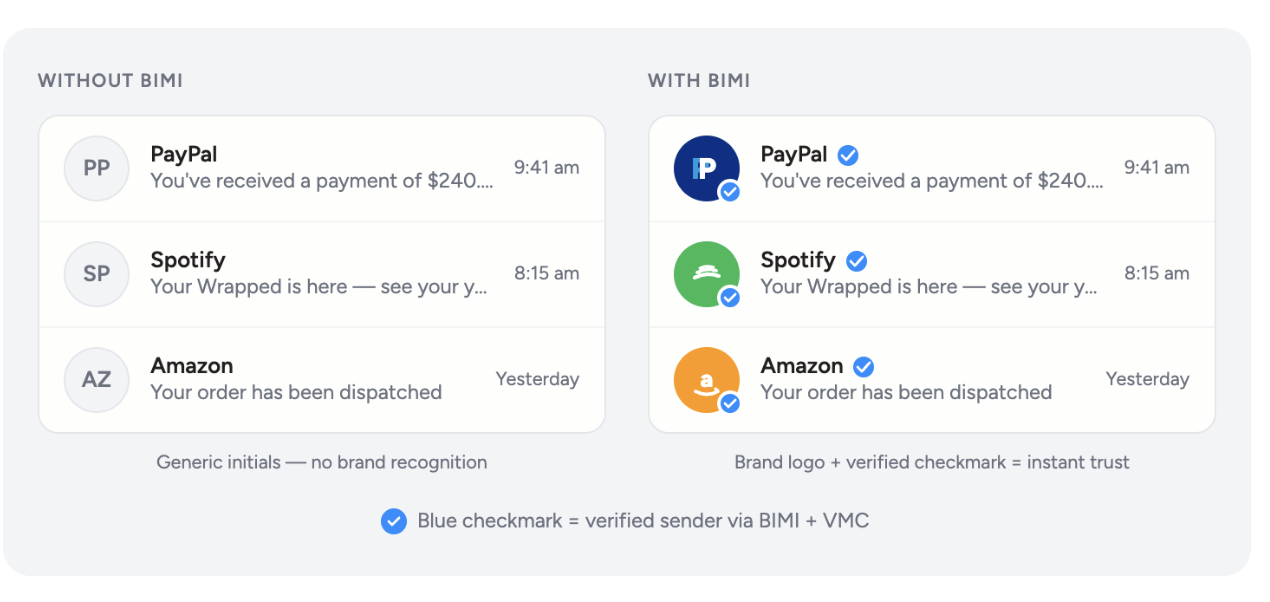
A common misconception among senders is that an email reported as "delivered" by their ESP has successfully reached the recipient’s inbox. This is often not the case. Validity’s 2026 Email Deliverability Benchmark report starkly reveals that approximately one in seven legitimate, permission-based marketing emails never actually make it to the inbox, instead landing in spam folders or being blocked entirely. This critical distinction between "delivered" and "inboxed" underscores why active, continuous monitoring of your deliverability metrics is not merely advisable but absolutely essential.
Effective deliverability monitoring involves keeping a close watch on several key performance indicators:
- Spam Complaint Rate: This is one of the most crucial metrics. A healthy spam complaint rate should ideally be 0.1% or less, with anything above 0.3% considered a serious red flag that can quickly lead to reputation damage and blocks.
- Bounce Rate: Distinguish between "hard bounces" (permanent delivery failures, indicating an invalid address) and "soft bounces" (temporary failures, like a full inbox). High hard bounce rates signal list hygiene issues, while persistent soft bounces can indicate reputation problems.
- Blocklisting Status: Regularly check if your sending IP addresses or domains have been listed on major industry blocklists. Many free and paid tools are available for this purpose.
- Engagement Metrics: While not direct deliverability metrics, high open and click-through rates, coupled with low unsubscribe rates, send positive signals to mailbox providers, indicating that your content is valued by recipients.
- Mailbox Provider Feedback Loops: Signing up for free feedback loop services offered by major providers is indispensable. Google Postmaster Tools, Microsoft SNDS (Smart Network Data Services), and Yahoo Sender Hub provide invaluable insights into how these dominant inbox providers perceive your sending reputation. They offer data on spam complaint rates, IP and domain reputation, DMARC authentication status, and more, giving you direct visibility into the factors influencing your inbox placement, rather than just whether your emails were accepted at the gateway.
Proactive monitoring allows marketers to identify and address deliverability issues swiftly, often before they escalate into major problems. Ignoring these signals can lead to a gradual erosion of sender reputation, culminating in widespread blocking and a significant loss of marketing effectiveness.
Broader Implications and the Enduring Value of the Effort
The investment in establishing and maintaining solid email infrastructure might not possess the immediate glamour of crafting a viral subject line or designing an interactive email template. Yet, it is the silent, fundamental force that underpins the success of every other email marketing endeavor. The landscape of email deliverability is continuously evolving, with authentication requirements becoming increasingly strict, inbox algorithms growing smarter and more sophisticated, and the competitive chasm between senders who prioritize their infrastructure and those who do not widening at an accelerating pace.
The implications of robust versus neglected infrastructure extend far beyond technicalities. Financially, poor deliverability translates directly into wasted marketing spend, lost sales opportunities, and a diminished return on investment for email campaigns. If emails consistently fail to reach the inbox, the potential revenue from those campaigns evaporates. From a brand reputation standpoint, consistently landing in the spam folder can erode trust, make a brand appear unprofessional, or even be perceived as engaging in questionable email practices. Conversely, a strong deliverability track record fosters customer loyalty and reinforces a positive brand image.
Ultimately, by beginning with a robust foundation, patiently warming up new sending domains, diligently configuring authentication protocols, and maintaining a vigilant eye on deliverability metrics, businesses position themselves for sustained success. This strategic approach ensures that marketing messages effectively reach their intended audience, fostering engagement, driving conversions, and maximizing the profound potential of email as a critical communication channel. For organizations seeking expert guidance in navigating these technical complexities, specialized professional services are available to audit existing setups, configure intricate authentication protocols, and maintain optimal deliverability, ensuring that every email sent has the best possible chance of fulfilling its purpose.









