rifanmuazin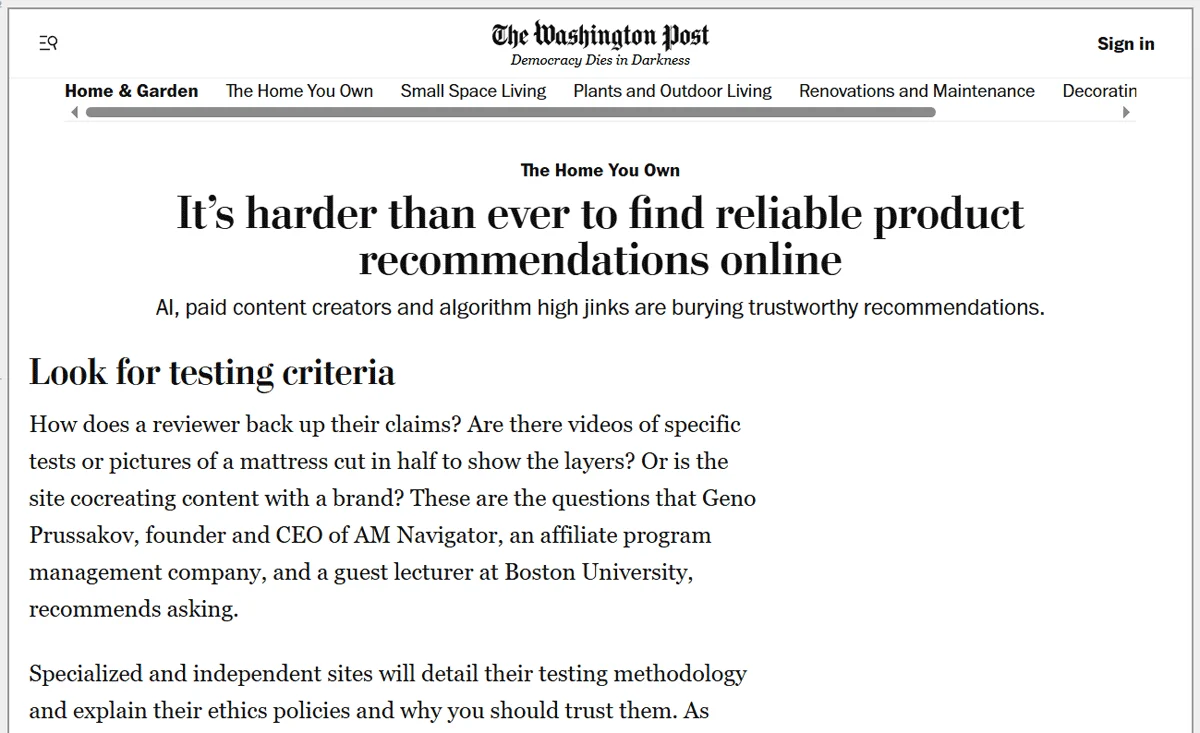
The landscape of digital journalism has undergone a profound transformation over the last decade, shifting from a primary reliance on display advertising to a sophisticated model of affiliate-driven commerce. This evolution reached a critical juncture in early 2025 as major news outlets, including The Washington Post, began a self-reflective examination of how media conglomerates leverage their established brand authority to influence consumer purchasing decisions. The central tension in this modern media environment lies in the balance between rigorous editorial testing and the financial incentives inherent in affiliate marketing, where publishers earn commissions on products purchased through their recommendation lists.
The Shift to Affiliate-Driven Journalism
For generations, legacy media organizations built their reputations on objective reporting and a strict "church and state" separation between editorial content and advertising. However, the decline of traditional print revenue and the diminishing returns of programmatic display ads forced a pivot toward "service journalism." This niche focuses on providing utility to the reader, primarily through product reviews, "best of" roundups, and buying guides.
Today, nearly every major media entity—from The New York Times and CNN to Forbes and Dotdash Meredith—operates a dedicated commerce wing. These divisions are designed to capture "high-intent" traffic: users who are searching for specific products with the intent to buy. By appearing at the top of search engine results pages (SERPs) for queries like "best vacuum cleaner" or "top credit cards for travel," these outlets can capture a significant percentage of the affiliate marketing industry, which is projected to exceed $15 billion in global spending by the end of 2025.
A Chronology of Media Monetization
The trajectory of this industry shift can be traced through several key milestones that redefined the relationship between publishers and retailers:
- 2011: The Acquisition of The Wirecutter. The New York Times Company’s purchase of the independent review site The Wirecutter for approximately $30 million served as a proof of concept. It demonstrated that rigorous, lab-based testing could be paired with affiliate links to create a sustainable revenue stream.
- 2016–2018: The Proliferation of "Underscored" and "Select." Major networks like CNN and NBC launched dedicated commerce brands (CNN Underscored and NBC Select), integrating product recommendations directly into their news homepages.
- 2020–2022: The Pandemic E-commerce Surge. The COVID-19 pandemic accelerated the shift to online shopping, leading media companies to expand their commerce teams aggressively to meet the demand for "work from home" and "home fitness" product advice.
- 2023–2024: The SEO Authority Wars. Google’s "Helpful Content" and "Product Review" updates aimed to prioritize high-quality reviews. However, critics argued these updates inadvertently favored "Big Media" domains, allowing legacy brands to dominate rankings even when their content lacked the deep expertise of niche enthusiast sites.
- January 2025: The Washington Post Investigation. A major report by The Washington Post examined the transparency of these lists, questioning whether financial arrangements with advertisers were beginning to supersede editorial integrity.
The Mechanics of Product Evaluation and Financial Influence
Industry experts, including Geno Prussakov of AM Navigator, suggest that while many big media players treat their monetization efforts with high seriousness, the process is not immune to financial pressure. Most reputable outlets employ a multi-layered approach to maintain credibility:
- Independent Editorial Teams: Maintaining a separation between the writers who test products and the business development teams that negotiate affiliate contracts.
- In-House Testing Labs: Investing in physical facilities where products are put through standardized performance tests.
- Third-Party Expert Consultation: Hiring specialists to provide technical insights that a generalist journalist might lack.
- Rigorous Updating Cycles: Ensuring that recommendation lists are not static, but are updated to reflect new product releases and inventory changes.
Despite these safeguards, the "pay-to-play" model remains a persistent concern. Financial arrangements often take the form of "placement fees," where a brand pays a flat rate to be included in a roundup, or "inflated commission rates," where a brand offers a publisher a higher percentage of the sale in exchange for a higher ranking on a list. Additionally, "Earnings Per Click" (EPC) guarantees—where an advertiser guarantees a certain level of revenue regardless of conversion—can subtly influence which products are featured most prominently.
Data-Driven Insights into the Affiliate Sector
Recent data highlights the sheer scale of the affiliate marketing ecosystem within the media industry. According to industry reports from 2024, affiliate marketing now accounts for up to 25% of total digital revenue for some major publishers. Furthermore, conversion rates for products recommended by trusted legacy brands are significantly higher—often by 150% to 300%—than those seen on standard retail sites or social media advertisements.

A study conducted in late 2024 found that 68% of consumers "highly trust" product recommendations from established news brands, yet only 22% of those same consumers were aware that the media outlet receives a commission if a purchase is made. This "transparency gap" is a primary driver of the current calls for stricter disclosure standards.
Regulatory Oversight and the Ethics of Disclosure
The Federal Trade Commission (FTC) in the United States has increasingly focused on the clarity of affiliate disclosures. Current guidelines require that any financial relationship between a content creator and a brand be disclosed in a "clear and conspicuous" manner.
However, the definition of "clear and conspicuous" is often debated. Many publishers place disclosures in small text at the top of a page or behind a "What is this?" info icon. Journalistic ethics advocates argue that for true transparency, disclosures should specify whether a product’s ranking was influenced by a commercial partnership, rather than using a generic statement about earning commissions.
Statements from industry watchdogs suggest that the next phase of regulation may involve mandatory "clear-labeling" of sponsored placements within editorial lists, similar to how "native advertising" is treated in digital magazines.
Consumer Strategies for Navigating Recommendation Lists
As the lines between editorial content and advertising continue to blur, consumers must adopt a more analytical approach to online shopping. Experts recommend four primary strategies for verifying the authenticity of a recommendation:
- Scrutinize the Date of Publication: Product landscapes change rapidly. A "best of" list that hasn’t been updated in six months may no longer reflect the current market or the latest technological advancements.
- Verify Disclosure Details: Look for explicit statements regarding how products were tested and whether any financial incentives influenced the rankings.
- Cross-Reference Multiple Sources: Compare recommendations across different media outlets and independent review sites. If one product is consistently ranked #1 across five different reputable sources, its quality is more likely to be legitimate.
- Consult Social Proof: Review aggregate customer feedback on neutral platforms like Reddit or specialized forums. These communities often identify long-term durability issues that a short-term media test might miss.
Broader Implications for the Digital Information Ecosystem
The monetization of search engine authority by big media has broader implications for the diversity of information on the internet. As legacy brands dominate the first page of search results, smaller, independent review sites—often run by subject-matter experts with decades of experience—find it increasingly difficult to survive. This consolidation of "ranking power" risks creating an echo chamber where only the products from brands with the largest affiliate budgets are seen by the general public.
Furthermore, the "halo effect" of a trusted brand like The Washington Post or The New York Times is a finite resource. If consumers begin to feel that recommendations are driven by profit rather than performance, the long-term damage to the brand’s core journalistic credibility could far outweigh the short-term affiliate revenue gains.
The ongoing dialogue sparked by recent industry reporting serves as a reminder that in the digital age, trust is the most valuable currency. As media organizations continue to navigate the complexities of e-commerce, the maintenance of that trust will require a commitment to transparency that matches the rigor of their reporting. The future of service journalism depends on the ability of publishers to prove to their audience that their recommendations are based on merit, not just on the highest commission rate.