
 rifanmuazin
Crazy Egg, a leading provider of website optimization and user experience analytics, has announced a significant update to its integration capabilities by enabling the direct tracking of Google Analytics 4 (GA4) “key events” as conversions within its platform. This development allows digital marketers, data analysts, and website owners to synchronize their conversion data between the two platforms without the necessity of implementing additional code or specialized tracking tags. By bridging the gap between quantitative traffic data and qualitative user behavior insights, this integration aims to provide a more cohesive view of the customer journey, facilitating more informed decisions regarding website design and conversion rate optimization (CRO).
The transition to GA4 has been a transformative period for the digital marketing industry, particularly following the sunsetting of Universal Analytics. One of the most recent shifts within the GA4 ecosystem was Google’s rebranding of “conversions” to “key events” for standard behavioral tracking, reserving the term “conversions” specifically for events shared with Google Ads for bidding purposes. Crazy Egg’s update directly addresses this terminology and functional shift, ensuring that users who have already invested time in configuring their GA4 properties can leverage that work immediately within their heatmaps, session recordings, and A/B testing suites.
The Technical Framework of the GA4 and Crazy Egg Integration
The mechanics of this integration rely on the ability of the Crazy Egg snippet to detect events as they fire within the visitor’s browser. When a user interacts with a website in a way that triggers a GA4 key event—such as a form submission, a product purchase, or a specific button click—Crazy Egg’s script identifies the event signal. If the user has configured a corresponding conversion goal in Crazy Egg, the platform automatically logs that session as a conversion.
This process is designed to be “plug-and-play” for organizations utilizing standard implementation methods. The integration supports events fired via the global Google Tag (gtag.js), Google Tag Manager (GTM), and various Customer Data Platforms (CDPs) that operate on the client side. However, technical specifications clarify a critical limitation: the integration is restricted to browser-side events. If an organization uses server-side tagging or processes events after they have left the browser environment, Crazy Egg will not be able to detect the trigger automatically. This distinction is vital for enterprise-level users who may have complex, server-oriented data architectures.
Strategic Context: The Evolution of Digital Analytics
To understand the significance of this update, one must look at the broader chronology of web analytics. For over a decade, Universal Analytics served as the industry standard, utilizing a session-based data model. The shift to GA4 introduced an event-based model, which offers greater flexibility but also requires a more rigorous setup process.
In April 2024, Google introduced the distinction between “key events” and “conversions.” This change was intended to simplify the workflow for advertisers who needed to distinguish between general milestones (like “video view”) and high-value actions (like “purchase”). Crazy Egg’s rapid adoption of this nomenclature reflects a commitment to maintaining parity with Google’s ecosystem, which remains the dominant force in web traffic measurement.
Market data suggests that as of 2024, over 50% of the world’s top one million websites utilize some form of Google Analytics. For these millions of users, the ability to port data between tools without increasing “tag bloat”—the slowing of a website due to excessive tracking scripts—is a high priority. Industry experts have long warned that excessive JavaScript tags can negatively impact Core Web Vitals, which in turn affects search engine rankings and user retention. By utilizing existing GA4 events, Crazy Egg helps users maintain site performance while gaining deeper insights.
Enhancing Data Accuracy and User Insight
The primary advantage of tracking GA4 key events within Crazy Egg is the enhancement of data granularity. When a conversion is logged in Crazy Egg, it allows the user to filter other reports based on that successful outcome. For instance, an e-commerce manager can view a heatmap specifically for users who completed the “purchase” key event versus those who did not.
This level of segmentation provides answers to critical business questions:
- Where did successful converters click compared to those who abandoned their carts?
- Are there specific elements on the page that distract users from the primary call to action?
- In session recordings, what common obstacles did users face before successfully triggering a key event?
By aligning Crazy Egg conversions with GA4 key events, businesses ensure that they are looking at a “single source of truth.” In the past, discrepancies between different analytics tools often led to confusion, as different platforms might use different logic to define a conversion. This integration minimizes those discrepancies by allowing Crazy Egg to essentially “listen” to the definitions already established in Google Analytics.
Implementation Workflow and Operational Efficiency
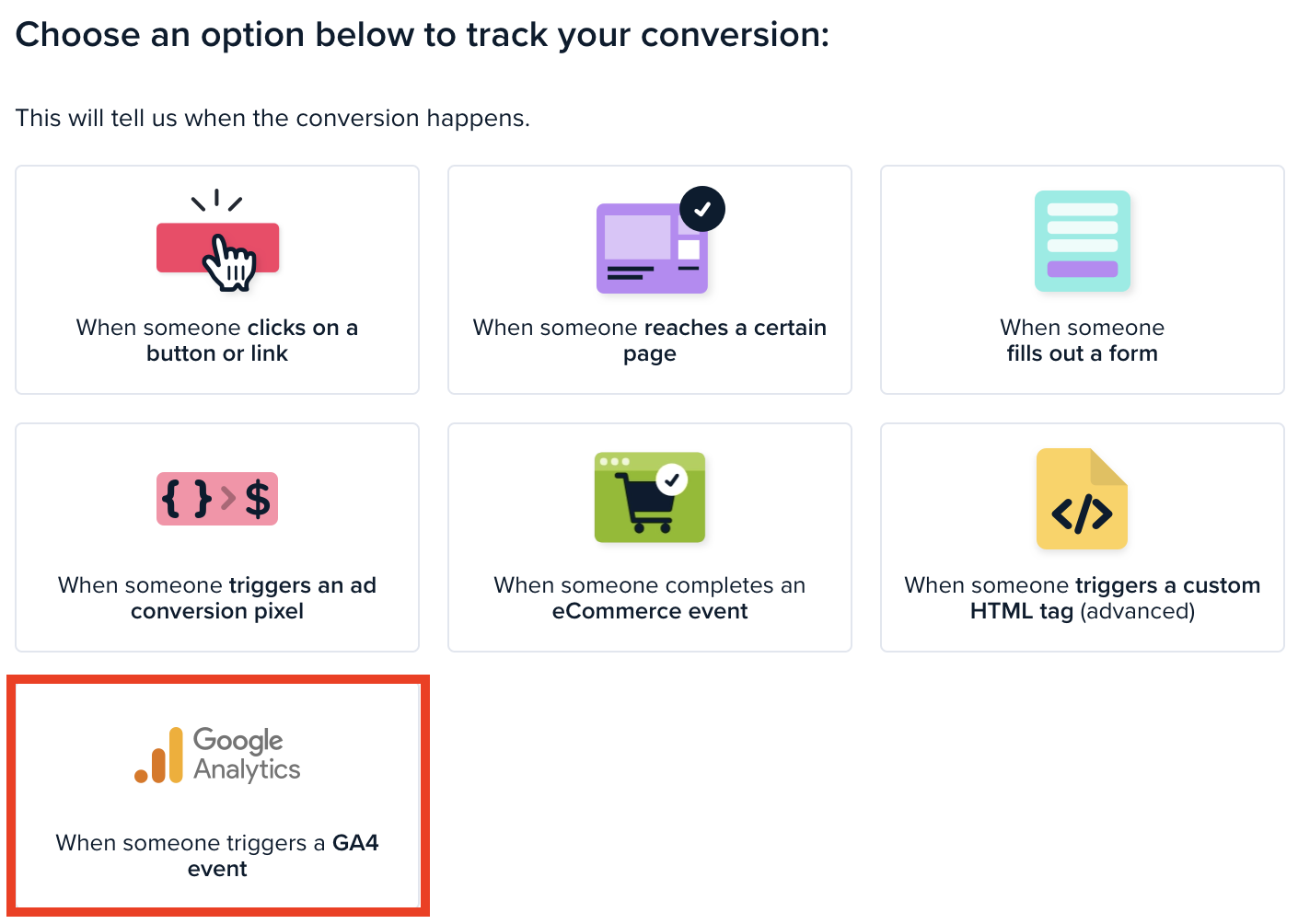
The implementation process has been streamlined to minimize the burden on IT departments. To track a GA4 key event as a conversion in Crazy Egg, users navigate to the “Conversions” section of their dashboard and select the option to use a GA4 trigger. From there, they specify the event name as it appears in their GA4 property.
This streamlined workflow represents a shift in the SaaS industry toward “low-code” solutions. As marketing teams are increasingly tasked with managing their own technology stacks without constant developer intervention, tools that offer native integrations become significantly more valuable. The reduction in technical debt—the long-term cost of maintaining custom code and tags—is a tangible benefit for growing companies.
Industry Implications and Competitive Analysis
The move by Crazy Egg is indicative of a broader trend toward interoperability in the marketing technology (MarTech) landscape. As the “walled gardens” of data become more difficult to navigate due to privacy regulations like GDPR and CCPA, as well as the phasing out of third-party cookies, the ability to leverage first-party event data across multiple platforms is crucial.
Analysts in the MarTech space note that tools like Hotjar, Mouseflow, and FullStory are also racing to deepen their integrations with GA4. Crazy Egg’s focus on the “key events” terminology specifically targets the ease of use for Google-centric marketers. By focusing on browser-side detection, Crazy Egg prioritizes the most common use case, though it leaves room for future developments in server-side compatibility as that technology becomes more mainstream among small to medium-sized businesses.
Furthermore, the integration supports better ROI (Return on Investment) calculations for advertising spend. When GA4 key events are accurately mirrored in Crazy Egg, marketers can perform more effective “conversion lift” studies. They can see not just that a user converted, but the entire behavioral path that led to that conversion, which can then be used to optimize landing pages for ad campaigns.
Addressing Potential Technical Challenges
While the integration offers numerous benefits, users must remain aware of technical nuances. Since the detection happens in the browser, any browser extensions that block scripts (such as certain ad-blockers) may prevent the event from being logged in both GA4 and Crazy Egg. Additionally, if there is a significant lag in how the Google Tag fires on a page, there could be minor discrepancies in data logging.
Another consideration is the setup of “Key Events” within the GA4 interface itself. For the integration to work effectively, the events must be properly named and active within the Google Analytics property. If a name is changed in GA4, it must be manually updated in Crazy Egg to maintain the connection. This underscores the importance of a disciplined data governance strategy within marketing teams.
Conclusion and Future Outlook
The integration of GA4 key events into the Crazy Egg platform marks a pivotal step in the democratization of advanced web analytics. By allowing users to leverage their existing tracking infrastructure, Crazy Egg is reducing the barriers to entry for sophisticated conversion rate optimization.
As digital landscapes continue to evolve, the demand for tools that offer a holistic view of the user experience—combining the “what” of quantitative data with the “why” of qualitative behavior—will only grow. This update positions Crazy Egg as a critical component of the modern analytics stack, providing a seamless bridge between Google’s data collection and actionable design insights.
In the coming months, it is expected that more features will be added to this integration, potentially including the ability to pull more complex event parameters into Crazy Egg’s filtering system. For now, the ability to track key events as conversions serves as a powerful foundation for any business looking to improve its online performance and better understand its audience in a post-Universal Analytics world. The focus remains on accuracy, efficiency, and the ultimate goal of transforming visitor data into tangible business growth.








