The digital landscape, ever-evolving and increasingly competitive, places a premium on direct audience engagement. At the heart of this strategy lies the email list, an indispensable asset often metaphorically described as a dedicated room filled with individuals eager to hear a brand’s message. In this “room,” subscribers not only consume content but also interact, inquire, purchase products or services, and, crucially, become advocates who draw others into the fold. For years, the conventional wisdom dictated that a robust online presence, typically anchored by a dedicated website, was a prerequisite for cultivating such a list. However, a significant paradigm shift has occurred, making it entirely feasible to gather a vibrant subscriber base without the initial overhead and complexity of website development. The key to this newfound accessibility is the hosted signup form, a standalone digital tool democratizing list building for entrepreneurs, creators, and small businesses alike.
The Enduring Power of the Email List in the Digital Age
Despite the proliferation of social media platforms and instant messaging apps, email marketing continues to assert its dominance as one of the most effective and reliable channels for communication and conversion. This enduring relevance stems from several fundamental advantages. Unlike social media algorithms, which dictate reach and visibility, an email list provides a direct line of communication to an interested audience, unfettered by third-party controls. Subscribers have actively opted in, indicating a higher level of intent and engagement compared to passive social media followers. Industry data consistently underscores email’s superior performance; studies by organizations like the Direct Marketing Association and Campaign Monitor routinely report an average return on investment (ROI) for email marketing hovering around $36 for every $1 spent, significantly outperforming other digital channels. Furthermore, email is often cited as being 40 times more effective at acquiring new customers than social media platforms like Facebook or Twitter. This formidable efficacy solidifies the email list’s position as a cornerstone of any sustainable digital strategy, serving as a primary conduit for nurturing leads, driving sales, and fostering brand loyalty. The ability to build and leverage this critical asset, even in the absence of a traditional website, therefore represents a pivotal development for countless emerging ventures.
Understanding the Hosted Signup Form: A Standalone Solution
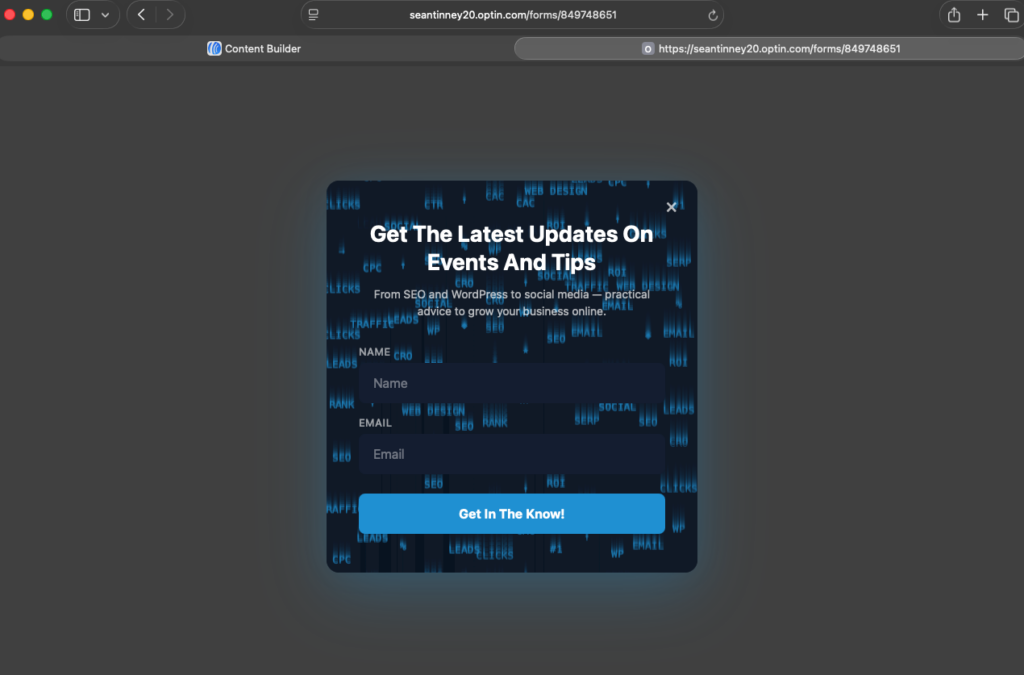
At its core, a hosted signup form is a dedicated web page designed for the singular purpose of collecting email addresses and adding subscribers to a mailing list. Unlike embedded forms that reside within an existing website, a hosted form “lives on its own,” possessing a unique, shareable URL. This independence is its primary strength. It functions as a complete, self-contained entity, accessible to anyone with the link, regardless of whether they have visited a specific website.
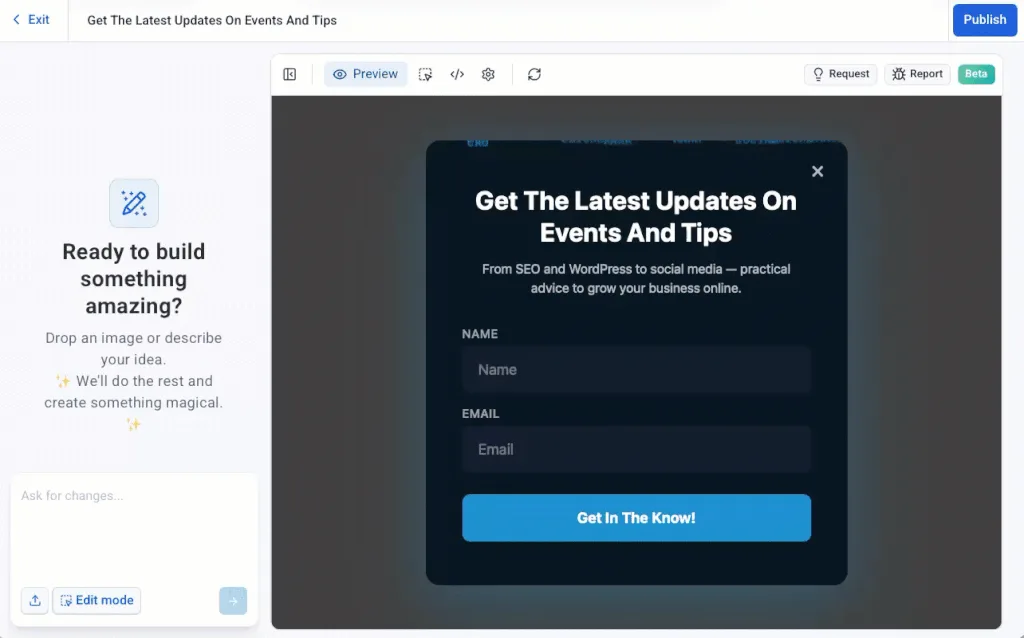
The architecture of a hosted form is streamlined by design. It typically features a compelling headline, a brief description outlining the value proposition for subscribing, and the essential input fields for collecting email addresses (and often names). The user experience is focused, minimizing distractions and guiding visitors directly to the subscription action. This contrasts sharply with a full website, which, while offering extensive content and navigation, can sometimes diffuse a visitor’s attention. For businesses already operating a website, a hosted signup form still offers significant strategic value. It serves as a vital backup mechanism should the primary site experience downtime, ensuring continuous list growth. Moreover, when the goal is to direct traffic solely to a subscription point—perhaps for a specific campaign or lead magnet—the hosted form provides an uncluttered, direct pathway, enhancing conversion rates by eliminating extraneous navigation elements.
The Evolution of Creation: AI-Powered Form Builders
The process of creating these essential forms has undergone a remarkable transformation, largely driven by advancements in artificial intelligence. Historically, designing and implementing signup forms often required a degree of technical proficiency or reliance on web developers. Today, AI-powered tools have dramatically simplified this process, making professional-grade forms accessible to virtually anyone.
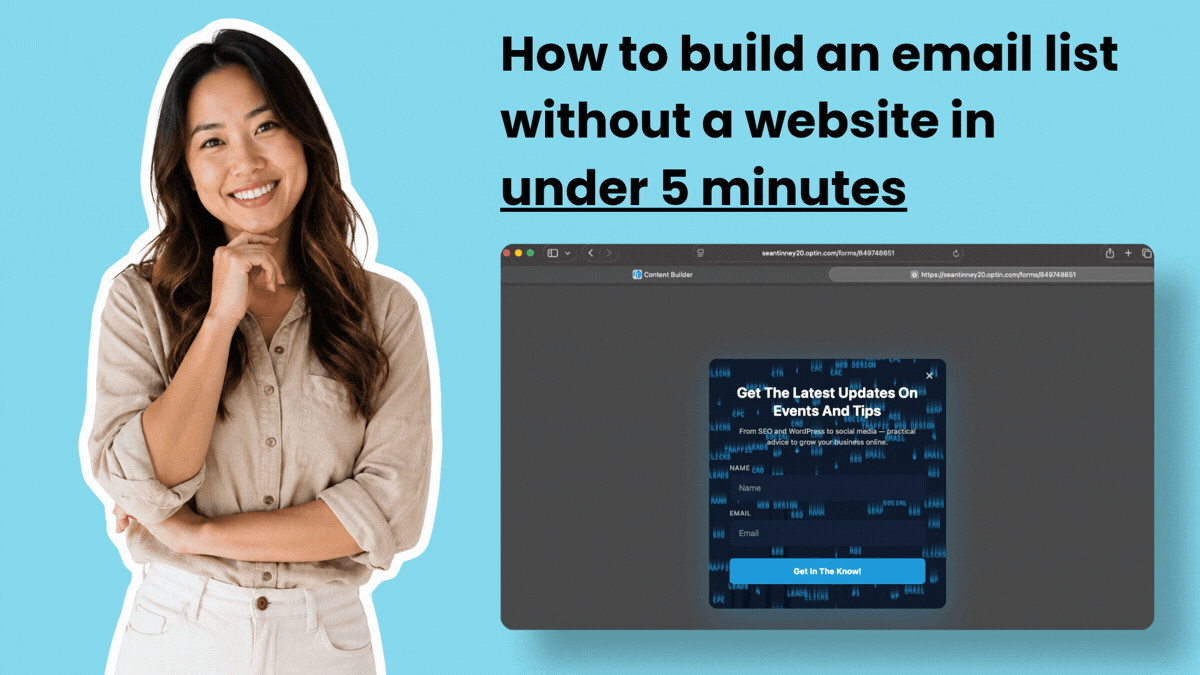
Email marketing platforms, such as AWeber, have been at the forefront of integrating AI into their signup form builders. These sophisticated tools can generate a complete, branded, and hosted signup form from a single, descriptive prompt. This innovation represents a significant leap, moving beyond template-based design to a more intuitive, generative approach.
The typical workflow for creating a hosted signup form with an AI builder follows a logical and remarkably swift chronology:
- Accessing the AI Signup Form Builder: Within the intuitive AWeber dashboard, users navigate to the ‘Pages & Forms’ section and select the ‘AI Signup Forms’ option. This dedicated portal initiates the guided creation process, signaling the transition from manual design to AI-assisted generation.
- Describing the Business or Niche: The user inputs a concise yet comprehensive description of their business, brand, or the specific content niche they intend to cover. This textual prompt serves as the foundation for the AI’s creative process. For instance, a user might input: “I run a sustainable gardening blog focused on organic vegetable growing tips for urban dwellers,” or “My business sells handmade ceramic mugs and offers workshops on pottery techniques.” The more precise the description, the more tailored the AI’s output.
- Review, Refine, and Customize: Leveraging sophisticated algorithms, the AI rapidly generates a fully functional signup form based on the provided description. This initial draft includes a relevant headline, a persuasive description of the list’s benefits, and a design aesthetic (colors, fonts, layout) that aligns with inferred brand identity. Users then have the opportunity to review this AI-generated content. While the AI aims for accuracy, human oversight allows for fine-tuning. Adjustments to the headline for greater impact, modifications to the descriptive text for clarity or tone, or alterations to the visual elements like colors and fonts can be made with simple clicks, ensuring the final form perfectly reflects the brand’s voice and visual identity. Alternatively, for those satisfied with the AI’s initial output, the form can be published immediately.
- Acquiring the Hosted URL: Upon publication, the system instantly provides a unique, shareable URL. This URL is the gateway to the newly created hosted signup form. It can be copied and pasted across various digital and even physical touchpoints, instantly making the form live and ready to collect subscribers.
The entire process, from initial description to a fully functional, shareable hosted form, often takes less than five minutes. This speed and simplicity are transformative. It eliminates the need for coding knowledge, extensive design decisions, or intricate technical configurations. The AI handles the heavy lifting of the initial draft, empowering users to refine and publish with unprecedented ease. This democratization of list-building tools significantly lowers the barrier to entry for digital marketing, allowing creators to focus their energy on content creation and audience engagement rather than technical infrastructure.
Strategic Deployment: Maximizing Reach Without a Website
Once a hosted signup form is created, the next crucial step is strategically placing its unique URL where the target audience congregates. The absence of a dedicated website does not equate to a lack of promotional avenues; rather, it encourages creative and direct distribution strategies. The key is to integrate the form seamlessly into existing online and offline communication channels, making subscription an effortless action for interested individuals.
-
Leveraging Social Media Platforms: Social media remains a powerhouse for audience discovery and engagement. Hosted signup form links can be strategically embedded across platforms like Facebook, Instagram, X (formerly Twitter), LinkedIn, TikTok, and YouTube.
- Link in Bio: This is a fundamental tactic, particularly for Instagram and TikTok, where clickable links are limited. A single, prominent link in the profile bio can direct followers to the signup form.
- Pinned Posts: On platforms like Facebook and X, a post featuring the signup link can be “pinned” to the top of a profile or page, ensuring it remains highly visible.
- Stories and Reels: Interactive elements within stories (e.g., “swipe up” or sticker links) and calls to action in Reels can guide viewers to the form.
- Direct Posts: Regular posts explicitly inviting followers to subscribe, explaining the benefits (e.g., exclusive content, early access, special offers), and including the link directly in the caption or as a comment. The preview text generated when sharing the AWeber hosted form link on platforms like Facebook automatically uses the form’s chosen name, making it imperative to select a descriptive and engaging name for the form itself.
- Group and Community Engagement: In relevant Facebook groups or LinkedIn communities, subject to group rules, sharing the link with a clear value proposition can attract highly targeted subscribers.
The efficacy of social media for list building is amplified when accompanied by a compelling call to action. Instead of merely “Sign Up Here,” a more engaging approach might be: “Unlock exclusive weekly insights into [Your Niche] and never miss a beat! Subscribe to my newsletter for [Specific Benefit]: [Link].” This direct, value-driven communication enhances conversion rates.
-
Guest Posts and Collaborations: A highly effective method for tapping into established audiences is through guest content creation and strategic collaborations. By writing articles for another blog, participating in a joint webinar, or appearing as a guest on a podcast, creators can introduce themselves to new communities.
- Author Bio Integration: In guest blog posts, the author’s bio is a prime location to include a link to the hosted signup form. A statement such as: “If you enjoyed this content and wish to receive more insights from [Your Name/Brand], subscribe to my newsletter here: [Link]” is a powerful prompt.
- Within Content (Contextual): If appropriate and permitted by the host, a subtle, contextually relevant link within the body of a guest post can also drive subscriptions.
- Joint Promotions: During collaborations (e.g., co-hosting an event, participating in a bundle sale), the hosted form link can be shared across all promotional materials, allowing both parties to benefit from audience cross-pollination. This strategy leverages the credibility of the host platform to introduce new potential subscribers to your offerings.
-
In-Person Collection via QR Codes: The intersection of the digital and physical worlds offers unique opportunities for list growth. QR codes have experienced a resurgence in popularity, becoming an indispensable tool for bridging this gap.
- Print Media Integration: By converting the hosted signup form’s URL into a QR code, entrepreneurs can embed it on business cards, flyers, brochures, product packaging, and event signage. A simple scan with a smartphone camera instantly directs individuals to the subscription form.
- Event Engagement: At farmer’s markets, craft fairs, conferences, or workshops, a prominently displayed QR code allows attendees to subscribe on the spot using their mobile devices. This eliminates the need for manual data entry, reduces friction, and captures interest in real-time. The immediate conversion potential is high, as interested parties can join the list before they even leave the immediate vicinity.
- Retail and Hospitality: Restaurants can include QR codes on menus for loyalty programs, retail stores on receipts for special offers, or service providers on display materials in their waiting areas.
-
Additional Non-Website Channels:
- Email Signatures: Every professional or personal email sent can serve as a subtle yet consistent reminder to subscribe. Including the hosted form link in the email signature ensures passive promotion with every outbound message.
- Online Forums and Communities: Active participation in relevant online forums, Reddit communities, or Slack channels can present opportunities to share the link strategically, ensuring it provides value rather than appearing as spam.
- Webinars and Online Events: For those hosting or participating in webinars, the signup form can be used for pre-registration, during the event for special offers, or in follow-up communications.
- Podcast Show Notes: Podcasters can include their hosted form link directly in their show notes, making it easy for listeners to subscribe for additional content or updates.
- YouTube Descriptions: Video creators can place the link prominently in the description box of their YouTube videos, guiding viewers to subscribe for more content.
- Virtual Business Cards: Digital business cards exchanged via NFC or QR codes can directly embed the hosted form link.
These diverse methods underscore the versatility of hosted signup forms, demonstrating that a lack of a traditional website is no longer an impediment to effective audience building.
The Strategic Decision: When to Upgrade to a Full Website
While hosted signup forms and dedicated landing pages offer a robust foundation for building an audience and even delivering lead magnets or triggering automated workflows, there comes a point in a business’s growth trajectory where a full-fledged website becomes a strategic necessity. Recognizing these trigger points is crucial for sustainable expansion.
The decision to invest in a website typically aligns with several key developments:
- Long-Form Content Publishing: When the need arises to publish extensive, evergreen content such as blog posts, detailed guides, whitepapers, or resource libraries, a website provides the ideal architecture for organization, searchability, and continuous updates. While individual articles can be shared via email, a blog centralizes all content, enhancing user experience and search engine optimization (SEO).
- Direct E-commerce Functionality: For businesses looking to sell multiple products or services directly online, a website with integrated e-commerce capabilities (shopping carts, product pages, secure payment gateways) is indispensable. While hosted forms can lead to sales pages on third-party platforms, a proprietary website offers greater control over the sales funnel and brand experience.
- Complex Multi-Page Navigation: As a business expands its offerings, services, and narrative, the need for multiple interconnected pages (e.g., “About Us,” “Services,” “Testimonials,” “Portfolio,” “Contact”) becomes apparent. A website provides the structural framework for this complex navigation, allowing visitors to explore different facets of the brand systematically.
- Enhanced Brand Authority and Search Engine Presence: A professional website significantly boosts a brand’s credibility and authority. It serves as a central hub for all brand information and can be optimized for search engines, making it easier for potential customers to find the business through organic search queries. When an audience is actively searching for a business by name, they expect to find a dedicated website.
- Advanced Analytics and Integration: Websites offer more sophisticated analytics tools, allowing for granular tracking of user behavior, conversion paths, and integration with a wider array of marketing and business intelligence platforms.
Until these specific needs emerge, hosted signup forms and strategically designed landing pages serve as a powerful and efficient “home base.” They effectively collect emails, distribute lead magnets, and initiate automated communication sequences—all the essential components for cultivating a real and engaged audience. It’s important to note that even after establishing a website, hosted forms and landing pages retain their utility. They can be deployed for specific marketing campaigns, A/B testing, or as dedicated conversion points that funnel visitors directly to a desired action, minimizing distractions inherent in a broader website environment.
Broader Impact and Future Outlook
The accessibility afforded by tools like AI-powered hosted signup forms signifies a broader trend in digital marketing: the democratization of advanced strategies. This shift empowers solopreneurs, freelancers, non-profits, and small businesses to build direct, valuable relationships with their audiences without requiring substantial upfront investment in web development or technical expertise. It allows creators to focus their resources and energy on their core competencies—crafting compelling content, developing innovative products, and nurturing their community—rather than grappling with the complexities of digital infrastructure.
This evolution highlights a future where sophisticated marketing tools become increasingly intuitive and automated, driven by AI. The emphasis will continue to be on simplifying the user journey, accelerating deployment, and providing actionable insights, enabling even the most nascent ventures to compete effectively in the digital realm. The ability to quickly establish a direct communication channel through an email list, independent of a full website, is not merely a convenience; it is a fundamental enabler of digital entrepreneurship and audience-first growth strategies.
In conclusion, the journey to building a powerful email list no longer begins with the daunting task of website creation. With the advent of hosted signup forms and intelligent AI builders, the path is clear, direct, and remarkably efficient. Industry leaders like AWeber have championed the development of such accessible tools, recognizing the evolving needs of digital entrepreneurs seeking to connect directly with their audience from the very outset. This innovation ensures that the enduring power of email marketing is within reach for everyone, fostering a more inclusive and dynamic digital economy.