

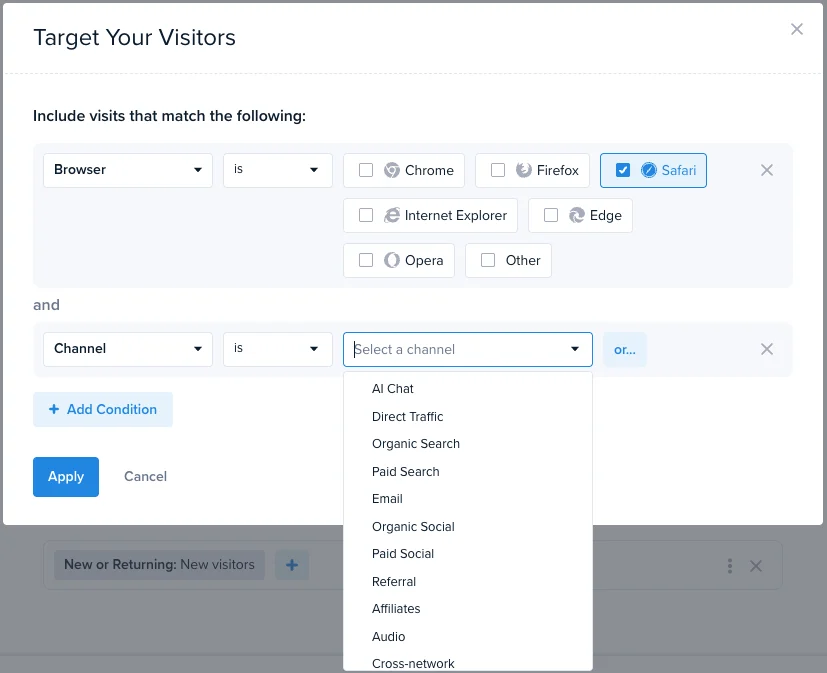
Crazy Egg, a pioneer in heatmapping and website optimization technology, has announced a significant expansion of its A/B testing suite with the introduction of 11 new audience targeting filters. This update is designed to provide digital marketers, UX researchers, and conversion rate optimization (CRO) specialists with more granular control over how page content is served to different segments of their audience. By allowing users to layer these new parameters on top of existing filters, the platform aims to bridge the gap between broad-scale A/B testing and highly specific web personalization.
The new filters focus on three primary categories of user data: acquisition source, behavioral engagement, and custom site-specific data. According to the company’s product release notes, these updates allow for the creation of complex audience segments that can be targeted with precision. For instance, a website owner can now serve unique content specifically to visitors arriving from a paid social media campaign who have remained on a page for more than 30 seconds, or to users who have reached a specific scroll depth on a previous visit.
A Strategic Expansion of Segmentation Tools
The 11 new filters are intended to complement Crazy Egg’s existing suite of targeting options, which includes device type, geographic location, visitor status (new vs. returning), UTM parameters, conversion status, and customer lifetime value. The addition of these new metrics reflects a broader trend in the digital marketing industry toward hyper-personalization.
The specific filters introduced in this update include:
- Channel: Identifies the broad category of traffic, such as organic search, paid search, social media, or direct.
- Referrer URL: Targets visitors coming from specific external websites.
- Time on Page: Allows marketers to trigger variants based on the duration of a user’s current session.
- Scroll Depth: Targets users based on how far down a page they have navigated.
- Language: Filters by the browser’s language settings.
- Browser: Targets specific web browsers like Chrome, Safari, or Firefox.
- Operating System: Segments users based on their OS (e.g., iOS, Android, Windows).
- Screen Resolution: Useful for testing designs on specific hardware configurations.
- Custom Variables: Allows businesses to pass in their own proprietary data from their backend or CRM.
- A/B Test Participation: Targets users based on whether they have seen a specific test before.
- Variant Exposure: Targets users based on which specific version of a previous test they were assigned to.
These filters utilize AND/OR logic, enabling users to "mix and match" criteria without a limit on the number of filters applied simultaneously. This flexibility is a significant shift from traditional A/B testing tools that often restrict the complexity of audience segments unless users possess advanced coding knowledge.
Chronology of Product Evolution
The launch of these filters marks a pivotal moment in Crazy Egg’s history, which spans nearly two decades. Founded in 2006 by Neil Patel and Hiten Shah, Crazy Egg initially gained prominence as one of the first tools to offer heatmaps, providing a visual representation of where users clicked on a page.
Over the last several years, the company has transitioned from a pure visualization tool into an all-in-one optimization platform. The timeline of this evolution includes:
- 2006–2010: Focus on Heatmaps and Scrollmaps, establishing the "Snapshot" as a core feature.
- 2015: Introduction of Confetti reports, allowing users to see clicks segmented by referral source.
- 2017: Launch of User Recordings, providing session-by-session playback of visitor behavior.
- 2020: The debut of the Crazy Egg A/B Testing tool, designed for ease of use without requiring developers.
- 2022–2024: Integration of surveys and advanced error tracking to identify "rage clicks" and broken elements.
- 2026 (Present Update): The release of the 11 audience filters, moving the platform toward advanced segmentation and automated personalization.
Data-Driven Personalization and Market Impact
The move to enhance audience targeting is supported by a growing body of industry data regarding the effectiveness of personalized web experiences. According to recent industry benchmarks, companies that excel at personalization generate 40% more revenue from those activities than average players. Furthermore, personalized calls-to-action (CTAs) are reported to perform 202% better than basic, non-targeted versions.
By providing these tools, Crazy Egg is positioning itself against other major players in the CRO space, such as VWO and Optimizely. Since the sunsetting of Google Optimize in 2023, the market for mid-market and enterprise-level testing tools has become increasingly competitive. Marketers are looking for solutions that offer the power of enterprise software with the user-friendliness of a self-service tool.
The inclusion of "Custom Variables" is particularly significant for e-commerce and SaaS businesses. This feature allows a site to pass data—such as a user’s subscription tier or their loyalty program status—directly into the A/B testing engine. This means a SaaS company could run a test specifically for "Pro" users that "Free" users would never see, ensuring that the user experience is relevant to the customer’s specific relationship with the brand.
From Testing to Permanent Personalization
A notable feature of this update is the ability to use A/B testing tools for permanent personalization. While traditional A/B tests are designed to find a "winner" between two or more variants, Crazy Egg’s new targeting logic allows users to route 100% of a specific segment’s traffic to a customized variant indefinitely.
This approach effectively turns the A/B testing engine into a personalization engine. For example, a business could decide that every visitor arriving from a specific LinkedIn ad campaign should see a landing page that mentions the specific industry discussed in that ad. By setting the traffic split to 100% for that targeted segment, the "test" becomes a permanent fixture of the site’s architecture for those specific users. This bypasses the need for complex hard-coding of dynamic content, allowing marketing teams to deploy personalized experiences in minutes rather than weeks.
Access and Availability
The distribution of these new features follows a tiered model based on the user’s subscription level. All 11 new filters are immediately available to customers on the Enterprise plan or those who have purchased the Audience Targeting add-on.
Customers on the Pro plan have been granted access to a subset of these features, specifically the Language, A/B Test, and A/B Test (Variant) filters. This tiered approach suggests that Crazy Egg is targeting larger organizations with complex data needs for its most advanced segmentation tools, while still providing meaningful updates to its mid-tier user base.
Professional Analysis of Implications
The introduction of these filters suggests a shift in how Crazy Egg views the role of the digital marketer. By removing the technical barriers to complex segmentation, the platform is betting on a future where "non-technical" team members handle the majority of site optimization.
However, this increased power comes with its own set of challenges. Industry analysts note that as targeting becomes more granular, the sample size for A/B tests naturally shrinks. Marketers will need to be cautious about achieving statistical significance when testing small, highly filtered segments. For instance, a test targeted at "Chrome users on mobile in Canada who arrived via a specific Facebook ad" may take months to reach a definitive result compared to a site-wide test.
Furthermore, the emphasis on custom data and user identifiers reflects the ongoing industry response to the "cookie-less future." As third-party cookies are phased out, the ability to use first-party data (via Custom Variables) becomes the gold standard for reaching the right audience.
Future Outlook
As Crazy Egg continues to roll out these updates, the focus is likely to shift toward automation and machine learning. Industry observers expect that the next logical step for the platform will be "predictive targeting," where the system automatically identifies which segments are most likely to convert on specific variants based on historical data.
For now, the addition of the 11 audience filters provides a robust framework for businesses to refine their digital presence. By allowing for a more nuanced understanding of the visitor journey—from how they found the site to how they interact with its content—Crazy Egg is enabling a level of precision that was previously the domain of high-end, high-cost enterprise suites.
The company has stated that the new filters are now live and can be accessed within the A/B Test targeting selector interface. Users are encouraged to review their current testing strategies to identify opportunities where these new segments could yield more actionable insights and improved conversion rates.







