rifanmuazin
In the dynamic and increasingly competitive realm of digital marketing, social media platforms have become indispensable channels for businesses seeking to connect with their audiences. At the heart of paid social strategies lie two fundamental approaches: boosted posts and comprehensive social advertisements. While often conflated, these methods serve distinct purposes, offer varying degrees of control, and are suited for different marketing objectives and resource allocations. Understanding the nuances between them is crucial for any brand aiming to optimize its digital spend and achieve measurable outcomes.
The Evolution of Paid Social: From Organic Reach to Targeted Promotion

The landscape of social media marketing has undergone significant transformation. Initially, platforms like Facebook and Instagram were bastions of organic reach, where compelling content could naturally find a vast audience. However, as these platforms matured and user bases swelled, algorithms were refined to prioritize user experience and, critically, to open new avenues for monetization. This evolution led to a gradual decline in organic reach for businesses, compelling them to invest in paid promotion to ensure their messages cut through the noise.
This shift gave rise to the two primary forms of paid promotion: the simplified, accessible "boosted post" and the more complex, powerful "social ad." Both are tools for extending visibility beyond a brand’s organic followers, but they diverge significantly in their strategic depth and potential impact.
Boosted Posts: Amplifying Existing Content with Simplicity

A boosted post represents the most straightforward entry point into social media advertising. Fundamentally, it involves allocating a budget to an existing organic post – whether text, image, or video – to expand its reach and potentially increase engagement metrics such as likes, comments, and shares. The process is designed for ease of use, typically requiring marketers to select a few basic targeting parameters and set a budget directly from the post itself.
Visually, a boosted post closely mirrors its organic counterpart, distinguished only by a subtle "sponsored" or "promoted" label in the viewer’s feed. Crucially, a boosted version may incorporate a call-to-action (CTA) button, such as "Shop Now" or "Send Message," which is typically absent from the original organic content. This added functionality, while simple, allows for a basic level of interaction beyond mere engagement. Platforms like Facebook, Instagram, LinkedIn, and TikTok (where it’s termed "Promote") universally offer this feature, making it accessible across major social networks. For instance, a well-performing organic Reel on Instagram can be quickly transformed into a boosted post, gaining a "Sponsored" tag and a "Shop Now" button, reaching new eyes without requiring extensive creative overhaul.
The primary appeal of boosted posts lies in their low barrier to entry. Small businesses, individual entrepreneurs, or marketing teams with limited time and resources can quickly and effectively put money behind content that is already resonating with their audience, providing an immediate, albeit superficial, uplift in visibility.

Social Ads: Crafting Campaigns from the Ground Up
In contrast to the reactive nature of boosting an existing post, social ads are proactively designed campaigns built from scratch within a platform’s dedicated ad management tool, such as Meta Ads Manager or LinkedIn Campaign Manager. This approach fundamentally reverses the process: instead of starting with content and adding a budget, marketers begin with a clear objective and budget, then meticulously construct the creative elements to achieve that goal.
The creative possibilities with social ads are vast and varied. Meta, for example, offers carousel ads, video ads, Stories ads, lead form ads, collection ads, and dynamic product ads, each tailored for specific objectives and placements. LinkedIn expands on this with conversation ads, message ads, and document ads. This extensive array of formats provides unparalleled flexibility, allowing advertisers to craft highly specific, visually rich, and interactive experiences designed to drive precise business outcomes. The journey from conception to execution is more involved, requiring a deeper understanding of the ad platform’s interface, targeting capabilities, and optimization levers.
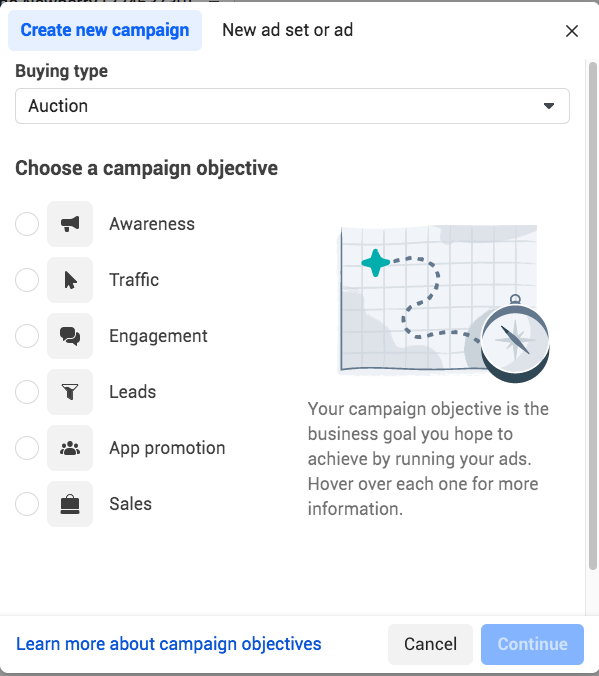
The evolution of these ad managers reflects the increasing sophistication of digital marketing. What started as simple promotional tools have grown into powerful ecosystems, enabling granular control over every aspect of an advertising campaign, from audience selection to budget allocation and performance tracking.
Key Differentiators: Control, Objectives, and Analytics
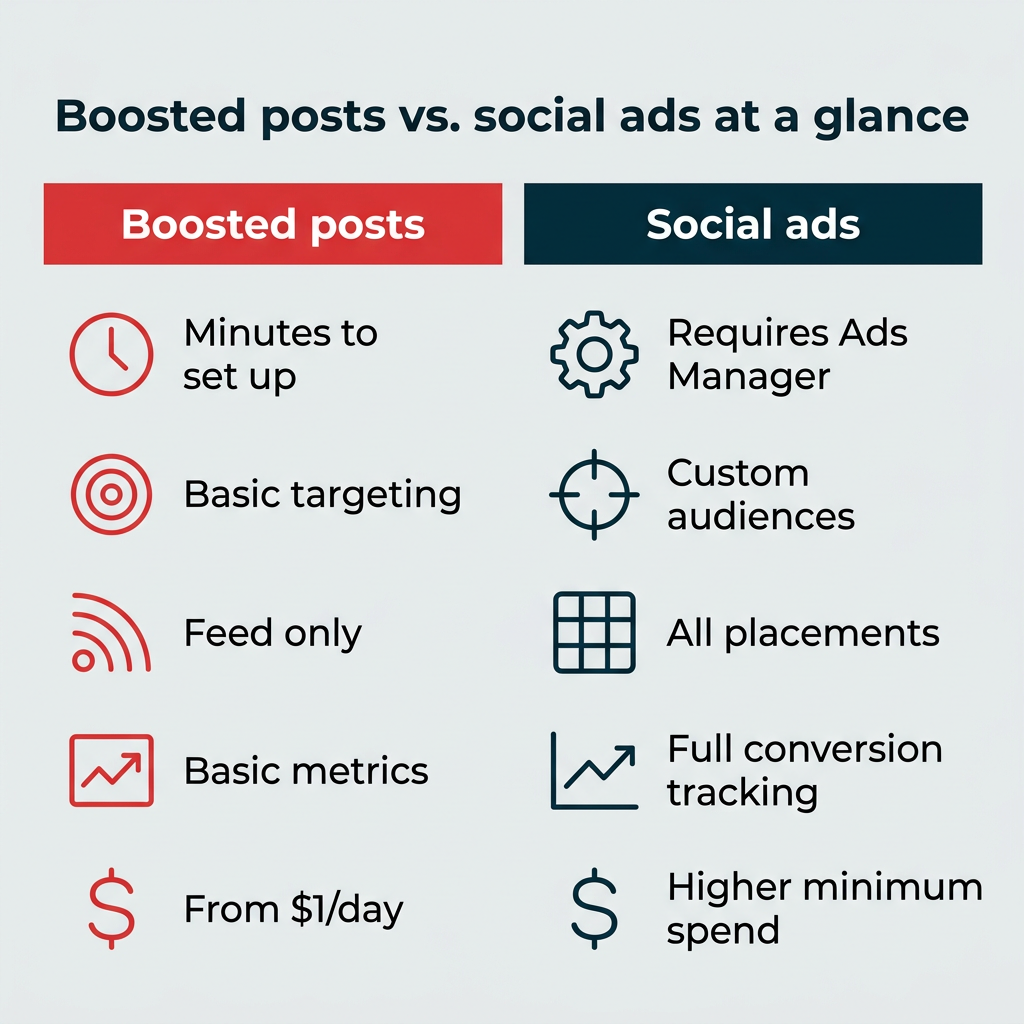
The core distinction between boosted posts and social ads boils down to control and strategic depth. A boosted post offers a quick, simplified amplification of existing content, whereas a social ad is a fully customizable campaign engineered for specific, measurable results. This divergence is evident across several critical dimensions:
-
Objectives:
- Boosted Posts: Primarily focused on increasing reach, driving engagement, generating profile visits, or encouraging basic link clicks. On LinkedIn, some lead generation capabilities are available, but these are typically simpler forms.
- Social Ads: Encompass all boosted post objectives, but crucially extend to more advanced, conversion-oriented goals such as direct sales, app installs, store traffic, website conversions (e.g., purchases, sign-ups), and even specific hiring objectives like job applicants on LinkedIn. This broader scope makes social ads indispensable for driving tangible business growth and direct return on investment (ROI).
-
Targeting Capabilities:
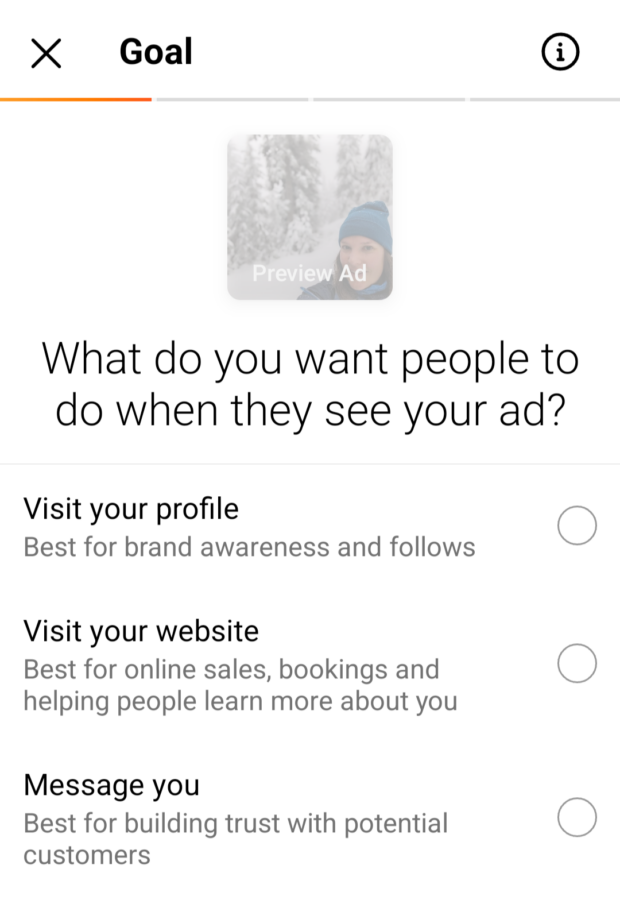
- Boosted Posts: Offer fundamental targeting options based on demographics (age, gender), interests, and geographical location. While sufficient for reaching a broad, relevant audience, this level of precision is limited.
- Social Ads: Unlock highly sophisticated targeting. Marketers can create custom audiences from their existing customer data (email lists, website visitors, app users), develop lookalike audiences based on their best customers, and utilize exclusion lists to avoid showing ads to already converted users. LinkedIn further offers account-based targeting by company name, job title, seniority, and industry, enabling highly specific B2B outreach. This granular control allows for hyper-personalized ad delivery, significantly improving efficiency and effectiveness.
-
Ad Placements:
- Boosted Posts: Generally confined to the primary feed (e.g., Facebook mobile and desktop feeds, Instagram feed).
- Social Ads: Provide access to a much wider array of placements, including Stories, Reels, Messenger, Audience Network, and various in-stream video placements. This expanded reach allows brands to connect with audiences across different touchpoints and content consumption habits, maximizing visibility and engagement potential.
-
Creative Control and Formats:
- Boosted Posts: Limited to the format and creative elements of the original organic post. Minor adjustments like a CTA button might be added, but the core content remains fixed.
- Social Ads: Offer complete creative autonomy. Advertisers can design bespoke ad formats (e.g., multi-product carousels, interactive lead forms, immersive video experiences), tailor copy, experiment with different calls to action, and create multiple creative variations for A/B testing. This flexibility is vital for optimizing ad performance and maintaining brand messaging integrity.
-
Reporting and Optimization:
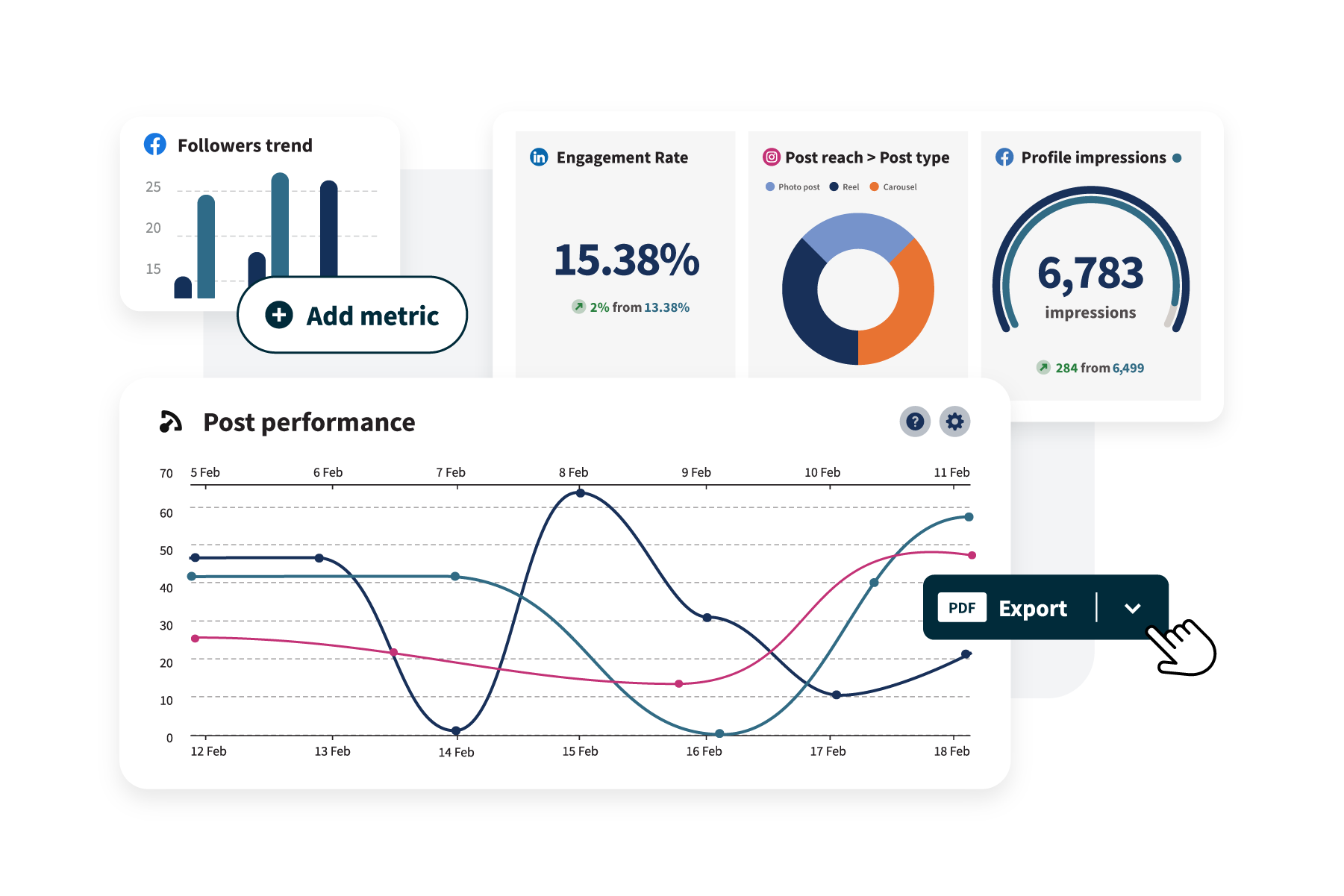
- Boosted Posts: Provide basic metrics such as reach, impressions, engagement rates, and link clicks. While useful for initial performance assessment, these insights offer limited depth regarding business outcomes.
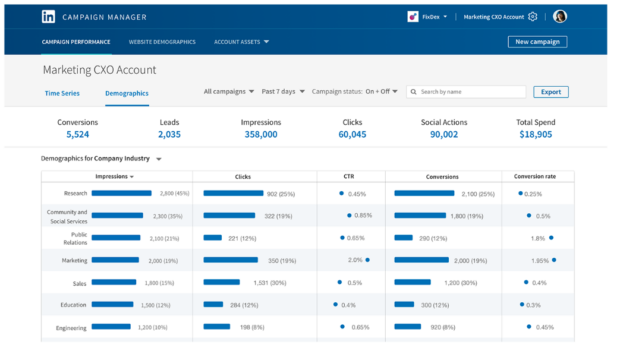
- Social Ads: Deliver comprehensive reporting, including full conversion tracking, pixel-based attribution, and detailed demographic breakdowns of who engaged with the ad and how they converted. Ad managers also facilitate A/B testing of various creative, audience, and placement combinations, with platforms often employing machine learning to optimize campaigns towards the best-performing variations. This robust analytics capability is critical for understanding campaign ROI and making data-driven adjustments.
-
Complexity and Learning Curve:
- Boosted Posts: Require minimal technical knowledge and can be set up in minutes, making them highly accessible for beginners.
- Social Ads: Demand a steeper learning curve, requiring familiarity with complex ad manager interfaces, campaign structures, and optimization strategies. While powerful, they necessitate a greater investment of time and expertise.
Strategic Application: When to Deploy Each Tool
The choice between a boosted post and a social ad is not about one being inherently "better" than the other, but rather about aligning the tool with specific marketing goals, available resources, and desired levels of control.
When to Choose Boosted Posts:
Boosted posts are the ideal solution for quick, low-cost amplification and testing. They are particularly well-suited for:
- Amplifying Top-Performing Organic Content: When an organic post garners exceptional engagement, boosting it can extend its lifecycle and reach a broader audience that might not have seen it organically.
- Driving Quick Engagement: For campaigns focused on increasing likes, comments, shares, or video views on a specific piece of content, boosted posts offer an efficient way to achieve these metrics.
- Event Promotion or Announcements: Rapidly increasing visibility for an upcoming event, webinar, or product launch announcement.
- Initial Market Testing: Using small budgets to test different messages, visuals, or audience segments to see what resonates before committing to larger, more complex campaigns.
- Limited Budgets and Resources: For startups, small businesses, or solopreneurs, boosted posts provide an accessible entry into paid social without requiring significant investment in ad creative or specialized expertise.
- Preserving Social Proof: Boosted posts retain all the likes, comments, and shares from the original organic post, which can enhance credibility and trust among new audiences.
Despite their advantages, boosted posts come with limitations. The restricted objectives mean they are not ideal for direct sales or complex lead generation. Furthermore, iOS users creating boosted posts directly within Meta’s mobile apps face a 30% service fee, a charge that can be circumvented by boosting via desktop or third-party tools like Hootsuite.
When to Choose Social Ads:

Social ads are the definitive choice for businesses seeking measurable conversions, advanced targeting, and scalable campaigns. They are indispensable for:
- Conversion-Focused Campaigns: Driving direct sales, generating qualified leads, acquiring app installs, or encouraging specific website actions (e.g., demo requests, whitepaper downloads).
- Retargeting and Remarketing: Re-engaging website visitors, past customers, or individuals who interacted with previous content but did not convert.
- Advanced Audience Segmentation: Leveraging custom and lookalike audiences to target highly specific segments with personalized messages.
- A/B Testing and Optimization: Systematically testing various ad creatives, headlines, CTAs, and audience segments to continually refine performance and maximize ROI.
- Scaling Successful Initiatives: Expanding campaigns that have demonstrated strong performance, leveraging automation and optimization features to grow reach and conversions efficiently.
- Complex Campaign Structures: Managing multiple ad sets, varying creative, and diverse placements within a single, cohesive campaign.
- Long-Term ROI Measurement: Utilizing pixel tracking and attribution models to directly link ad spend to revenue and calculate precise return on investment.
The primary drawbacks of social ads are their inherent complexity and the time/skill investment required. Building and managing multi-variant campaigns across different platforms demands dedicated expertise, and without proper optimization, budgets can be quickly depleted on underperforming ads.
Cost Dynamics and Budgeting Considerations
The cost of social advertising, whether for boosted posts or full ad campaigns, is highly variable, influenced by factors such as industry, audience size and competition, ad quality, chosen objective, and placement. eMarketer projects that social networks will claim close to 32% of all US digital ad dollars, highlighting the intense competition that can drive costs upward.
For boosted posts, Meta platforms allow boosting for as little as $1 per day, while LinkedIn requires a minimum of $10 per day. While these minimums apply to full ad campaigns as well, achieving meaningful results and exiting the platform’s "learning phase" typically demands a larger investment. Meta, for instance, generally recommends generating around 50 conversion events per week per ad set to optimize performance effectively. If a cost per conversion is $10, this translates to roughly $500 per week per ad set as a starting point for conversion-focused campaigns.
Effective budgeting involves starting with smaller test budgets (e.g., $5-$20/day for boosted posts) to establish a baseline and identify what resonates. For full ad campaigns, it’s crucial to allocate enough to allow the platform’s algorithms to learn and optimize, preventing budget waste on underperforming initial iterations.
An Integrated Strategy: The Best of Both Worlds
Most successful brands do not choose exclusively between boosted posts and social ads; instead, they integrate both into a comprehensive paid social strategy. This approach leverages the strengths of each method in a complementary fashion.
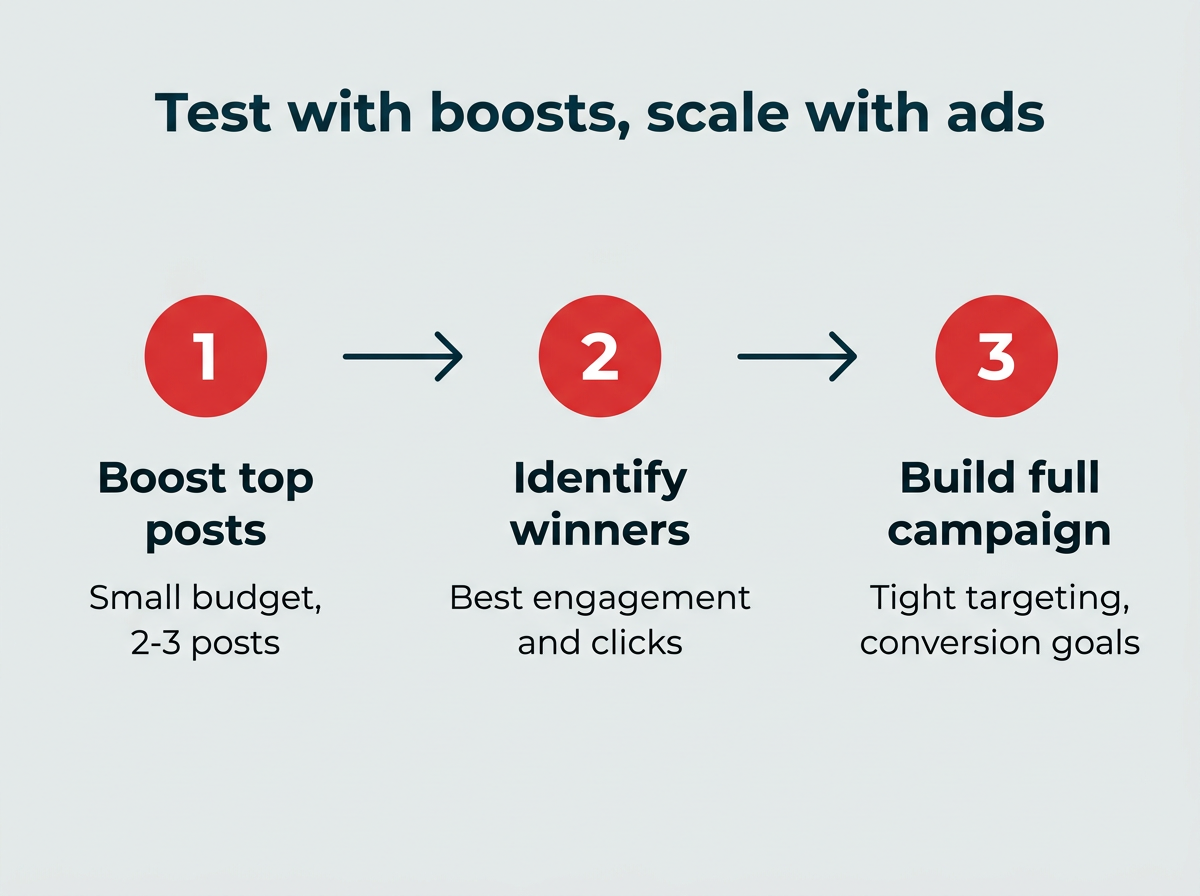
A common and highly effective strategy involves using boosted posts as a rapid testing ground. Marketers can amplify several variations of organic content with small budgets to gauge audience reaction to different messages, visuals, and topics. The insights gained from these boosted posts – which content generates the most engagement, clicks, or profile visits – can then inform the development of more sophisticated, conversion-oriented social ad campaigns. This iterative process reduces wasted ad spend by validating messaging and creative with real audience data before committing a larger budget to a full campaign.

For example, a company might boost three different LinkedIn posts about a new product feature, each highlighting a different benefit. The post that garners the highest engagement and click-through rate provides valuable intelligence, indicating the most compelling angle to use for a subsequent lead generation campaign built in LinkedIn Campaign Manager, complete with advanced targeting and conversion tracking. This synergistic approach ensures that paid and organic strategies reinforce each other, creating a cohesive and highly effective presence across social channels.
Streamlining Management with Unified Platforms
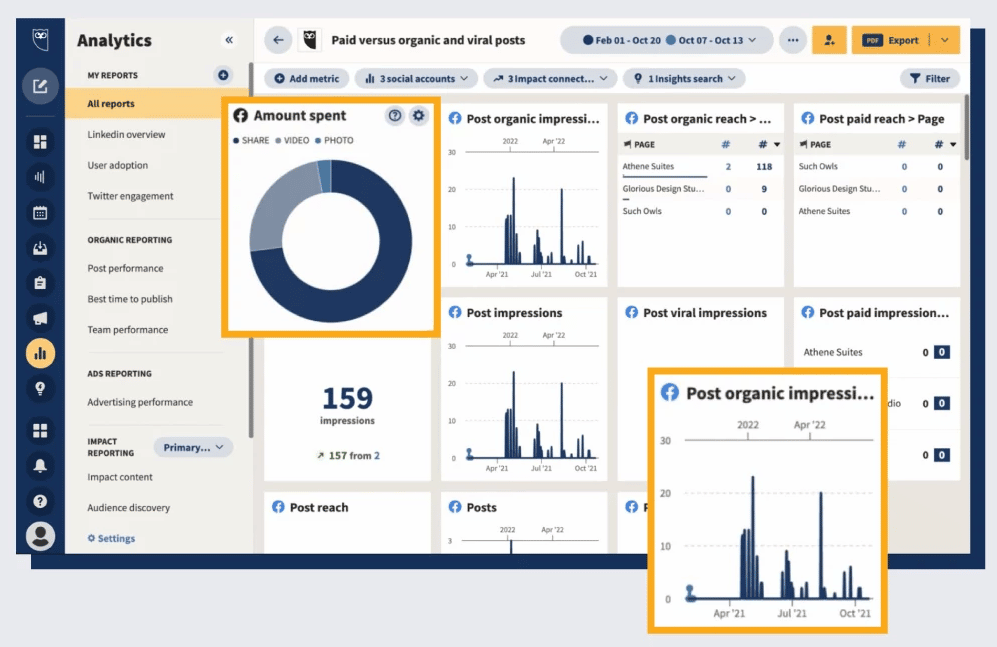
The complexity of managing multiple boosted posts and full ad campaigns across various social platforms can be substantial. Tools like Hootsuite Social Advertising offer a unified dashboard solution, simplifying the workflow and providing a holistic view of all paid and organic social activity.
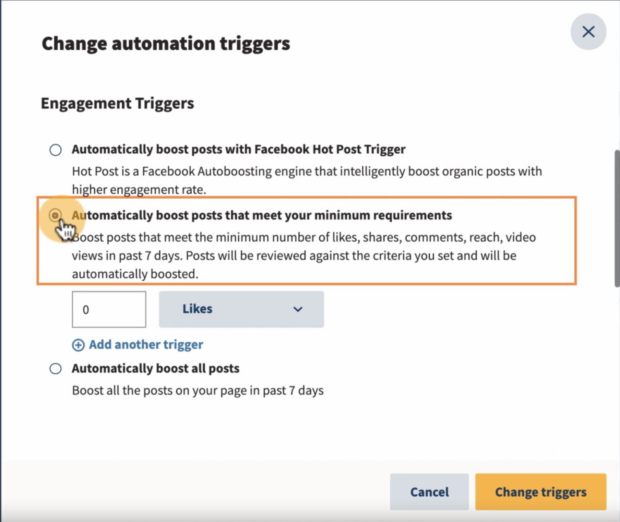
Through such platforms, marketers can boost posts for Facebook, Instagram, and LinkedIn from a single screen, schedule boosted posts in advance, and even set automated triggers to promote top-performing organic content based on predefined engagement thresholds. This not only enhances efficiency but also helps avoid platform-specific fees, such as the 30% service charge for iOS users boosting posts directly within Meta apps.
For full social ads, unified platforms provide a centralized environment for planning, creating, managing, scheduling, and reporting on campaigns across multiple networks. This allows for cross-platform budget allocation, real-time strategy adjustments, and integrated analytics that track ROI, enabling marketers to compare performance and refine their strategy to maximize efficiency and effectiveness over time.
Conclusion

The distinction between boosted posts and social ads is more than semantic; it represents a fundamental difference in strategic intent and execution within social media advertising. Boosted posts offer unparalleled ease and speed for amplifying existing content and generating basic engagement, making them ideal for quick wins, content testing, and smaller budgets. Social ads, conversely, provide the granular control, diverse formats, advanced targeting, and comprehensive analytics necessary for driving measurable business objectives like sales and leads, catering to more sophisticated campaigns and larger enterprises.
In today’s competitive digital landscape, a nuanced understanding of both tools is essential. The most successful brands will embrace an integrated approach, using boosted posts to test and learn, and social ads to scale and convert, all while leveraging unified management platforms to streamline operations and maximize their return on investment. The future of social advertising demands adaptability, data-driven decisions, and a strategic deployment of every tool in the marketer’s arsenal.