Laily UPN
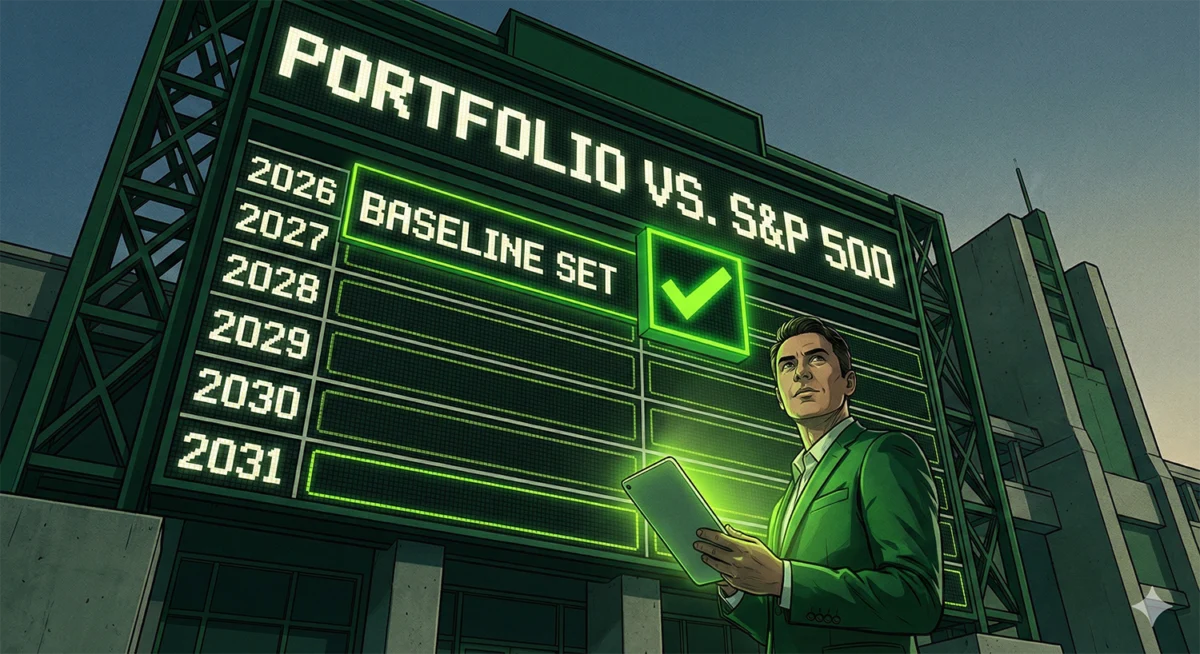
This article delves into the critical importance for entrepreneurs to develop and meticulously track their personal balance sheets, mirroring the financial diligence they apply to their businesses. The author, a proponent of a comprehensive financial mastery framework, argues that an overreliance on a future business exit, which carries inherent uncertainty, constitutes a significant risk. By cultivating personal wealth alongside business growth, entrepreneurs can achieve greater financial optionality, enhanced security, and improved decision-making capabilities, mitigating the desperation that can arise from singular financial dependence. To illustrate this philosophy in practice, the author commits to transparently sharing his personal investment portfolio’s performance against the S&P 500 annually, beginning with a detailed baseline established for 2026.
Defining the Personal Balance Sheet: Exclusions and Rationale
The author’s approach to calculating his personal balance sheet is deliberately focused on liquid and investable assets, intentionally excluding certain categories to maintain clarity and avoid a skewed perception of financial security. Specifically excluded are the primary residence, physical possessions, and the entrepreneurial venture itself.
The rationale behind excluding the primary residence stems from the perspective that a home, while a significant asset, functions primarily as a consumption item rather than a directly investable asset. Its value is often tied to personal use and market fluctuations that may not align with investment growth. Similarly, physical possessions, such as vehicles, art, or collectibles, are not considered investable assets in this framework. Their value is subjective, illiquid, and subject to depreciation or market fads.
Perhaps the most crucial exclusion is the business itself. The author posits that a business, until it is successfully sold, remains illiquid and inherently volatile. Including its current valuation on a personal balance sheet can create a misleading sense of security, as the actual realization of its value is contingent on numerous external factors and a successful exit strategy. By focusing on liquid investments, the author aims to provide a cleaner, more actionable snapshot of his financial health and progress, separate from the operational and market risks associated with his entrepreneurial endeavors. This methodology underscores a commitment to tangible, controllable financial growth.
A Diversified Investment Portfolio: The 2026 Baseline Breakdown
The author’s 2026 personal balance sheet is strategically allocated across several asset classes, reflecting a blend of long-term growth, diversification, and calculated risk. This allocation is underpinned by a philosophy of balancing stable, predictable investments with select, high-conviction opportunities.
Individual Stocks (3.5%): The author advocates for a disciplined approach to individual stock picking, characterizing it as "10% bold" within a larger strategy of "90% boring." This segment of the portfolio is reserved for a select few companies in which the investor holds deep conviction and anticipates outperformance. The key is that these positions must be sizable enough to make a meaningful impact if the conviction proves correct.
In his 2026 portfolio, these two positions are Shopify and Cloudflare. Shopify is identified as a near-monopoly in the e-commerce software-as-a-service (SaaS) space, offering a robust and increasingly entrenched platform that is considered a primary alternative to Amazon for hosted solutions. The author expresses long-term confidence in its continued growth and market position. Cloudflare, while less intimately understood in its internal operations, garners praise from industry contacts and positive personal user experience. Its broad utility in web infrastructure and a reportedly strong company culture contribute to the author’s conviction.
Index Funds (63%): This forms the bedrock of the portfolio, representing the "boring and intentional" 90% of the investment strategy. The allocation is predominantly weighted towards U.S. total market index funds, with approximately 15% dedicated to international equity exposure. Notably, there is zero allocation to bonds, indicating a higher risk tolerance and a focus on long-term capital appreciation. The author expresses an intention to modestly increase international exposure, citing recent strong performance and potential undervaluation as catalysts, alongside the inherent diversification benefits. The core principle remains: invest in broad-market index funds with low fees and hold them for the long term.

Cryptocurrency (12%): Primarily allocated to Bitcoin and Ethereum, this segment reflects a continued belief in the long-term potential of these digital assets as a non-institutional store of value and a hedge against potential monetary policy missteps by governments. However, the author acknowledges a recent divergence in behavior, noting that cryptocurrency has exhibited more characteristics of a risk asset than a safe-haven asset like gold. The stark contrast between gold’s significant gains over the preceding 12 months and Bitcoin’s lagging performance is highlighted as a point of concern. Despite this, the author maintains his holdings, citing long-term fundamental beliefs, tax considerations on unrealized gains, and the diversification benefits of an anti-institutional hedge. The increasing institutional adoption is seen as a factor that could temper upside potential and increase volatility, but the author remains committed to his long-term thesis.
Real Estate (11%): This portion of the portfolio is represented by a single rental property. The author candidly admits that this is not an ideal pure investment, but rather a property the family enjoys and is currently renting out. The experience of managing a short-term rental, even with a third-party manager, has provided a newfound appreciation for the operational complexities involved. It has also offered a unique perspective on the value proposition of platforms like Airbnb from a traveler’s standpoint.
Cash (9%): A significant cash reserve is maintained, particularly with markets trading at all-time highs. Approximately half of this cash is earmarked for a "big bets" fund, awaiting high-conviction investment opportunities in 2026 where a substantial commitment can be made. This strategy reflects a proactive approach to capitalizing on future market dislocations or specific company opportunities.
Private Investments (Less than 1%): This segment represents a small allocation to early-stage companies founded by entrepreneurs the author trusts. Three specific investments are mentioned: IntelliGems, Postpilot, and Kanpai Foods. While acknowledging the appeal of private investing, particularly when leveraging domain expertise and trusted networks, the author emphasizes its minor role in the overall portfolio due to its inherent illiquidity and higher risk profile.
Strategic Divestments: Lessons Learned from Two Key Sales
The author’s investment journey in 2026 included two significant divestments, each offering valuable lessons about evolving investment theses and the importance of conviction.
Tesla: After a four-year holding period, the author decided to sell his Tesla holdings. The initial investment thesis was rooted in the exceptional product quality and customer satisfaction associated with Tesla’s vehicles. However, the author observed a strategic shift within the company, moving beyond its automotive core to focus heavily on robotics, autonomous driving, and automated taxi services. While acknowledging the potential of these ventures, the author felt his original thesis had fundamentally changed. Crucially, he lacked the detailed homework required to confidently evaluate whether these new initiatives justified Tesla’s multi-trillion-dollar valuation. An additional factor contributing to the decision was the increasing "key man risk" associated with Elon Musk. The author noted Musk’s age, his demanding work ethic across multiple ventures, and the inherent risk that his continued leadership and focus might be stretched thin. Given the change in his original investment thesis and the substantial valuation, the author concluded that it was an opportune moment to exit.
Airbnb: This sale is characterized by the author as one of his poorer recent decisions. The investment was described as a "knee-jerk reaction," initiated after hearing a recommendation and lacking a clear alternative for deploying capital. This is identified as a classic investment mistake. The holding period was between six and twelve months, during which the investment broke even. The author’s personal experience setting up an Airbnb rental this year led him to re-evaluate his bullishness on the company. While not deeming the company "terrible," he expressed concerns about its years of lackluster growth and uncertainty about any catalysts for significant change. The primary takeaway from this experience is the critical importance of investing with high conviction. The author strongly advises against making speculative investments in individual stocks with only a "5-out-of-10" conviction level, recommending instead that such capital be allocated to index funds.
A Commitment to Transparency and Future Reporting
The author concludes by reiterating that the presented portfolio breakdown serves as the baseline for his 2026 personal financial standing. He commits to providing a performance update at the end of the year, detailing how this portfolio has fared in comparison to the broader S&P 500 index. This commitment to transparency is part of a larger effort to share insights on building financial mastery among entrepreneurs and to foster a community of successful business owners. The author invites ongoing engagement through his newsletter for those seeking regular tips and deeper insights from his network of established entrepreneurs.


 Lina Hope

 Suro Senen