

In an era where digital saturation has reached an all-time high, the discipline of Conversion Rate Optimization (CRO) is undergoing a fundamental transformation, moving away from surface-level tactical changes toward a deep integration of data science and human psychology. Leading this shift are practitioners like Dzifa Mensah, a Conversion Optimization Specialist whose decade-long career illustrates the maturation of the industry. Having navigated the complexities of web development, growth marketing, and cross-continental experimentation, Mensah’s approach underscores a critical reality in modern business: as automated tools become ubiquitous, the “human element”—the ability to interpret subtle user hesitations and cultural nuances—remains the final frontier of competitive advantage.
The Foundational Shift in Conversion Optimization
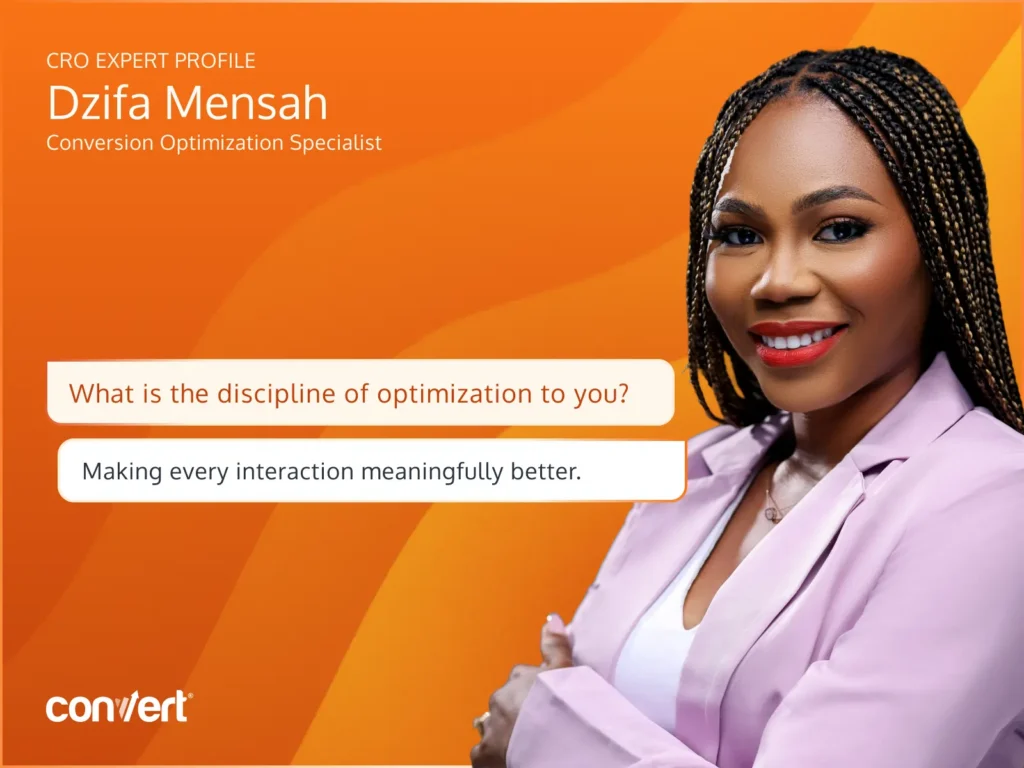
The discipline of optimization is frequently misunderstood as a series of aesthetic adjustments to buttons or layouts. However, for industry veterans like Mensah, the scope is significantly broader, defined as the process of making every digital interaction meaningfully better for the end-user. This philosophy aligns with a broader industry trend where CRO is increasingly viewed as a pillar of customer experience (CX) rather than just a marketing tactic.
Mensah’s entry into the field was driven by a fascination with the scientific method—observation, hypothesis, testing, and learning. By applying this rigour to digital behavior, practitioners can move beyond guesswork. This shift is mirrored in the global market; the conversion rate optimization software market, which was valued at approximately $771 million in 2022, is projected to reach over $1.9 billion by 2030. This growth is fueled by the realization that acquiring new traffic is significantly more expensive than optimizing the value of existing visitors.

The Role of Artificial Intelligence as a Thinking Partner
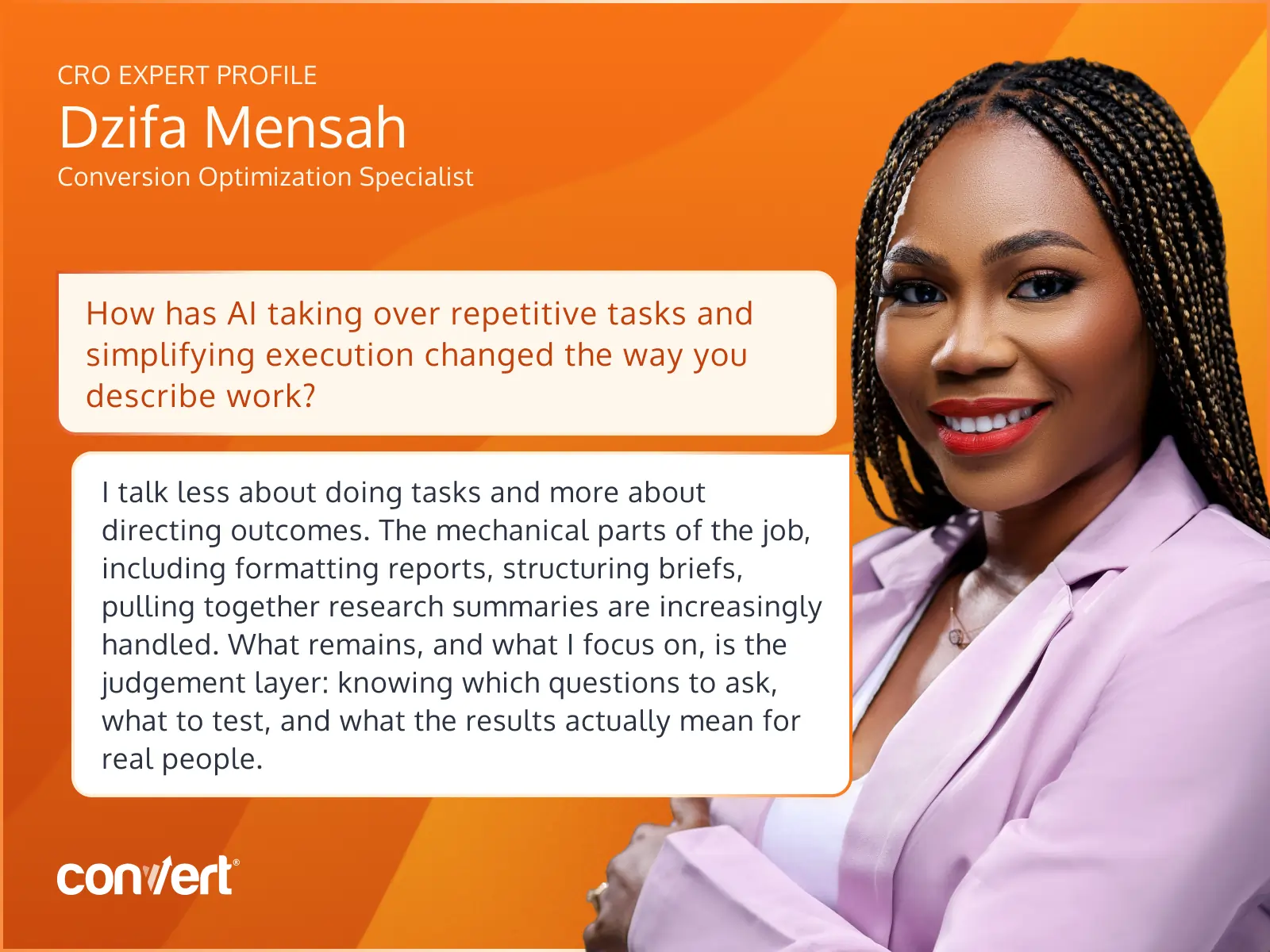
The integration of Artificial Intelligence (AI) has sparked debate across the tech sector, yet in the realm of experimentation, its role is becoming clearly defined not as a replacement for human intellect, but as a “thinking partner.” Mensah identifies a specific shift in workflow where AI handles the heavy lifting of the pre-test phase.
In traditional workflows, specialists would spend dozens of hours manually consolidating quantitative data from platforms like Google Analytics with qualitative feedback from user surveys or heatmaps. Today, AI is utilized to surface patterns and contradictions within these datasets at a speed unattainable by humans. This allows for the creation of sharper hypotheses. Beyond data analysis, AI is streamlining stakeholder management—a historically friction-heavy aspect of the job. By automating the drafting of test announcements and translating technical results into readable reports for non-technical executives, specialists can refocus their efforts on high-level strategy.
Chronology of Professional Evolution in Experimentation
To understand the current state of CRO, one must look at the professional trajectory of its leaders. Mensah’s career spanning over ten years reflects the broader evolution of the digital landscape:
- The Technical Foundation (Web Development): Early in the 2010s, optimization was often limited by technical constraints. Practitioners with a background in web development, like Mensah, held an advantage in understanding the underlying architecture of the user experience.
- The Growth Marketing Era: As digital advertising costs rose, the focus shifted to “Growth Hacking.” This period emphasized rapid experimentation and the scaling of successful tactics across various industries, including SaaS and e-commerce.
- The Specialization Phase: By the early 2020s, the industry moved toward specialized experimentation. This involved sophisticated multivariate testing and a deeper focus on user psychology rather than just “hacks.”
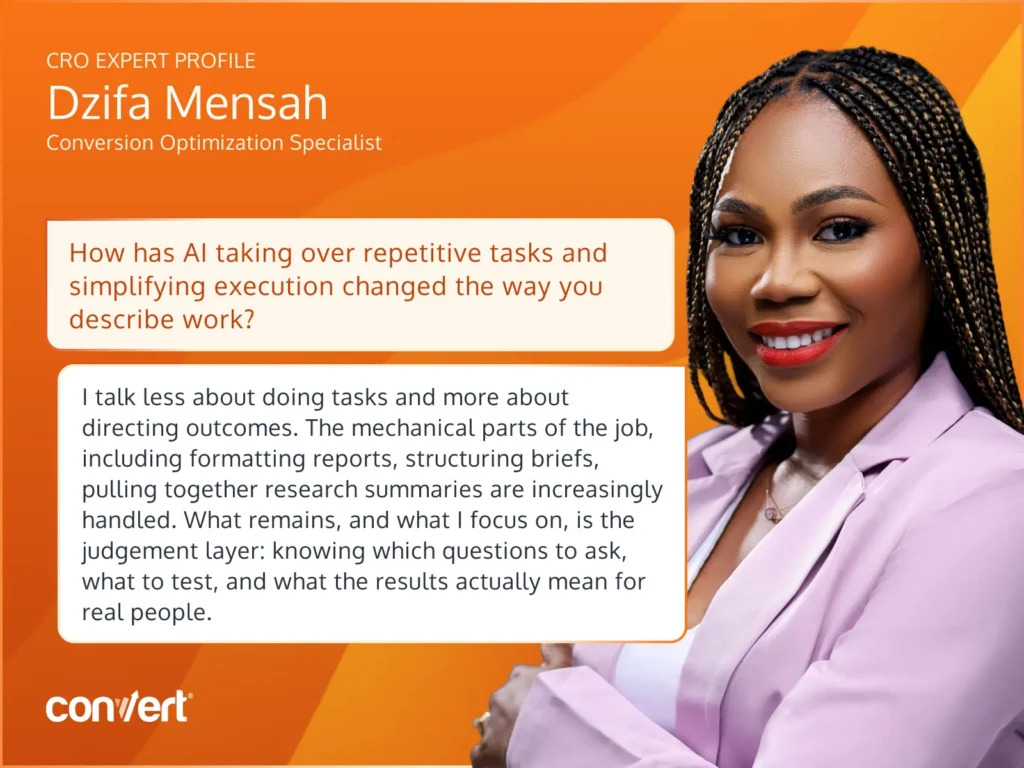
- The Integration of Human-Centric AI: The current phase involves using AI to handle repetitive execution while doubling down on the “judgement layer”—the human ability to ask the right questions and interpret results within a social context.
Case Study: The Cultural Nuances of Global Experimentation
One of the most significant challenges in modern experimentation is the assumption of global uniformity. Mensah highlights a pivotal multivariate experiment conducted across French, English, and German versions of a single proposition. Despite the product being identical, the results were drastically different. Only the English-language site reached statistical significance, while the German and French audiences responded to the messaging in ways that defied the initial hypothesis.
This phenomenon is supported by broader research into cross-cultural UX. For instance, according to Hofstede’s Cultural Dimensions, users in different regions have varying levels of “Uncertainty Avoidance.” A German user might require more technical documentation and trust signals before converting, whereas a US-based user might respond better to social proof and persuasive, benefit-driven copy. Mensah’s experience serves as a humbling reminder that localization is not merely translation; it is an adaptation to the cultural context that shapes how people trust and act on information.
Optimization in the Third Sector: The Psychology of Generosity
The application of CRO principles in the charity sector represents a unique challenge that deviates from standard e-commerce logic. In e-commerce, the goal is often to reduce friction and increase convenience. However, when optimizing for donations, the primary drivers are emotion, empathy, and trust.
In this context, a “conversion” is not a transaction for a tangible good but an act of generosity. Data suggests that donors are highly sensitive to “transparency signals”—knowing exactly where their money goes. Experimentation in this sector often involves testing the impact of storytelling versus the impact of statistical data. Mensah’s work in this field highlights that metrics do not always sit neatly in a dashboard; sometimes, the most successful test is the one that builds a long-term emotional connection rather than a one-time click.
Industry Analysis: The Future of the “Judgement Layer”
As automation takes over the mechanical parts of the job—formatting reports, structuring briefs, and summarizing research—the value of a practitioner is increasingly tied to their analytical instincts. The “judgement layer” involves knowing which questions are worth asking and which tests are worth running.
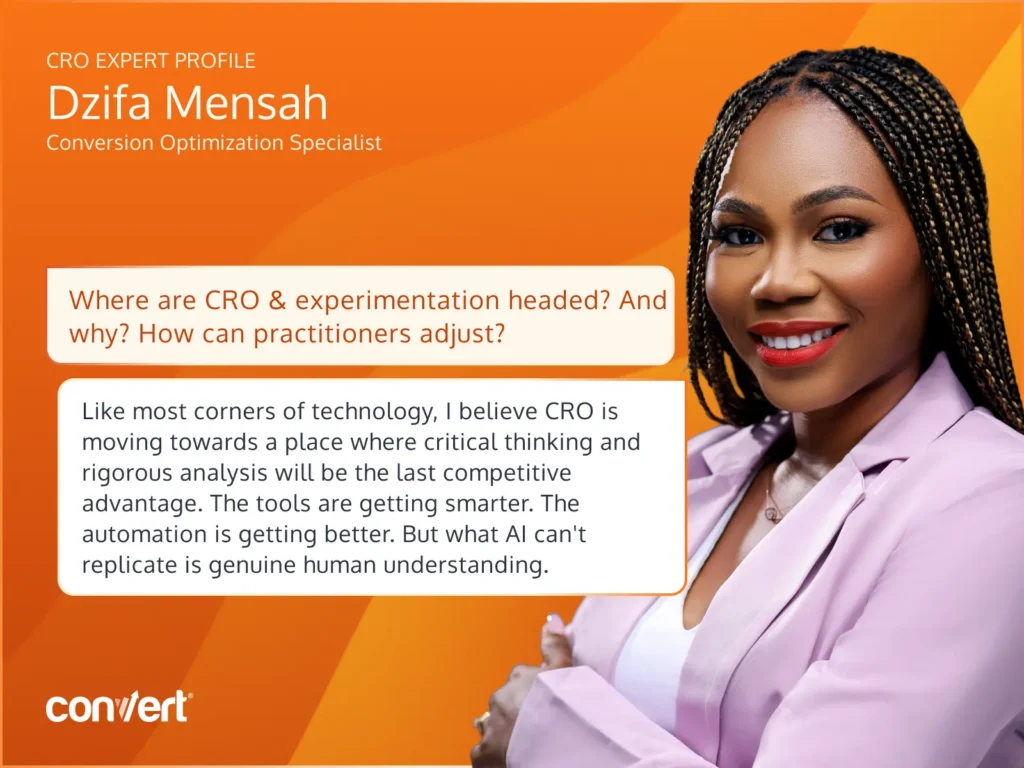
Industry analysts suggest that as AI-driven testing platforms become more accessible, the barrier to entry for running tests will lower. However, the barrier to running meaningful tests will remain high. The risk of “false positives” and “noise” increases when tests are run without a deep understanding of user psychology. Practitioners are therefore encouraged to adjust by:
- Doubling down on Qualitative Research: AI can analyze text, but it cannot yet replicate the experience of sitting with a user and noticing the hesitation in their voice or a subtle micro-expression of confusion.
- Focusing on “Directing Outcomes”: Moving from being a “doer” of tasks to a “director” of strategic outcomes.
- Ethical Data Usage: As privacy regulations like GDPR and CCPA evolve, the way data is collected and tested must be handled with a high degree of ethical oversight.
Broader Impact and Implications for Stakeholders
The insights shared by Mensah reflect a broader shift in how organizations perceive value. For stakeholders and business leaders, the takeaway is clear: experimentation is no longer a siloed activity for the marketing department. It is a cross-functional necessity that involves product, engineering, and customer service.

The move toward “meaningful interactions” suggests that the companies that will thrive in the next decade are those that treat every test as a learning opportunity rather than a mere search for a statistical “win.” Failed tests are not losses; they are data points that prevent companies from investing in features or messaging that do not resonate with their actual audience.
In conclusion, the evolution of CRO, as exemplified by Dzifa Mensah’s career, marks a transition from a technical craft to a strategic imperative. By leveraging AI to handle the mundane and focusing human intellect on the complex, the industry is setting a new standard for how businesses interact with their customers. The future of experimentation lies at the intersection of rigorous science and empathetic human understanding, ensuring that as tools get smarter, the experiences they create become more human.







