rifanmuazin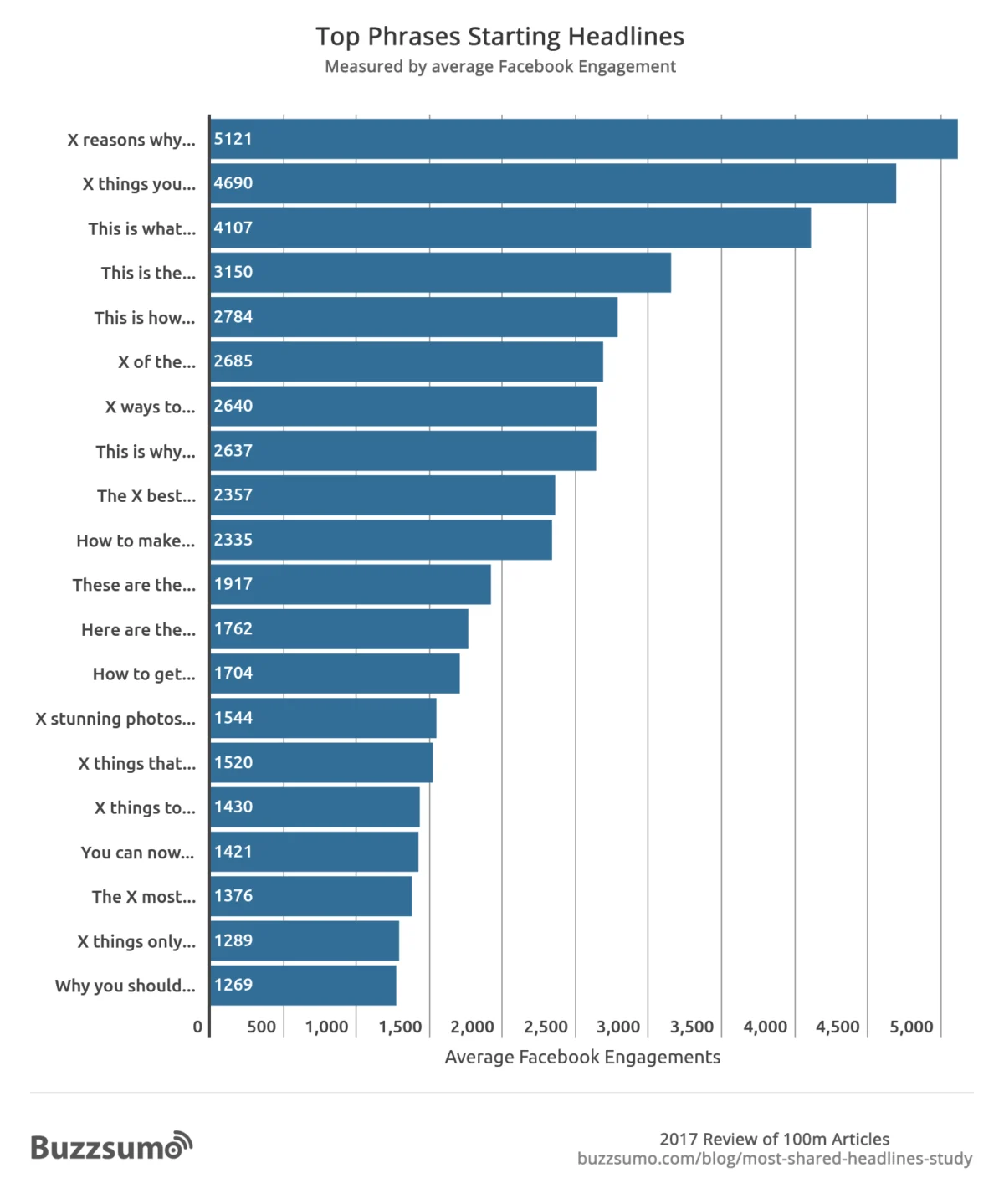
A groundbreaking study by BuzzSumo, encompassing an analysis of 100 million article headlines published between 2019 and 2020 on Facebook and Twitter, unveils critical shifts in audience engagement and content consumption patterns. This extensive research, building upon a similar 2017 study by BuzzSumo co-founder Steve Rayson, provides invaluable insights for publishers, content creators, and marketers navigating the increasingly complex digital landscape. The findings highlight the imperative for nuanced headline strategies, moving away from past trends like overt emotional appeals and tribal content towards more informative, instructional, and concise communication.
The Evolving Dynamics of Headline Effectiveness
In an era of unprecedented content overload and sophisticated algorithms, a headline transcends its traditional role as a mere title. It functions as a critical gateway, acting as a subject line, tweet, video title, or H2, designed to capture fleeting attention and compel engagement. Today’s digital environment, characterized by algorithmic gatekeepers, intense competition, and elevated audience standards, demands a data-driven approach to headline crafting. BuzzSumo’s latest analysis, augmented by perspectives from leading marketing experts, offers a detailed roadmap for maximizing content reach and impact.
The study’s top insights reveal several significant transformations since 2017, pointing to a more refined and purposeful content ecosystem. For content creators, understanding these shifts is crucial for developing headlines that resonate effectively across major social platforms.
Optimal Headline Length: Prioritizing Conciseness
Contrary to some outdated advice advocating for brevity, the latest research indicates that headlines need to be both specific and detailed enough to truly captivate readers. The ideal headline length for maximum engagement on Facebook and Twitter has been identified as 11 words and 65 characters. This marks a notable reduction from the 2017 findings, which favored headlines around 15 words and 95 characters. This trend towards snappier headlines underscores a broader societal shift: audiences demand information quickly. With online content volume increasing by 64% since 2016, as revealed by another BuzzSumo study of 1.7 billion articles, content overload is a tangible reality, driving a preference for headlines that get straight to the point.
The Magic of Numbers in Headlines
Numbers continue to be a powerful tool for driving engagement, with the number 10 emerging as the perennial favorite. Beyond this "magic number," single-digit numbers from three to ten consistently generate the most social media engagement, securing the top seven positions for most shared headlines on Facebook and Twitter. Interestingly, the study found no strong preference for odd or even numbers, with both appearing prominently in the top five most shared headlines. However, double-digit numbers like 15 and 20, which were popular in 2017, have seen a decline in favor, further reinforcing the audience’s desire for rapid insight rather than extensive lists.
A Decisive Shift from 2017: Farewell to Emotional and Tribal Clickbait
One of the most profound changes observed is the dramatic decline of overtly emotional, sensational, and tribal headlines that dominated engagement in 2017. Phrases like "will make you," "melt your heart," "shocked to see," "tears of joy," and "so incredible" were once highly effective on Facebook. In 2017, the phrase "will make you" garnered an average of 8,691 shares and was often used as a precursor to emotional statements (e.g., "10 Photos That Will Make You Believe in Love Again"). However, the 2019-2020 analysis found such explicitly emotional or sensational headlines to be largely absent. The phrase "in love with" appeared only once in the top 60 trigrams, with significantly lower average shares (1,723). The top headline using "will make you" in the updated study achieved a mere 143k shares, a stark contrast to the 1.7 million shares seen in 2017.
Similarly, quiz-based headlines (e.g., "Can We Guess Your Real Age?") and tribal headlines (e.g., "25 Things Only Teachers Will Understand") that fostered a sense of inclusivity and identity have also fallen out of favor. These formats, described as a "blast from the past" by the researchers, rarely appeared in the updated analysis.
This dramatic shift is largely attributed to algorithmic maturity, particularly Facebook’s conscious efforts to demote clickbait-style content starting in May 2017. Further updates in 2018 and 2020 prioritized news from trustworthy sources and original, authoritative reporting, effectively reshaping the content landscape and diminishing the reach of sensationalist tactics. This algorithmic evolution has cultivated an audience preference for more reliable and substantive content.
Homogenization and Platform-Specific Strategies
The study also reveals an increasing homogenization of headline phrases across social media platforms. In 2017, Facebook and Twitter shared only one common phrase among their top 20 headlines. By 2019-2020, this similarity jumped to eight phrases, indicating that a quarter of the most effective starting phrases now work across both networks. This suggests that certain headline structures can be effectively duplicated as part of a content distribution strategy, though platform-specific testing remains crucial.
Despite this convergence, significant differences in engagement levels persist. The most shared headline phrase on Facebook in 2019-2020 ("of the year") garnered an average of 26,702 shares, a threefold increase from Facebook’s top phrase in 2017. Conversely, Twitter saw a nearly fourfold decrease in shares for its most popular phrases during the same period. An analysis of 11 million Twitter engagements confirmed a 14% drop in Twitter shares from 2017 to 2020, even as monthly active users remained relatively stable. This points to a more fragmented engagement on Twitter, where headlines might be more varied, or a general decline in sharing behavior on the platform.
Deep Dive: Facebook Engagement Drivers (2019-2020)
Facebook audiences in 2019-2020 gravitated towards specific three-word phrases (trigrams). "Of the year" ranked highest, often associated with awards and rankings (e.g., "TIME’s Person of the Year"). Close behind were "in X years" and "for the first," frequently combined into phrases like "for the first time in X years," signaling newness or surprise.
Categorizing the top 60 Facebook trigrams revealed eight dominant themes:
- Ranking: Awards, public votes (e.g., "of the Year").
- Newness: Unique or rare events (e.g., "For the first time in history").
- Hyperbole: Exaggerated statements (e.g., "One of the most important").
- Instructional: Commanding statements, urgency, obligation (e.g., "Everything you need to know").
- Surprise: Challenging standard views, invoking shock (e.g., "At least 36 Intelligent Alien Civilizations").
- Curiosity: Revealing, explaining, or analyzing (e.g., "Here Are The Results," "X reasons why").
- Guidance: "How to" or tutorial-based (e.g., "How to make cookie cereal").
- Story: Centered around a person or topic, like a case study (e.g., "Inside the Story of").
Instructional headlines, leveraging modal verbs like "you need to" or phrases like "need to know," demonstrated exceptional success. These phrases create a sense of FOMO (Fear Of Missing Out) and promise concise, critical information, effectively teasing what the article will reveal. Hyperbolic phrases, particularly those using superlatives like "one of the most" or "of the best," also maintained high engagement, especially when referencing genuinely exceptional content.
When examining the start of Facebook headlines, listicles (starting with a number) were highly effective, promising actionable takeaways. Instructional and curiosity phrases also performed strongly at the beginning of headlines, with "how to" formats being particularly popular, indicating an audience keen to learn. At the end of Facebook headlines, time-centric phrases (e.g., "of the year," "in 2020," "for 2021") were most prevalent, reflecting a focus on current events and the impact of the pandemic. Numbers at the end often induced surprise or highlighted speed to insight.
Twitter Engagement: A Lean Towards Research and Immediacy
Twitter audiences exhibited distinct preferences, particularly a strong interest in the "future of" various topics, which was the most shared three-word phrase. This phrase also commonly started Twitter headlines. Words like "study" and "report" frequently appeared at the beginning of top-performing headlines, indicating Twitter’s role as a platform for sharing research and data-driven content.
Twitter headlines also emphasized immediacy and reactivity, with a significant number of top-ending phrases related to specific dates or current developments (e.g., "in 2020," "today"). This underscores the platform’s role as a hub for real-time news and current affairs. While instructional headlines performed well on both platforms, Twitter showed a greater propensity for curiosity and story-driven content, suggesting that narratives and intriguing questions resonate strongly with its user base.
Expert Reflections and Strategic Implications
Leading marketing experts provided valuable insights into these findings. Heidi Cohen highlighted the impact of the pandemic on customer behavior, noting increased focus on current events, a preference for concise information, and a desire to learn from experts. She advised marketers to return to core marketing basics and continually engage with customers to understand their evolving needs.
Rand Fishkin emphasized the study’s role in myth-busting, confirming some long-held beliefs about social media content while dispelling others. He stressed that the research offers nuance beyond simple clickbait, providing valuable data for content creators and strategists. Ross Simmonds pointed to the success of instructional copy like "you need to" as a fascinating insight, attributing it to human psychology and the desire not to miss out on important information. Brian Dean observed the shift from BuzzFeed-style clickbait to instructional headlines on Facebook, signifying that users now expect content that teaches them something new. Amanda Milligan further elaborated on the "instructional" trend, linking it to a growing desire to learn from experts and to the inherent authority demonstrated by such language.
The overarching implication is that content strategies must be dynamic and highly adaptable. Publishers and marketers can no longer rely on a one-size-fits-all approach. Instead, they must:
- Embrace Conciseness and Specificity: Craft headlines that are informative and to the point, adhering to the 11-word/65-character ideal for broad appeal.
- Strategic Use of Numbers: Leverage the power of "10" and other single-digit numbers for listicles, ensuring they promise quick insights.
- Prioritize Value over Sensationalism: Focus on delivering genuine value through instructional, curiosity-driven, and authoritative content, aligning with algorithmic preferences for trustworthy sources.
- Tailor for Platforms: Recognize the distinct preferences of Facebook (instructional, hyperbolic, ranking, newness) and Twitter (research, current affairs, curiosity, stories).
- Demonstrate Authority: Use language that positions content as expert guidance or essential knowledge.
- Continuously Analyze and Adapt: The digital landscape is constantly evolving, necessitating ongoing analysis of what resonates with specific audiences on different platforms. Tools like BuzzSumo’s Content Analyzer remain crucial for real-time insights.
Methodology
This comprehensive study analyzed 100 million article headlines published between 2019 and 2020 across Facebook and Twitter. Engagement was measured by average median shares. To prevent popular sites from skewing results, only one headline trigram/phrase example per domain was included in the analysis. Furthermore, the three most shared examples of each trigram were removed to eliminate potential outliers. The 2017 research, which analyzed 100 million headlines from March to May 2017, followed a similar methodology, focusing on Facebook engagements (likes, shares, comments). This rigorous approach ensures that the findings reflect broad trends rather than isolated viral successes. The research was inspired by Steve Rayson’s original work and data meticulously collected by Henley Wing Chiu, Co-Founder and CTO of BuzzSumo, with the report authored by Louise Linehan, BuzzSumo’s Content Manager.