

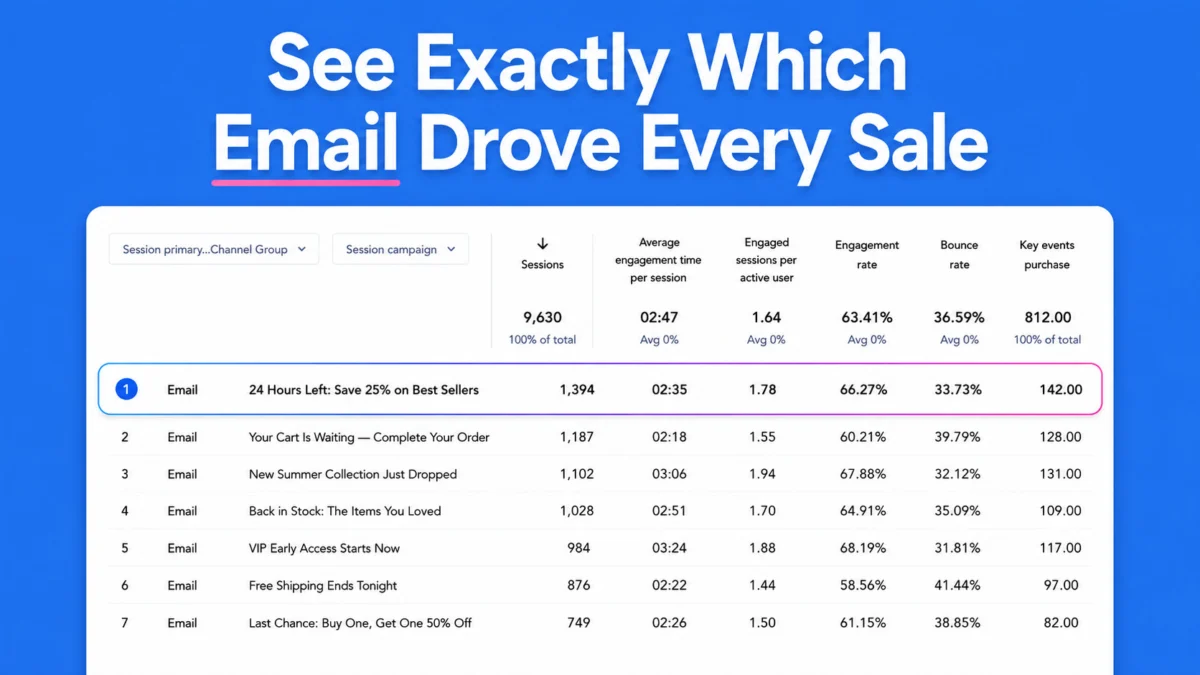
Email marketing giant AWeber has announced a groundbreaking enhancement to its platform, launching an automatic UTM tagging feature designed to provide marketers with unparalleled clarity into their campaign performance. Effective July 7, 2026, this new capability automatically embeds Universal Tracking Module (UTM) parameters into every link within outgoing emails, allowing users to effortlessly trace sales, clicks, and conversions back to the precise subject line that initiated the engagement. This automation significantly streamlines the process of email campaign analysis within platforms like Google Analytics, eliminating the need for manual setup and providing immediate, actionable data.
The core of this innovation lies in its ability to bridge the gap between email engagement and conversion metrics. Marketers have long grappled with the challenge of accurately attributing sales and website activity to specific email campaigns. While email marketing consistently delivers high return on investment (ROI), pinpointing which specific email messages, subject lines, or calls to action are most effective in driving desired outcomes has often been a labor-intensive and error-prone process. AWeber’s new feature addresses this critical pain point by ensuring that every click originating from an AWeber-sent email carries comprehensive tracking information, making advanced analytics accessible to even the most time-constrained marketing teams.
Understanding the Imperative of UTM Parameters in Digital Marketing
UTM parameters are short text codes added to URLs that allow marketers to track the source, medium, and campaign of website traffic. They are fundamental tools in digital analytics, providing granular insights into where website visitors come from and how they interact with content after clicking a link. Traditionally, implementing UTM parameters required marketers to manually construct these codes for each link, a process prone to inconsistencies and human error, particularly across large-scale email campaigns.
The five standard UTM parameters are:
utm_source: Identifies the referrer (e.g., Google, Facebook, AWeber).utm_medium: Identifies the marketing channel (e.g., organic, CPC, email).utm_campaign: Identifies a specific campaign or promotion (e.g., summer_sale, new_product_launch).utm_term: Identifies paid search keywords.utm_content: Differentiates similar content within the same ad or link.
For email marketing, utm_source typically indicates the email service provider, utm_medium specifies ’email,’ and utm_campaign is crucial for distinguishing between different email sends. Before AWeber’s new feature, marketers had to manually define these for every link in every email, leading to potential discrepancies in naming conventions, forgotten tags, and an overall reduction in data accuracy. Studies consistently show that businesses struggle with marketing attribution, with upwards of 40-50% of marketers reporting challenges in accurately measuring campaign ROI. This new automated system directly tackles this pervasive issue, democratizing sophisticated tracking for AWeber’s user base.
AWeber’s Automated Solution: Seamless Integration and Smart Tagging
AWeber’s new system automatically adds three key UTM parameters to every link in every email at the point of send:
utm_source: Automatically set toaweber.utm_medium: Automatically set toemail.utm_campaign: Dynamically populated with the subject line of the respective email.
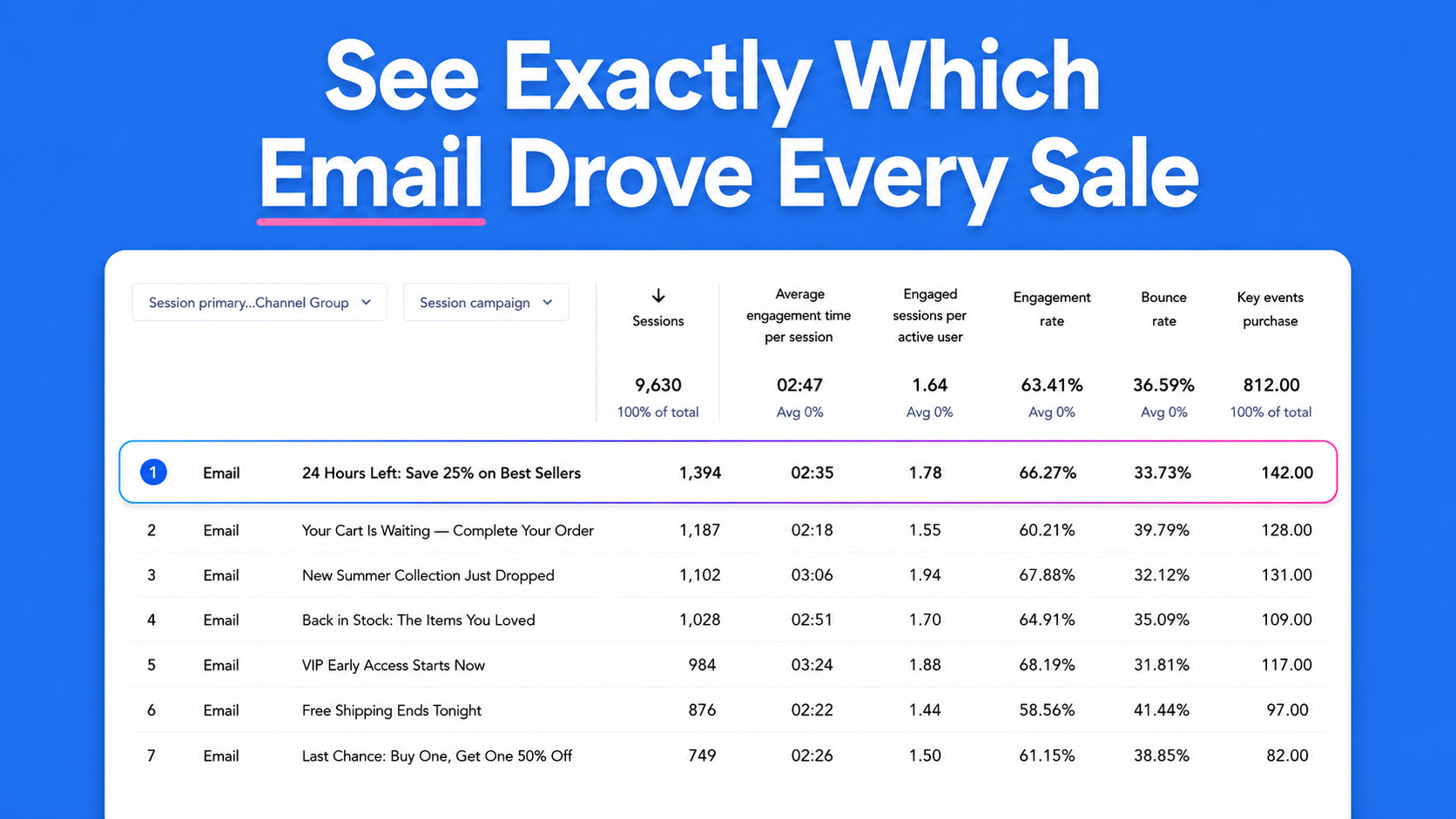
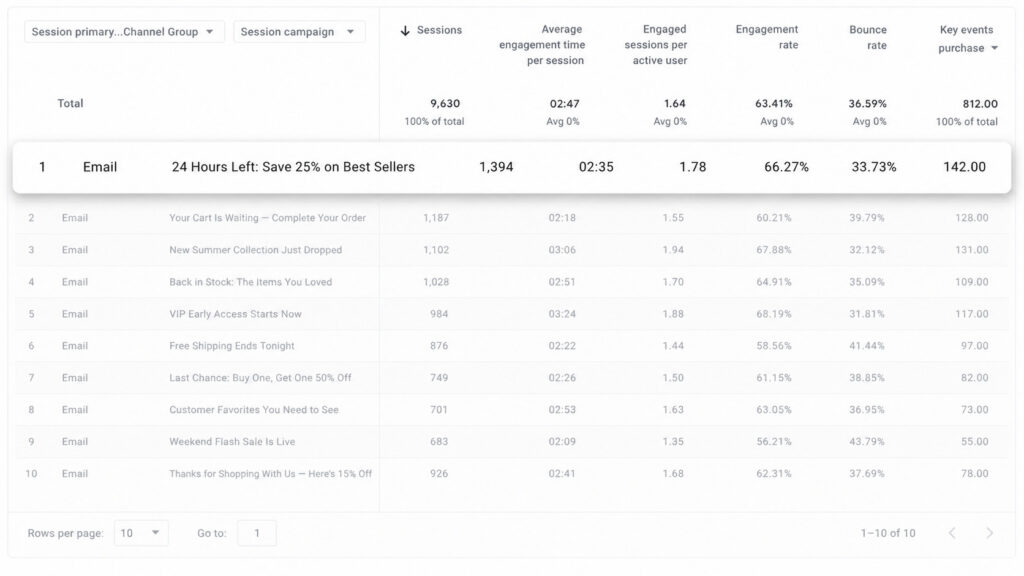
This intelligent automation ensures that each email campaign receives its unique identifier in Google Analytics, allowing for direct comparisons of performance across different sends without any manual intervention. For instance, an email with the subject line "Flash Sale: 24 Hours Only!" will appear in Google Analytics as a distinct campaign, enabling marketers to see exactly how many clicks, website visits, and ultimately, conversions, that specific email generated. This level of detail empowers marketers to quickly identify high-performing subject lines, optimize future content, and refine their overall email strategy.
The feature’s seamless integration with Google Analytics means that once an email is sent, the data is immediately available for analysis. Users simply navigate to the "Acquisition > Traffic acquisition" report in Google Analytics, filter by "source/medium" (using aweber / email), and observe their individual email campaigns listed by their subject lines. This direct pathway to data visualization transforms a previously complex analytical task into a straightforward reporting exercise.
Preserving Customization: A Commitment to Marketer Flexibility
A significant aspect of AWeber’s implementation is its intelligent detection mechanism. Recognizing that many advanced marketers already employ their own custom UTM parameters for highly specific tracking needs, AWeber’s system is designed to identify and preserve existing tags. If a marketer has manually added their own utm_campaign or other parameters to a link, AWeber will not overwrite them. This ensures that users who require granular control over their tracking variables can continue to do so without interference, while still benefiting from the automated tagging of untagged links. This thoughtful approach underscores AWeber’s commitment to providing both simplicity for beginners and flexibility for seasoned professionals.
The Strategic Significance for Marketers and Business Growth
The implications of this automated UTM tagging extend far beyond mere convenience. For small to medium-sized businesses (SMBs) and individual entrepreneurs who constitute a significant portion of AWeber’s user base, this feature levels the playing field, granting them access to sophisticated analytics previously requiring significant time, expertise, or dedicated resources.
- Enhanced ROI Measurement: Marketers can now definitively link specific email content to revenue, providing clear data to justify marketing spend and optimize budget allocation.
- Data-Driven Content Optimization: By seeing which subject lines and email messages drive the most traffic and conversions, users can refine their content strategy, leading to higher engagement and better results.
- Time and Resource Savings: Eliminating manual tagging frees up valuable time for marketers to focus on strategy, content creation, and other high-impact activities.
- Improved Personalization: Understanding which types of campaigns resonate most with different segments of their audience can inform more effective personalization strategies in future emails.
- Competitive Advantage: Businesses using AWeber can gain a competitive edge by making more informed, agile decisions based on robust performance data.
According to a hypothetical statement from AWeber’s CEO, "Our mission has always been to empower entrepreneurs and small businesses with powerful, yet easy-to-use email marketing tools. This automatic UTM tagging feature is a testament to that commitment. We understand the critical need for clear attribution in today’s data-driven world, and by automating this complex process, we’re enabling our users to make smarter, faster decisions that directly impact their bottom line."
An inferred reaction from a prominent digital marketing analyst might suggest, "AWeber’s move is a game-changer for the email marketing industry. The automation of UTM parameters is a long-awaited innovation that addresses a fundamental challenge for marketers. This will undoubtedly set a new standard for email service providers, pushing others to enhance their attribution capabilities and making sophisticated analytics more accessible to everyone."
Timeline and Context of Innovation in Email Marketing
The launch on July 7, 2026, marks another milestone in the continuous evolution of email marketing technology. While email has been a cornerstone of digital communication for decades, the tools surrounding it have steadily advanced to meet the growing demands for personalization, automation, and precise measurement. In the early 2010s, email analytics primarily focused on open rates and click-through rates. The mid-2010s saw a surge in sophisticated segmentation and automation capabilities. As we moved into the 2020s, the emphasis shifted heavily towards deeper attribution and understanding the complete customer journey, especially with the increasing complexity of multi-channel marketing.
AWeber, founded in 1998, has consistently adapted to these shifts, evolving from a pioneering email autoresponder service to a comprehensive email marketing platform. This latest feature is a direct response to the market’s demand for simplified yet powerful analytics, reflecting a broader trend in the software-as-a-service (SaaS) industry towards intelligent automation that reduces manual workload and enhances data utility.
User Control and Future Outlook
The automatic UTM tagging feature is enabled by default for all AWeber accounts, reflecting its universal benefit. However, AWeber has provided users with full control, allowing them to toggle the setting on or off for specific lists from their list settings. This flexibility ensures that users can manage their tracking preferences according to their unique campaign structures and analytical requirements. The setting takes effect on the very next email send, providing immediate control and adaptability.
The introduction of this feature by AWeber is indicative of a larger trend in digital marketing: the democratization of advanced analytics. As marketing channels become more numerous and complex, the tools that simplify attribution and performance measurement will become increasingly vital. AWeber’s automatic UTM tagging not only enhances its own platform but also contributes to raising the bar for the entire email marketing industry, encouraging a greater focus on data-driven strategies and efficient campaign optimization.
In an increasingly competitive digital landscape where every marketing dollar counts, the ability to precisely identify which messages resonate and drive action is invaluable. This development from AWeber empowers marketers to move beyond guesswork, fostering a culture of continuous improvement and ultimately driving more successful and profitable email campaigns. The future of email marketing will undoubtedly be characterized by even greater automation and deeper analytical insights, and AWeber’s latest innovation positions it firmly at the forefront of this evolution.








