Generating top-tier public relations campaign ideas that consistently deliver measurable results remains a significant challenge for many professionals in the communications industry. The demands of innovation, coupled with the pressure to guarantee success, often require a more systematic approach than traditional brainstorming alone can provide. In an increasingly competitive media landscape, where content saturation is the norm and audience attention spans are fleeting, a robust, data-backed methodology is not just advantageous but essential for creating campaigns that resonate, earn coverage, and drive engagement.
This article outlines a two-step, research-intensive process designed to dramatically elevate the probability of a PR campaign’s success. This framework leverages sophisticated content analysis tools and draws inspiration from proven strategies, ensuring that creative concepts are firmly grounded in audience interest and media trends.
The Foundation of Success: Understanding Themes and Emotions
The initial and arguably most critical step in developing a successful PR campaign involves a deep dive into existing content landscapes to identify prevailing themes and emotional triggers. Success, in this context, is primarily defined by securing high-quality media coverage and backlinks, with social engagement serving as a crucial secondary performance indicator (KPI). This phase precedes concrete ideation, alleviating the pressure to conceive a fully formed campaign immediately. Instead, it focuses on unearthing the fertile ground from which impactful ideas can organically grow.
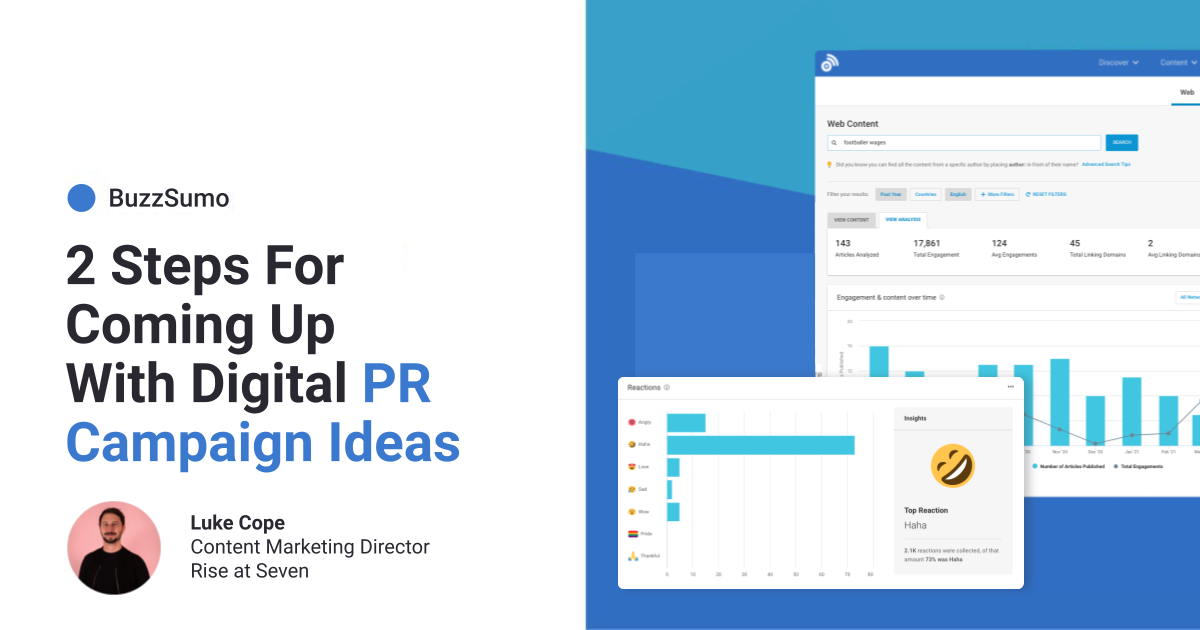
To achieve this, PR professionals must meticulously research content themes that exhibit two key characteristics: consistent discussion within the target media, and consistent sharing and linking by the audience. Tools like BuzzSumo’s Content Analysis Report become indispensable here, offering a granular view of content performance across various topics. Industry analysts consistently highlight the efficacy of such tools in identifying trends and audience sentiment, thereby reducing speculative ideation.
The process begins by exploring keywords directly related to a client’s product or brand. For instance, a brand specializing in honeymoon packages would start with "Honeymoons." However, the research should not stop there. It’s vital to branch out to adjacent, related topics that might capture broader audience interest, such as "Engagement rings," "Weddings," or "Destination proposals." This expansion continues until the themes become too far removed from the core offering, ensuring relevance while broadening the scope for creative angles. This exploratory phase helps map the content ecosystem surrounding a brand, revealing not just what is being discussed, but how it is being discussed and why it resonates.
Analyzing the volume of articles published over time for each theme provides an initial understanding of its consistent relevance and potential opportunities for media traction. A theme with sustained coverage indicates enduring public and journalistic interest, suggesting a stable foundation for a campaign. Furthermore, examining social media engagement trends and the prevailing emotional sentiment associated with these themes offers invaluable insights. Are articles about "Honeymoons" primarily evoking feelings of joy and aspiration? Do discussions around "Engagement rings" lean towards excitement or perhaps anxiety about cost? Understanding these emotional undercurrents allows campaigners to tailor their messaging for maximum impact, crafting narratives that align with or skillfully subvert audience expectations.
Leading digital PR strategists advocate for this preliminary research phase, emphasizing that it transforms campaign development from an art of intuition into a science of informed decision-making. The goal at this stage is not to pinpoint a specific campaign idea, but rather to identify overarching themes that consistently generate significant media coverage, garner links, and provoke strong emotional responses. These insights form the bedrock upon which truly compelling campaigns are built, ensuring that subsequent creative efforts are not merely guesswork but informed strategic decisions.
Case Study: Illuminating the Impact of Light Pollution
A compelling illustration of this research-driven approach is the "World Without Light Pollution" campaign. The client, in this instance, specialized in star maps, a niche product area that, while interesting, might not offer enough immediate thematic depth for a widespread PR campaign on its own.
Initial research, following the outlined two-step process, began with the core product theme: "Star maps." Recognizing its limited scope, the team branched out.
- Secondary theme 1: Supermoons. This revealed significant social engagement and offered opportunities for reactive PR due to their regular occurrence.
- Secondary theme 2: Night sky. This theme consistently showed high social engagement, indicating a broad public fascination with celestial phenomena.
- Secondary theme 3: Light pollution. This theme emerged as particularly promising. It not only demonstrated robust social engagement but was also a current, burgeoning topic with ample room for diverse campaign ideas.
Crucially, the timing for the light pollution theme was serendipitous. At the time of the campaign’s conception, discussions around light pollution were experiencing a surge. SpaceX’s satellite launches were prompting concerns about increased celestial interference, and the global context of the COVID-19 pandemic had brought general environmental pollution into sharp public focus. This confluence of events created a highly receptive environment for a campaign addressing light pollution, signifying that "now was the time to launch." Environmental awareness campaigns typically see heightened engagement during periods of public discourse on related issues, a trend that was clearly leveraged here.
Further analysis of the emotional reactions to articles concerning light pollution revealed a dichotomy: content either evoked sadness or a profound sense of ‘wow’ and wonder. This dual emotional response provided clear guidance for developing outreach angles. The campaign needed to be visually striking to tap into the ‘wow’ factor, prompting audiences to contemplate a world free from the pervasive glow of artificial light. This initial research into themes and emotions provided a clear strategic direction, moving the team from a niche product to a globally relevant, emotionally resonant topic.
Case Study: The Psychology of Wealth and Aspiration in Footballer Cars
Another impactful campaign, focusing on the extravagant cars owned by professional footballers, also benefited from a meticulous research phase rooted in emotional understanding. The client’s core offering was private number plates, a product with some inherent novelty but limited potential for viral, broad-appeal content.
The research journey began with the product theme: "Private number plates." While some humorous content existed, it wasn’t enough to anchor a major campaign. The strategist then broadened the search into aspirational lifestyle themes:
- Secondary theme 1: Celebrity cars. This area yielded a significant volume of published articles, indicating media interest.
- Secondary theme 2: Footballer cars. This theme proved to be a goldmine, not only generating substantial content but also provoking a torrent of reactions in the comment sections of articles.
A deeper dive into these comments was revelatory. The sentiment was often one of intense frustration, envy, or even anger among readers, coupled with an underlying current of competitiveness and "one-upmanship." People were not just reading about these luxury vehicles; they were instinctively comparing their own financial realities to the opulent lifestyles of footballers. This insight sparked the core idea: why not create a literal comparison? A calculator allowing individuals to quantify how long it would take them to afford a footballer’s car, based on average wages, would tap directly into these potent emotions. This strategic move transformed a simple observation into an interactive, emotionally charged campaign concept. The average worker, for instance, might spend decades saving for a car a top footballer could acquire in mere weeks, a disparity that fuels strong emotional responses.
The ability to emerge from this initial research phase with an idea that is inextricably linked to consistently successful themes and that skillfully taps into one or two dominant emotions is a powerful indicator of future success. This systematic approach, consistently applied before every campaign, de-risks the creative process and sets a solid foundation for impactful digital PR and social engagement.
Crafting Impact: Optimal Format and Depth
Once a compelling, research-backed idea is identified, the second critical step is to determine the absolute best format for its presentation and to imbue it with significant depth and multiple angles. The most brilliant idea can fall flat if packaged incorrectly. For instance, the light pollution campaign, designed to evoke a ‘wow’ factor, would have lost much of its power if presented merely as a blog post. The visual impact was paramount.
The chosen format for the light pollution campaign—an interactive slider showcasing "before" and "after" images of cities without light pollution—was instrumental. This simple piece of code transformed static images into an engaging, participatory experience, allowing users to actively visualize the profound change. This interactivity not only heightened the ‘wow’ factor but also fostered a deeper connection with the campaign’s message.
The format is not merely about presentation; it’s about amplifying the idea’s inherent power. Equally important is the depth of the content and the variety of angles it offers. While a single, strong angle can suffice, adding layers of data, diverse perspectives, and broader relevance significantly enhances a campaign’s reach and impact. In the light pollution example, the striking statistic that "85% of Americans had never seen the Milky Way" served as a potent primary angle. This was further enriched by incorporating data from the Bortle scale, illustrating how major cities (Bortle 10) would appear as pristine night skies (Bortle 1). Moreover, while the initial focus might have been on the USA, expanding the scope to a global level was a logical and impactful decision, recognizing light pollution as a universal issue. This multi-layered approach provides journalists and audiences with various entry points and narratives, increasing the likelihood of widespread coverage.
Another powerful example of format and depth is the "Touch the Germs" campaign. What could have been a simple graphic or a data list detailing germ hotspots was transformed into an interactive experience featuring a microscope function. This elevated the campaign from informative to immersive, making the invisible threat of germs palpably real for users. The campaign’s depth and innovative format resulted in a high volume of media links and even garnered direct attention from the Mayor of London, who commented on the issue. This demonstrates how a well-executed format can not only achieve widespread media pickup but also catalyze real-world discussion and policy engagement.
The Pitfalls of Under-Developed Ideas: The Space Junk Conundrum
While the previous examples highlight successful applications of format and depth, it is also instructive to consider campaigns where these elements could have been further optimized. The "Who Owns All the Space Junk?" campaign, while visually appealing and conceptually interesting, perhaps illustrates the limitations that can arise when a vast idea isn’t fully explored in its format and depth.
The piece effectively visualized space junk broken down by country, providing a clear main angle. However, the potential for further development was substantial. Imagine adding interactive timelines showing the accumulation of space junk over decades, or detailed classifications of different types of debris (defunct satellites, rocket stages, collision fragments). What if the campaign explored future scenarios, predicting the visual impact of space junk in 10, 50, or 100 years? Or perhaps a feature illustrating the relative sizes and speeds of these objects? These additional layers of interactivity, data, and future-gazing perspectives would have significantly amplified the campaign’s impact, transforming a good idea into an extraordinary one. This example underscores that even with a spot-on theme, a failure to fully exploit the potential of format and depth can leave significant PR opportunities untapped.
Simplicity as Strength: The iPods as Vinyl Analogy
Conversely, not all effective formats need to be complex. The "iPods Visualized as Vinyl" campaign, conceptualized by Mark Johnstone, exemplifies the power of elegant simplicity. This campaign took two seemingly disparate but culturally significant objects—the digital music player and the analog record—and visually merged them. The simplicity of the concept, combined with its nostalgic and thought-provoking visual execution, created an immediate resonance. It tapped into discussions about the evolution of music consumption, the tactile versus the digital, and the enduring appeal of retro aesthetics. This campaign’s success lay in its ability to spark conversation and evoke emotion through a straightforward yet highly creative visual format, proving that sometimes, less is indeed more, provided the core idea is potent.
Multi-Angle Strategy: Reinforcing the Footballer Cars Campaign
Revisiting the footballer cars campaign further illustrates the importance of depth through multiple angles. Beyond the primary interactive calculator comparing individual wages to car costs, the campaign was fortified with numerous data-driven angles suitable for outreach. These included:
- Comparisons of footballer weekly wages versus the cost of specific luxury vehicles.
- Calculations of the number of years an average person would need to work to afford a footballer’s car, factoring in national average salaries.
- Geographic analyses of where the most expensive footballer cars were owned, potentially linking to regional wealth disparities or player demographics.
- Trends in footballer car preferences over time, reflecting changes in automotive luxury and athlete endorsements.
Each of these angles provided a distinct hook for different media outlets and audience segments, allowing for a multifaceted outreach strategy. A finance publication might focus on the wage comparisons, while a lifestyle magazine might highlight the specific car models. This strategic layering of angles ensures that a single campaign idea can generate diverse narratives, maximizing its media footprint and sustained relevance.
Ultimately, the confluence of a carefully chosen format and a wealth of well-developed angles is what propels a campaign toward widespread success. When these elements are seamlessly integrated with the initial research into successful themes and potent emotions, the resulting campaigns are poised for significant hits across both digital PR and social media platforms.
Strategic Execution: From Research to Outreach and Approval
The benefits of a research-first approach extend beyond idea generation, critically influencing the subsequent phases of campaign execution, particularly media outreach and stakeholder approval.
Streamlining Outreach with Targeted Seeding Lists
One immediate practical advantage is the ability to leverage initial research for creating highly relevant media seeding lists. By revisiting the BuzzSumo Content Analysis Report or similar tools used to identify successful themes, PR professionals can easily export a list of journalists, editors, and publications that have consistently covered the campaign’s subject matter. This eliminates guesswork, ensuring that pitches are directed to individuals and outlets already demonstrably interested in the topic. BuzzSumo’s outreach tools, for instance, allow users to save relevant journalists to projects and export their contact details, creating a ready-made, highly targeted media list. This precision dramatically improves pitch relevance and response rates, a critical factor given the volume of unsolicited pitches journalists receive daily. Understanding how to craft a compelling PR pitch and secure media coverage is further enhanced by studies into journalist pitching habits, emphasizing personalization and value proposition.
Securing Stakeholder Buy-in with Data-Backed Proposals
Perhaps one of the most significant, yet often overlooked, benefits of a research-driven methodology is its capacity to depoliticize and de-subjectify the idea approval process. Campaign ideas, by their very nature, can be subjective, leading to disagreements between creative teams, clients, and internal stakeholders. However, by presenting a proposal anchored in robust data—demonstrating the consistent engagement, media coverage, and emotional resonance of the chosen themes—PR professionals can replace opinion with evidence.
Packaging the entirety of the initial research, including BuzzSumo’s Content Analysis Report showcasing emotion analysis by PR theme and publisher, provides irrefutable proof of concept. This data-backed approach instills confidence, mitigates risk, and significantly increases the likelihood of securing swift and enthusiastic sign-off on campaign ideas, especially those that might initially seem unconventional but are demonstrably rooted in public interest. This objective validation empowers teams to pursue ambitious yet strategically sound campaigns, ultimately leading to more efficient resource allocation and greater overall success.
Key Takeaways for Data-Driven PR Campaign Development
To summarize, the pathway to consistently successful PR campaigns is paved with rigorous research and strategic execution:
- Explore engagement and consistency: Always investigate multiple themes to understand what content consistently performs well in terms of media coverage and social interaction.
- Tap into emotion: Ensure your campaign ideas resonate on an emotional level, whether it’s joy, sadness, anger, awe, or aspiration. Emotional connection drives sharing and discussion.
- Match format to idea: Select the optimal presentation format that best amplifies your campaign’s core message and emotional intent. This will vary greatly from idea to idea.
- Create compelling comparisons: Leverage contrasts, such as comparing typical realities with aspirational dreams (e.g., average wages vs. footballer salaries) or stark differences (e.g., light pollution vs. a clear night sky), to generate strong emotional responses and narrative hooks.
- **