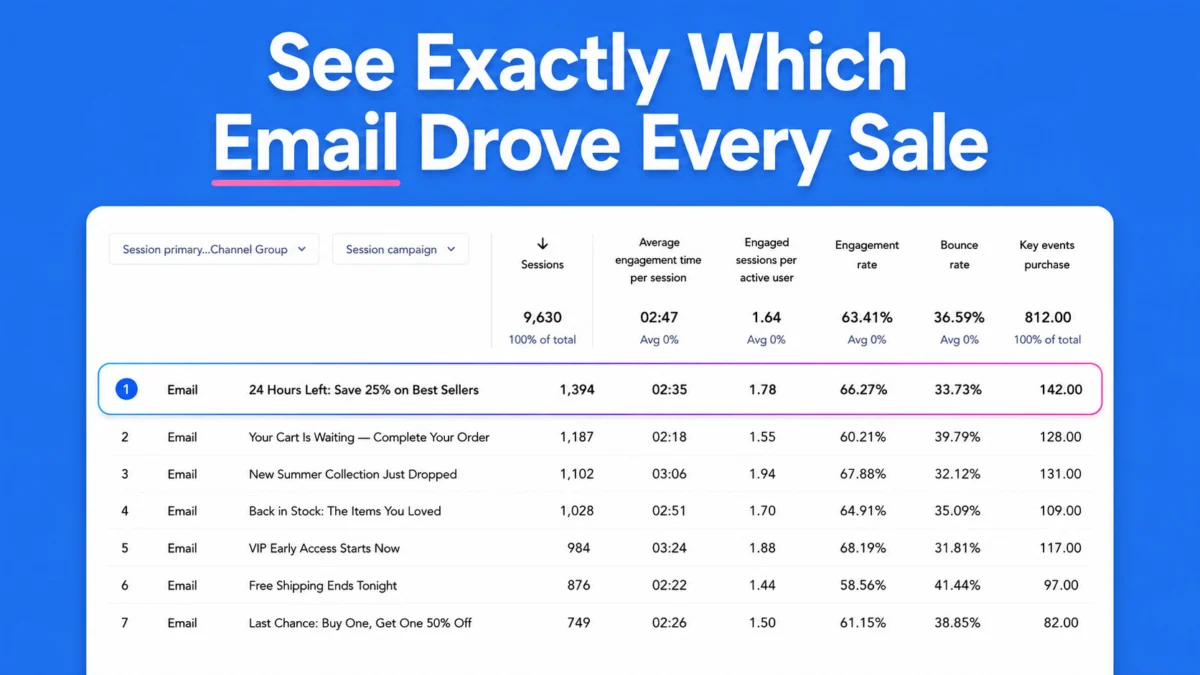
Leading email marketing service provider AWeber has unveiled a significant enhancement to its platform, automatically tagging every link in outgoing emails with UTM parameters. Launched on July 7, 2026, this new feature promises to transform how marketers track the performance and return on investment (ROI) of their email campaigns, offering unprecedented clarity into sales and engagement without the need for manual setup. The innovation means that upon sending an email, data crucial for attribution is instantly available in Google Analytics, allowing users to trace specific sales and conversions back to the precise subject line that initiated the customer journey. This move addresses a long-standing pain point for digital marketers, streamlining the analytics process and empowering more data-driven decision-making.
The Crucial Role of UTM Parameters in Digital Marketing
Understanding the journey a customer takes from initial contact to a conversion is paramount in modern digital marketing. This is where UTM (Urchin Tracking Module) parameters come into play. These are short text codes added to URLs that allow marketers to track the source, medium, and campaign of website traffic. Typically, five types of UTM parameters are used:
utm_source: Identifies the source of your traffic (e.g., Google, Facebook, newsletter).utm_medium: Identifies the medium that referred the user (e.g., CPC, email, social).utm_campaign: Identifies a specific product promotion or strategic campaign (e.g., summer_sale, new_product_launch).utm_term: Identifies paid keywords (primarily for search ads).utm_content: Differentiates similar content within the same ad or link (e.g., banner_link, text_link).
Historically, applying these parameters to every link in an email campaign has been a manual, often tedious, and error-prone process. Marketers would either use a URL builder tool or manually append the parameters to each URL, a task that multiplied with the number of links and campaigns. Errors in tagging could lead to fragmented data, making it difficult to accurately assess which emails, subject lines, or calls to action were most effective in driving traffic, leads, and ultimately, sales. This manual burden often deterred smaller businesses or time-strapped marketing teams from fully leveraging the power of attribution analytics, leaving valuable insights undiscovered.
Email marketing, consistently lauded for its high ROI—often cited as delivering $36 for every $1 spent—has always been a cornerstone of digital strategy. However, proving this ROI beyond simple open and click rates required deeper integration with web analytics. The ability to link an email click directly to a website visit, and then to a specific conversion event (like a purchase, sign-up, or download), is what transforms email from a communication channel into a measurable revenue driver. AWeber’s automated UTM tagging seeks to bridge this gap, democratizing sophisticated attribution for all its users.
AWeber’s Seamless Automation: A Paradigm Shift for Email Analytics
AWeber’s new system represents a significant step forward in simplifying email marketing analytics. At the core of this innovation is the automatic injection of three critical UTM parameters into every link within every email sent through the platform:
utm_source=aweber: Clearly identifies AWeber as the origin of the traffic.utm_medium=email: Designates the channel as email.utm_campaign=[email_subject_line]: Uniquely labels each campaign using the email’s subject line. This is a particularly powerful aspect, as it allows direct comparison of performance based on the initial message hook.
This automation occurs at the point of sending, ensuring that all outgoing emails are correctly tracked without any pre-configuration by the user. The immediate benefit is the elimination of manual tagging, freeing up valuable marketing team resources and drastically reducing the potential for human error. For marketers, this means more time spent on strategy and content creation, and less on administrative tasks.
Crucially, AWeber has designed this feature with user flexibility in mind. The system intelligently detects existing UTM parameters. If a user has already manually added their own custom tags to a link, AWeber’s automation will respect and preserve them, ensuring that bespoke tracking remains intact. This thoughtful implementation prevents conflicts and caters to advanced users who may require more granular or custom attribution beyond the default AWeber parameters. This non-overwriting policy is a testament to AWeber’s understanding of diverse marketer needs, from beginners seeking simplicity to seasoned professionals requiring nuanced control.
Integrating with Google Analytics for Actionable Insights
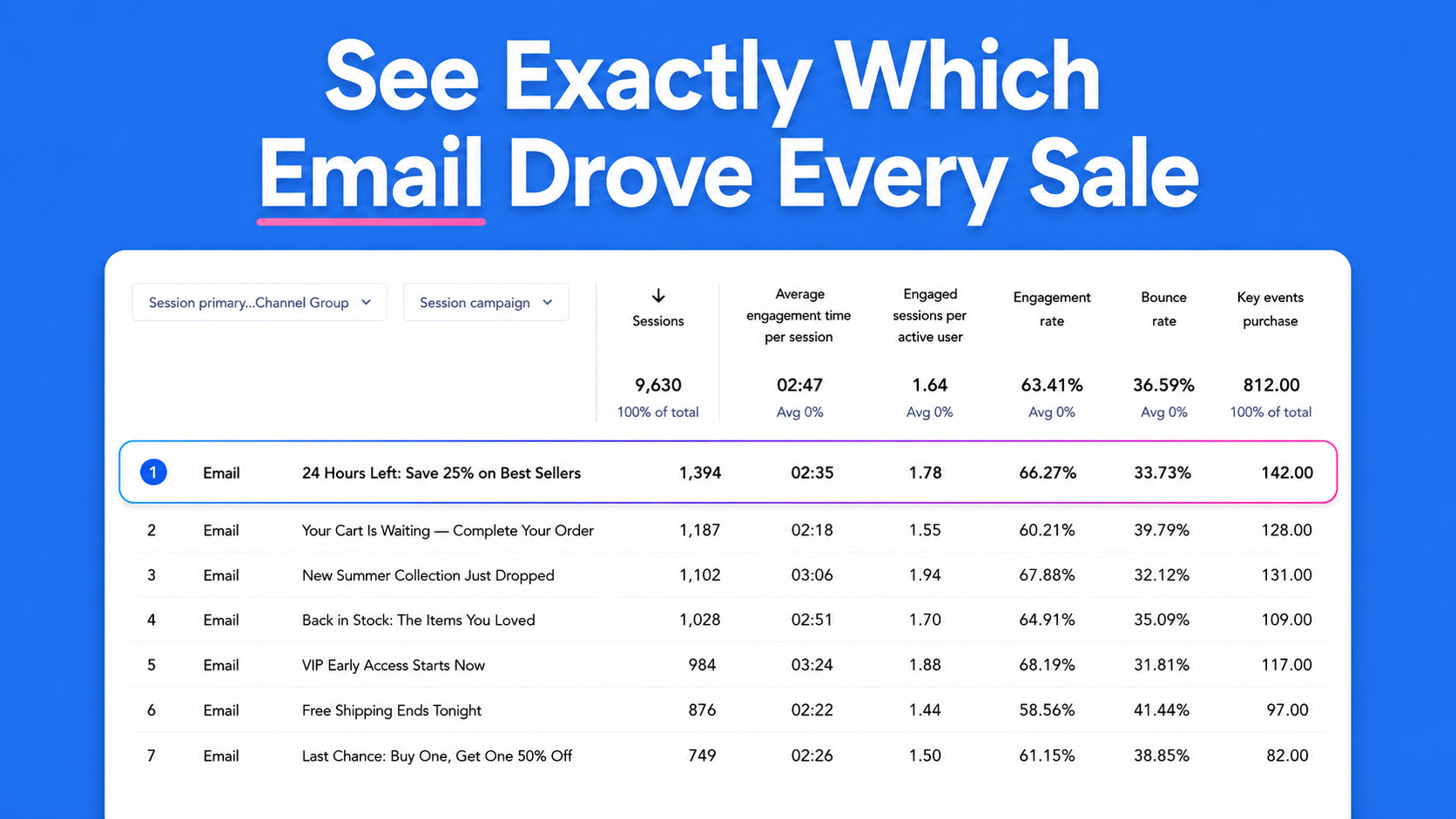
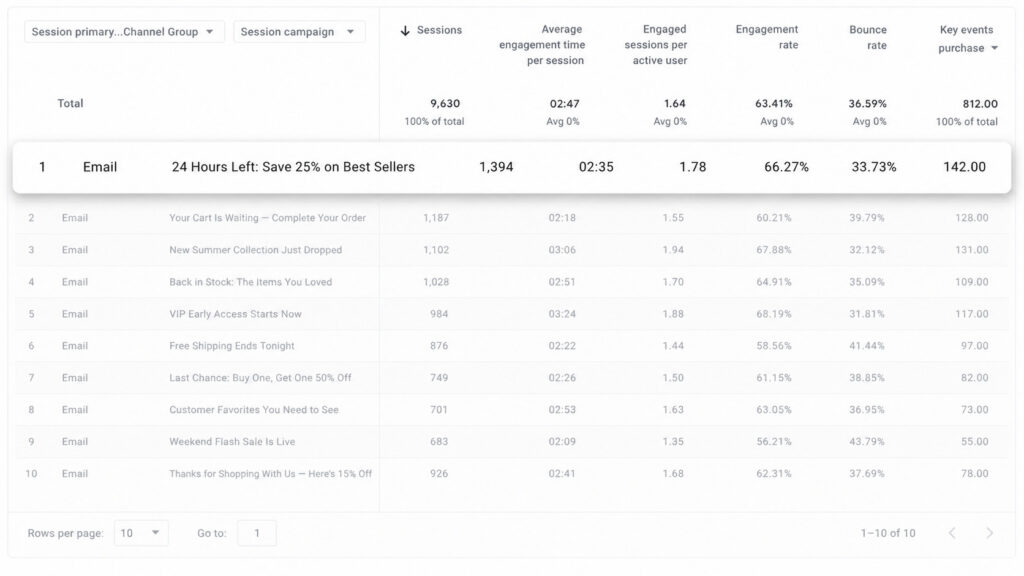
The true power of this automated tagging comes to life within Google Analytics (GA). Marketers simply need to access their GA account, navigate to the Acquisition > Traffic acquisition report, and filter the data by source/medium using aweber / email. Here, every email sent through AWeber will appear as its own distinct campaign, labeled precisely by its subject line.
This granular visibility allows marketers to:
- Identify Top-Performing Campaigns: Instantly see which subject lines and email content drive the most traffic to their website.
- Measure Conversion Effectiveness: Beyond clicks, track which emails ultimately lead to desired actions, such as product purchases, lead form submissions, e-book downloads, or subscription sign-ups. This is vital for understanding true campaign ROI.
- Optimize Future Strategies: By comparing the performance of various email sends, marketers can discern patterns, understand what resonates with their audience, and refine their messaging, offers, and calls to action for future campaigns. For example, if "Flash Sale: 24 Hours Only!" consistently outperforms "New Arrivals This Week," marketers gain clear direction for their promotional efforts.
- Understand Customer Journey: Trace the path from an email open to a specific conversion, providing deeper insights into user behavior and engagement beyond the initial click.
- Justify Marketing Spend: Present clear, data-backed reports on how email marketing directly contributes to business objectives and revenue, making it easier to secure budget and resources for future initiatives.
For small businesses and entrepreneurs, who often juggle multiple roles, this automated integration is particularly transformative. It removes a significant technical barrier, allowing them to access sophisticated analytics typically reserved for larger enterprises with dedicated analytics teams. The visual representation within Google Analytics, as demonstrated by the provided screenshot, makes the data immediately digestible and actionable.
Broader Impact and Implications for the Marketing Landscape
The introduction of AWeber’s automated UTM tracking carries several significant implications for the broader digital marketing industry:
- Increased Efficiency and Productivity: The most immediate impact is the immense time saving for marketing teams. By eliminating manual tagging, marketers can reallocate hours previously spent on administrative tasks to more strategic activities like content creation, A/B testing, and audience segmentation. This boosts overall team productivity and allows for faster campaign deployment.
- Enhanced Data Accuracy: Automated processes inherently reduce human error. Consistent and correctly formatted UTM parameters ensure cleaner data in Google Analytics, leading to more reliable insights and better decision-making. Fragmented or incorrect data can lead to misguided strategies and wasted resources.
- Democratization of Advanced Analytics: AWeber’s move makes sophisticated attribution tracking accessible to a wider audience, including small businesses and individual content creators who may lack the technical expertise or resources for complex manual setups. This levels the playing field, allowing more businesses to operate with a data-driven approach.
- Strengthening Email Marketing’s Position: In an increasingly fragmented digital landscape, email marketing continues to prove its resilience and effectiveness. By providing clearer attribution, AWeber solidifies email’s role as a directly measurable and highly accountable channel for driving business growth, making it easier for marketers to advocate for its continued investment.
- Competitive Pressure on ESPs: This innovation will likely spur other email service providers to enhance their own analytics offerings. As marketers increasingly demand seamless integration and automation, ESPs that fail to adapt risk falling behind. This competitive drive ultimately benefits users through more robust and user-friendly platforms.
- Alignment with Privacy-First Trends: As third-party cookie deprecation looms and data privacy regulations tighten, the emphasis shifts to first-party data and direct attribution methods. UTM parameters, which rely on first-party website tracking (Google Analytics), become even more critical for understanding customer behavior in a privacy-compliant manner. AWeber’s feature helps marketers navigate this evolving landscape.
Statements from Industry and AWeber Leadership (Inferred)
Dave Stys, the author of the initial announcement and a product leader at AWeber, likely underscored the company’s vision behind this release. "Our mission at AWeber has always been to simplify powerful marketing tools for our users," Stys might have stated. "Automated UTM tracking is a direct response to the growing need for clear, actionable insights without the technical overhead. We want our customers to focus on crafting compelling messages, confident that every click and every conversion is being accurately attributed. This feature empowers them to truly understand what moves their audience to act and to optimize their campaigns for maximum impact."
A hypothetical marketing industry analyst, Sarah Chen of Digital Insights Group, could comment on the broader significance: "In today’s competitive digital environment, attribution is no longer a luxury, but a necessity. AWeber’s automated UTM tagging is a smart move that tackles a genuine pain point for marketers. By seamlessly integrating with Google Analytics, they’re not just offering a feature; they’re providing a pathway to more intelligent, results-driven email strategies. This type of automation is indicative of the direction the industry is heading – towards more integrated, less manual marketing operations."
A hypothetical small business owner, Maria Rodriguez, founder of "Artisan Crafts Co.," might express enthusiasm: "As a small business owner, every minute counts. Manually tagging links for my email campaigns was always a chore I dreaded, and sometimes I’d skip it altogether because it was too time-consuming. Now, with AWeber doing it automatically, I can finally see exactly which emails are bringing in sales. It’s a game-changer for me; I can focus on my craft and know my marketing is working smarter."
Chronology and User Control
The feature was officially rolled out on July 7, 2026, building upon AWeber’s continuous development cycle. While the initial development and beta testing phases would have occurred prior to this date, the public launch marks the point where all AWeber users gain access to this capability.
AWeber has ensured that users retain full control over this powerful new feature. While automated UTM tracking is enabled by default for every AWeber account, users have the flexibility to adjust or disable it for specific lists. This can be done directly from the list settings:
- Navigate to
List Settingswithin the AWeber dashboard. - Locate the
UTM Trackingsection. - Toggle the setting on or off as desired.
This level of control is crucial for marketers who may have unique tracking requirements, integrate with other analytics platforms, or simply prefer to manage their UTM parameters manually for specific campaigns. The change in settings takes effect immediately on the next email send for that particular list, providing users with instant adaptability.
The Future of Email Marketing with Enhanced Analytics
AWeber’s automated UTM tracking is more than just a convenience; it is a foundational step towards a more intelligent and accountable future for email marketing. As the digital landscape continues to evolve, with increasing demands for personalization, precise attribution, and demonstrable ROI, tools that simplify complex analytics will become indispensable. By making it effortless to connect email engagement with website conversions, AWeber empowers its users to not only understand their audience better but also to prove the tangible value of their email marketing efforts. This innovation solidifies AWeber’s commitment to providing marketers with the tools they need to succeed in an increasingly data-driven world, ensuring that every email sent has a clear, traceable path to business success.