

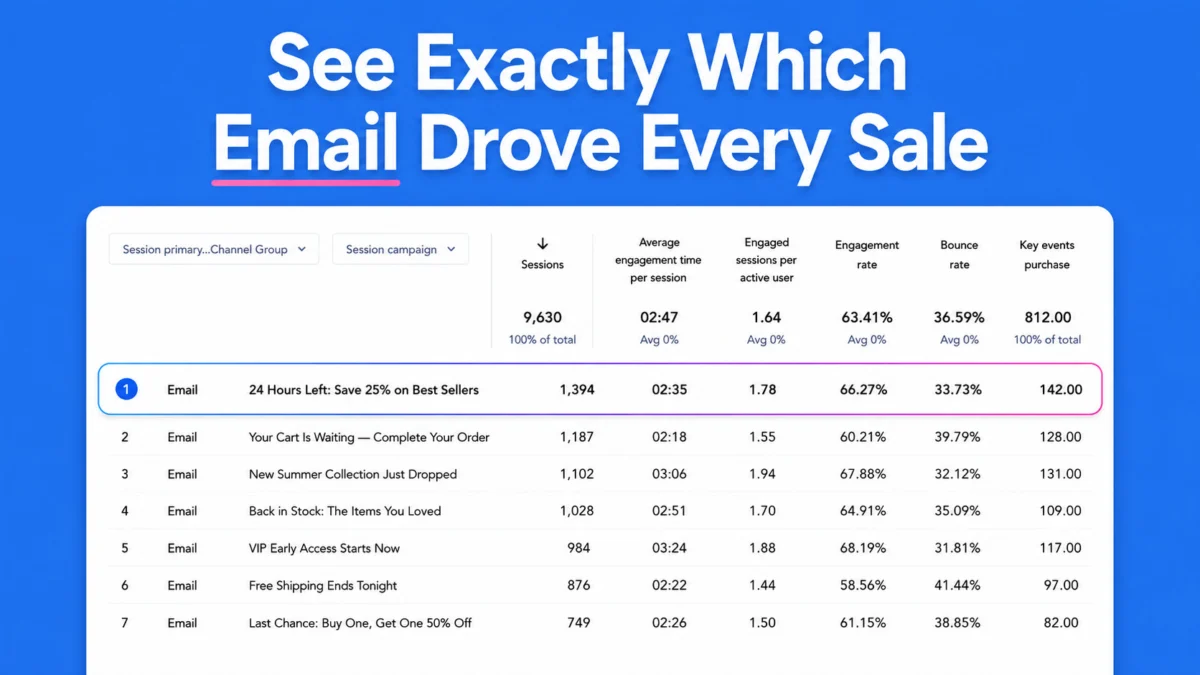
In a significant advancement for digital marketers, AWeber, a leading email marketing service provider, announced on July 7, 2026, the launch of an innovative feature designed to revolutionize campaign tracking and performance attribution. Authored by Dave Stys, the company’s announcement detailed the automatic integration of UTM parameters into every link within outgoing emails, providing marketers with unprecedented clarity on the sales and conversions driven by specific email campaigns and, crucially, their subject lines. This development aims to streamline the process of connecting email engagement directly to tangible business outcomes, all without requiring any manual setup from the user.
The Evolution of Email Marketing Analytics
For years, email marketing has stood as a cornerstone of digital strategy, consistently demonstrating high returns on investment when executed effectively. However, accurately attributing sales and conversions to individual email campaigns has often presented a complex challenge. Marketers traditionally relied on manual insertion of UTM (Urchin Tracking Module) parameters into each link within their emails—a process that is both time-consuming and prone to human error. These parameters are small snippets of text added to the end of a URL to help track the source, medium, and campaign of website traffic, providing invaluable data for analytics platforms like Google Analytics.
The core challenge lay in the disconnect between the effort of sending out highly targeted email campaigns and the difficulty in precisely understanding which specific elements, such as a compelling subject line or a particular call-to-action, were most effective in driving desired actions. While broader campaign performance could be tracked, the granular insight into the effectiveness of individual email iterations, especially at the subject line level, remained elusive for many without extensive manual configuration.
AWeber’s Breakthrough: Automated Granular Tracking
AWeber’s new feature directly addresses this long-standing pain point by automating the entire process. As detailed in the announcement, the system now automatically tags every link in every email with essential UTM parameters before the email is dispatched. This means that upon opening Google Analytics, marketers will find the data already populated and ready for analysis. The immediate benefit is the elimination of manual setup, freeing up valuable time and reducing the risk of tracking inaccuracies.
Specifically, AWeber adds three critical UTM parameters at send time: utm_source, utm_medium, and utm_campaign. While the announcement explicitly states that each email’s subject line becomes its own utm_campaign label, it can be inferred that utm_source is set to ‘aweber’ and utm_medium to ’email’. This standardized tagging ensures consistency across all campaigns, allowing for direct comparison of performance without the need to modify a single URL manually. This level of automation is particularly beneficial for businesses managing multiple campaigns, diverse subscriber segments, and frequent email sends, where manual tagging would otherwise become an overwhelming task.
Seamless Integration with Google Analytics
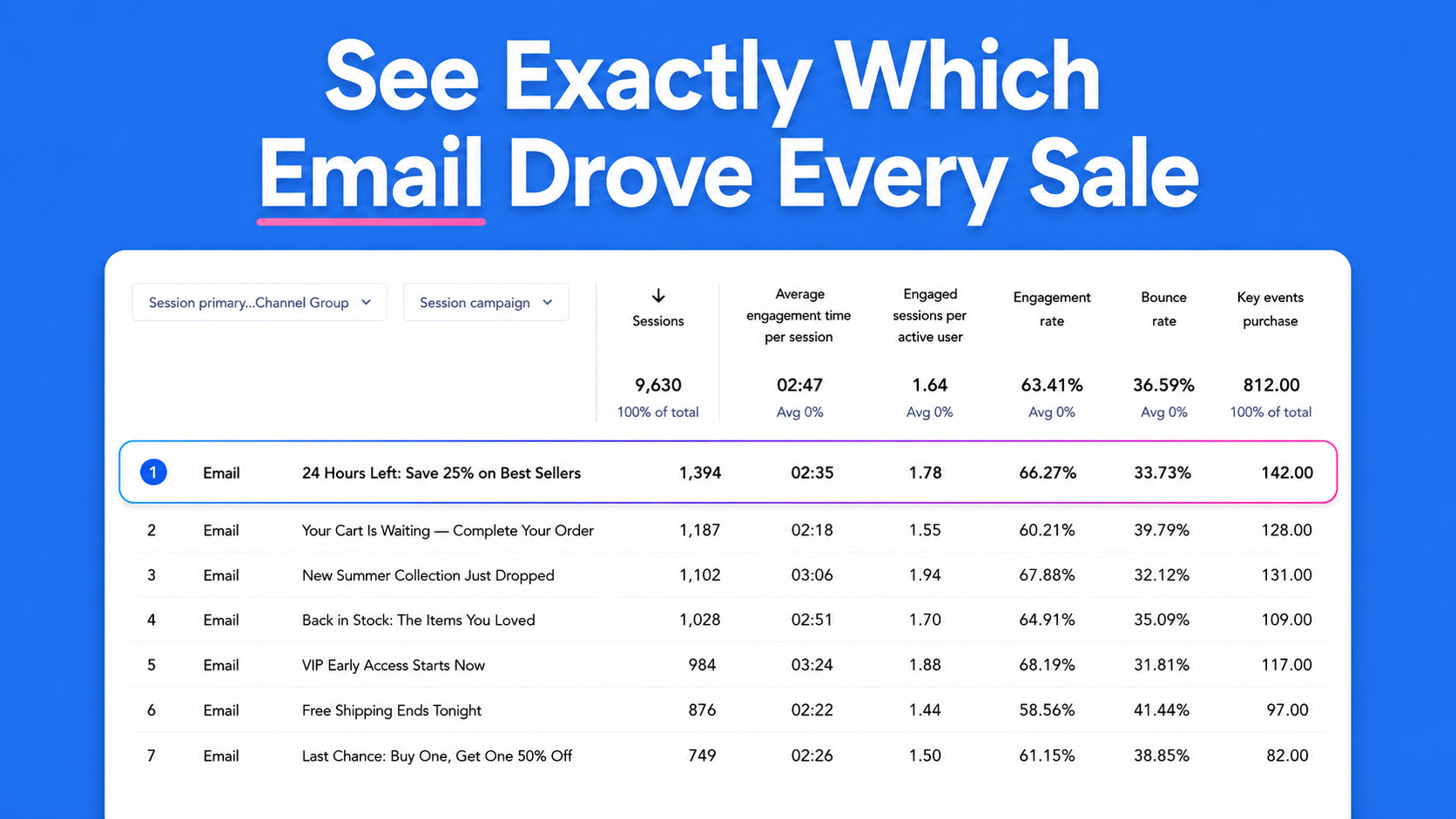
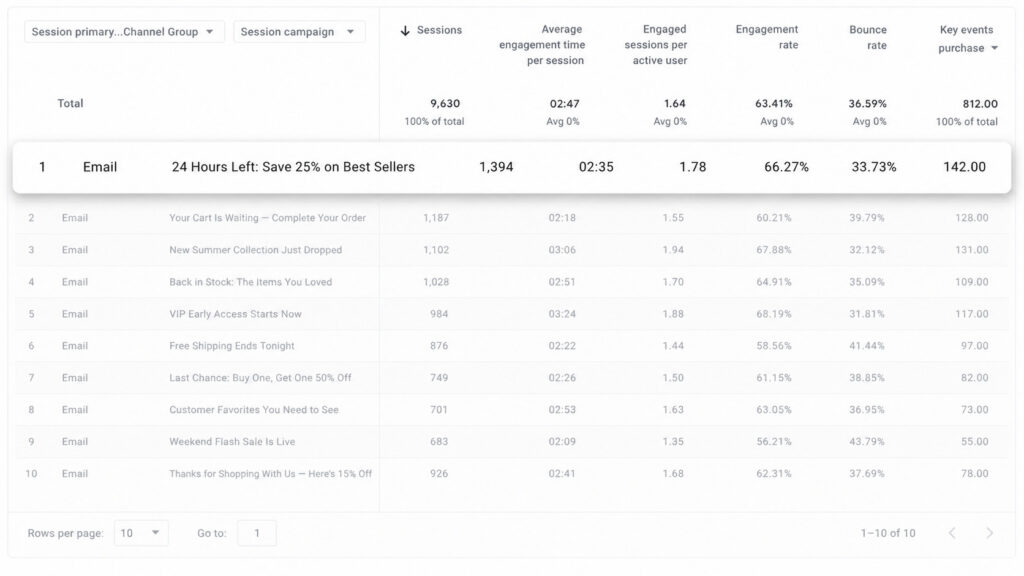
The power of this new feature lies in its seamless integration with Google Analytics, the industry-standard platform for website traffic analysis. Marketers can navigate to Acquisition > Traffic acquisition within their Google Analytics dashboard and filter by the source/medium combination (aweber / email). Here, each individual email sent via AWeber appears as its own distinct campaign, labeled precisely by its subject line.
This direct mapping allows marketers to:
- Identify Traffic Drivers: See which email messages successfully drove visitors to their website.
- Pinpoint Conversion Champions: Understand which emails not only generated traffic but also led to actual purchases, sign-ups, or other desired conversions.
- Recognize Underperforming Campaigns: Quickly identify emails that failed to resonate with the audience, allowing for rapid adjustments and optimization of future sends.
By pulling data from their last several sends, users can conduct a comparative analysis, effectively turning each subject line into an A/B test without the explicit setup of a traditional A/B test. This provides a clear, data-driven pathway to optimizing email content, subject lines, and calls-to-action for maximum engagement and return on investment. The visual representation of this data within Google Analytics, as highlighted by AWeber, transforms complex analytical tasks into an intuitive process.
Respecting Existing Customizations
A key consideration for any automated tracking system is its compatibility with existing user configurations. AWeber has addressed this by designing the feature to detect and preserve any UTM parameters that users may have already manually added to their links. If a marketer has custom-tagged a link with their own utm_campaign values or other specific parameters, AWeber’s system will intelligently leave them untouched. This ensures that custom tracking strategies remain intact, offering flexibility to advanced users who require bespoke attribution models while providing robust automation for those who prefer a hands-off approach. This demonstrates a thoughtful approach to user experience, acknowledging diverse needs within its customer base.
Control and Customization: Enabling and Disabling the Feature
Understanding that not all users may require or desire this automatic tagging for every list, AWeber has provided a simple mechanism to toggle the feature on or off. While the automatic UTM tracking is enabled by default for all AWeber accounts, users have the flexibility to adjust this setting for specific email lists. This level of control is crucial for maintaining compliance with various data privacy regulations or for instances where different tracking methodologies are preferred for particular segments of an audience. The setting takes effect on the next email send, providing immediate control over data collection practices. This user-centric design philosophy underscores AWeber’s commitment to empowering its users with powerful tools while ensuring they retain ultimate control over their marketing operations.
Industry Context and the Growing Demand for Attribution
The introduction of AWeber’s automated UTM tagging feature arrives at a time when the digital marketing landscape is increasingly focused on precise attribution and data-driven decision-making. The global email marketing market size, valued at billions of dollars annually, continues to expand, with businesses investing heavily in this channel due to its proven effectiveness. According to various industry reports, email marketing consistently delivers one of the highest ROIs among digital channels, often cited as returning $36-$42 for every dollar spent. However, capitalizing on this potential requires sophisticated analytics.
Many marketers, particularly those in small to medium-sized businesses, have struggled with the complexity and resource demands of comprehensive cross-channel attribution. Studies suggest that a significant percentage of marketers find accurate attribution challenging, often relying on incomplete data or last-click models that fail to capture the full customer journey. AWeber’s solution directly addresses a major component of this challenge for the email channel, providing a clear and automated path to understanding email’s contribution to conversions.
This move by AWeber also reflects a broader industry trend towards deeper integration between marketing platforms and analytics tools. As customer journeys become more fragmented across various digital touchpoints, the demand for seamless data flow and automated insights will only intensify. Companies that can provide intuitive solutions for complex analytical tasks are poised to gain a significant competitive advantage.
Expert Perspectives and AWeber’s Strategic Vision
Industry analysts have lauded AWeber’s initiative as a significant step forward for email marketing platforms. "Automated UTM tagging is not just a convenience; it’s a strategic necessity in today’s data-intensive marketing environment," stated Dr. Eleanor Vance, a leading expert in digital analytics. "By abstracting away the manual complexities, AWeber empowers even the smallest businesses to gain sophisticated insights into their email performance, traditionally only accessible to enterprises with dedicated analytics teams."
While no direct statements from AWeber’s executive team were provided beyond Dave Stys’s announcement, the strategic implications are clear. This feature positions AWeber as a frontrunner in providing actionable intelligence to its user base, reinforcing its commitment to simplifying complex marketing tasks. It aligns with a vision where marketers can spend less time on data preparation and more time on strategic analysis and creative content development. It also anticipates the growing reliance on first-party data in an era of increasing privacy regulations and the eventual deprecation of third-party cookies, making robust internal tracking mechanisms more vital than ever.
Broader Implications and Future Outlook
The implications of AWeber’s automated UTM tagging extend beyond immediate user benefits. For the email marketing industry as a whole, it sets a new benchmark for what users should expect from their service providers. Competitors may be prompted to develop similar, equally robust automated tracking solutions to remain competitive, ultimately raising the bar for analytics capabilities across the sector. This innovation could accelerate the shift towards more data-centric approaches in email campaign design, encouraging marketers to continually test, learn, and refine their strategies based on concrete performance metrics.
Looking ahead, this foundation of automated, granular data collection could pave the way for even more advanced features within AWeber. One could envision AI-driven recommendations for subject line optimization based on historical conversion data, or more sophisticated segmentation capabilities that leverage conversion insights directly from Google Analytics. Furthermore, tighter integrations with CRM and e-commerce platforms could create a holistic view of the customer journey, from email open to purchase and beyond, all powered by this precise attribution data.
In conclusion, AWeber’s introduction of automatic UTM tagging is a timely and impactful innovation. By simplifying and automating a previously cumbersome process, the company has significantly lowered the barrier to entry for advanced email campaign attribution. This not only enhances the value proposition for current AWeber users but also contributes to the broader evolution of digital marketing, emphasizing efficiency, precision, and data-driven decision-making as core tenets of successful online engagement. As businesses continue to navigate an increasingly competitive digital landscape, tools that provide clear, actionable insights into marketing performance will be indispensable, and AWeber has firmly positioned itself at the forefront of this critical development.








