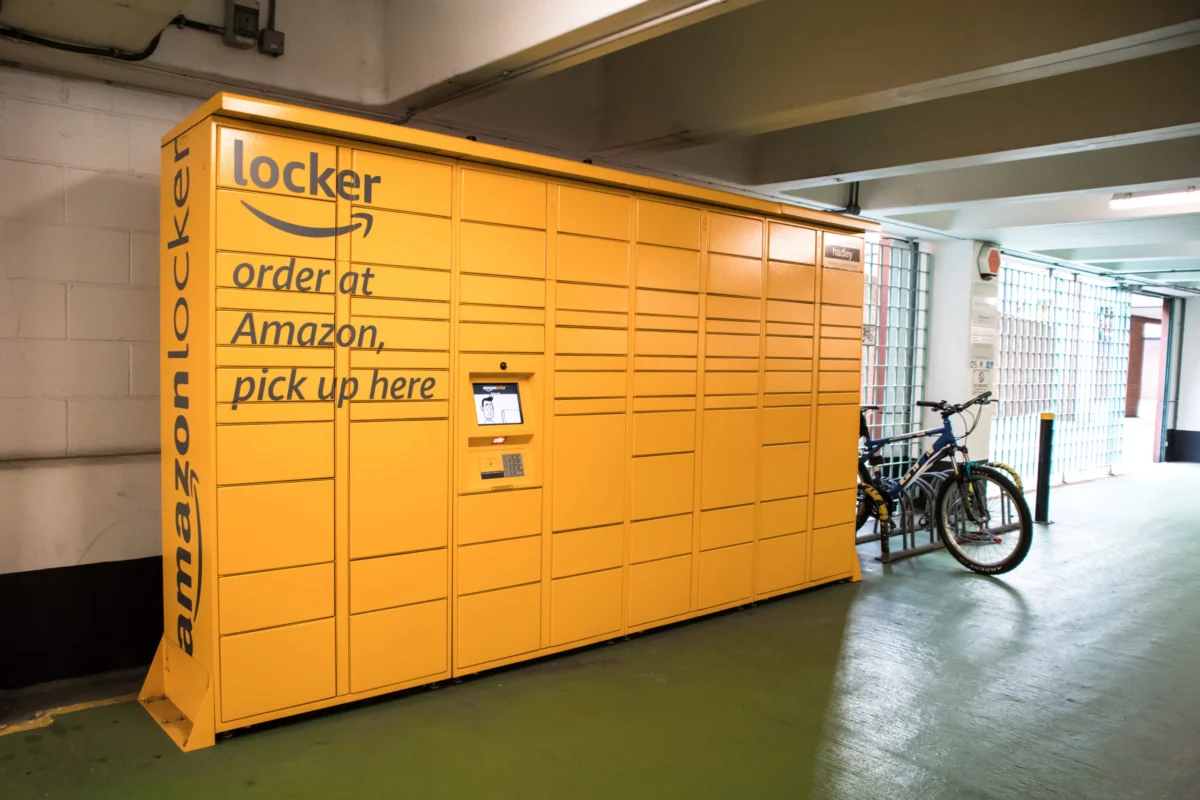
Amazon.com Inc. has significantly broadened its Amazon Locker network, establishing more than 750 self-service package pickup points across over 500 U.S. college campuses. This strategic expansion aims to place convenient package retrieval directly within the daily routines of students, integrating delivery hubs into the fabric of academic life. By strategically locating these kiosks near student residences, dining facilities, and academic buildings, Amazon is effectively creating centralized delivery points in high-traffic areas already populated by a significant demographic of young online shoppers. The initiative underscores Amazon’s ongoing commitment to optimizing its last-mile delivery strategy and enhancing customer convenience, particularly for a key demographic.
The company has identified Cornell University, Georgia Tech, Michigan State University, Montana State University, Quinnipiac University, and the University of Portland as among the institutions that have recently integrated Amazon Locker services. While Amazon has not disclosed the precise number of new lockers installed or the specific rollout dates for each campus, the scale of the expansion suggests a substantial investment in this segment of its logistics network. This campus-focused rollout is a component of Amazon’s broader push to expand its nationwide package pickup network, which now reportedly encompasses over 25,000 locations.
Amazon’s dominance in the e-commerce landscape is well-established. The company consistently ranks at the top of industry analyses, such as Digital Commerce 360’s Top 1000 Database, which tracks North America’s largest online retailers based on annual e-commerce sales. This database positions Amazon as the undisputed leader in digital commerce. However, in emerging areas like artificial intelligence applications in commerce, Amazon’s ranking is more nuanced. The company is positioned at No. 158 in Digital Commerce 360’s AI Rankings, a testament to the rapidly evolving nature of technology integration in retail. Furthermore, Amazon’s role as a global marketplace operator is also significant; it holds the No. 3 spot in Digital Commerce 360’s Global Online Marketplaces Database, which evaluates the largest marketplaces by third-party gross merchandise value (GMV).
Strategic Rationale: Proximity and Convenience for Students
The decision to concentrate Amazon Locker expansion on college campuses is driven by a clear understanding of student behavior and logistical challenges. In its August 11 announcement, Amazon emphasized that the expanded network brings package pickup “closer to where students live and study.” A primary hurdle for traditional package locker systems is the requirement for customers to make a dedicated trip to retrieve their orders. On a college campus, this logistical friction is significantly reduced. Students can integrate package pickup into their existing commutes to and from classes, dining halls, or other campus activities, transforming a potential inconvenience into a seamless part of their day.
Viraj Chatterjee, vice president of Amazon Transportation, articulated this strategy: “College students are constantly on the move, and picking up a package should fit into their day – not the other way around. Expanding Amazon Locker across college and university campuses nationwide puts secure package pickup directly into the flow of campus life.” This approach directly addresses the "last mile" problem of delivery, making it more efficient and less burdensome for the end consumer.
The user experience for Amazon Locker is designed for simplicity. Students can locate nearby lockers by entering an address or ZIP code, add a preferred locker location to their Amazon address book, and then select it during the checkout process. The pickup service is free of charge. Upon delivery, Amazon sends detailed instructions, including a unique code, barcode, or a prompt within the Amazon Shopping app, to unlock the designated locker. Customers are provided with three calendar days to retrieve their packages; failure to do so results in Amazon automatically returning and refunding the order.
Complementing the locker expansion, Amazon also used its announcement to highlight its discounted Prime membership program for young adults. Students and individuals aged 18 to 24 can subscribe to Prime for $7.49 per month or $69 per year, representing a 50% discount compared to the standard membership price. This offer requires verification through a .edu email address or valid student ID. The discounted Prime membership includes benefits such as 5% cash back on eligible purchases in select categories, further incentivizing student engagement with Amazon’s ecosystem.
A Decade-Long Evolution of Campus Logistics
Amazon’s engagement with campus logistics has been a gradual process, evolving from initial experiments to the current widespread deployment of Locker facilities. The company first piloted Amazon Locker in 2011, with early installations primarily concentrated in the Seattle metropolitan area, according to reports from GeekWire. This initial phase focused on testing the feasibility and operational aspects of self-service package retrieval in urban environments.
By 2015, Amazon began exploring more integrated campus solutions, launching its first staffed campus pickup site at Purdue University. This model offered students the flexibility of retrieving packages from lockers or interacting with staff at a dedicated desk. A year later, in 2016, Amazon established a significant presence at the University of California, Berkeley, with a 3,500-square-foot staffed pickup location. This site was notable as Amazon’s fifth campus community to feature a staffed pickup facility and was distinguished by its interactive Amazon device area, allowing students to experience Kindle e-readers, Fire tablets, and Fire TV devices firsthand.
Over time, the emphasis appears to have shifted towards standalone and self-service locker installations, which are generally more scalable and cost-effective. Recent years have seen continued growth in this area. In 2022, Amazon installed seven parcel kiosks near residence halls at Duke University. More recently, Western Washington University added two Amazon Hub lockers, with indications that further installations were planned. This chronological progression illustrates Amazon’s strategic refinement in delivering packages to the student population, adapting its service offerings based on market demand and operational efficiency.
Data Insights into Locker Network Performance and Demand
While Amazon does not publicly release specific data on college campus locker usage, internal research and external studies provide valuable insights into the demand and operational efficiencies of its locker network. Years ago, internal research indicated that Amazon Locker systems were already grappling with capacity constraints.
A peer-reviewed study published in 2024 highlighted issues with early Amazon Locker systems, noting that they often allocated excessive space to standard-delivery orders, consequently reducing capacity for faster-shipping items. In 2017, approximately 20% of Amazon Locker requests were rejected. The study further revealed that up to 35% of these rejections were unnecessary, as viable space was actually available.
To address these inefficiencies, Amazon developed a sophisticated system leveraging machine learning to forecast demand and accurately estimate package dwell times within lockers. An optimization model was then implemented to allocate space based on shipping speed. During the 2018 holiday season, this improved system reportedly increased worldwide Locker throughput by 9% year-over-year, enabling Amazon to accommodate millions of additional locker requests that would have otherwise been declined.
Evidence from campus environments suggests tangible operational savings for universities. At Boston College, a single Amazon Locker unit handled approximately 200 deliveries per month during its initial three months of operation, effectively bypassing the campus mailroom. This reduced the burden on mailroom staff, who no longer had to receive, sort, or distribute these packages, leading to enhanced efficiency.
Beyond higher education, independent research corroborates the benefits of locker installations. A 2023 field study conducted at the University of Washington found that couriers spent significantly less time—between 50% and 60% less—inside a Seattle apartment building after the installation of a common-carrier locker. The building manager also reported a substantial 90% reduction in package-related tasks.
Challenges and Future Implications
Despite the demonstrated efficiencies, widespread adoption of locker systems is not guaranteed. A 2021 review sponsored by the U.S. Department of Transportation noted that locker and collection-point usage typically ranges from 10% to 20%, even in countries with well-established locker programs. A primary barrier identified in earlier research is the necessity for consumers to complete the final leg of the retrieval journey themselves. Amazon’s strategic placement of lockers on college campuses directly aims to mitigate this inconvenience by situating them along routes that students frequently travel.
The expansion of Amazon Locker on college campuses represents a strategic move to capture a valuable and digitally native consumer base. By embedding its pickup network into the daily lives of students, Amazon not only enhances convenience but also strengthens its competitive position in the student market. This initiative could foster greater brand loyalty among young consumers, potentially translating into long-term purchasing habits. Furthermore, the operational efficiencies gained from reduced last-mile delivery challenges and streamlined package handling for universities suggest a mutually beneficial arrangement. As the e-commerce landscape continues to evolve, Amazon’s proactive approach to optimizing delivery and pickup networks, particularly in high-density environments like college campuses, positions it to maintain its market leadership. The success of this strategy will likely influence future logistics innovations in both retail and institutional settings.