rifanmuazin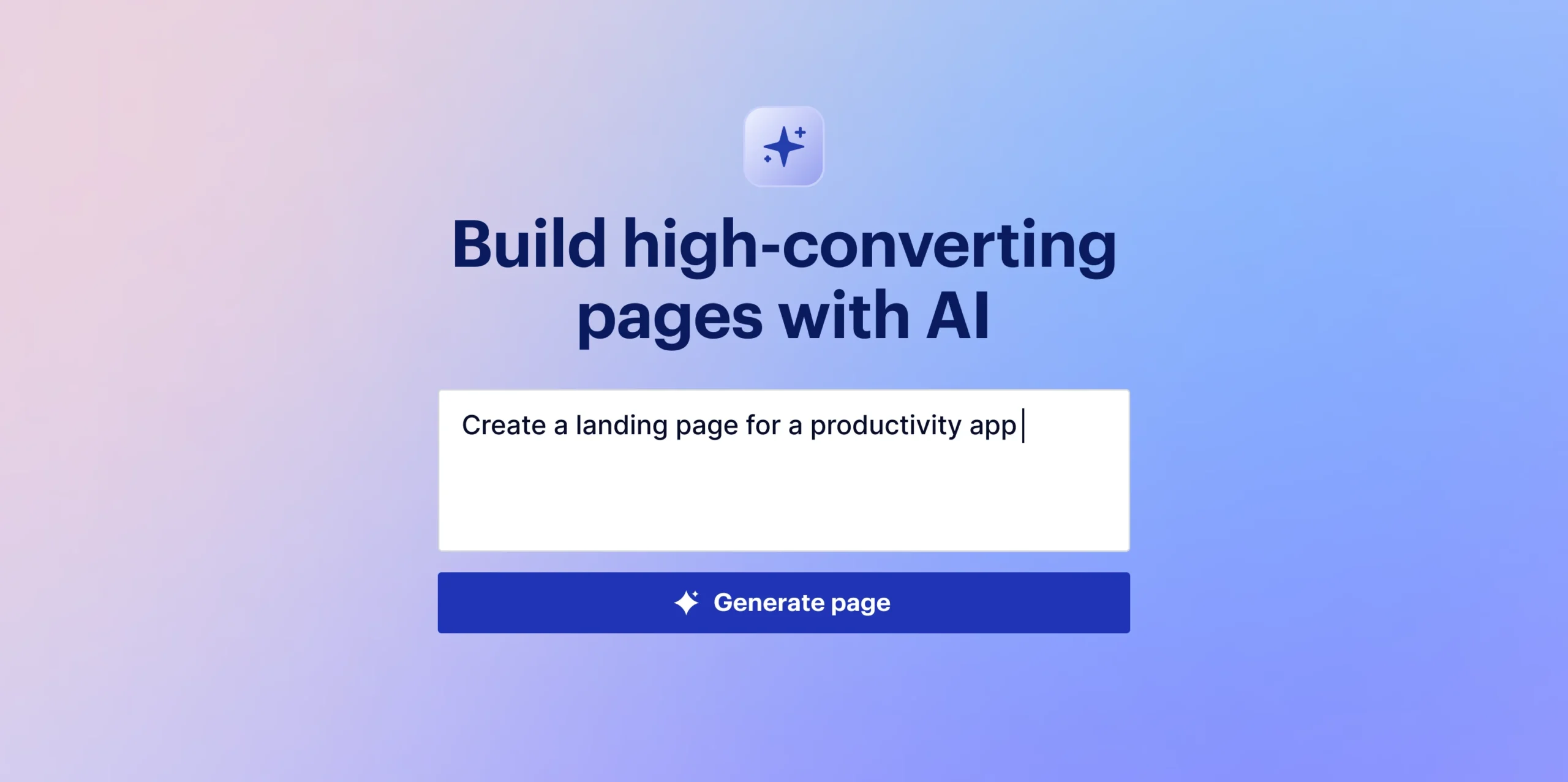
Instapage, a long-standing leader in landing page technology and conversion rate optimization (CRO), has announced the official launch of its end-to-end AI-powered marketing platform. This significant evolution marks a transition from a specialized landing page builder into a holistic ecosystem that integrates artificial intelligence across the entire marketing funnel, from initial page conception to automated lead nurturing. Since its inception in 2012, the company has focused on reducing the technical barriers to high-performance marketing. With this latest release, Instapage addresses the modern challenges of 2026, where marketing teams face increased pressure to deliver high-volume, personalized campaigns with leaner budgets and smaller headcounts.
The platform’s new capabilities include AI-driven page generation, automated email creation, and intelligent "AI Collections," which collectively aim to eliminate the friction inherent in multi-tool marketing stacks. By embedding AI into every stage of the creation, testing, and optimization process, Instapage seeks to provide a unified solution that replaces the fragmented "stitching" of disparate tools that has characterized digital marketing for over a decade.
A Decade of Evolution: From Builder to AI Ecosystem
The journey of Instapage reflects the broader trajectory of the MarTech industry. Founded in 2012, the company initially gained traction by offering a "pixel-perfect" drag-and-drop builder that allowed non-developers to create sophisticated landing pages. Over the subsequent years, the company expanded its scope, developing a suite of tools focused on personalization, experimentation (A/B testing), and detailed analytics.
By 2020, the industry began to shift toward integrated suites as companies grew weary of managing dozens of individual software subscriptions. Instapage responded by building out its CRO capabilities, ensuring that every page was not just visually appealing but mathematically optimized for conversions. The pivot to AI, which began in earnest several years ago, represents the third major era for the company. While previous iterations focused on the how of building pages, the new AI-powered platform focuses on the speed and scale of execution.
The chronology of this development is marked by a series of strategic beta tests. Over the past twenty-four months, Instapage has gradually embedded AI copy tools and experimentation modules into its existing framework. The 2026 release of AI page and email generation represents the culmination of these efforts, moving AI from a peripheral feature to the core engine of the platform.
Solving the "Blank Page" Crisis with AI Generation
One of the primary hurdles in digital marketing is the "blank page syndrome." Marketing professionals often have clear objectives and audience insights but struggle with the initial structural and creative execution. Instapage’s new AI page generation tool is designed to bypass this bottleneck.
Unlike traditional AI generators that produce static or difficult-to-edit templates, Instapage’s system allows users to describe their goals in natural language. The AI then generates a complete, conversion-ready page in seconds, including tailored messaging, optimized layouts, and strategic calls-to-action.
A critical differentiator in Instapage’s approach is the retention of creative control. Industry analysts have noted that many standalone AI generators suffer from a "regeneration trap," where any significant change to the AI’s output requires a complete redo of the prompt, often costing the user additional credits or "tokens." Instapage avoids this by integrating the AI output directly into its proprietary pixel-perfect builder. Once the AI provides the foundation, users can manually adjust elements, move sections, or refine branding without needing to re-prompt the system. This hybrid approach—AI for speed and human-led design for precision—is a response to the growing demand for tools that support "human-in-the-loop" workflows.
Unified Lead Nurturing: The AI Email Revolution
The expansion into AI-powered email generation addresses the critical gap between lead acquisition and lead conversion. Historically, marketing teams have used one tool to build pages and another to manage email sequences, often requiring third-party integration platforms like Zapier or manual data exports to keep the systems in sync. This fragmentation often leads to delayed response times, which can be fatal for conversion rates.
Data from the Harvard Business Review and various sales tech studies suggest that firms that contact prospects within an hour of receiving a query are nearly seven times as likely to have a meaningful conversation with a key decision-maker as those that wait even sixty minutes. Instapage’s integrated AI email generator is built to capitalize on this "speed to lead" window.

The platform now allows users to set up automated follow-up sequences directly within the same interface used to build the landing pages. By selecting a goal, target audience, and desired tone, the AI generates contextually relevant email copy that aligns with the specific landing page the lead interacted with. This ensures a seamless brand voice and a highly personalized user journey, all managed within a single dashboard.
Supporting Data and Market Context
The move toward AI-integrated platforms is supported by significant shifts in the global marketing landscape. As of 2025, a study by Gartner indicated that 63% of marketing leaders planned to invest heavily in generative AI to combat rising labor costs and the complexity of multi-channel management. Furthermore, the "MarTech 5000"—a famous chart tracking the number of marketing technology tools—has ballooned to over 11,000 solutions, leading to what experts call "tool fatigue."
Instapage’s internal data suggests that teams using integrated AI tools can reduce the time spent on page creation by up to 80%. In a competitive environment where the "cost per acquisition" (CPA) continues to rise on platforms like Google and Meta, the ability to rapidly test and iterate on landing pages is no longer a luxury but a necessity for survival.
The 2026 economic environment has further catalyzed this shift. With many venture capital-backed firms moving away from "growth at all costs" toward "efficient growth," marketing departments are being tasked with maintaining output despite reduced headcounts. Instapage’s platform is positioned as a "force multiplier" that allows a single marketer to perform tasks that previously required a designer, a copywriter, and a front-end developer.
Industry Implications and Expert Analysis
The transition of Instapage into an end-to-end AI platform has broader implications for the SaaS (Software as a Service) industry. It signals a move away from "point solutions"—tools that do one thing well—toward "workflow solutions"—tools that manage an entire process.
Industry analysts suggest that the success of this model depends on the quality of the AI’s output and the ease of the user interface. "The challenge for AI in marketing isn’t just generating content; it’s generating content that actually converts," says a senior analyst in the digital commerce space. "By tying AI generation directly to their historical conversion data and CRO tools, Instapage is making a bet that their AI will be more effective than generic models because it is purpose-built for the landing page use case."
Furthermore, the integration of email and page building suggests a convergence in the market. We are seeing the lines blur between Landing Page Builders, CRM (Customer Relationship Management) tools, and Email Marketing Providers. Instapage’s strategy appears to be capturing the "top of the funnel" and the "immediate follow-up," leaving the long-term CRM management to traditional players while owning the high-intensity conversion window.
Official Responses and Future Outlook
While Instapage executives have emphasized the efficiency gains of the new platform, they have also issued a note of transparency regarding the rollout. Select AI features, including the advanced AI Collections, are currently in beta. This phased release allows the company to gather user feedback and refine the machine learning models based on real-world performance data.
In a statement regarding the launch, the company noted that the goal was never to replace the marketer, but to remove the technical debt that prevents marketers from being creative. The platform is designed to handle the "heavy lifting" of layout and initial drafting, allowing human users to focus on high-level strategy and brand differentiation.
For existing customers, the transition represents an opportunity to consolidate their tech stacks. For the broader market, it serves as a benchmark for what an "AI-native" marketing workflow looks like. As AI continues to evolve, Instapage has signaled that it will continue to embed these technologies across all stages of the marketing lifecycle, including advanced predictive analytics and real-time page mutation based on visitor behavior.
The platform is currently offering a 14-day free trial for businesses to experience the AI-powered workflow. As the marketing world watches, the success of Instapage’s new direction may well determine the standard for how digital campaigns are built and managed in the second half of the decade. The focus remains clear: in an era of unprecedented digital noise, the winners will be those who can deploy highly relevant, conversion-optimized experiences at the speed of AI.