rifanmuazin
The global e-commerce landscape is currently undergoing a structural transformation as artificial intelligence and integrated social commerce platforms challenge the traditional direct-to-consumer model. While the rise of "one-click" shopping within social media apps and AI interfaces like ChatGPT has been framed as an existential threat to brand-owned websites, recent consumer behavior data suggests a more complex reality. Although big tech platforms are encroaching on the sales funnel, a significant majority of shoppers continue to prefer buying directly from brand websites, citing deep-seated concerns regarding security, authenticity, and customer service on third-party platforms. However, industry analysts warn that this "trust moat" is fragile and could evaporate as platforms refine their shopping experiences and AI-driven discovery becomes the new retail standard.
The Current State of Digital Commerce
The conversation surrounding e-commerce has shifted from simple online storefronts to a fragmented ecosystem where discovery and purchase happen simultaneously. Historically, the shopper’s journey began with a search engine query or a direct visit to a known brand. Today, that journey is increasingly contained within "walled gardens" such as TikTok Shop, Instagram Checkout, and Google’s Search Generative Experience (SGE). Despite these technological advancements, including ChatGPT’s attempts at scaling "Instant Shopping" features, the transition to platform-based purchasing has been slower than many tech giants anticipated.
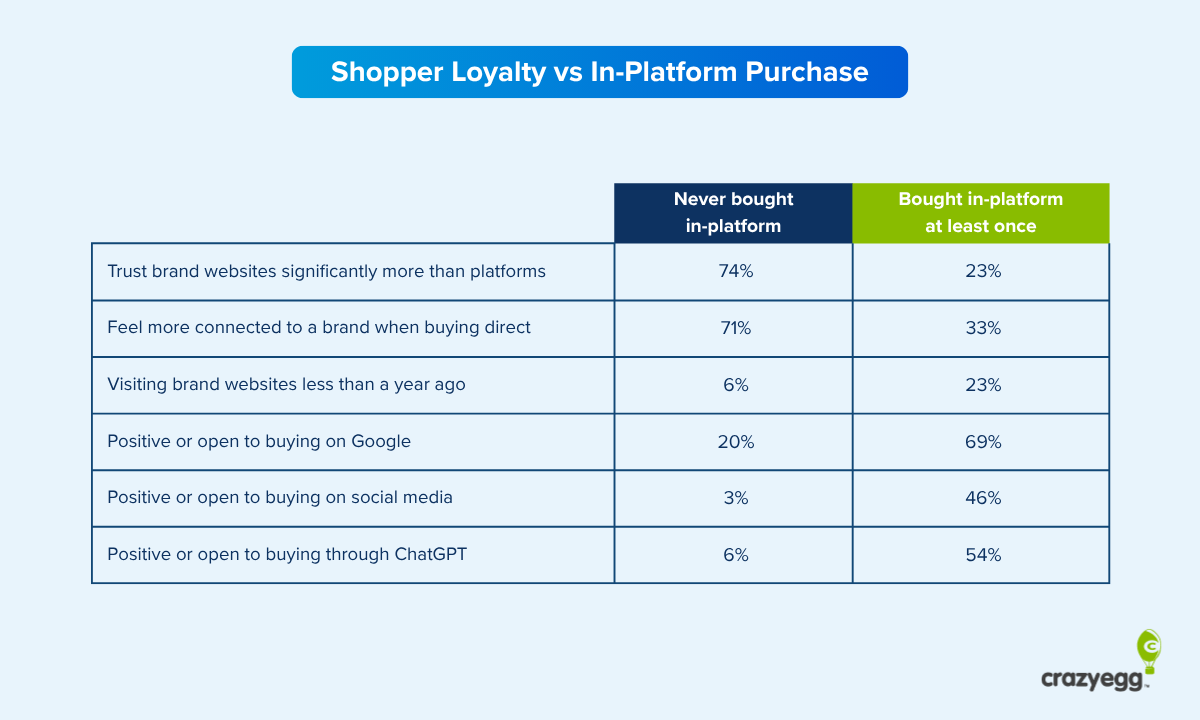
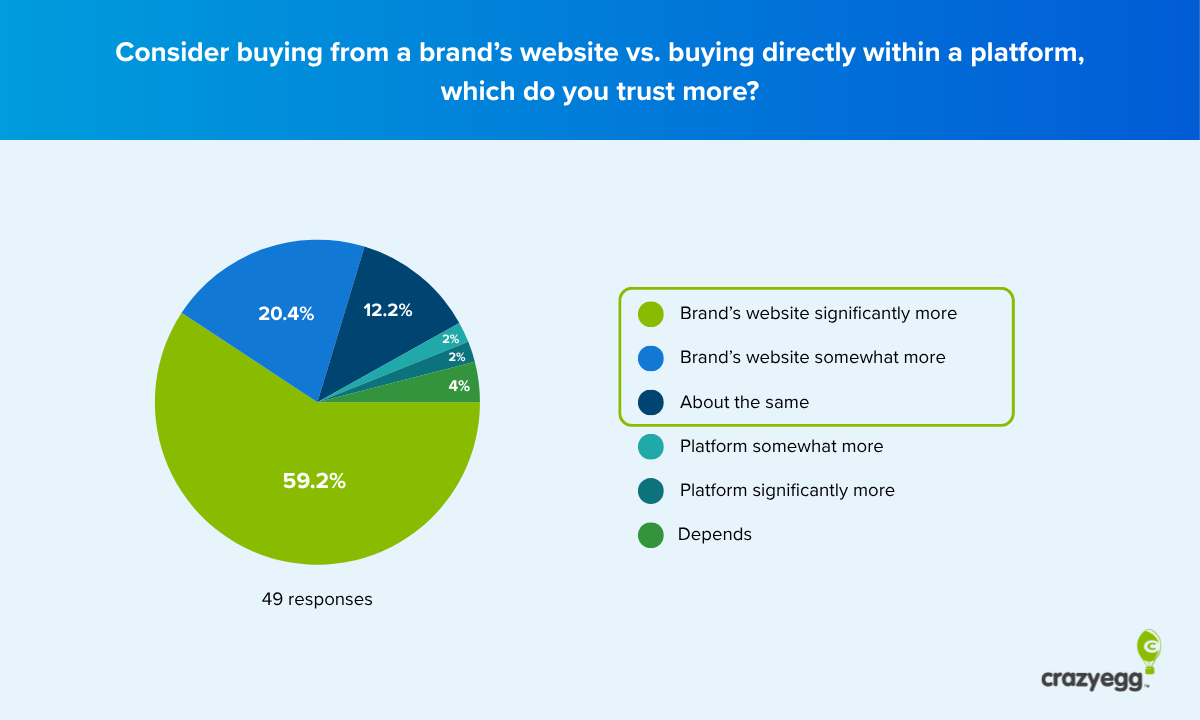
Data from a recent industry survey of online shoppers reveals that brand websites remain the primary fortress of consumer trust. The findings indicate that while awareness of platform-based shopping is high, actual conversion rates within those platforms remain low compared to direct-to-consumer (DTC) channels. This preference is not necessarily rooted in a superior user interface on brand sites, but rather in a pervasive distrust of the alternatives. As platforms attempt to close this gap, brands are being urged to strengthen their direct sales channels before the current window of consumer loyalty narrows.
Chronology of E-commerce Evolution and Platform Encroachment
To understand the current tension, one must look at the timeline of digital retail evolution. In the early 2010s, the "DTC Revolution" allowed brands like Warby Parker and Casper to bypass traditional retailers and build direct relationships with customers. By 2018, social media platforms began integrating "Buy" buttons, attempting to reduce friction by keeping users within their apps.
The year 2023 marked a pivot point with the explosion of Generative AI. Tools like ChatGPT began experimenting with plugins that allowed users to research and purchase products through a conversational interface. However, early iterations faced hurdles; for instance, OpenAI recently scaled back some of its instant checkout features due to integration complexities and user hesitation. In 2024, the focus has shifted toward AI-assisted discovery, where the AI acts as a concierge, narrowing down choices before the consumer ever reaches a merchant’s site. This shift represents a move from "Search" to "Answer," where the brand that is not cited by the AI effectively ceases to exist in the consumer’s consideration set.
Supporting Data: The Anatomy of Consumer Trust
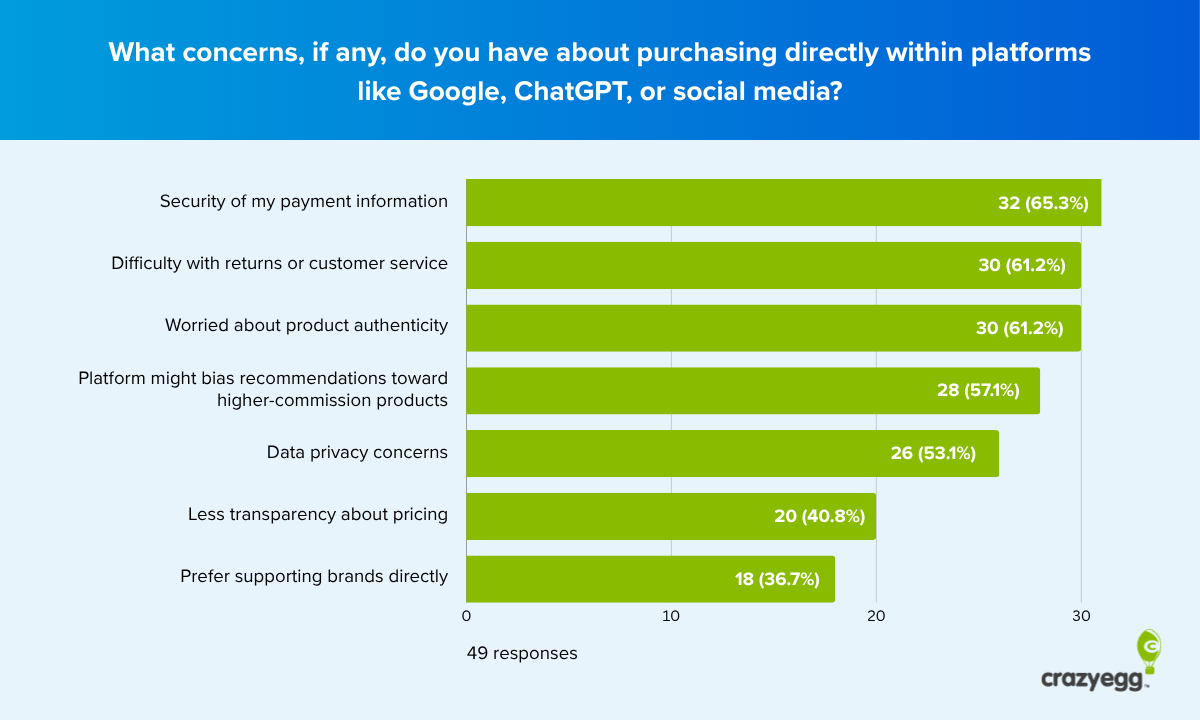
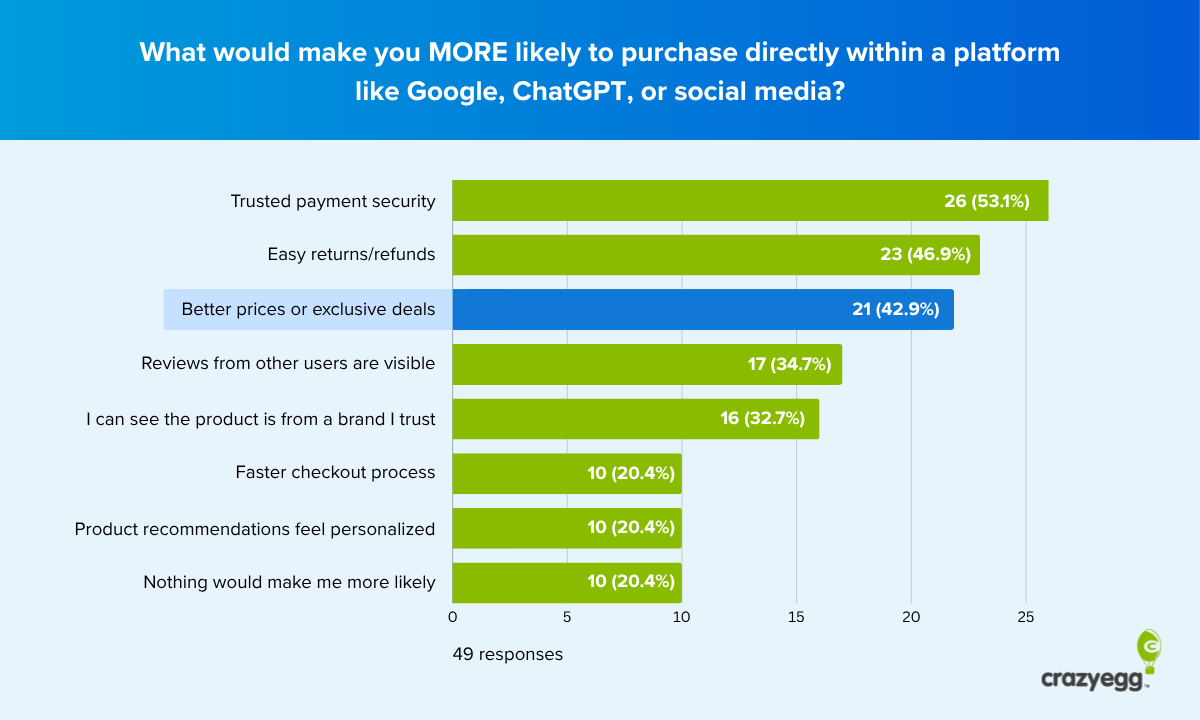
The preference for brand websites is supported by specific psychological and functional barriers that platforms have yet to overcome. According to survey data, three primary concerns prevent shoppers from completing purchases within social or AI platforms:
- Payment Security: Approximately 65% of respondents cited the security of their financial data as a primary reason for avoiding in-platform purchases.
- Returns and Customer Service: 61% of shoppers expressed concern that resolving issues with a third-party platform would be more difficult than dealing with a brand directly.
- Product Authenticity: 61% of consumers worry about the prevalence of counterfeit goods or "gray market" sellers on large tech platforms.
Currently, 71% of shoppers report feeling "uncomfortable" making a purchase directly within an AI or social interface. This discomfort provides a defensive moat for independent e-commerce brands. However, the data also reveals a "loyalty tax" that consumers are currently willing to pay. Only 51% of shoppers believe they get better value by buying direct, and many noted that manufacturer’s suggested retail prices (MSRP) are often higher on brand sites than on marketplaces. This suggests that shoppers are choosing brand sites for safety rather than for price or experience—a position that is inherently unstable.
The "Single Purchase" Effect and Behavioral Shifts
A critical finding in recent market research is the volatility of consumer loyalty once a platform purchase is successfully completed. The data shows a stark divide between "platform-naive" shoppers and those who have made at least one purchase via a social or AI interface.
Once a consumer completes just one successful in-platform transaction, their attitudes shift dramatically. These "experienced" shoppers are significantly more likely to trust platforms for future purchases and are less likely to feel a strong emotional connection to the brand itself. This suggests that the "trust moat" is a one-time barrier; once breached, the convenience of the platform begins to outweigh the perceived security of the brand website. For e-commerce brands, this means that every customer who migrates to a platform for a single "deal" may be a customer lost to the brand’s direct ecosystem forever.
Strategic Analysis: Strengthening the Direct Connection
To combat the rise of platform-driven commerce, retail experts suggest that brands must move beyond transactional relationships. The "post-purchase" phase of the buyer journey is identified as the highest-leverage touchpoint. While many brands stop communicating after a shipping notification, successful companies are using this window to reinforce brand values.
A case study of Freshly Cosmetics, a natural skincare brand, illustrates this potential. By implementing a post-purchase email flow that focused on product education and brand values rather than just sales, the company saw a 136% increase in revenue from repeat customers. This type of emotional and educational engagement is something that big-tech platforms, by their very nature as aggregators, cannot replicate. By answering the customer’s implicit question—"Did I make the right choice by buying from this brand?"—DTC companies can build a level of retention that survives the convenience of AI-assisted shopping.
Broader Implications for the AI-Driven Future
The long-term implication for the e-commerce industry is a bifurcation of the market. Brands will likely fall into two categories: those that are "relationship-led" and those that are "utility-led."
For relationship-led brands, the priority will remain the direct channel. These brands will use AI not to replace the storefront, but to personalize the experience on their own sites. They will likely avoid deep integration with platforms like Amazon or TikTok to maintain brand equity and control over customer data.
For utility-led brands—those competing primarily on price, specs, or availability—the strategy must be one of "visibility everywhere." As AI tools take over the discovery phase, these brands must optimize their digital presence so that search engines and Large Language Models (LLMs) can easily parse their product data. This involves aggressive use of Schema.org markup, maintaining high-quality product feeds, and ensuring presence in the datasets that AI models use for training.
Official Responses and Industry Outlook
Industry leaders from platforms like Shopify have noted that the "future of commerce is everywhere," suggesting that the most successful brands will not choose between direct and platform sales but will instead aim for a unified "omnichannel" presence. However, the risk of "platform dependency" remains a central concern for small and medium-sized enterprises (SMEs).
In a statement regarding the evolution of search, digital marketing analysts suggest that the "consideration set" is the new battleground. If a shopper asks an AI for a recommendation and a brand is excluded, the quality of that brand’s website becomes irrelevant. Therefore, the emerging consensus is that brands must protect their direct relationships through superior service and trust signals while simultaneously ensuring they are discoverable in the AI-generated shortlists that will soon define the start of every shopping journey.
As the window of consumer hesitation regarding AI and social commerce begins to close, the brands that thrive will be those that have turned trust into a visible, optimized asset. The current preference for brand websites is a gift of time, but it is not a permanent state of the market. The transition toward AI-assisted retail is inevitable; the only variable is whether brands will be the masters of that transition or its casualties.