
 rifanmuazin
The modern digital landscape has reached a critical inflection point where the traditional corporate website, once viewed as a static digital brochure, is being fundamentally reimagined as a high-performance sales engine. As global advertising costs continue to climb and consumer attention spans dwindle, marketing departments are shifting their focus from raw traffic acquisition to the scientific optimization of conversion rates. This evolution is driven by the realization that even a modest increase in a website’s ability to capture leads can result in exponential revenue growth without a corresponding increase in ad spend.
In an era defined by data-driven decision-making, the role of the website has transitioned from a purely aesthetic asset to a functional, hard-working member of the sales team. Industry analysts note that the most successful firms in 2025 are those that have successfully reclaimed control of their web presence from technical silos, allowing marketing teams to implement agile, strategic tweaks that turn casual browsers into qualified prospects. The following analysis explores 17 battle-tested strategies that are currently defining the lead-generation landscape, supported by empirical data and industry case studies.
The Evolution of Conversion: From Homepages to Landing Experiences
The historical approach to web design often prioritized the homepage as the primary point of entry. However, modern consumer behavior suggests that the homepage, while important for brand identity, is often too generalized to drive specific conversions. Experts argue that a homepage is a "buffet" when most visitors are looking for a "specific dish." This has led to the rise of dedicated landing pages—standalone web pages created specifically for a single marketing or advertising campaign.
The shift toward campaign-specific landing pages is supported by significant performance data. Unlike homepages, which are cluttered with navigation menus and multiple calls to action (CTAs), landing pages focus on one goal. This singular focus reduces the cognitive load on the visitor, leading to higher conversion rates. By removing the "leaks" found in traditional site architecture—such as footer links or unrelated services—marketers can guide the visitor toward a single, decisive action.
The Science of A/B Testing and Incremental Gains
One of the most profound shifts in digital marketing is the abandonment of "gut-feeling" design in favor of rigorous A/B testing. This methodology involves comparing two versions of a webpage to see which performs better. While large-scale redesigns are often met with fanfare, data suggests that small, granular changes often yield the most significant ROI.
A notable case study involves the travel deals company Going (formerly Scott’s Cheap Flights). By executing a simple A/B test that changed just three words in their call to action—moving from "Sign up for free" to "Trial for free"—the company observed a staggering 104% increase in conversions month-over-month. This example highlights a broader industry truth: the psychological nuance of language can be the difference between a bounce and a lead. High-impact elements for testing include headlines, CTA button colors, form lengths, and the placement of social proof.
Addressing the Trust Deficit Through Social Proof
In an increasingly skeptical digital environment, trust has become the primary currency of lead generation. Visitors are often hesitant to share personal information due to fears of spam or data misuse. To combat this, successful websites are integrating strategic social proof—evidence that other people have found value in the product or service.
Effective social proof goes beyond generic testimonials. It includes specific case studies, client logos, industry awards, and real-time review counts. Analysts suggest that placing these trust signals near "friction points"—such as lead capture forms—can significantly reduce abandonment rates. A "mini-case study" or a badge indicating a high rating on a platform like G2 or Trustpilot acts as a psychological safety net for the visitor at the moment of conversion.
The Technical Imperative: Speed and Mobile Optimization
The technical performance of a website is no longer just an IT concern; it is a critical marketing metric. According to research from ToolTester and Google, 53% of mobile site visitors will leave a page if it takes more than three seconds to load. Furthermore, website conversion rates have been shown to drop by approximately 4.42% for every additional second of load time.
In the chronology of web development, the "Mobile First" era has matured into a "Speed First" era. Marketers are now prioritizing image compression, the elimination of heavy scripts, and the use of high-performance hosting environments to ensure that their message reaches the consumer before they lose interest. A slow-loading page is essentially a "broken" page in the eyes of a modern consumer, regardless of how compelling the offer might be.
Value-First Content and the Problem-Solving Lead Magnet
The traditional "lead magnet"—typically a generic PDF or a gated newsletter—is losing its efficacy. As consumers become more protective of their inboxes, the "value exchange" must be skewed heavily in favor of the visitor. The most successful lead-generation assets in 2025 are those that solve immediate, tangible problems.
Industry leaders are moving away from "10 Tips for Success" toward practical tools such as:
- Calculators and Graders: Tools that provide personalized data (e.g., an ROI calculator).
- Templates and Checklists: Ready-to-use resources that save the user time.
- Original Research: Data-heavy reports that provide insights not available elsewhere.
By offering high-value content, brands pre-qualify their leads. A user who downloads a "Data Migration Checklist" is signaling a specific intent and a high likelihood of needing related professional services, making them a far more valuable prospect than a general site visitor.

Artificial Intelligence and Personalization at Scale
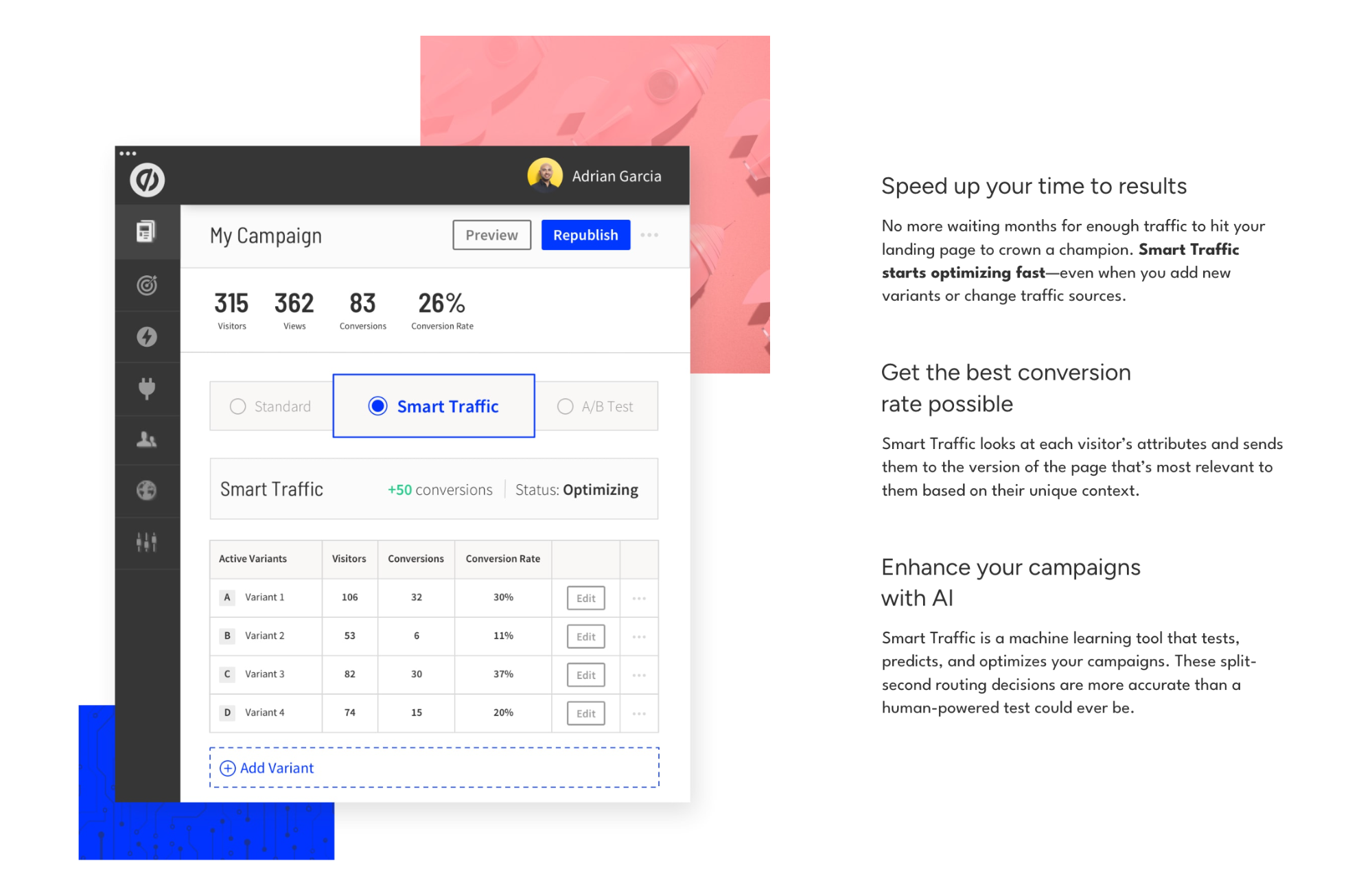
The integration of Artificial Intelligence (AI) has introduced a new level of sophistication to lead generation. Technologies like "Smart Traffic" and "Dynamic Text Replacement" allow websites to adapt in real-time to the individual visitor.
Smart Traffic uses machine learning to analyze visitor characteristics—such as location, device type, and time of day—and automatically routes them to the page variant most likely to convert them. This moves beyond the traditional A/B test, which declares a single winner for everyone, and instead recognizes that different audience segments have different preferences. Similarly, personalization tools can swap out headlines or keywords to match the exact search terms a user typed into Google, creating an immediate sense of relevance that drives higher engagement.
Real-Time Engagement: The Role of Conversational Marketing
The rise of live chat and AI-powered chatbots reflects a broader consumer demand for immediacy. When a visitor has a question, the time it takes for a company to respond is directly correlated with the likelihood of conversion. Conversational marketing tools allow businesses to engage prospects at the peak of their interest.
Modern chat solutions serve several functions:
- Immediate Objection Handling: Answering questions that might otherwise prevent a conversion.
- Lead Qualification: Using automated bots to ask qualifying questions before involving a human agent.
- Meeting Scheduling: Allowing hot prospects to book a demo directly through the chat interface.
The "Paradox of Choice" and Clarity of Action
A common pitfall in web design is providing too many options, leading to what psychologists call the "Paradox of Choice." When faced with multiple competing calls to action—"Learn More," "Sign Up," "Follow Us," and "Download the App"—visitors often experience decision paralysis and take no action at all.
Clarity is the antidote to confusion. High-converting pages typically feature a single, primary goal. The next step for the visitor should be obvious, simple, and visually prominent. This involves using contrasting colors for CTA buttons and ensuring that the most important action is "above the fold"—visible without the need for scrolling.
Bridging the Marketing-Sales Divide Through Qualification
The ultimate goal of lead generation is not just a high volume of leads, but a high volume of revenue. This requires a seamless alignment between marketing and sales departments. A recurring point of friction in many organizations is the quality of leads being passed from marketing to sales.
To resolve this, sophisticated marketers are implementing lead scoring and qualification systems. By asking targeted questions in lead forms—such as company size, budget, or timeline—marketing teams can filter out "window shoppers" and prioritize "sales-ready" leads. This ensures that the sales team spends their time on high-value opportunities, improving morale and increasing the overall closing rate.
Broader Impact and the Future of Digital Lead Generation
The implications of these 17 strategic tweaks extend far beyond simple website updates. They represent a fundamental shift in how businesses interact with the global marketplace. As automation and AI continue to evolve, the barrier to entry for creating high-converting digital experiences is lowering, allowing smaller firms to compete with industry giants on the basis of agility and optimization.
Furthermore, the focus on user experience (UX) and site speed aligns with the broader goals of search engines like Google, which increasingly reward high-performing, user-friendly sites with better organic rankings. In this sense, conversion optimization is not just a sales strategy; it is a holistic approach to digital health.
In conclusion, the transformation of a website into a lead-generation powerhouse is a continuous process of testing, learning, and refining. By prioritizing dedicated landing pages, leveraging AI for personalization, ensuring technical excellence, and fostering trust through social proof, organizations can turn their digital presence into their most effective sales representative. As the digital landscape becomes more crowded, the ability to convert traffic into leads will remain the most significant competitive advantage a brand can possess.








