
 rifanmuazin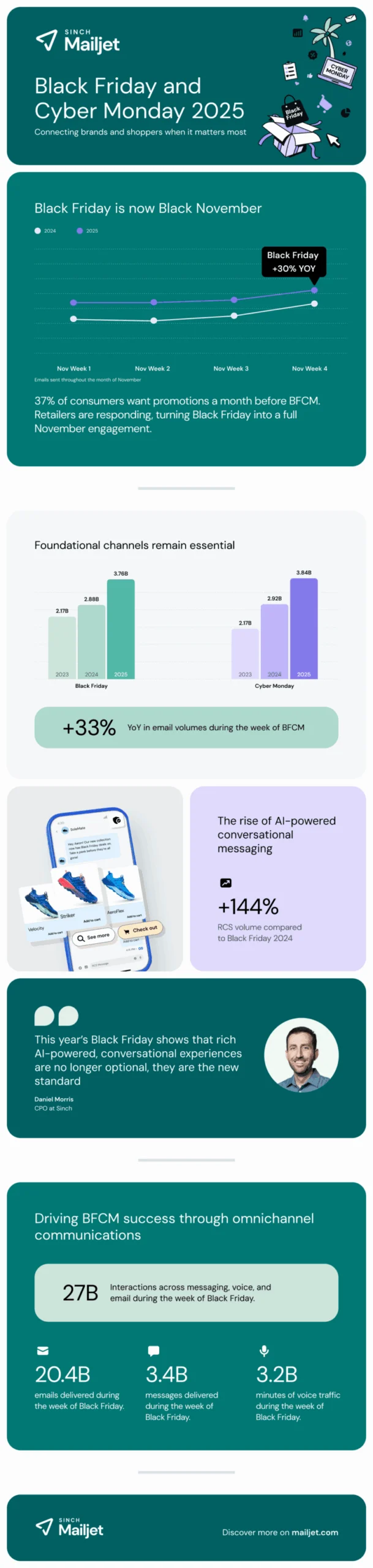
The close of the 2025 Black Friday and Cyber Monday (BFCM) period marked another historic milestone for global e-commerce, with Adobe Analytics reporting a staggering $137.4 billion in revenue generated throughout November 2025. This impressive figure represents a substantial 7.2% year-over-year increase, underscoring the enduring strength of the digital retail sector. For email marketers and brands operating within this high-stakes environment, the period was not merely a sales opportunity but an ultimate stress test for their deliverability infrastructure, especially for critical transactional communications. Ensuring that essential messages, such as order confirmations and shipping updates, reached customers instantly was paramount, given consumers’ heightened reliance on email for these crucial touchpoints. A comprehensive analysis of billions of emails processed by Sinch’s Mailgun and Mailjet platforms during this pivotal month reveals the intricate dynamics behind brand communication strategies and consumer engagement during the holiday shopping frenzy.
The Evolving Landscape of Holiday Shopping
Black Friday, traditionally the day after Thanksgiving in the United States, and Cyber Monday, the subsequent Monday, have evolved far beyond their initial single-day or weekend confines. What began as a post-Thanksgiving sales phenomenon has morphed into a month-long retail marathon, colloquially known as "Black November." This evolution is driven by both retailer strategy and shifting consumer expectations. Historically, retailers initiated sales earlier to capture market share, while consumers, increasingly digitally savvy, began to anticipate and even demand early access to deals. The economic climate of 2025, characterized by continued digital transformation and a strong emphasis on consumer convenience, further fueled this expansion. Brands found themselves in an intensely competitive arena, where the ability to cut through the noise with timely and relevant offers became a critical differentiator. This prolonged sales period tests the resilience of marketing infrastructure and demands a strategic, sustained approach to customer engagement across multiple channels.
BFCM 2025: A Month-Long Engagement Marathon
The data from Sinch’s 2025 pre-holiday consumer survey, involving 3,180 respondents, unequivocally confirmed a powerful and consistent trend: email remains the undisputed channel for both promotional offers and vital transactional updates. This consumer preference directly influenced brand strategies, transforming the traditional BFCM weekend sprint into an extended engagement marathon. The survey highlighted that a significant 45.9% of consumers desired promotions at least a full month before Black Friday, indicating a strong appetite for early-bird deals.
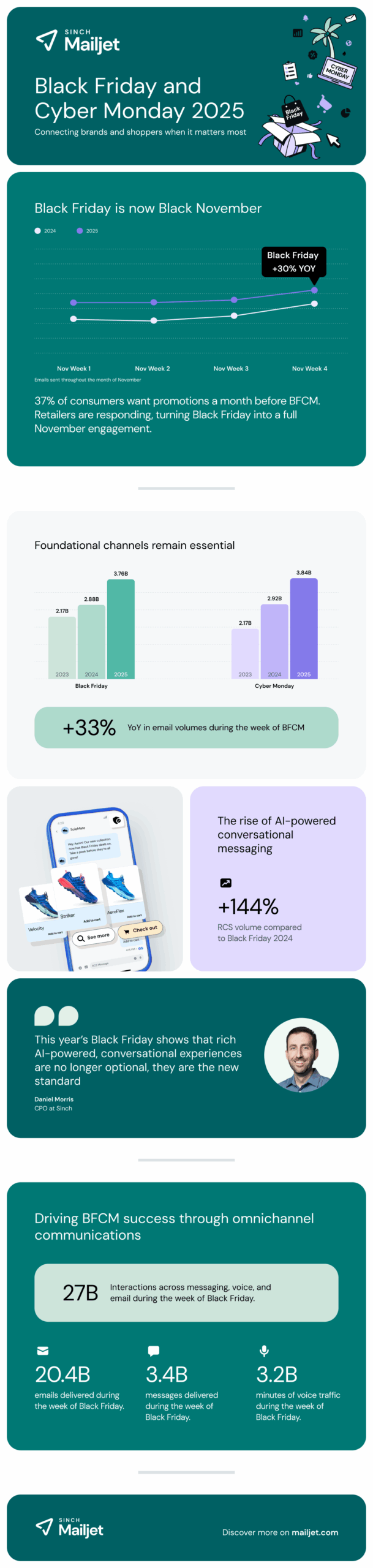
Brands responded dynamically to this consumer demand. Sinch’s analysis of email sending data revealed a remarkable 32% year-over-year surge in email volume throughout November 2025. Crucially, the most significant growth in email traffic occurred in the week before Cyber Week, as retailers launched their early promotional campaigns. This proactive approach by brands ensured they were front and center in consumers’ inboxes well ahead of the main sales events, aligning with the "Black November" trend. This sustained campaign strategy culminated in a staggering 27 billion customer interactions across all channels during Black Friday week alone, demonstrating a cohesive, multi-channel effort to capture consumer attention and drive sales throughout the month.
Email’s Enduring Dominance and the Deliverability Imperative
Despite the proliferation of communication channels, email continues to hold a unique and dominant position in holiday retail. The 2025 Sinch survey found that over half of consumers (56.5%) explicitly preferred email for receiving Black Friday and Cyber Monday promotions. This preference intensified for critical post-purchase communications, with an overwhelming 73.9% of consumers depending on email for essential transactional updates such such as order confirmations, shipping alerts, and delivery notifications.
The sheer scale of email activity during BFCM 2025 was unprecedented. Sinch’s email platform delivered a colossal 20.4 billion emails during Cyber Week, showcasing the immense capacity and reliability required to handle such volumes. On Black Friday alone, email volumes rose by an impressive 30% year-over-year. This surge underscores not only the continued strategic importance of email but also the rigorous demands placed on email service providers to ensure successful delivery.

The paramount concern for marketers during this hyper-competitive period is whether their emails actually cut through the noise. Despite the overflowing inboxes, Sinch’s data delivered a clear affirmative: engagement levels remained robust. Average open rates held steady at 13% (excluding bot activity), indicating that consumers were not experiencing email fatigue but were actively seeking out deals and crucial information. This consistent engagement highlights the effectiveness of well-targeted campaigns and the underlying consumer intent during the holiday season.
However, achieving this level of engagement and ensuring messages land in the inbox requires more than just compelling offers; it demands flawless execution of email deliverability best practices. During peak sending periods, internet service providers (ISPs) heighten their scrutiny to combat spam and protect user inboxes. Factors such as sender reputation, authentication protocols (SPF, DKIM, DMARC), email content quality, and list hygiene become critical. A single misstep can lead to emails being routed to spam folders, delayed, or even blocked, directly impacting sales and customer satisfaction. The sustained open rates, even amidst peak volumes, demonstrate the necessity of a robust email infrastructure capable of scaling under pressure without compromising world-class delivery standards. Brands relying on advanced email platforms benefit from built-in deliverability tools, expert support, and sophisticated monitoring to navigate these challenges effectively.
The Omnichannel Imperative: Beyond the Inbox
In today’s dynamic retail landscape, relying on a single communication channel is increasingly insufficient. The 2025 consumer survey by Sinch revealed that a substantial 77.9% of customers expect to hear from brands across multiple channels during major shopping events. This expectation has firmly established an integrated omnichannel approach as the new standard for effective holiday marketing.
Brands demonstrated a clear understanding of this imperative during BFCM 2025. Sinch’s comprehensive communications platform powered an incredible 27 billion interactions across a diverse range of channels, including SMS, MMS, RCS, WhatsApp, email, and voice. This multi-modal engagement strategy ensured that brands could connect with customers wherever they were, delivering the right message at the right time through their preferred channel.
SMS proved to be an indispensable tool for cutting through the digital clutter with time-sensitive offers and urgent updates. Sinch delivered 3.4 billion SMS messages globally during the BFCM weekend, cementing its role as the go-to channel for last-minute deals, flash sales, and high-priority alerts that demand immediate attention. The brevity and immediacy of SMS make it highly effective for driving impulse purchases and ensuring critical notifications are received without delay.
For more complex issues or when the stakes were particularly high, human conversation remained irreplaceable. Customers overwhelmingly turned to phone support for real-time assistance and resolution. This was evident on Black Friday alone, where Sinch handled a staggering 3.2 billion minutes of voice traffic. This metric underscores the vital role of voice channels for urgent customer care, service escalation, and personalized support, particularly when dealing with order modifications, delivery issues, or product inquiries during a high-pressure shopping period. The ability to seamlessly integrate these diverse communication channels into a unified customer journey is a hallmark of modern, successful retail marketing.
Technological Backbone: Scaling for Peak Performance
The successful execution of BFCM 2025 campaigns, involving billions of emails, SMS messages, and voice minutes, hinges on a robust and scalable technological infrastructure. Email service providers and communication platforms face immense technical challenges during peak sending periods. This includes managing colossal message queues, maintaining high IP reputation across numerous domains, mitigating spam complaints, and ensuring rapid message processing times. The ability of platforms like Sinch Mailgun and Mailjet to deliver 20.4 billion emails and 3.4 billion SMS messages within a concentrated period speaks to the sophistication of their underlying technology and operational expertise.
Beyond simple message delivery, these platforms offer advanced analytics that provide marketers with crucial insights into campaign performance, deliverability rates, and engagement metrics. Features like real-time tracking, bounce management, and spam complaint monitoring are essential for identifying and addressing issues proactively. Moreover, the integration capabilities of these platforms allow brands to unify their communication efforts across various channels, providing a holistic view of customer interactions and enabling truly personalized experiences. The investment in such enterprise-grade infrastructure is non-negotiable for brands aiming to succeed in the increasingly competitive e-commerce landscape.
Implications for Marketers and Retailers
The insights from BFCM 2025 offer critical implications for marketers and retailers as they plan for future peak seasons. The shift to "Black November" means that campaign planning must extend beyond a single weekend, requiring sustained engagement and a phased approach to promotions. This necessitates earlier budget allocation, content creation, and technical readiness.
Furthermore, the data reinforces the necessity of an integrated omnichannel strategy. Brands must move beyond siloed departmental operations and foster collaboration between email, SMS, voice, and other digital teams. A unified customer view, enabled by robust CRM and communication platforms, is essential for delivering consistent and personalized experiences across all touchpoints. This also implies a greater need for data analytics to understand which channels are most effective for different types of messages and customer segments.
Finally, deliverability remains a foundational pillar of success. Brands cannot afford to overlook the technical aspects of email sending. Partnering with an expert email service provider that offers not only scale but also advanced deliverability features and proactive monitoring is crucial. Continuous education on best practices, regular list hygiene, and adherence to sender authentication protocols are non-negotiable requirements to ensure messages reach their intended recipients and avoid revenue loss due to missed opportunities.
Looking Ahead to 2026 and Beyond
While BFCM 2025 set new records and provided invaluable insights, the peak sending season for many retailers extends beyond November, encompassing the crucial Christmas and New Year sales periods. Consumers continue to have high expectations for timely deals and reliable communication throughout the entire holiday season.
The lessons learned from BFCM 2025 will be instrumental in shaping future strategies. Success during these periods demands a strategic combination of the right sending partner, unparalleled email expertise, and a vigilant eye on performance metrics. As the digital retail landscape continues to evolve, brands that prioritize robust communication infrastructure, embrace omnichannel strategies, and commit to deliverability excellence will be best positioned to capture market share and foster lasting customer relationships.
Platforms like Sinch Mailjet remain committed to providing the essential support for brands to ensure their emails consistently hit the inbox. With user-friendly solutions that enable senders to design, deploy, and track impactful email campaigns, Mailjet empowers businesses to drive sales and engagement, whether they are sending thousands or billions of messages. The continuous evolution of email marketing features and expert guidance on deliverability will be key enablers for brands navigating the complexities of future peak seasons, ensuring their messages resonate and convert in an increasingly crowded digital space.









