


In the fiercely competitive landscape of modern commerce, where consumer skepticism towards traditional advertising is at an all-time high, the authentic voice of the customer has emerged as an unparalleled force. This phenomenon, known as testimonial advertising, leverages user-generated content (UGC), expert endorsements, and influencer reviews to build trust, enhance brand recall, and ultimately convert prospective buyers into loyal patrons. It is a sophisticated marketing discipline that transcends simple product reviews, integrating credible social proof across paid, earned, and owned media channels, from targeted Google Ads to personalized email and SMS campaigns.
Testimonial advertising fundamentally operates on the principle of social proof, a psychological and social phenomenon where people assume the actions of others in an attempt to reflect correct behavior for a given situation. In an online environment devoid of physical interaction with products or sales associates, consumers increasingly rely on the experiences of their peers. A shopper, for instance, might sign up for a brand’s welcome series primarily due to a compelling customer quote and star rating prominently displayed in a pop-up, subsequently utilizing a discount on their inaugural purchase. This direct correlation between peer validation and purchasing behavior underscores the efficacy of testimonial advertising.
The Evolution of Trust in Digital Commerce
The ascendance of testimonial advertising is intrinsically linked to the digital transformation of commerce. Historically, word-of-mouth was the most potent form of recommendation, limited by geographical and social proximity. The internet, however, democratized this process, giving rise to online review platforms, social media, and forums where consumer opinions could be shared globally and instantaneously. This shift empowered buyers with unprecedented access to unbiased product information, simultaneously eroding the effectiveness of purely brand-centric messaging.

Initially, businesses cautiously embraced customer reviews, often relegated to a small section on product pages. However, as e-commerce matured, data began to unequivocally demonstrate the profound impact of these unsolicited endorsements. Studies consistently revealed that consumers placed significantly more trust in reviews from fellow customers than in brand-generated content. This growing consumer preference for peer-validated information forced a strategic re-evaluation within marketing departments, elevating testimonial advertising from a peripheral tactic to a central pillar of growth strategy.
Distinguishing Forms of Social Proof: Testimonials, Endorsements, and Influencer Reviews
While often used interchangeably, it is crucial for marketers to understand the distinct characteristics and strategic applications of various forms of social proof:
- Testimonials: These are genuine, unsolicited statements from actual customers who have experienced and derived value from a product or service. They are typically unpaid and reflect an authentic user experience. Their power lies in their relatability and perceived impartiality, resonating deeply with potential customers seeking trustworthy opinions from peers. Collection is often automated post-purchase.
- Endorsements: This involves a recognizable figure or entity publicly backing a product or brand, usually in exchange for compensation. The figure may or may not be a regular user of the product, but their credibility or authority lends weight to the recommendation. Examples include celebrities, industry experts, or professional organizations. While powerful due to the authority or aspirational appeal of the endorser, their paid nature requires transparent disclosure under regulatory guidelines like those set by the Federal Trade Commission (FTC).
- Influencer Reviews: Similar to endorsements, these involve creators (often with niche expertise or a dedicated following) reviewing and promoting products to their audience. While typically compensated, the perceived authenticity often stems from the influencer’s established relationship with their followers and their ability to integrate products into their lifestyle content. Influencer marketing operates at scale, aiming to reach specific demographic segments through trusted voices within those communities.
The table below highlights these distinctions:
| Feature | Testimonial | Endorsement | Influencer Review |
|---|---|---|---|
| Who Speaks? | A customer | A known figure/entity | A creator |
| Paid? | No | Yes | Usually |
| Genuine Experience? | Yes | Sometimes, if they use the product | Sometimes, if the review isn’t paid for |
For e-commerce, the strategic integration of these types across the customer journey is paramount. A customer’s initial interaction might be a star rating on a Google ad, followed by a detailed written testimonial on a product page, and later, an influencer’s video review on social media. Each type serves a unique purpose in building credibility and guiding the purchasing decision.
The Psychological Underpinnings: Why Testimonials Resonate
The effectiveness of testimonial advertising is deeply rooted in human psychology. Beyond the general concept of social proof, several cognitive biases and psychological principles contribute to its power:
- Trust and Credibility: Consumers inherently trust their peers more than they trust brands. A brand’s claims, however well-articulated, are often viewed through a lens of inherent bias. A fellow customer’s experience, however, is perceived as objective and authentic.
- Relatability: When a potential customer sees someone similar to themselves endorsing a product, it fosters a sense of connection and belief that the product will also work for them. This is particularly effective with detailed testimonials that describe specific problems solved or benefits gained.
- Risk Reduction: Online shopping carries inherent risks (product not as described, poor quality, sizing issues, etc.). Testimonials act as a form of risk reduction, offering reassurance that others have had positive experiences, thereby mitigating perceived uncertainties.
- Emotional Connection: Authentic stories, especially those detailing transformative experiences, can evoke strong emotions. These emotional connections are far more memorable and persuasive than dry product specifications.
- Authority and Expertise (for endorsements): When an expert or a respected public figure endorses a product, their perceived authority can sway opinion. This is particularly relevant in health, beauty, or technical fields where expert validation holds significant weight.
Quantifying the Impact: Data-Driven Insights
The anecdotal success of testimonial advertising is strongly supported by compelling data from various industry reports:
- Consumer Trust: A May 2026 survey by product reviews app Judge.me revealed that 19% of shoppers cited customer reviews as a key factor in determining an online store’s trustworthiness at first glance, second only to secure payment options. This highlights the critical role of visible social proof in establishing initial credibility.
- Purchase Likelihood: BrightLocal’s Local Consumer Review Survey 2026 found that an astounding 85% of individuals who read positive reviews are highly likely to engage with that business. Furthermore, 54% of consumers specifically visit a business’s website after encountering positive reviews, indicating a direct pathway from social proof to conversion intent.
- Growth Driver: A 2025 Shopify survey of 500 merchants identified word-of-mouth and customer testimonials as the primary drivers for 53% of businesses in their first year of growth. This underscores its foundational importance for nascent e-commerce ventures.
- Conversion Rate Enhancement: Yotpo, a leading user-generated content platform, reported that shoppers who interact with reviews convert a remarkable 161% higher than those who do not. This statistic powerfully illustrates the direct, measurable impact of integrating social proof into the purchasing funnel.
These figures collectively paint a clear picture: testimonial advertising is not merely a “nice-to-have” but a strategic imperative for driving sales, fostering trust, and ensuring sustained growth in the digital marketplace.

Strategic Deployment Across Channels: A Multichannel Approach
Effective testimonial advertising requires a comprehensive, multichannel strategy that integrates social proof at every touchpoint of the customer journey.
- Website & Landing Pages: This is the foundational channel. Product pages should prominently feature star ratings, written reviews, and even video testimonials. Dedicated “Testimonials” or “Customer Stories” pages can compile extensive feedback. For instance, Parry Soap Co. integrates text reviews with star ratings directly below product entries, while ShoeNami combines written testimonials with engaging video carousels on its homepage and product pages, catering to different consumption preferences. Huel leverages a dynamic reel of images featuring top performers and nutrition experts with text overlays, creating a powerful endorsement hub.
- Search Engine Marketing (Google Ads & Display): Testimonials can significantly enhance ad performance. Google Seller Ratings, derived from aggregated customer reviews, can appear directly in search ads, boosting click-through rates and instilling immediate trust. Ad copy itself can feature compelling customer quotes. Noom effectively uses a concise testimonial in its Google search ad headline: “This Is The Only Thing That Works Despite Having No Time On My Hands” – Sarah. Orthofeet Inc. further combines written testimonials with a 4.5-star rating and certifications, providing comprehensive social proof within the ad snippet. IPSY compiles key phrases from multiple reviews (“Best value. Top brands. Variety. Choice of 3 items.”) to create a powerful, multi-faceted ad message.
- Social Media (Facebook, Instagram, TikTok): Social platforms are fertile ground for testimonial advertising, especially through user-generated content (UGC) and influencer collaborations. Brands can share customer photos, videos, and positive comments directly. Paid ads on these platforms can feature authentic customer stories. True Nutra Pure leads its Facebook ads with an expert testimonial, while sad miles club compiles multiple Trustpilot reviews into visually appealing Instagram posts. Happy Mammoth EU uses highly personal customer stories, often in video format, as the central narrative of its Facebook ads, allowing potential customers to connect with relatable experiences. L’Oréal Paris USA partners with TikTok influencers like itsbabykelz to showcase product application and share genuine thoughts, leveraging the platform’s reach to younger demographics. VKTRY’s collaboration with TikTok influencer Sidelinedevon highlights product features through an authentic user experience, ending with a powerful statement of desire. Macy’s effectively uses celebrity collaborations for seasonal sales events, producing advice-based videos with figures like Halle Bailey, integrating product recommendations seamlessly.
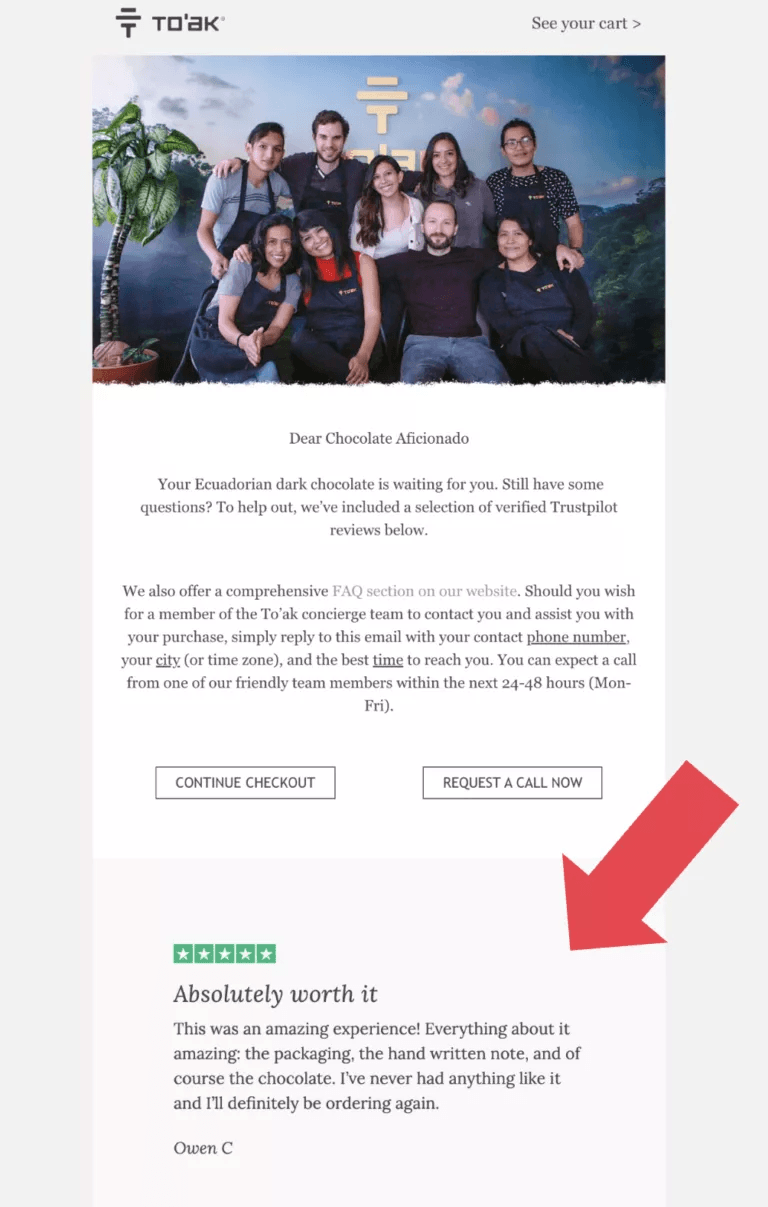
- Email & SMS Marketing: Direct communication channels offer a personalized way to integrate testimonials. Welcome emails can feature initial social proof to build confidence. Abandoned cart emails, like those from Omnisend customer Amundsen Sports, can achieve high conversion rates (57%) by incorporating social proof elements. To’ak Chocolate strategically places customer testimonials at the bottom of its checkout recovery emails. Shift Robotics uses star ratings and customer quotes in its welcome emails to drive click-throughs. Bite dedicates entire email campaigns to compiling endorsements from magazines and compelling customer testimonials, encouraging subscriptions. MasterClass includes “What learners are saying” sections with images and professional titles of contributors in its course promotion emails, adding a layer of professional validation.
Ethical Considerations and Regulatory Compliance
The power of testimonial advertising necessitates a strong commitment to ethical practices and adherence to regulatory guidelines. The Federal Trade Commission (FTC) in the United States, for instance, provides comprehensive endorsement guides that mandate truthfulness and transparency. Key requirements include:
- Disclosure of Material Connections: If a testimonial involves payment, gifts, or any other incentive, this material connection must be clearly and conspicuously disclosed to the audience. This applies equally to celebrity endorsements and influencer reviews.
- Truthfulness and Non-Deception: Testimonials must reflect the honest opinions, findings, beliefs, or experience of the endorser. Advertisers cannot use testimonials that misrepresent what a typical consumer can expect to achieve. If results are not typical, a clear disclaimer is required.
- No Fake Testimonials: Creating or commissioning fake testimonials is strictly prohibited and can lead to significant penalties, including civil fines.
- Substantiation: Advertisers are responsible for substantiating any claims made in an endorsement, just as they would for any other advertising claim.
Maintaining authenticity is paramount. While minor grammatical edits for clarity are permissible, altering the core message or fabricating experiences undermines the very trust that testimonial advertising seeks to build. Brands must actively monitor their testimonials for compliance and uphold the highest standards of integrity.

The Playbook for Collecting Testimonials with Email and SMS
Collecting a steady stream of high-quality testimonials is the cornerstone of an effective strategy. Here’s a proven playbook:
- Trigger a Post-Purchase Review-Request Email: The optimal timing for sending a review request email is typically five to seven days post-delivery. This window allows customers sufficient time to receive, use, and form an opinion about the product without being so delayed that their experience fades from memory. Platforms like Omnisend offer pre-built post-purchase email flows that trigger automatically on the “order-fulfilled” event, allowing for custom delays.
- Ask Guiding, Contextual Questions: Generic “Leave a review” requests often yield bland responses. Instead, prompt customers with specific, open-ended questions related to their experience. For example, instead of “How was your product?”, ask “How did our [product feature] improve your [specific problem]?” or “What was your favorite aspect of using [product name]?” This encourages detailed, contextual feedback that is far more valuable for advertising.
- Send One SMS Follow-Up for Non-Responders: For customers who have opted into SMS marketing and have not responded to the email request, a single, concise text message can significantly boost response rates. SMS inboxes are less cluttered and often checked more frequently. However, restraint is key to avoid opt-outs due to message fatigue. Omnisend’s global SMS capabilities allow for seamless integration of text messages into automated flows for multichannel reach.
- Leverage Dedicated Review Collection Apps: While email and SMS facilitate outreach, specialized review apps like Loox, Judge.me, Yotpo, or Stamped.io streamline the collection and display process. These apps handle star ratings, written reviews, photo/video submissions, and often integrate with e-commerce platforms and marketing automation tools. Omnisend, for example, syncs with these apps, pulling review data back into customer profiles for advanced segmentation and follow-up automation.
- Curate and Strategically Deploy Across Channels: Once collected, testimonials must be curated and strategically deployed. This involves:
- Quality Control: Reviewing submissions for clarity, grammar, and appropriateness. Minor edits for typos are acceptable, but the original meaning must be preserved.
- Selection: Identifying the most impactful testimonials that address key selling points, overcome common objections, or highlight unique benefits.
- Format Adaptation: Converting testimonials into suitable formats for different channels (e.g., short quotes for Google Ads, compelling narratives for email, visual UGC for social media).
- Recency: Prioritizing the latest reviews ensures relevance and freshness, particularly in ad rotations.
- Segmentation: Using testimonials relevant to specific customer segments or product categories in targeted campaigns.
Testimonial Advertising: A Future-Proof Strategy
Testimonial advertising is more than a fleeting trend; it is a fundamental shift in how brands build credibility and engage with consumers in the digital age. As artificial intelligence evolves, it may further enhance testimonial strategies through advanced sentiment analysis, personalized testimonial delivery, and even AI-powered review generation (though ethical considerations here will be paramount). However, the core principle of authentic human connection and peer validation will remain the driving force.
By consistently collecting, curating, and strategically deploying customer feedback across all marketing channels, e-commerce businesses can cultivate an environment of trust, significantly increase conversion rates, and build a resilient brand reputation that stands the test of time and market fluctuations. The empowered consumer, armed with the collective wisdom of their peers, continues to shape the future of commerce, making testimonial advertising an indispensable component of any successful marketing strategy.








