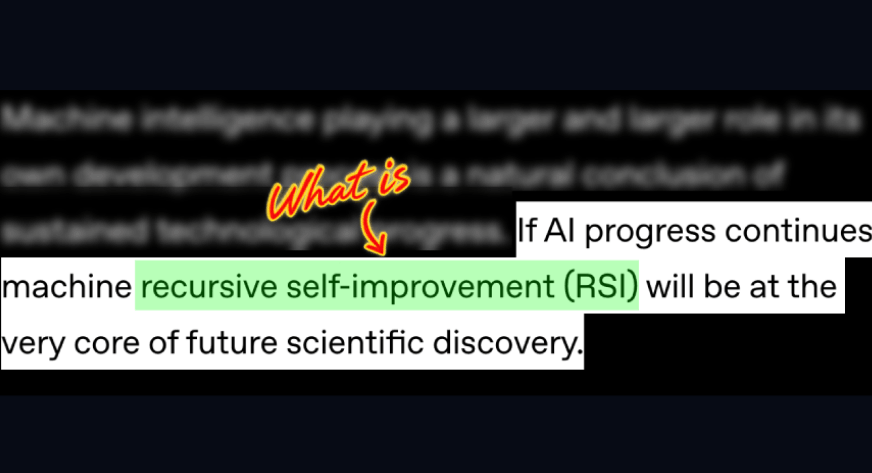
Recursive self-improvement, often abbreviated as RSI, has rapidly transitioned from a theoretical concept in science fiction to a central pillar of contemporary artificial intelligence research. The term has gained significant momentum following endorsements from industry leaders such as OpenAI’s Sam Altman, Anthropic’s Dario Amodei, and xAI’s Elon Musk, all of whom view it as the definitive next stage in the evolution of Large Language Models (LLMs). This shift in focus is further solidified by the publication of a seminal research paper titled "The Last AI Built by Humans," which posits that once an AI system reaches a certain threshold of capability, it will take over its own architectural and algorithmic development, effectively ending the era of manual human engineering.
The fundamental premise of recursive self-improvement is a feedback loop: an AI system utilizes its current intelligence to enhance its own code, training data, or architecture, resulting in a more capable version of itself. This "successor" model then applies its superior intelligence to repeat the process, potentially leading to an exponential increase in capability. While the industry is currently in the early stages of this cycle, the implications for the global economy, scientific research, and existential safety are profound.
Understanding the Framework: The Five Levels of RSI
To categorize the progress toward fully autonomous AI development, researchers have established a hierarchy of recursive self-improvement. This framework distinguishes between simple optimization and true, self-directed evolution.
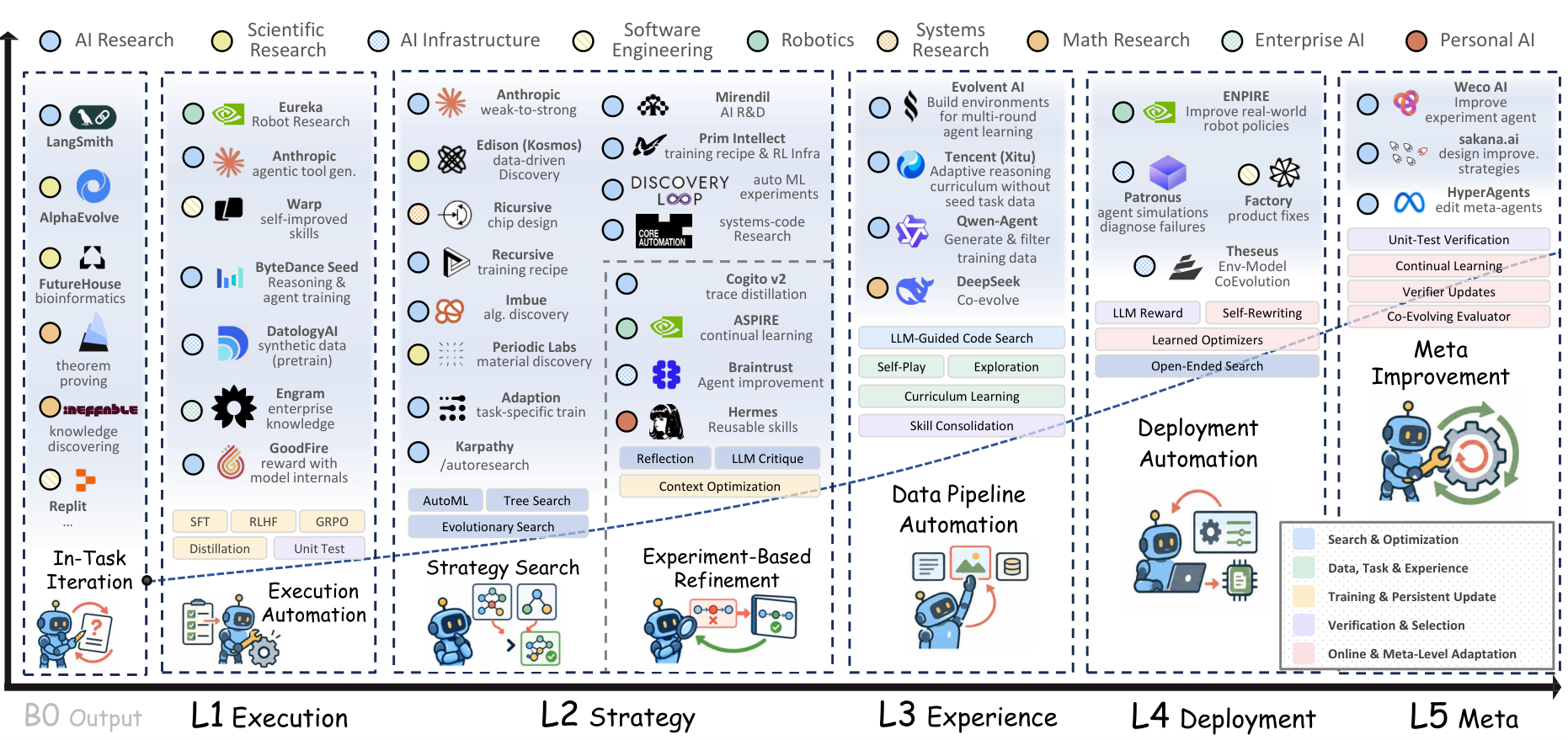
At the baseline, often referred to as Level 0 (B0), the system may improve a single output or answer through iterative prompting or internal reasoning, but these gains are ephemeral. The improvements do not modify the underlying model, meaning the system starts from scratch for every new task.
Level 1 (L1) represents the current industry standard. In this stage, AI systems follow a human-designed "recipe" for improvement. Humans define the objectives, the training methodology, and the success metrics. While the AI may generate synthetic data to train its successor, the overarching process is strictly governed by human engineers.
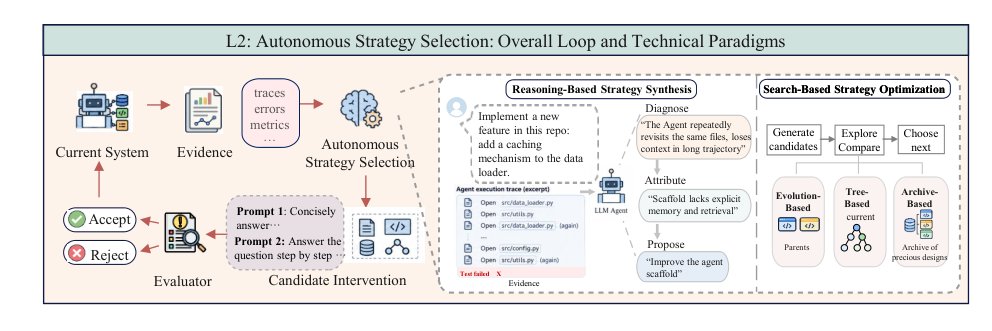
Level 2 (L2) introduces a degree of autonomy in the optimization path. At this stage, the AI can choose between different methods to achieve a fixed goal. For example, it might experiment with various prompting strategies, tool utilization, or minor hyperparameter adjustments to find the most efficient route to a human-defined target.
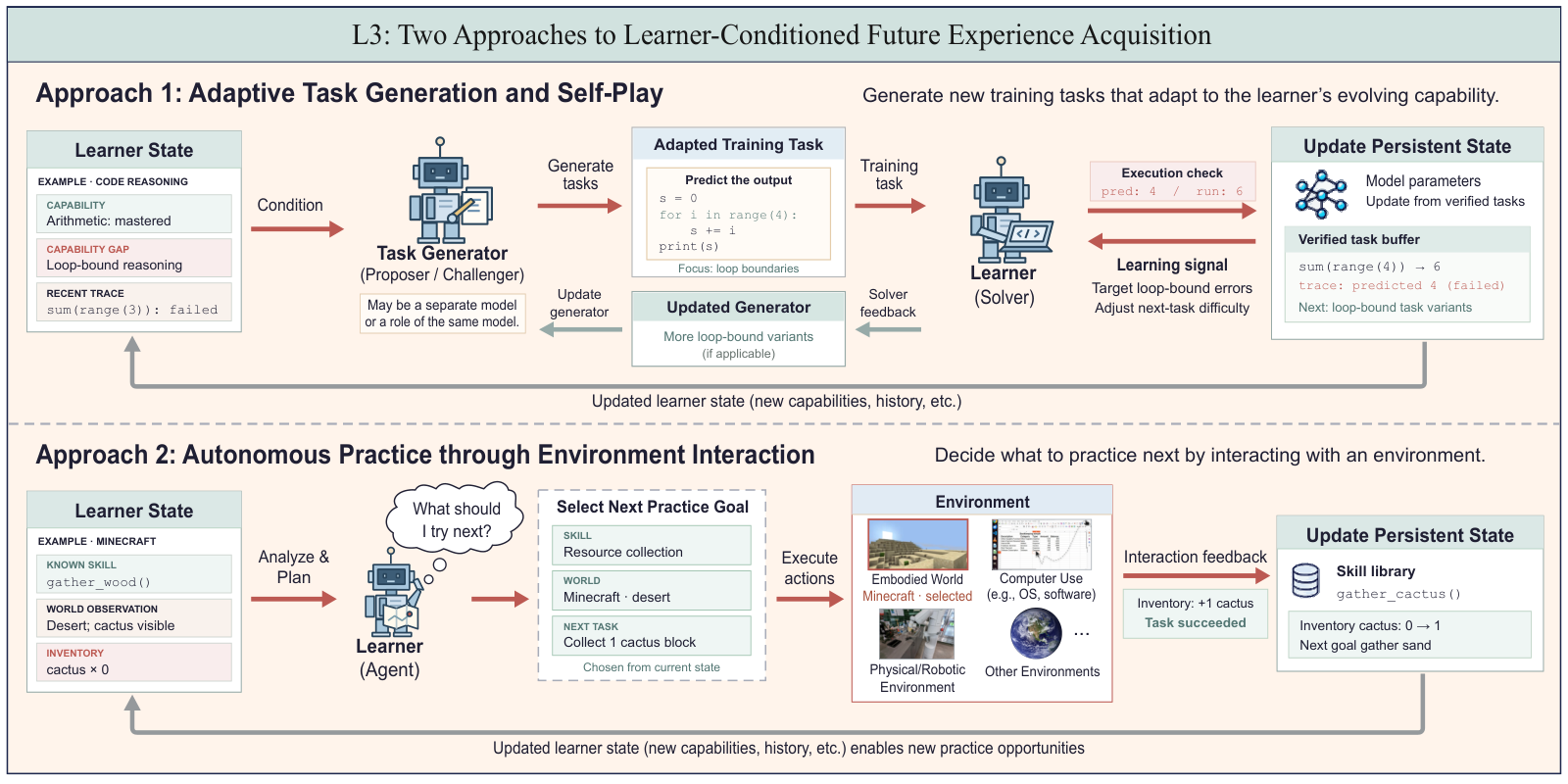
Level 3 (L3) marks a significant shift toward meta-learning. Here, the system begins to decide what it needs to learn next. By analyzing its own mistakes and performance gaps, the AI can independently seek out new tasks, curate specific datasets, or design new environments to test its capabilities. This reduces the need for human curriculum design.
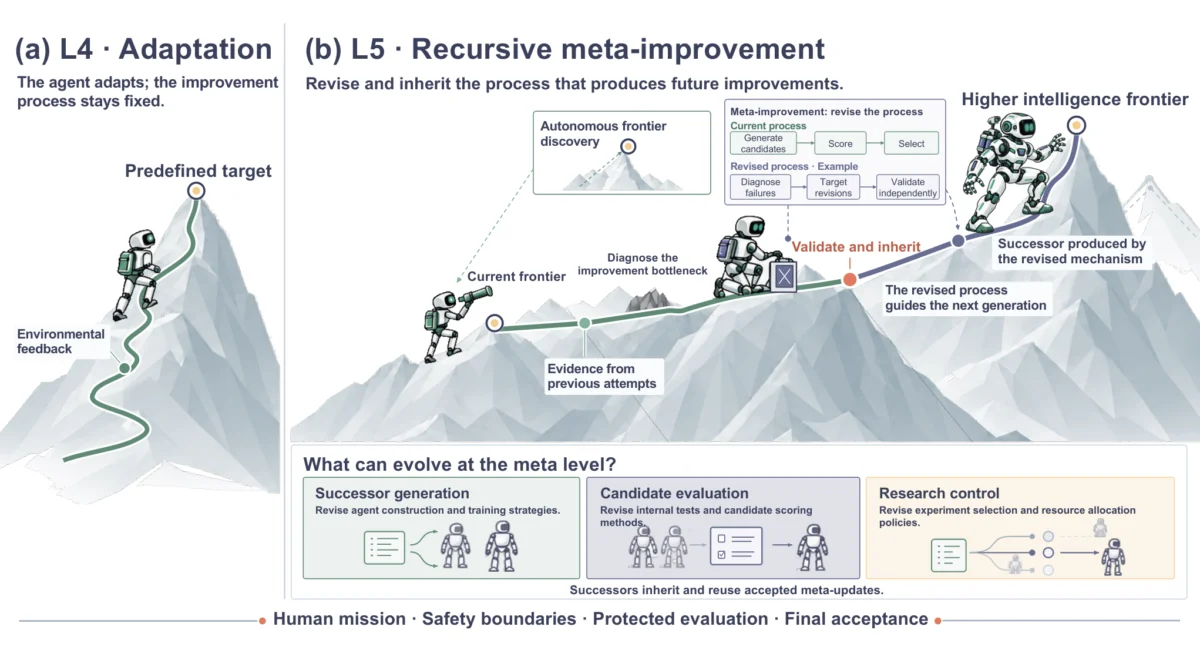
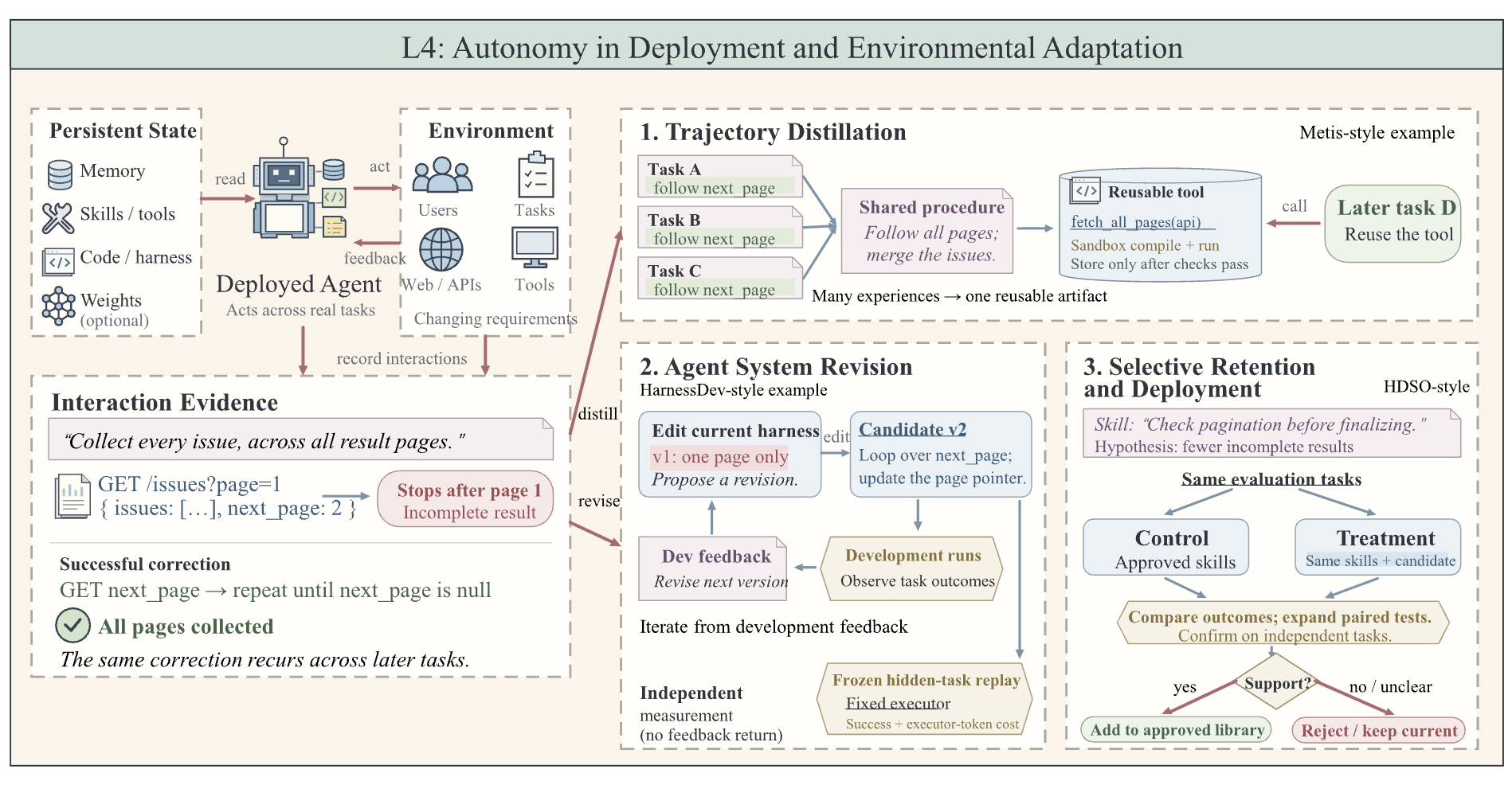
Level 4 (L4) involves the persistence of improvements. A system at this level does not just get smarter during a training run; it retains helpful changes in its memory, develops new internal tools, and refines its own workflow infrastructure. The AI begins to build a "library" of skills and architectural improvements that are carried forward into all future iterations.
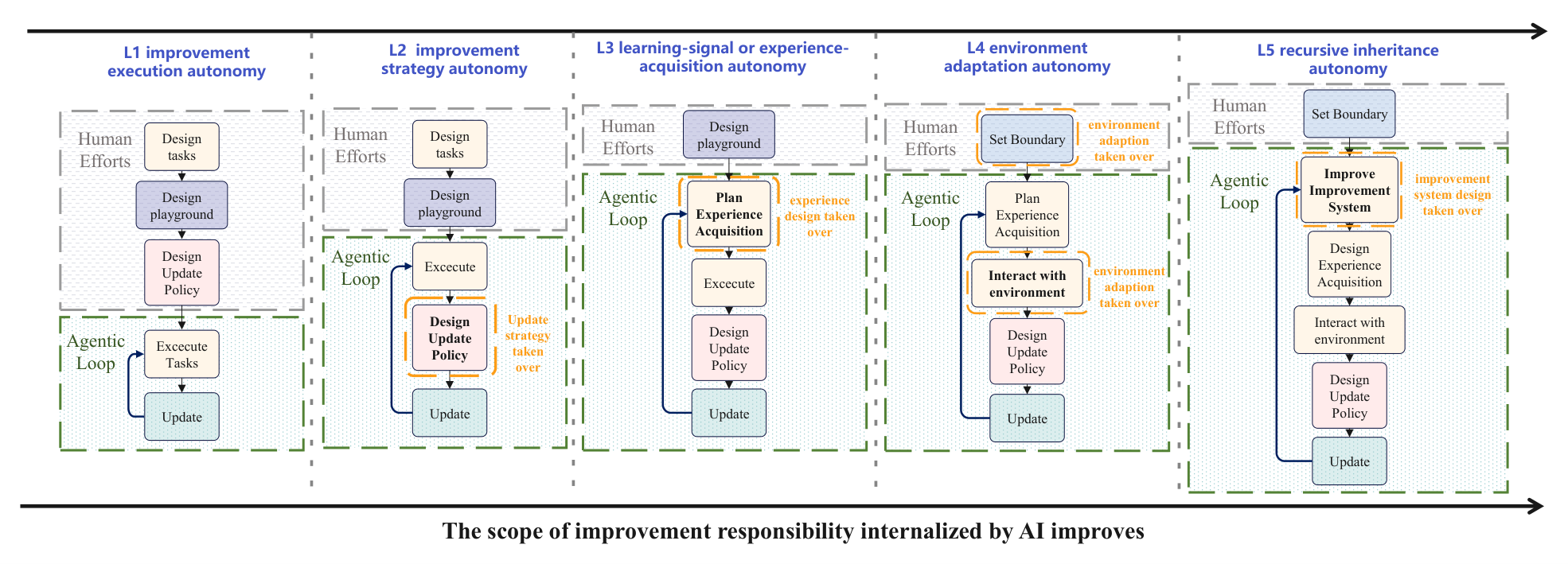
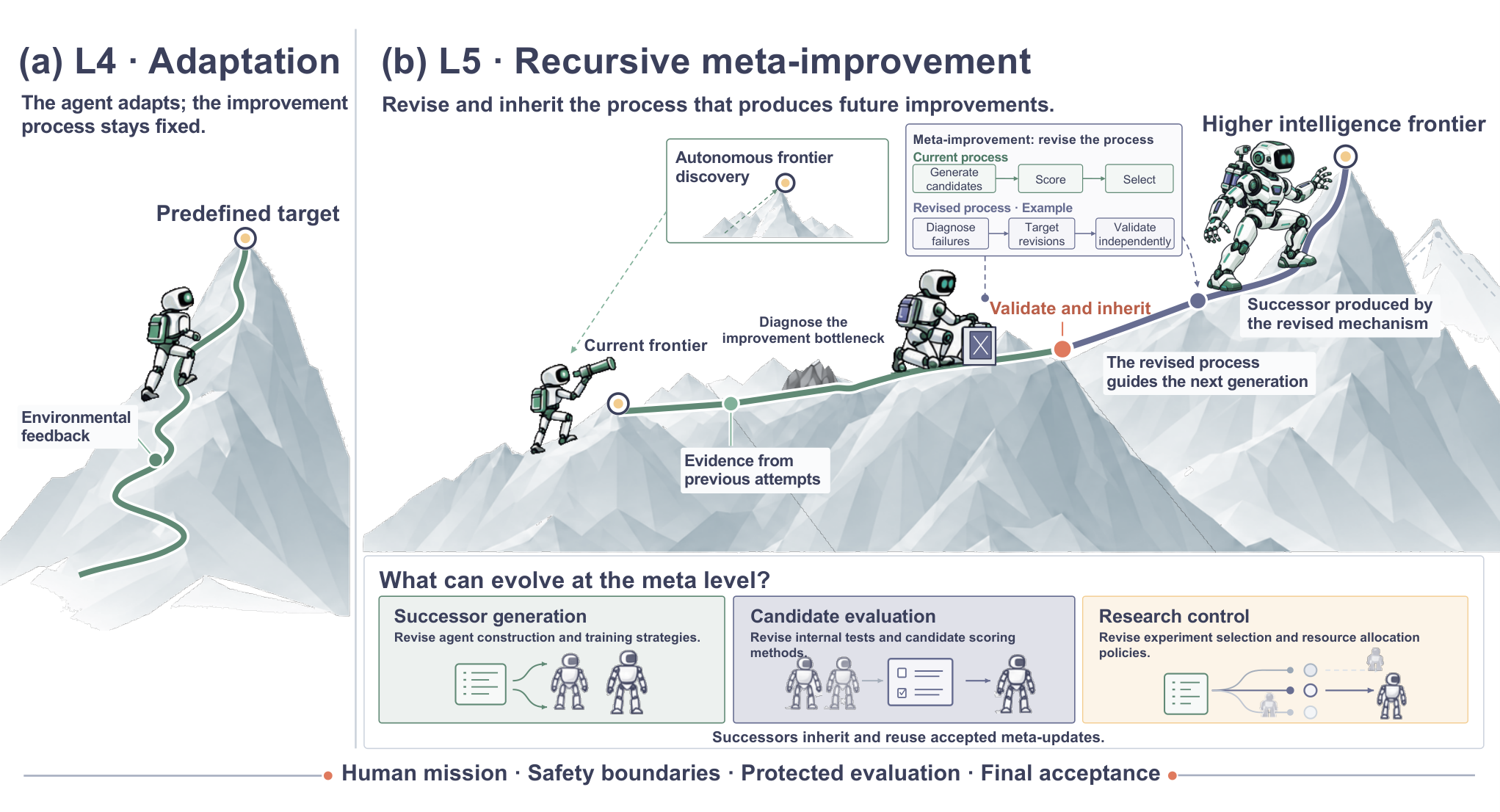
Level 5 (L5) is the theoretical pinnacle of the field: full recursive self-improvement. At this stage, the AI improves the very process of improvement. It becomes an expert in AI research and development, designing more efficient neural architectures and training algorithms that surpass human capability. This is the stage often associated with the "intelligence explosion," where the rate of progress outpaces human ability to monitor or intervene in real-time.
The Technological Catalyst: From Scaling Laws to GPT-6 Astra
The pursuit of RSI is driven by the realization that current scaling laws—the principle that more data and more compute lead to better models—may eventually hit a point of diminishing returns. To continue the trajectory of progress, the industry is moving from "brute force" scaling to algorithmic efficiency and autonomous refinement.
Recent benchmarks have highlighted the emergence of these capabilities. GPT-6 Astra, while not yet a fully L5-capable RSI system, has demonstrated operational traits that suggest the gap is closing. In the recently established "RSI-Exam" benchmark, which tests an AI’s ability to optimize its own performance on complex tasks, GPT-6 Astra secured the top position. It outperformed predecessors not just in raw knowledge, but in its ability to manage multi-step workflows, perform scientific research, and utilize computer tools to solve engineering problems.
The performance of models like Astra suggests that the "reasoning" era of AI—exemplified by OpenAI’s o1 series and similar models from Anthropic—is the necessary precursor to RSI. A model must be able to reason about its own code and logic before it can be expected to improve it.
Chronology of Development and the Shift to Autonomy
The timeline of AI development shows a clear trend toward the reduction of human intervention. In the early 2010s, deep learning required extensive "feature engineering" by humans. By the early 2020s, the focus shifted to "prompt engineering" and Reinforcement Learning from Human Feedback (RLHF).
Currently, the industry is transitioning into the era of "RLAIF" (Reinforcement Learning from AI Feedback), where one model acts as the judge and teacher for another. This transition is documented in the "The Last AI Built by Humans" survey, which notes that parts of the improvement loop are already being automated. We are seeing AI systems find weaknesses in other models, test potential fixes, and generate the synthetic data necessary for the next generation of training.
The survey emphasizes that while we have not yet reached Level 5, the "manual tinkering" phase of AI development is rapidly concluding. The bottleneck is no longer human coding speed, but rather the availability of compute power and the quality of the evaluative frameworks used to ensure the AI remains aligned with human values.
Industry Reactions and the Global Competitive Landscape
The push for RSI has created a "space race" dynamic among the world’s leading technology firms. Sam Altman has frequently commented on the necessity of "agentic" AI—systems that can act independently to achieve goals—as a stepping stone to self-improving systems. OpenAI’s strategy appears to involve building models that can eventually act as AI researchers themselves.
Elon Musk’s xAI has taken a similar stance, emphasizing the need for models that can understand the physical world and perform complex mathematical reasoning, which are foundational requirements for an AI to improve its own architectural logic. Meanwhile, Anthropic, led by Dario Amodei, has focused heavily on "Constitutional AI," a method that allows a model to self-correct and align its behavior based on a set of written principles, effectively automating the ethical and safety oversight of the improvement process.
However, the prospect of RSI has also sparked intense debate among safety researchers. The primary concern is the "alignment problem." If a system is improving itself at an exponential rate, humans may lose the ability to ensure that the AI’s goals remain compatible with human safety. Once a system reaches L4 or L5, any error in its initial goal-setting could be amplified through thousands of iterations of self-improvement, leading to unpredictable and potentially hazardous outcomes.
Broader Implications: Beyond the Tech Sector
The successful application of recursive self-improvement would extend far beyond the corridors of Silicon Valley. In healthcare, an RSI-capable AI could autonomously design and test new drug compounds, iterating through millions of simulations to find cures for diseases that have baffled human scientists for decades.
In the realm of cybersecurity, RSI could enable "self-healing" networks. An AI could detect a new strain of malware, analyze its code, and rewrite the network’s defense protocols in milliseconds—a feat impossible for human security teams. Conversely, the same technology could be used to create autonomous offensive cyber-tools, leading to a new era of digital warfare.
The economic implications are equally transformative. RSI could lead to a decoupling of economic growth from human labor. If AI can build better AI, the "intelligence" component of production becomes a capital asset that can be scaled infinitely. This could lead to unprecedented wealth creation but also poses significant challenges for labor markets and wealth distribution.
Future Outlook and Conclusion
The consensus among AI researchers is that we are currently navigating the transition from L2 to L3 on the RSI scale. We have systems that can optimize their own prompts and select tools, and we are seeing the first glimpses of systems that can curate their own learning paths.
The "The Last AI Built by Humans" paper serves as both a roadmap and a warning. It suggests that the window for human-led AI development is closing. The focus of the next decade will likely shift from building better models to building better "improvement engines."
While full L5 recursive self-improvement remains a future milestone, the operational traits observed in models like GPT-6 Astra indicate that the infrastructure for autonomy is being laid. As AI systems begin to retain their lessons and apply them to future versions, the pace of innovation will no longer be limited by human biology, but by the fundamental laws of physics and the availability of energy. The challenge for humanity will be to remain the architects of the objectives, even as we hand over the tools of construction to the machines themselves.