The mobile application landscape has reached a point of saturation where performance is no longer measured solely by the number of downloads, but by the depth of user engagement and the seamlessness of the digital experience. While the majority of mobile app professionals utilize sophisticated analytics suites to monitor their products, a significant portion of these workflows remains fundamentally incomplete. This gap exists because traditional analytics methodologies rely almost exclusively on quantitative data—the "what" of user behavior—while neglecting the "why." To address this, industry leaders are increasingly turning toward qualitative analytics, a set of tools designed to provide visual context to raw data, thereby enabling more precise optimization and proactive troubleshooting.
The Quantitative Limitation and the Need for Context
In the current digital economy, quantitative analytics serves as the bedrock of app management. These tools provide essential metrics such as Daily Active Users (DAU), churn rates, session frequency, and conversion funnels. For instance, a product manager might observe through a quantitative dashboard that 40% of users drop off at the registration screen. This is a critical insight, signaling a failure in the onboarding process. However, quantitative data alone cannot explain the root cause of this abandonment. Is the form too long? Is a specific button unresponsive on certain devices? Is the "Sign Up" button obscured by a UI element?
This informational vacuum often leads to "blind optimization," where development teams guess at solutions, potentially wasting resources on fixes that do not address the actual user pain points. The integration of qualitative analytics solves this by offering a "behind-the-scenes" look at the user journey, transforming abstract numbers into actionable visual evidence.
The Mechanics of Qualitative Analytics: Heatmaps and Recordings
Qualitative analytics primarily consists of two core technologies: touch heatmaps and user session recordings. Each provides a unique layer of insight that traditional data points cannot replicate.
Visualizing Interaction through Touch Heatmaps
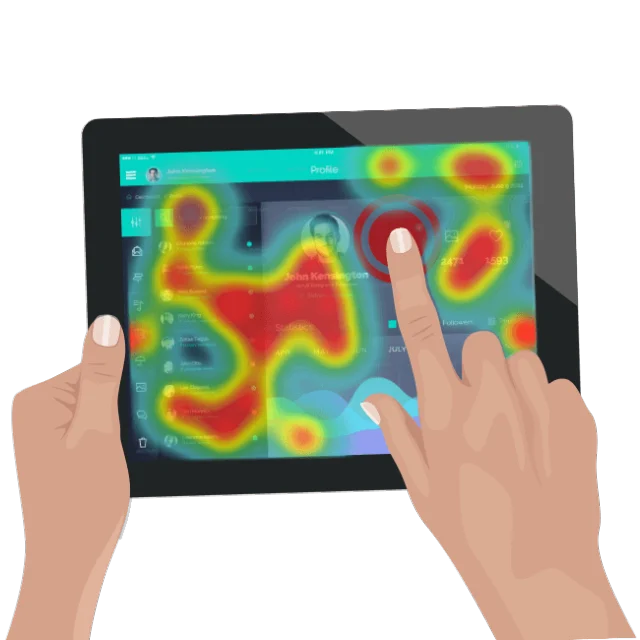
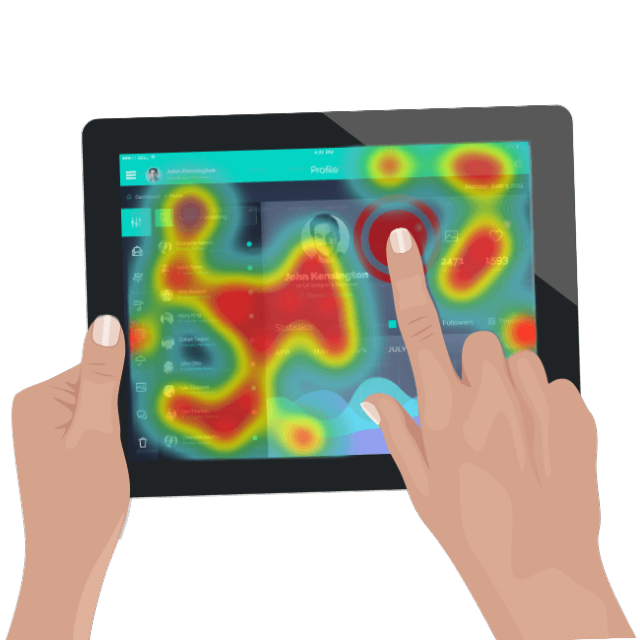
Touch heatmaps aggregate every user interaction—taps, double-taps, swipes, and pinches—across every screen of an application. This data is then overlaid onto the app’s interface as a color-coded frequency map. Areas of high interaction appear "hot" (red/orange), while neglected areas appear "cold" (blue/purple).
The strategic value of heatmaps lies in their ability to identify "unresponsive gestures." These occur when a user taps an element expecting an action, but the app provides no response. This often happens when a design element looks like a button but is actually just a static graphic, or when a legitimate button has a hit-box that is too small for the average thumb. According to industry UX standards, unresponsive gestures are among the highest contributors to user frustration and "rage clicking," which frequently leads to immediate app abandonment. By identifying these zones, designers can adjust the UI to match user intuition, ensuring the app behaves exactly as the audience expects.
The Narrative Power of User Session Recordings
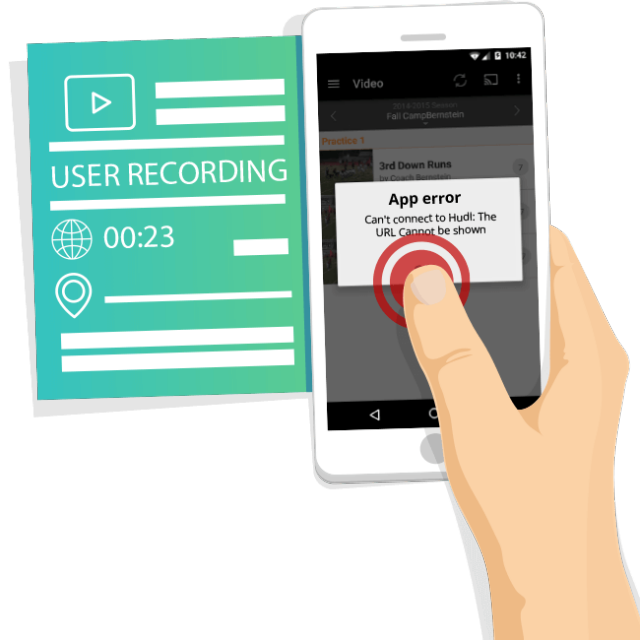
While heatmaps provide an aggregate view, user session recordings offer a granular, individual perspective. These recordings capture the exact sequence of events a user experiences during their time in the app. This is not a video recording of the user themselves, but a reconstruction of their screen interactions, navigation paths, and technical events.
Session recordings allow developers to see the app through the eyes of the user. If an app crashes, a developer can watch the moments leading up to the failure to see exactly what the user did to trigger the bug. This eliminates the need for users to provide detailed (and often inaccurate) bug reports. Furthermore, recordings reveal the "logical flow" of a user. If a user spends three minutes wandering through menus before finding the search bar, it indicates a significant navigation flaw that a quantitative "time-on-app" metric would have misinterpreted as high engagement.
Strategic Workflows: From Reactive to Proactive
The implementation of qualitative tools facilitates a paradigm shift in how mobile teams approach product evolution. This can be categorized into two primary workflows: Data-Fueled Optimization and Proactive Troubleshooting.
Data-Fueled Optimization
This workflow creates a feedback loop between quantitative "alarms" and qualitative "investigations." The process typically follows a three-step cycle: Alert, Investigate, and Resolve.
- Alert: Quantitative tools flag a drop in a specific KPI, such as a sudden 15% increase in shopping cart abandonment.
- Investigate: The team filters user session recordings specifically for those who abandoned their carts. By watching these sessions, they might discover that a "discount code" field is causing the keyboard to overlap the "checkout" button, making it impossible for users to proceed.
- Resolve: The UI is adjusted to ensure the checkout button remains visible.
Without the qualitative "Investigate" phase, the team might have assumed the shipping costs were too high or the checkout process had too many steps, leading them to change the wrong part of the business model.
Proactive Troubleshooting
Traditionally, troubleshooting is a reactive process triggered by a spike in crash reports or negative App Store reviews. Qualitative analytics allows for a proactive stance. By regularly reviewing heatmaps and a random sampling of session recordings, QA teams can spot friction points before they escalate into widespread issues.
For example, a developer might notice in a recording that users on a specific version of Android are experiencing a slight lag when opening the settings menu. While this lag hasn’t caused a crash yet, it represents a "micro-frustration" that erodes user satisfaction over time. Fixing these minor issues proactively prevents the long-term churn that typically follows a cumulative decline in user experience quality.
Market Context and the Growth of Mobile Intelligence
The shift toward qualitative data is reflected in the rapid growth of the mobile analytics market. According to recent market research reports, the global mobile app analytics market is projected to reach over $12 billion by 2027, growing at a CAGR of approximately 22%. This growth is driven by the increasing complexity of apps and the rising cost of user acquisition.
In an era where acquiring a single new user can cost several dollars in marketing spend, retaining that user is paramount. Industry data suggests that the average mobile app loses nearly 80% of its daily active users within the first three days of installation. In this high-stakes environment, the ability to quickly diagnose and remove "user experience friction" is not just a technical advantage—it is a financial necessity.
Privacy and Ethical Considerations in Qualitative Data
As qualitative analytics involves recording user sessions, it brings significant privacy considerations to the forefront. Modern qualitative tools are designed with "Privacy by Design" principles to comply with global regulations such as the General Data Protection Regulation (GDPR) and the California Consumer Privacy Act (CCPA).
Leading platforms automatically mask sensitive information. When a user enters a credit card number, password, or personal address into a text field, the qualitative tool censors that data in real-time, ensuring that the recording captures the behavior of the user without capturing their private data. For mobile app professionals, maintaining this balance between deep insight and user privacy is critical for brand trust and legal compliance.
The Broader Impact on Product Development Teams
The integration of qualitative analytics also reshapes the internal dynamics of app development teams. It fosters a more collaborative environment by providing a "single source of truth." When a UX designer argues that a layout is confusing, and a developer argues that it is technically sound, a session recording provides objective evidence that can settle the debate instantly.
Furthermore, it empowers customer support teams. When a high-value user reports a problem, support agents can view the user’s specific session to understand the issue without asking the user for screenshots or technical logs. This leads to faster resolution times and a significantly better customer service experience.
Conclusion: The Future of Holistic Analytics
The "flaw" in traditional analytics workflows—the over-reliance on quantitative data—is rapidly being corrected as more organizations adopt a holistic approach. By combining the "what" of quantitative metrics with the "why" of qualitative insights, mobile app professionals can move beyond mere monitoring and into the realm of true user empathy.
As the mobile ecosystem continues to evolve, the winners will be those who recognize that users are more than just data points on a graph. They are individuals navigating a digital interface, and understanding their visual and emotional journey is the only way to build a product that truly resonates. Qualitative analytics is no longer an optional "add-on"; it is the essential bridge between raw data and a world-class user experience. Through touch heatmaps and session recordings, the "missing link" in analytics has been found, providing the clarity needed to turn a standard mobile application into a market-leading powerhouse.