Google has released a significant new help document, meticulously outlining the nuances and regional variations inherent in its global search experience. This comprehensive guide, now accessible to the public, aims to demystify the complex interplay of features such as aggregator units, supplier units, and carousels, which often manifest differently depending on the user’s geographical location. The timing of this release is particularly noteworthy, coinciding directly with the implementation of the European Union’s stringent Digital Markets Act (DMA), signaling a proactive effort by the tech giant to enhance transparency and foster a more equitable digital ecosystem.
The newly published documentation, titled "Regional Differences in Search Experience," is housed within Google’s developer resources, explicitly targeting publishers, businesses, and aggregators. Its stated purpose is to empower these stakeholders by providing clear insights into the diverse regional search features available, elucidating the specific eligibility criteria for participation, and guiding them on how to effectively integrate their content within these localized search functionalities. This move represents a pivotal moment in Google’s ongoing evolution, particularly as it navigates an increasingly complex global regulatory environment.
The Imperative for Transparency: Responding to the Digital Markets Act
The unveiling of this detailed documentation is inextricably linked to the sweeping changes brought forth by the European Union’s Digital Markets Act (DMA). Enacted in March 2022 and with compliance deadlines for designated "gatekeepers" like Google commencing in March 2024, the DMA seeks to curb the market power of large online platforms, promote fairer competition, foster innovation, and offer greater choice to consumers. A core tenet of the DMA is to prevent self-preferencing by gatekeepers, a practice where platforms unfairly favor their own products or services over those of competitors within their ecosystem.
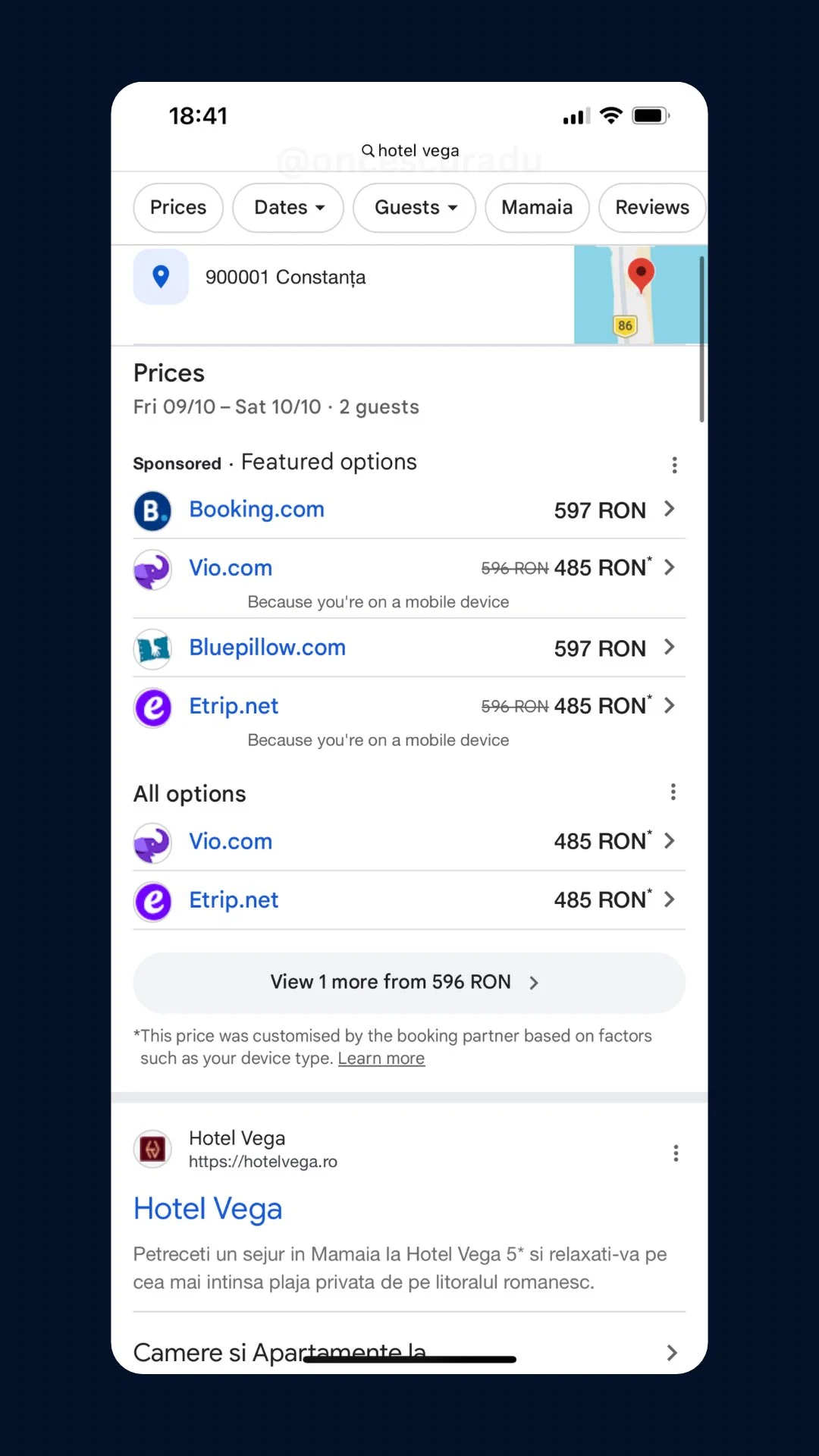
In response to the DMA, Google has initiated substantial modifications to its search results pages, particularly within the EU. The company explicitly stated that it is "evolving the search results page for certain types of queries to provide new opportunities for Vertical Search Services (VSS), Comparison Shopping Services (CSS), direct suppliers, and content providers." This restructuring aims to level the playing field, ensuring that third-party services and direct suppliers receive more prominent visibility, potentially at the expense of previously favored Google-owned services. For instance, search results for flights, hotels, or shopping in EU countries might now display a wider array of third-party aggregators and direct providers more prominently than before, often in dedicated, non-Google-branded modules.
The new documentation serves as a critical guide for these entities, enabling them to understand the updated landscape and optimize their presence within Google Search. By providing granular detail on what features are available where, and how to qualify, Google is effectively laying out the new rules of engagement for its European operations, which could serve as a template for other regions facing similar regulatory scrutiny.
A Deep Dive into Regional Feature Variations
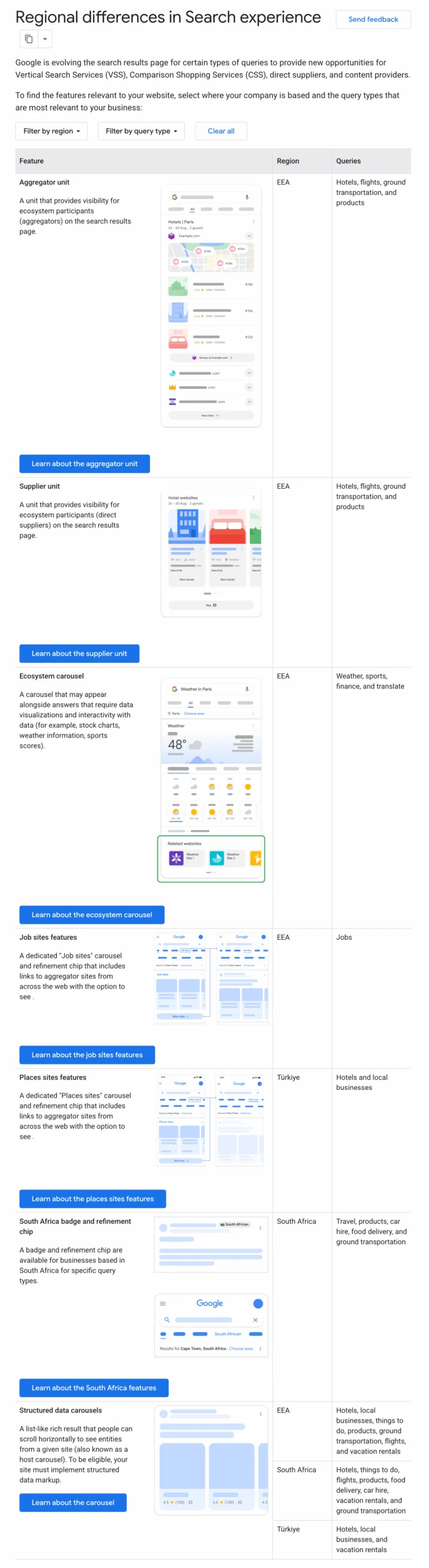
The documentation breaks down search features by region and query type, offering a systematic overview. Key components discussed include:
-
Aggregator Units: These are specialized modules within search results that compile information from multiple sources for specific categories, such as flights, hotels, jobs, or local services. The document clarifies how the presence, design, and even the underlying data sources for these units can vary significantly. For example, a flight aggregator unit in Germany might integrate data from different local airlines and travel agencies compared to a similar unit in the United States or Japan, reflecting regional market dominance, data availability, and user preferences. The eligibility criteria for aggregators to appear in these units, often involving specific structured data markups or API integrations, are also detailed, highlighting the technical requirements for participation.
-
Supplier Units: These features provide direct listings from individual businesses or service providers, bypassing traditional aggregators. This could include direct bookings for hotels, restaurant reservations, or local business information. The documentation explains how the prominence and format of these direct supplier units might differ. In some regions, Google might have established partnerships or data feeds that allow for richer, more interactive direct listings, while in others, a simpler display might be the norm. The emphasis on direct supplier units aligns with the DMA’s goal of empowering smaller businesses and reducing reliance on intermediary platforms.
-
Carousels: While carousels are a common visual element across Google Search, their content and specific implementation can vary regionally. This includes image carousels, video carousels, news carousels, and product carousels. The documentation outlines how content eligibility for these carousels might be region-specific, influenced by local content regulations, linguistic nuances, or popular cultural trends. For instance, a news carousel in India might prioritize local news outlets and topics more heavily than a general news carousel in the UK, reflecting distinct media landscapes and user interests.
The ability to filter this information by feature, region, and query within the documentation itself provides an unprecedented level of specificity, allowing businesses to tailor their strategies with surgical precision.

The Historical Context of Google’s Localization Efforts
Google’s acknowledgment of regional differences is not entirely new; the company has long invested in localizing its search experience. From its earliest days, Google recognized that a truly global search engine needed to understand and cater to local languages, cultural contexts, and geographical relevance. Algorithms like "Pigeon" (2014) and "Possum" (2016) were significant updates specifically designed to enhance the accuracy and diversity of local search results, considering factors like physical proximity, business categories, and searcher intent within a defined geographic area.
However, past localization efforts were often implicitly managed through algorithmic adjustments and internal data, with less explicit public documentation on the structural differences in search features. The new documentation marks a shift towards greater transparency, externalizing much of this intricate knowledge. This is partly a response to regulatory pressures, but also reflects a broader industry trend towards providing more granular control and understanding to webmasters and developers. In some markets, particularly developing economies, Google has also faced scrutiny for how it displays or monetizes certain local features, leading to ongoing dialogues with local governments and businesses. This new documentation can be seen as a strategic step to address such concerns by providing a clearer framework for engagement.
Implications for Stakeholders: A Shifting Landscape
The release of this documentation carries profound implications for various stakeholders:
For Publishers and Businesses: The primary beneficiaries are expected to be publishers, direct suppliers, and smaller businesses. For them, the documentation offers a roadmap to increase visibility and potentially drive traffic and conversions. Understanding the specific structured data requirements, API integrations, and content guidelines for different regions means they can optimize their digital presence more effectively. This could lead to a more diversified inbound marketing strategy, moving beyond generic SEO practices to highly localized optimization efforts. However, it also introduces complexity, requiring resources to analyze regional differences and adapt content and technical implementation accordingly. Businesses operating across multiple countries will need to invest in dedicated regional SEO strategies, potentially hiring local experts or leveraging sophisticated geo-targeting tools.
For Aggregators and Vertical Search Services (VSS/CSS): For existing aggregators and new VSS/CSS providers, particularly in the EU, this documentation signals new opportunities. By clarifying how to participate and achieve eligibility, Google is facilitating a more competitive environment. This could lead to a proliferation of specialized search services, offering consumers more choices beyond Google’s own offerings. The challenge for these entities will be to meet Google’s technical requirements and provide high-quality, relevant data to earn a prominent spot in the search results.
For SEO Professionals and Digital Marketers: The role of SEO professionals will become even more specialized and critical. They will need to move beyond general best practices and delve into the specifics of regional search feature availability and eligibility. This necessitates a deep understanding of international SEO, localized content strategies, and potentially the intricacies of local regulatory frameworks. The documentation provides a powerful new tool for conducting competitive analysis and identifying untapped opportunities in various markets. The emphasis will shift towards hyper-localization, requiring content tailored not just by language but by specific cultural, economic, and legal contexts.
For Google Itself: This move is a strategic play by Google to demonstrate compliance with regulatory bodies, especially in the EU. By proactively providing this level of detail, Google aims to mitigate potential antitrust concerns and foster a more open ecosystem. It reflects a balancing act: maintaining its dominant position while responding to demands for fairness and transparency. The success of this initiative will largely depend on how effectively publishers and businesses can leverage the information, and how regulators perceive Google’s ongoing efforts to create a truly competitive landscape. Moreover, by empowering third parties, Google could indirectly enrich its own search results, offering a broader and more diverse range of information to its users globally.
Broader Impact and Future Outlook
The release of the "Regional Differences in Search Experience" documentation underscores a broader trend towards increased granularity and localization in the digital sphere. As global markets mature and regulatory frameworks become more fragmented, technology companies are compelled to adapt their offerings to suit diverse local conditions. This is not merely about language translation but about understanding distinct legal requirements, cultural norms, economic landscapes, and user behaviors.
Looking ahead, it is plausible that this documentation will continue to evolve, with Google adding more features, regions, and detailed eligibility criteria as its search experience adapts further to global demands and regulatory pressures. Other jurisdictions, observing the EU’s DMA, may consider similar legislative actions, potentially prompting Google to extend these transparency efforts to other parts of the world. For instance, countries like India, the UK, and the US have their own ongoing antitrust investigations and regulatory debates concerning digital gatekeepers. This European precedent could therefore set a new global standard for how dominant online platforms interact with the broader digital economy.
Ultimately, this documentation represents a significant step towards a more transparent and potentially more equitable global search landscape. While it introduces new complexities for businesses and publishers, it also opens doors to unprecedented opportunities for those willing to invest in localized strategies and understand the intricate fabric of Google’s globally diverse search experience. The digital world is becoming increasingly localized, and Google’s latest move is a clear acknowledgment of this fundamental shift.