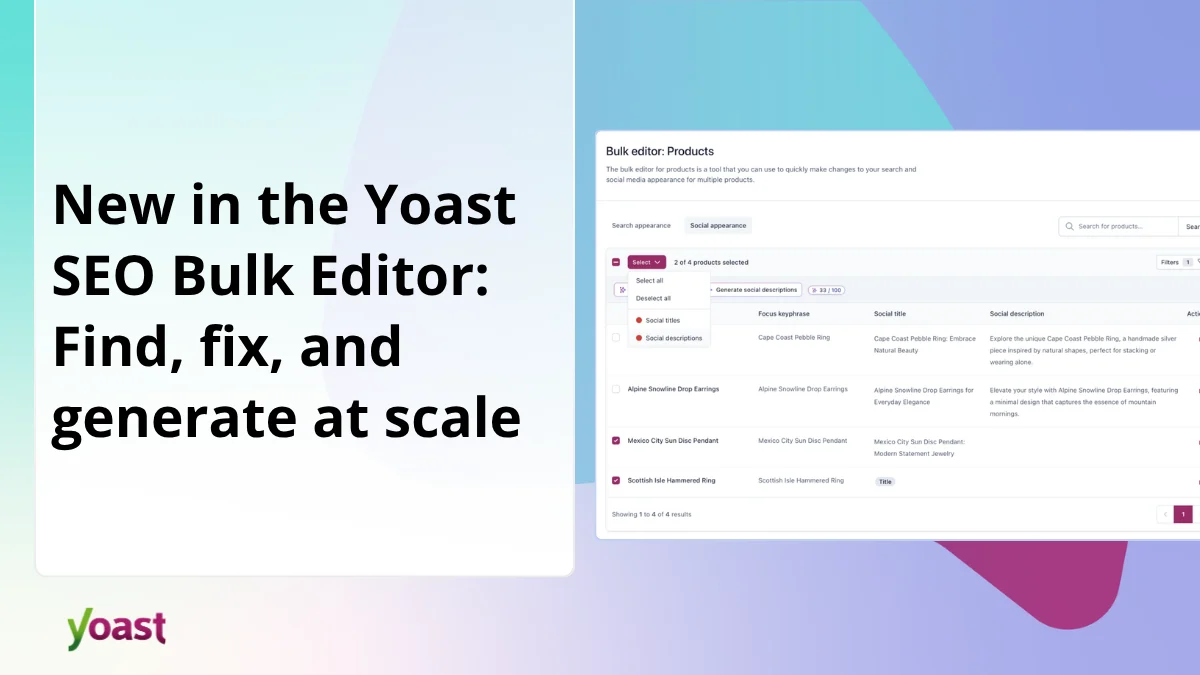
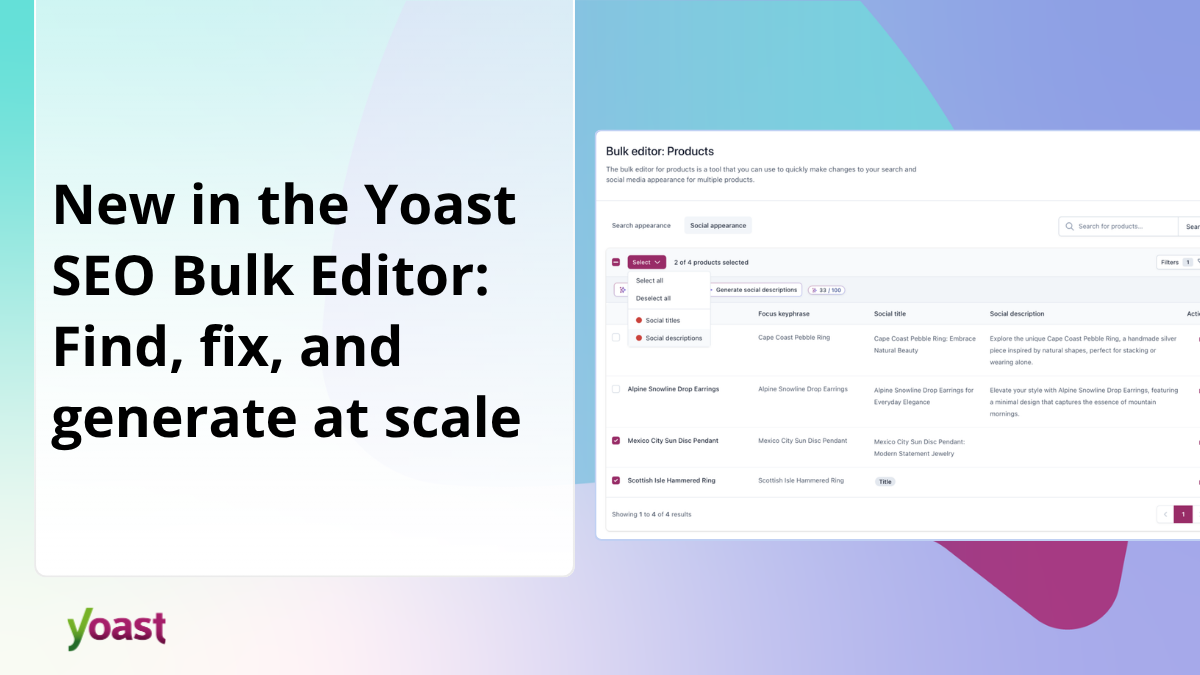
Yoast, a leading provider of SEO software for WordPress, has announced a significant update to its popular Yoast SEO Bulk Editor, introducing a suite of new features designed to dramatically improve efficiency, enhance content quality, and streamline the optimization workflow for website administrators and content managers. This latest iteration builds upon the existing capabilities of the Bulk Editor, which already facilitates the mass updating of titles, meta descriptions, and focus keyphrases, alongside AI-powered metadata drafting. The new enhancements focus on making it easier for users to identify posts requiring immediate attention, validate AI-generated suggestions, and integrate bulk editing seamlessly into their regular content management routines, ultimately empowering them to maintain superior SEO standards across extensive content libraries.
The Evolving Landscape of SEO and Content Management
In the dynamic world of digital publishing, where content volume continues to escalate and search engine algorithms constantly evolve, maintaining optimal search engine optimization (SEO) across an entire website presents a formidable challenge. Content managers, SEO professionals, and webmasters are tasked with ensuring that every piece of content – from blog posts and product pages to static information pages – is discoverable, engaging, and performs well in search results. A critical component of this performance lies in meticulously crafted metadata, including SEO titles, meta descriptions, and social media descriptions. These elements are often the first point of contact between a potential visitor and a website in search results, directly influencing click-through rates (CTR) and overall visibility.
Yoast has long been at the forefront of simplifying complex SEO tasks for WordPress users. Its suite of tools aims to demystify SEO, making it accessible to individuals regardless of their technical expertise. The Bulk Editor, in particular, was developed to address the scalability issues inherent in managing large websites. Manually updating metadata for hundreds or thousands of pages is an arduous, time-consuming, and error-prone process. The introduction of bulk editing capabilities marked a pivotal shift towards more efficient content governance. However, even with initial bulk editing features, users often struggled with quickly identifying which content needed attention and ensuring the quality of automated suggestions. This latest update directly tackles these pain points, reflecting a deeper understanding of user workflows and the practical challenges of enterprise-level SEO.
Precision Targeting: Identifying Weak Fields with New Filters
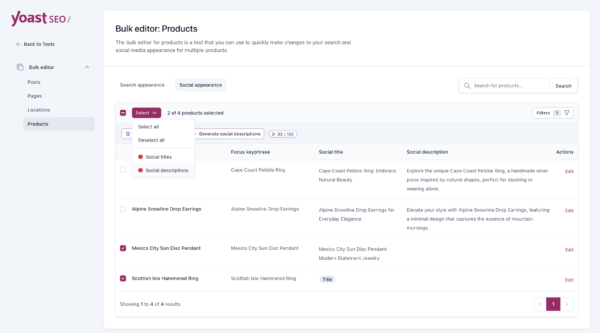
A cornerstone of the updated Bulk Editor is its enhanced filtering system, which allows users to swiftly pinpoint content requiring optimization. The Filters dropdown now incorporates "needs improvement" options specifically for SEO title, meta description, social title, and social description. By activating one of these filters, the editor dynamically displays only those posts where the selected field is either entirely empty or scores poorly according to Yoast’s established content analysis system. This intuitive filtering mechanism leverages the same robust scoring logic that users are familiar with from the individual post editor, ensuring consistency and reliability in identifying underperforming elements.
For large websites with thousands of pages, this granular filtering represents a significant leap in efficiency. Instead of manually auditing each page, content teams can now, with a few clicks, generate a focused list of items demanding immediate attention. This capability transforms a potentially overwhelming task into a manageable project. Complementing these filters are new quality-based options within the Select menu. Users can now select every post on a given page that needs improvement in a single click, perfectly aligning with the applied filters. Furthermore, for those who prefer a more hands-on, row-by-row approach, the editor now supports Shift+click functionality, allowing users to select a range of items simultaneously, mimicking standard table interaction patterns and enhancing user experience. This combination of powerful filtering and flexible selection tools drastically reduces the time and effort traditionally associated with large-scale metadata audits, enabling faster iterations and more proactive SEO management.
Intelligent Assistance: Guardrails for AI-Generated Suggestions
The integration of artificial intelligence (AI) into SEO tools has been a game-changer, automating the generation of metadata and freeing up valuable human resources. Yoast AI, specifically, assists in drafting SEO titles, meta descriptions, and social copy in bulk. However, a known challenge with AI models, particularly when operating on vast datasets, is the quality of output when input content is sparse or underdeveloped. Previously, the Bulk Editor might generate suggestions for posts with very little written content, resulting in metadata that was generic, uninformative, or even misleading. Users lacked an immediate indicator of which AI-generated suggestions warranted a closer human review, potentially leading to the publication of suboptimal metadata.
The latest update introduces a crucial "guardrail" to mitigate this issue. After a bulk generation run, the editor now intelligently flags precisely which generated posts had limited content input. This visual cue immediately alerts users to instances where the AI might have struggled to produce high-quality, contextually relevant metadata. This flagging system empowers users to prioritize their review efforts, directing their attention to the posts most likely to need human refinement. The recommended workflow encourages users to add more substantial content to flagged posts and then regenerate the metadata, ensuring that the AI has ample material to work with for optimal suggestions. This feature strikes a vital balance between the efficiency of AI automation and the indispensable need for human oversight and quality control, ensuring that AI serves as an assistant rather than an unchecked generator, ultimately leading to more robust and effective SEO outcomes.
Seamless Workflow Integration: Bulk Editing from Post Lists
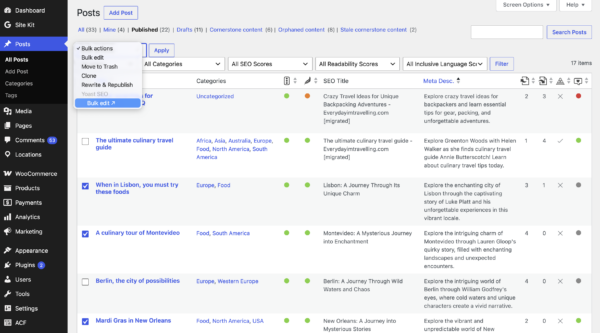
Prior to this update, initiating a bulk editing session often required navigating to a separate section of the Yoast SEO interface, potentially disrupting a content manager’s natural workflow. Recognizing the importance of a streamlined user experience, Yoast has now integrated direct access to the Bulk Editor from the standard WordPress overview screens for posts, pages, or products. Users can now select multiple items directly from these familiar lists, choose "Bulk edit" from the bulk actions dropdown menu, and their selection will be seamlessly carried straight into the Bulk Editor, ready for immediate optimization.
This seemingly minor change significantly enhances workflow efficiency. It eliminates an extra step, making the process of transitioning from content identification to bulk optimization far more intuitive and less fragmented. For content teams accustomed to managing their content directly from the WordPress dashboard, this integration feels natural and saves valuable time. It aligns with broader industry trends towards consolidating tools and functionalities within a single, coherent interface, reducing cognitive load and improving productivity. By embedding the Bulk Editor more deeply into the core WordPress experience, Yoast empowers users to adopt bulk optimization as a regular, integrated part of their content management strategy, rather than an isolated, occasional task.
Enhanced Connectivity: Overcoming Hosting Challenges for Yoast AI (Rolling Out)
One of the persistent challenges for cloud-based AI services, including Yoast AI, can be connectivity issues stemming from varied hosting environments. Websites operating behind firewalls, those in an offline development state, or those with the REST API disabled (a common WordPress component that allows external services to interact with the site) could previously experience difficulties connecting with Yoast AI, leading to service interruptions or a "dead end" user experience.
Yoast is addressing this by rolling out an enhanced connectivity solution. If Yoast AI detects that it cannot reach a user’s site due to such restrictions, the system will now present an option to connect the site directly to MyYoast. MyYoast is Yoast’s central user account portal, and establishing this direct connection can bypass common hosting limitations, allowing Yoast AI to function reliably even in trickier setups. This feature is being rolled out gradually, meaning not all users will see it immediately, but it represents a proactive step towards ensuring universal accessibility and consistent performance for Yoast AI. Users will be invited to connect when the system identifies a need, eliminating the need for any pre-emptive action or complex configuration on their part. This commitment to robust service delivery underscores Yoast’s dedication to providing a seamless and reliable SEO toolkit for all its users, regardless of their specific hosting configurations.
Supporting Data and Industry Trends
The importance of efficient metadata management cannot be overstated. Industry reports consistently show that well-optimized SEO titles and meta descriptions significantly impact organic search performance. Studies by organizations like Moz and Search Engine Journal frequently highlight that compelling meta descriptions can improve click-through rates by as much as 30% or more, directly translating to increased organic traffic. Given that WordPress powers over 43% of all websites on the internet, and many of these sites host hundreds or thousands of pages, the sheer volume of metadata requiring attention is immense. Without robust bulk editing tools, the task becomes virtually impossible for many digital publishers.
Furthermore, the rapid acceleration of AI integration into marketing and content creation processes underscores the strategic value of tools like the Yoast SEO Bulk Editor. A 2023 HubSpot report indicated that 60% of marketers already use AI in their content strategy, with many citing efficiency and scalability as primary benefits. However, the same reports often caution against unchecked AI usage, emphasizing the need for human oversight and quality checks. Yoast’s introduction of AI guardrails directly addresses this industry-wide concern, ensuring that the power of AI is harnessed responsibly and effectively. The enhancements reflect a broader trend in the SEO tool ecosystem towards intelligent automation that augments, rather than replaces, human expertise.
Statements and Reactions
Beth Parker, Product Marketing Manager at Yoast, emphasized the strategic intent behind these updates. "Our goal at Yoast has always been to make SEO accessible and effective for everyone," Parker stated. "These new Bulk Editor features are a direct response to the evolving needs of our users, particularly those managing large and complex websites. We’re empowering them to identify critical optimization opportunities with unprecedented speed, ensure the quality of AI-generated content, and integrate SEO tasks more smoothly into their daily workflows. It’s about giving content creators the tools to maintain a competitive edge without sacrificing precious time or compromising on quality."
The SEO community and content managers are expected to react positively to these enhancements. The ability to quickly filter for weak metadata fields will be particularly welcomed by agencies and in-house teams managing extensive content portfolios, where manual audits are a significant bottleneck. The AI guardrails will instill greater confidence in using automated generation tools, fostering a more trustful relationship between users and AI capabilities. The streamlined access from post lists is a practical improvement that will resonate with busy webmasters looking to shave off valuable seconds from repetitive tasks. Overall, these updates are anticipated to be perceived as a substantial step forward in usability and practical utility, reinforcing Yoast’s position as a vital tool in the digital marketing arsenal.
Broader Impact and Implications
The implications of these Yoast SEO Bulk Editor updates extend beyond mere feature additions; they represent a significant shift towards more intelligent, efficient, and reliable content optimization. For digital publishers, the ability to rapidly identify and rectify metadata deficiencies across an entire site translates directly into improved search visibility and higher click-through rates. This can lead to increased organic traffic, better conversion rates, and ultimately, stronger business outcomes.
Moreover, by providing guardrails for AI-generated content, Yoast is actively promoting a higher standard of content quality in an era where AI adoption is skyrocketing. This intelligent oversight ensures that automation serves to enhance, rather than degrade, the user experience and search engine performance. The improved workflow integration means that SEO is no longer a separate, often neglected, task but an intrinsic part of the content creation and management lifecycle.
Looking ahead, these updates lay the groundwork for further innovation in SEO automation. As AI models become more sophisticated, the interplay between automated suggestions and human validation will only grow in importance. Yoast’s commitment to continuous improvement, particularly in addressing user feedback and adapting to technological advancements like AI, positions it to remain a key player in shaping the future of digital content optimization. The enhancements underscore a proactive approach to empowering content creators to navigate the complexities of modern SEO with greater ease and effectiveness.
In conclusion, Yoast’s latest update to its SEO Bulk Editor is more than just a collection of new features; it is a strategic enhancement designed to address the core challenges of large-scale content optimization in the current digital landscape. By providing advanced filtering, intelligent AI guardrails, seamless workflow integration, and robust connectivity solutions, Yoast continues to equip digital publishers with the necessary tools to maintain high SEO standards, drive organic growth, and stay ahead in the competitive world of online content.