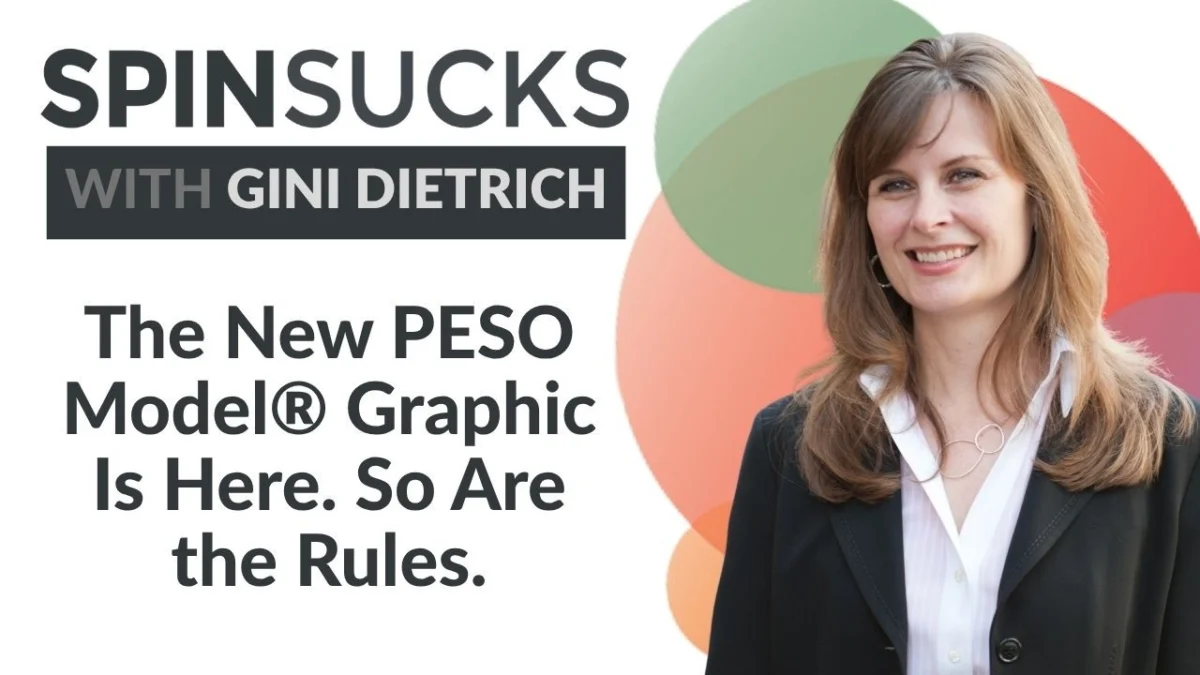
The communications and marketing landscape has undergone a fundamental transformation over the last decade, necessitating a shift in how professionals categorize, execute, and measure their efforts. Gini Dietrich, the founder of Spin Sucks and the architect of the PESO Model®, has announced a significant graphic refresh and a refined structural approach to this industry-standard framework. This update marks the first major evolution of the model in several years, transitioning it from a tactical or strategic overview into a comprehensive, outcome-based operating system. This shift is designed to address the increasing complexities of the digital age, including the rise of generative artificial intelligence, the decline of traditional search engine dominance, and the heightened demand for measurable business results such as pipeline growth and brand valuation.
The Twelve-Year Chronology of the PESO Model
The PESO Model—which stands for Paid, Earned, Shared, and Owned media—was first introduced twelve years ago to provide a unified structure for integrated communications. Its evolution reflects the broader history of the digital marketing industry. In its earliest iteration, the model was primarily tactical. It functioned as a categorized list of platforms and activities, including then-dominant players like Google+ and Vine. At that stage, the industry’s primary challenge was simply understanding where to post content and how to distinguish between a blog post and a news release.
As the digital landscape matured, the model underwent its first major refresh. This second version moved away from specific platforms, acknowledging that platforms are ephemeral while strategies are enduring. The focus shifted toward the integration of the four media types, illustrating how they could reinforce one another. This version became the standard for agencies and internal communications teams, helping them move beyond siloed operations. However, as Dietrich notes, this version was often misinterpreted as a mere checklist of tactics rather than a cohesive strategy.
The current 2024-2025 refresh represents the third stage of evolution: the move toward outcomes. In an era where Chief Marketing Officers (CMOs) and boards of directors demand specific evidence of how communications contribute to the bottom line, the model has been redesigned to emphasize four key business results: Authority, Credibility, Discovery, and Growth.
The Four Pillars of the Outcome-Based Operating System
The new PESO Model graphic is organized around what each media type produces for an organization. By shifting the focus to outcomes, the model allows practitioners to align their work with broader corporate objectives.
Owned Media: The Driver of Authority
Owned media consists of the content an organization creates and controls, such as websites, blogs, and white papers. In the new framework, the primary outcome of owned media is Authority. In a saturated content market, simply publishing is insufficient. Organizations must establish themselves as the definitive source of information in their niche to satisfy both human audiences and AI-driven "answer engines." Authority is the foundation upon which the rest of the model is built, providing the long-form substance necessary for expertise.
Earned Media: The Driver of Credibility
Earned media remains the traditional heart of public relations, involving third-party validation through media relations, influencer outreach, and word-of-mouth. Its primary outcome is Credibility. In an age of misinformation and deepfakes, the "halo effect" of being featured in a reputable publication or endorsed by a trusted third party provides a level of validation that paid or owned media cannot achieve alone.
Shared Media: The Driver of Discovery
Shared media encompasses social media, community engagement, and collaborative platforms. The primary outcome here is Discovery. As traditional search engines like Google integrate more AI-generated summaries, the way users find information is changing. Shared media ensures that an organization’s content is distributed through networks, making it findable in the places where target audiences are already congregating and conversing.
Paid Media: The Driver of Growth
Paid media includes social media advertising, sponsored content, and lead-generation activities. Its primary outcome is Growth. While the other three pillars focus on building the brand’s ecosystem, paid media acts as the accelerant. It allows organizations to scale their reach, target specific demographics with precision, and drive measurable increases in pipeline and revenue.
Compound Outcomes: The Power of Integration
The true strength of the PESO Model lies not in the individual circles but in their overlaps. The new graphic identifies six specific compound outcomes that occur when two or more media types are integrated effectively.
- Expertise (Owned + Earned): When an organization’s authoritative content is validated by third-party media, it establishes deep industry expertise.
- Trust (Owned + Shared): When authoritative content is discussed and shared within a community, it builds a foundation of trust with the audience.
- Distribution (Owned + Paid): Using paid media to amplify owned content ensures that the organization’s best assets reach the widest possible relevant audience.
- Influence (Earned + Shared): The combination of third-party credibility and social discovery creates influence, allowing a brand to shape the narrative within its category.
- Reach (Earned + Paid): Utilizing paid tactics to boost earned media coverage maximizes the visibility of positive third-party endorsements.
- Response (Shared + Paid): The intersection of social discovery and paid amplification drives immediate audience response and engagement.
At the center of the model, where all four circles overlap, is the "Operating System." This represents the state in which a communications program is fully integrated, creating a compounding effect where the total value is greater than the sum of its parts.
Intellectual Property and the New Licensing Framework
Along with the graphic refresh, Spin Sucks has introduced a more formalized approach to the intellectual property (IP) surrounding the PESO Model. For over a decade, the model has been widely adopted, often without formal attribution. While Dietrich has historically encouraged broad adoption, the rise of commercialized misuse—where the model is repackaged into paid courses, books, and software without permission—has prompted a change in policy.
Non-Commercial Use
The PESO Model remains free to use for non-commercial purposes, provided there is proper attribution to Spin Sucks. This includes internal team training, classroom instruction by professors, blog posts, and conference presentations where the model is mentioned but not the primary subject of a paid training. Users are required to download the graphic from the official Spin Sucks website to ensure they are using the most current version and to agree to simple terms of use.
Commercial Licensing
A formal commercial license is now required for any use of the model that generates direct or indirect revenue. This includes:
- Paid online or in-person courses and certifications.
- Books, e-books, and published training manuals.
- Software products that incorporate the PESO framework into their functionality.
- Paid speaking engagements where the model is taught as a methodology.
- Branded reuse where an agency replaces the Spin Sucks branding with its own.
This shift is intended to protect the integrity of the model. When various entities teach different, unauthorized versions of the PESO Model, it leads to industry-wide dilution and confusion. By centralizing the licensing process, Spin Sucks aims to ensure that the "operating system" is taught and implemented correctly across the professional landscape.
Industry Implications and the AI Challenge
The timing of this refresh is significant given the rapid advancement of artificial intelligence. Marketing and PR professionals are currently facing a "telephone game" scenario where AI models scrape data from across the web. If an organization’s content is not authoritative and its brand narrative is inconsistent across the PESO pillars, AI answer engines are likely to misrepresent or ignore the brand entirely.
Recent data suggests that integrated marketing campaigns see a 31% higher return on investment (ROI) compared to single-channel campaigns. Furthermore, as third-party cookies are phased out, the importance of "Owned" and "Shared" data has skyrocketed. The new PESO Model provides a roadmap for navigating these technical shifts, ensuring that communications teams are not just creating noise, but are building a defensible digital moat around their brand.
The Path Forward: Certification and Education
To support the professionalization of the model, Spin Sucks has deepened its partnership with the S.I. Newhouse School of Public Communications at Syracuse University. The PESO Model Certification® remains the primary path for practitioners to master the system. This certification is now the only program that automatically grants commercial use rights to its graduates, providing them with the tools, including AI-driven operating tools, to implement the model at an enterprise level.
The launch of the new graphic is the first part of a six-part series titled "The PESO Operating System," which will continue through the second quarter of the year. Subsequent installments will address specific challenges such as the impact of AI on content integrity and the evolution of measurement in an outcome-based world.
By establishing clear rules for use and a refined visual framework, Spin Sucks is attempting to standardize the way integrated communications are practiced globally. As the industry moves away from vanity metrics and toward business-critical outcomes, the PESO Model continues to serve as the foundational infrastructure for modern public relations and marketing.