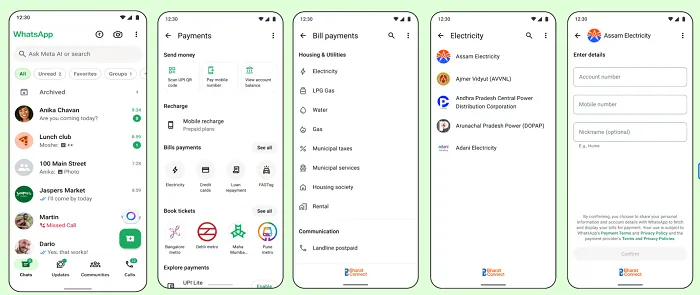
WhatsApp, Meta’s ubiquitous messaging platform, has significantly expanded its utility in India by integrating a comprehensive bill payment feature directly within the app. This strategic move allows users across the country to manage and pay a wide array of household and utility bills without leaving the messaging interface, marking another substantial step in Meta’s long-term ambition to transform WhatsApp into an "everything app" akin to China’s WeChat within the Indian market.
The new functionality is powered by the Bharat Bill Payment System (BBPS) network, a robust and interoperable platform overseen by the National Payments Corporation of India (NPCI). This integration provides WhatsApp users access to an extensive ecosystem of 22,722 billers across 30 diverse categories. These categories encompass essential services such as electricity, gas, and water bills, alongside other critical payments like FASTag recharges, insurance premiums, credit card dues, and loan repayments. Beyond mere payment execution, the feature also facilitates comprehensive payment management, offering users the ability to access bill summaries and overviews of their various accounts directly within the application, thereby streamlining their financial oversight.
The "Everything App" Vision: Replicating WeChat’s Success
Meta’s pursuit of the "everything app" model for WhatsApp, particularly in India, is a direct emulation of the phenomenal success of Tencent’s WeChat in China. WeChat has transcended its origins as a messaging application to become an indispensable digital hub for hundreds of millions of Chinese citizens. Its ecosystem seamlessly integrates social networking, mobile payments, e-commerce, food delivery, taxi hailing, government services, healthcare appointments, and a myriad of other daily necessities. This pervasive utility has cemented WeChat’s status as a critical infrastructure, making it virtually impossible for users to navigate modern life in China without it.
For Meta, replicating this model with WhatsApp offers profound strategic advantages. Firstly, it provides a powerful avenue for revenue diversification beyond its traditional reliance on advertising. By facilitating transactions and services, WhatsApp can potentially earn through transaction fees, merchant commissions, and premium service offerings for businesses. Secondly, and perhaps more importantly, it fosters deeper user engagement and lock-in. The more essential services a user can access through a single platform, the more time they spend on it, and the less likely they are to switch to competing services. This increased stickiness translates into a more valuable user base and a stronger competitive moat. While Meta has attempted to expand the utility of its apps in Western markets like the EU and the Americas, regulatory complexities and established market dynamics have presented significant hurdles, making India, with its vast digital-first population and evolving regulatory landscape, a prime target for this ambitious undertaking.
WhatsApp’s Evolutionary Journey in India: A Chronology of Expansion
WhatsApp’s journey in India has been characterized by rapid user acquisition and a gradual, albeit sometimes challenging, expansion of its feature set beyond basic messaging. With over 800 million local users, according to figures cited by World Population Review, India represents WhatsApp’s largest market globally. This immense user base provides an unparalleled foundation for developing an integrated digital ecosystem.
- Early Dominance (2010s): WhatsApp quickly became the de facto communication platform in India due largely to its simplicity, end-to-end encryption, and free messaging, effectively displacing SMS.
- Introduction of Payments (2018 onwards): The first major step towards financial integration was the introduction of WhatsApp Pay. Built on India’s Unified Payments Interface (UPI), it allowed users to send and receive money directly within chats. However, its rollout was protracted due to regulatory scrutiny, particularly concerning data localization and storage requirements mandated by the Reserve Bank of India (RBI). Initial user caps imposed by the NPCI also slowed its adoption compared to competitors like Google Pay and PhonePe.
- Expanding Utility (2020-2022): Despite the slow start for WhatsApp Pay, Meta continued to integrate other utility functions. Users gained the ability to recharge their mobile phones, book public transport tickets (such as metro and bus tickets), and access citizen services through government-managed chatbots. These chatbots, often powered by AI, allowed users to inquire about various public services, download documents, and receive updates, further embedding WhatsApp into the daily lives of Indians.
- Strategic Acquisition and Leadership Change (June 2023): Recognizing the unique intricacies of the Indian fintech landscape and the need for localized expertise, Meta made a significant strategic move. The company acquired a stake in India-based fintech unicorn Cred, a platform renowned for simplifying credit card bill payments and offering rewards. Concurrently, Meta appointed Cred’s founder, Kunal Shah, a highly respected and influential figure in the Indian startup and fintech ecosystem, as the new head of WhatsApp in India. This move was widely interpreted as an acceleration of Meta’s "everything app" ambitions, leveraging Shah’s deep understanding of Indian consumers and regulatory nuances to navigate and innovate within the market.
- Comprehensive Bill Payments (Late 2023/Early 2024): The current integration of comprehensive bill payment capabilities via BBPS represents the culmination of these efforts, building directly on the foundation laid by previous utility additions and the enhanced strategic guidance brought by the Cred acquisition.
The Robust Digital Payments Landscape in India
India’s digital payments ecosystem has undergone a revolutionary transformation in recent years, largely driven by government initiatives and technological innovations. At the heart of this revolution is the Unified Payments Interface (UPI), an instant real-time payment system developed by NPCI. UPI has democratized digital payments, allowing users to link multiple bank accounts to a single mobile application and transfer funds instantly, 24/7, using a virtual payment address (VPA) or QR codes.
The scale of UPI’s success is staggering. Monthly transaction volumes regularly exceed 10 billion, with values totaling trillions of rupees, making it one of the most successful digital payment platforms globally. This widespread adoption has fostered a highly competitive environment, with players like Google Pay, PhonePe, Paytm, and Amazon Pay vying for market share.
The Bharat Bill Payment System (BBPS), which WhatsApp is now leveraging, is another critical component of India’s digital infrastructure. Launched by the RBI and operated by NPCI, BBPS aims to provide an interoperable and accessible "Anytime Anywhere" bill payment service to customers across India through a network of agents, banks, and online channels. It standardizes bill payments, ensuring reliability, security, and efficiency for both consumers and billers. By integrating with BBPS, WhatsApp gains immediate access to a vast network of service providers, significantly accelerating its entry into the comprehensive bill payment market. This integration not only offers convenience to users but also reinforces the government’s push for digital financial inclusion and a cashless economy.
Mechanics and User Experience of the New Feature
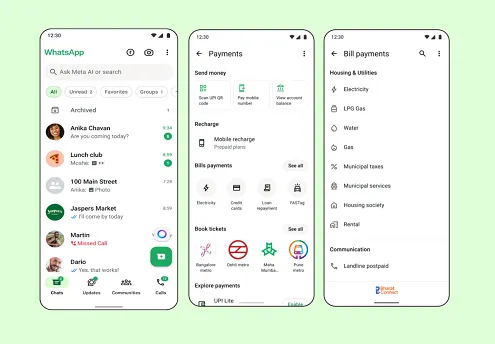
The bill payment feature within WhatsApp is designed for intuitive use. Users can typically access it through a dedicated "Payments" or "Bill Payments" section within the app. From there, they can search for specific billers by name or category. Once a biller is selected, users can link their accounts (e.g., electricity consumer number, gas connection ID) and view outstanding bills. The payment process itself is streamlined, likely leveraging WhatsApp Pay’s underlying UPI integration, allowing for secure transactions with just a few taps and a UPI PIN.
The ability to access bill summaries and overviews of various accounts directly within the app significantly enhances the user experience. This consolidation means users no longer need to navigate multiple apps or websites to check different utility bills, credit card statements, or loan repayment schedules. This convenience is particularly valuable in a country where smartphone penetration is high, but access to traditional banking services might be less straightforward for some segments of the population. The end-to-end encryption inherent to WhatsApp’s messaging platform also extends to payment-related communications, providing an added layer of security and privacy reassurance for sensitive financial information.
Strategic Implications for Meta and the Indian Market
The expansion into comprehensive bill payments holds profound strategic implications for Meta:
- Diversified Revenue Streams: As previously noted, this move is crucial for Meta’s efforts to diversify revenue beyond advertising, which faces increasing headwinds from privacy regulations and competitive pressures. Transaction fees, value-added services for businesses, and potentially even lending or insurance products down the line could open significant new revenue opportunities.
- Deepened User Engagement and Loyalty: By becoming a central hub for essential daily tasks, WhatsApp increases its "stickiness." Users are less likely to churn when the app is deeply embedded in their financial and daily routines. This creates a powerful network effect.
- Leveraging India as a Testbed: India’s unique combination of a massive digital-savvy population, a robust public digital infrastructure (like UPI and BBPS), and an evolving regulatory framework makes it an ideal proving ground for Meta’s "everything app" ambitions. Lessons learned and successes achieved in India could inform strategies for other emerging markets.
- Justifying the WhatsApp Acquisition: Meta acquired WhatsApp for a staggering $19 billion in 2014. While its growth in user numbers has been immense, monetizing that user base has been a long-term challenge. Expanding utility and transaction capabilities, especially in key markets like India, is critical to demonstrating the long-term value and return on investment of that colossal acquisition.
- Data Insights: While maintaining user privacy, the aggregate data derived from usage patterns (e.g., popular bill categories, peak payment times) can provide invaluable insights for Meta to further refine its services, offer targeted solutions to businesses, and identify new market opportunities.
For the Indian market, this development signifies further acceleration of digital transformation. It empowers more users, especially those in semi-urban and rural areas who might be less familiar with dedicated banking apps, to participate in the digital economy through a platform they already use daily. It also intensifies competition among digital payment providers, potentially leading to better services and innovations for consumers.
Challenges and Regulatory Scrutiny
Despite the significant potential, Meta’s "everything app" ambitions in India are not without challenges:
- Regulatory Compliance: India’s regulatory environment, particularly for fintech and data, is stringent and dynamic. Meta must continuously navigate and comply with evolving norms from the RBI, NPCI, and upcoming data protection laws (such as the Digital Personal Data Protection Act, 2023). Any misstep could lead to penalties, operational restrictions, or reputational damage.
- Intense Competition: The digital payments space in India is fiercely competitive, with well-entrenched players like PhonePe, Google Pay, and Paytm having already captured significant market share and user trust. WhatsApp will need to differentiate itself beyond mere convenience.
- Building Trust: While WhatsApp enjoys high trust as a communication tool, extending that trust to financial transactions requires consistent security, reliability, and responsive customer support. Data privacy concerns remain paramount for Indian users.
- Scalability and Infrastructure: Managing billions of transactions and ensuring seamless service for over 800 million users requires robust and scalable infrastructure, capable of handling peak loads and ensuring minimal downtime.
- Potential for Anti-Trust Scrutiny: As WhatsApp consolidates more services and potentially gains significant market power, it could attract scrutiny from antitrust regulators concerned about market dominance and fair competition.
Future Outlook
The integration of comprehensive bill payments is a foundational step. Looking ahead, WhatsApp’s roadmap for India is likely to include further expansion into various other services. This could encompass deeper e-commerce integration, direct booking for travel and hospitality, healthcare services (e.g., doctor appointments, prescription refills), and educational platforms. The long-term vision is to create an ecosystem where users can fulfill nearly all their digital needs within the WhatsApp interface, making it an indispensable part of their daily routine.
This sustained push, particularly bolstered by localized expertise and strategic acquisitions, positions Meta to realize the full potential of WhatsApp in India. If successful in establishing itself as the critical app for users in the world’s most populous country, it could profoundly impact Meta’s global strategy, diversifying its revenue streams, deepening its engagement metrics, and ultimately justifying the massive investment made almost a decade ago. The journey is complex, requiring steady steps, unwavering compliance, and continuous innovation, but the latest bill payment integration is a clear indicator of Meta’s determined progress towards its ambitious "everything app" goal in India.