rifanmuazin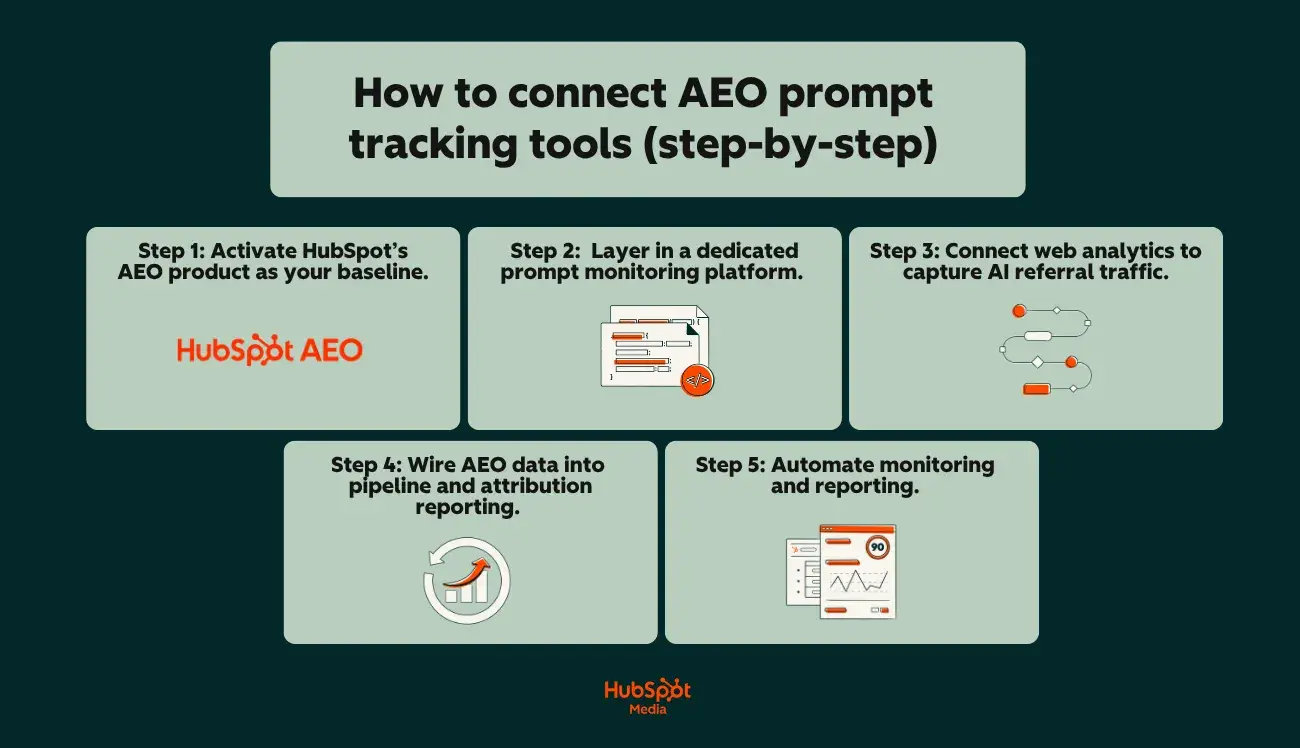
The rapid evolution of artificial intelligence has fundamentally reshaped the digital information landscape, ushering in a new era for brand visibility measurement known as Answer Engine Optimization (AEO) prompt tracking. While traditional Search Engine Optimization (SEO) strategies have long focused on keyword rankings, organic traffic, and SERP positions, the advent of sophisticated AI platforms like ChatGPT, Perplexity, and Google AI Overviews demands a more nuanced approach. AEO prompt tracking emerges as the critical new layer of measurement, designed to monitor whether and how a brand is cited within AI-generated answers when users pose buying questions or seek information. This paradigm shift addresses a significant gap: traditional metrics fail to inform marketers when their brand is absent from an AI’s synthesized response, even if their content ranks highly on a standard search results page.
The Paradigm Shift: From Links to Answers
The digital ecosystem has been undergoing a profound transformation. For decades, the internet functioned primarily as a directory of documents, with search engines serving as sophisticated librarians. Users navigated lists of links, clicking through to find information. However, the proliferation of Large Language Models (LLMs) and advanced AI has introduced a new dynamic: answer engines. These platforms are designed not merely to point users to information but to synthesize it, providing direct, conversational responses. This fundamental change in user interaction – from "where can I find this?" to "tell me the answer" – necessitates a parallel evolution in marketing measurement.
Industry analysts estimate that a significant and growing percentage of online queries now bypass traditional search results in favor of AI-generated summaries. Reports from leading tech firms indicate that daily interactions with generative AI tools are in the tens of millions, influencing purchasing decisions and brand perception. For marketing leaders, SEO managers, and demand generation teams, this shift presents both a challenge and an immense opportunity. The ability to prove that AI search drives pipeline requires a new framework, moving beyond the simple "we publish great content" assertion to a data-driven validation of AI visibility’s impact.
.png)
Distinguishing AEO from Traditional SEO
AEO prompt tracking fundamentally differs from SEO rank tracking across four core dimensions: the object of measurement, the location of measurement, the stability of outputs, and the mechanism of attribution.
- What You Measure: SEO measures a URL’s position for a specific keyword on a search engine results page. AEO measures a brand’s presence (or absence) within an AI-generated answer. It’s about whether your brand, content, or URLs are cited or mentioned in the conversational response.
- Where You Measure It: SEO focuses on standard search engine results pages (SERPs). AEO extends to the direct answer boxes, conversational interfaces, and synthesized summaries provided by various AI models (e.g., ChatGPT, Gemini, Perplexity, Google AI Overviews).
- Stability of Outputs: SEO rankings, while subject to algorithm updates, tend to be relatively stable for a given query over time. AEO outputs, generated by LLMs, are inherently non-deterministic. The same prompt can yield slightly different answers, citations, or placements each time it’s run, necessitating continuous, scheduled monitoring across multiple engines.
- Attribution: Traditional SEO attribution is typically tied to direct clicks from search results to a website. AEO attribution is more complex. While some answer engines may pass referral data, others might influence user behavior indirectly, leading to direct site visits or brand searches that are harder to track.
Essentially, SEO answers the question, "Where do I rank on the list?" AEO addresses, "Am I even part of the AI’s conversation?" The latter reflects a more direct, influential interaction with potential customers at the point of inquiry.
Operationalizing AEO: Overcoming the Challenges

Despite the clear imperative, many marketing teams grapple with operationalizing AEO. The primary hurdles include limited prompt-level visibility, fragmented AI search data disconnected from web analytics and CRM systems, unclear attribution to leads and revenue, and the overwhelming choice of emerging monitoring tools. These challenges often result in inconsistent reporting, governance gaps, and stalled AEO initiatives that struggle to secure budget and executive buy-in.
To address these issues, a structured, data-driven framework is essential. This framework hinges on a repeatable process for tracking AI search visibility and directly linking it to pipeline and revenue impact.
Key AEO Metrics for Marketing Leadership
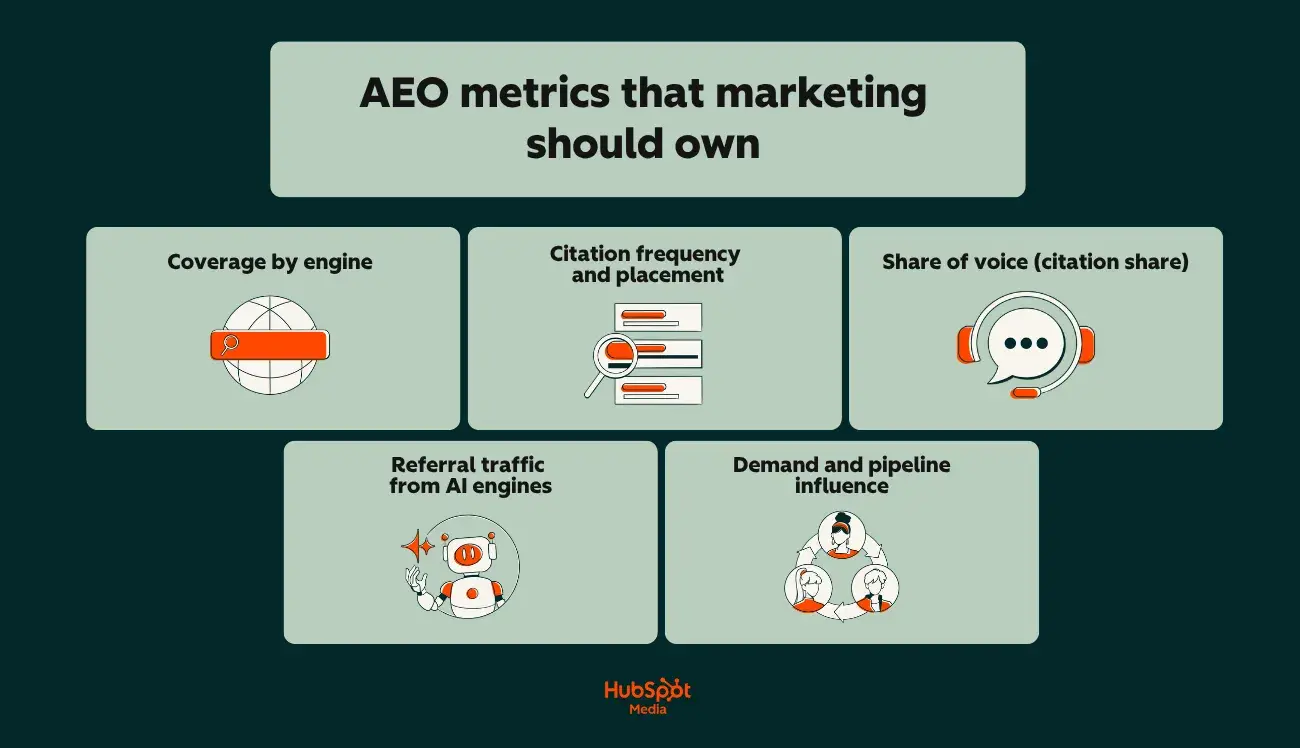
For AEO to become a measurable discipline, marketing teams must adopt specific KPIs that transform AI search visibility into actionable insights comparable to competitors and directly tied to business outcomes. Five core metrics are paramount:
- Coverage by Engine: This metric assesses whether a brand appears in AI answers on each platform independently. Marketers must track visibility across platforms like ChatGPT, Gemini, Perplexity, and Google AI Overviews. Different engines behave distinctively; a brand might be frequently cited in Perplexity (known for its robust source attribution) but absent from Gemini’s responses for identical prompts. This granular breakdown prevents critical visibility gaps from being obscured by aggregate averages. Measuring involves running a prompt library across each engine and logging a binary (yes/no) for brand presence, calculating the percentage of prompts where the brand appears per engine.
- Citation Frequency and Placement: Frequency quantifies how many times a brand, domain, or specific URL is cited across a defined set of prompts. Placement tracks where in the answer the citation appears—e.g., as a primary source, a supporting mention, or a footnote. First-position placement, particularly for high-value prompts, significantly boosts effective visibility and authority, even if overall citation frequency is moderate. Tracking both separately allows for a more nuanced understanding of brand prominence.
- Share of Voice (Citation Share): Analogous to organic share of voice in traditional SEO, citation share reveals how often a brand or source appears in AI answers relative to its competitors for the same set of prompts. If Brand A appears in 35% of tracked responses while Competitor B appears in 52%, this gap provides a strategic input for content investment and competitive positioning, moving beyond mere guesswork.
- Referral Traffic from Answer Engines: This metric measures the actual clicks and visits generated from AI-generated answers to a brand’s website. This is where AEO connects to traditional web analytics, though attribution remains a complex area. While some engines (like Perplexity and Google AI Overviews) are more likely to pass clear referral data, others (such as ChatGPT or Gemini) may lead to direct traffic or branded searches, making direct click attribution challenging. Establishing dedicated segments in analytics platforms for known AI referral sources, and correlating direct traffic spikes with increased AI citation frequency, provides valuable directional signals.
- Demand and Pipeline Influence: The ultimate goal is to translate AEO visibility into leads, opportunities, and revenue. This requires integrating AI search data with CRM systems to trace whether AI-sourced traffic converts and contributes to the sales pipeline. This involves tagging AI-influenced contacts, monitoring their lifecycle stages, and attributing revenue based on established CRM attribution logic.
Building a Robust AEO Prompt Library and Taxonomy
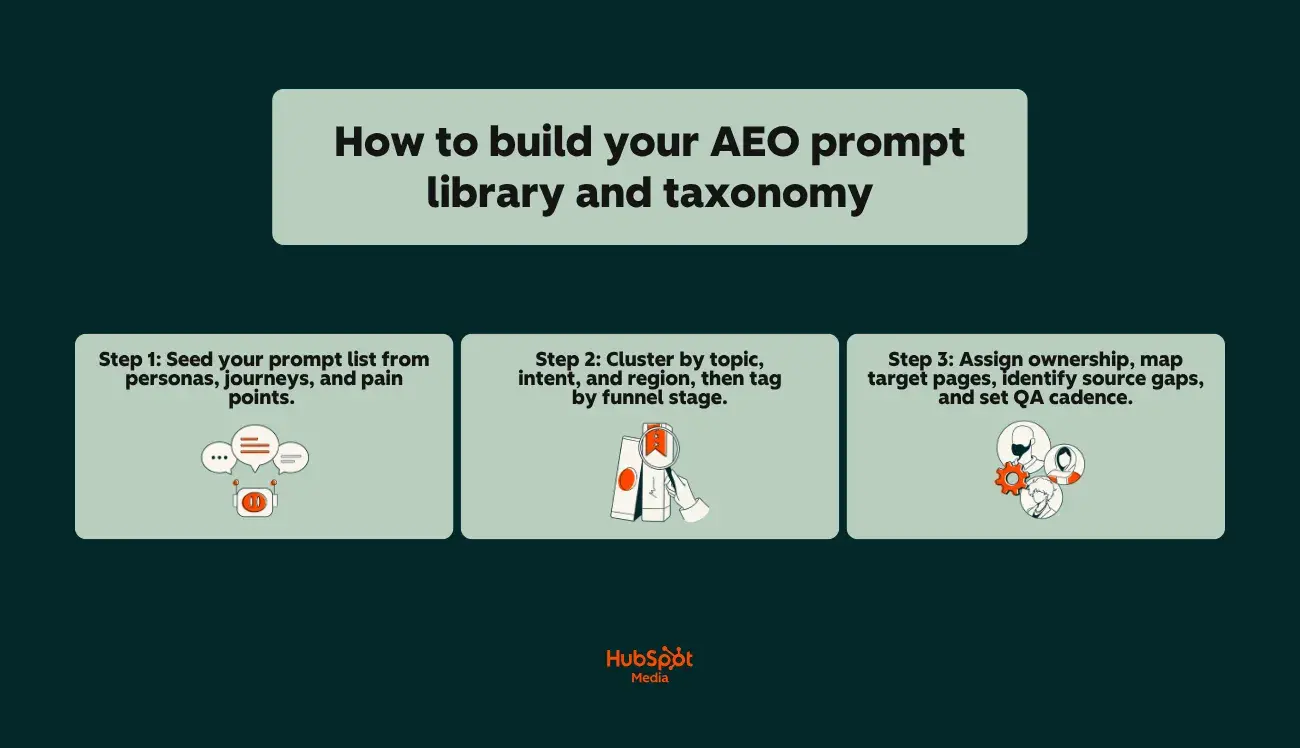
The foundation of effective AEO prompt tracking is a meticulously constructed prompt library and taxonomy. This library dictates what is measured, how results are segmented, and how insights inform content strategy. A poorly designed library yields noise; a well-structured one becomes a strategic asset. The process involves three key steps:
- Seeding the Prompt List: Prompts should be derived from three primary sources: buyer personas, customer journey stages, and documented pain points. These should be augmented with core category terms the brand aims to own. The goal is to reflect actual user queries, not internal product terminology. Aim for an initial library of 100-200 seed prompts; fewer may lack statistical significance, while more than 300 can become unwieldy without robust automation. CRM data can be leveraged to suggest business-context-driven prompts.
- Clustering and Tagging: Convert the raw prompt list into a structured tracking system by clustering prompts across topic, intent, and region.
- Topic Clusters: Group related prompts (e.g., "marketing automation," "CRM best practices").
- User Intent: Categorize by informational, navigational, or transactional intent.
- Region: For global brands, segment by geographical relevance.
Additionally, tag each prompt by its respective funnel stage (awareness, consideration, decision). This taxonomy enables segmented analysis, allowing marketers to report AEO visibility by funnel position, directly addressing questions like, "Are we visible in AI answers for bottom-of-funnel buying prompts?"
- Assigning Ownership, Mapping Pages, and QA Cadence: Each prompt requires actionable metadata:
- Owner: A designated individual or team responsible for the content associated with that prompt.
- Target Page: The specific URL(s) intended to be cited for that prompt.
- Source Gaps: Identify areas where the brand lacks authoritative content relevant to the prompt.
- Status: Track whether content for the prompt is published, optimized, or requires creation.
A regular QA cadence (e.g., quarterly, with monthly lighter reviews) is crucial to review library health, update stale prompts, and ensure relevance. This transforms the library into a living system that refines over time with added citation data and competitive benchmarks.
Connecting AEO Prompt Tracking Tools for a Unified Stack
The expanding AEO tooling landscape necessitates a strategic approach to integration. The goal is a connected system, not a fragmented sprawl of disconnected platforms. A five-step process guides this integration:
- Activate a CRM-Integrated Platform: Start with a platform that combines prompt-level visibility tracking across multiple AI engines with native CRM integration. This eliminates the data-stitching overhead that often derails early AEO programs, ensuring data is connected to contact records and pipeline dashboards.
- Layer in Dedicated Prompt Monitoring Platforms: For broader engine coverage (e.g., Copilot, Google AI Overviews) or high-volume prompt monitoring, supplementary AEO platforms may be necessary. These tools should offer structured data exports (CSV or API) with per-prompt, per-engine granularity to allow seamless integration with the primary CRM-integrated platform.
- Connect Web Analytics: Integrate web analytics platforms to capture AI referral traffic. This involves setting up dedicated segments for known AI referral sources and configuring UTM parameters for any outbound links from AI-generated answers where possible. This closes the gap between "visibility" and "traffic."
- Wire AEO Data into Pipeline and Attribution Reporting: This crucial step translates AEO visibility into revenue conversations. It requires deliberate CRM configuration to tag AI-influenced contacts, track their journey, and attribute revenue. This typically involves custom fields, workflows, and dedicated attribution models within the CRM.
- Automate Monitoring and Alerting: Automate recurring operational tasks to eliminate manual check-ins. This includes setting up alerts for significant citation losses, competitor entry into target prompts, traffic threshold triggers, and automated reports for quarterly QA. Automation surfaces signals; human judgment remains essential for strategic decisions.
Closing Content Gaps and Improving Citations
Translating AEO data into improved brand visibility requires a strategic approach to content creation and optimization. This is a three-step process focused on identifying high-leverage opportunities:
- Run a Trusted-Source Analysis: Examine the URLs, domains, and content types consistently cited by answer engines for a given prompt set. This reveals which sources are currently winning citations and why, informing a content strategy that targets formats and authority signals already trusted by AI. Analyze top-cited domains, common content types (e.g., "how-to" guides, definitions, case studies), and the structure of winning content.
- Build a Sourcing Plan for High-Trust Content: Prioritize creating or optimizing content formats that answer engines frequently cite, ranked by impact and feasibility. Focus on authoritative long-form guides, comprehensive FAQ sections, and structured data (schema markup). Rank content gaps based on the potential pipeline impact of gaining citations and the feasibility of creating/optimizing the content.
- Optimize On-Page Patterns for Answer Engine Retrieval: Structure content to facilitate clean extraction and citation by AI. Key structural patterns include:
- Clear Definition Blocks: Use concise, introductory paragraphs to define key terms.
- Numbered and Bulleted Lists: Facilitate easy summarization of steps or features.
- Dedicated FAQ Sections: Directly address common questions.
- Structured Data (Schema Markup): Use schema (e.g., FAQPage, HowTo, Article) to explicitly label content elements for AI.
- Strong Internal Linking: Reinforce content authority and discoverability for AI crawlers.
The Future of Marketing: AEO as an Essential Discipline
AEO prompt tracking is not merely a fleeting trend; it represents an essential, evolving discipline within digital marketing. The core concept is straightforward: identify how your audience asks questions, track if your brand is cited in the AI’s answer, and measure the impact on your business. The tools and metrics are available, and the workflow is repeatable.
The primary hurdle is not the inherent complexity of AEO but the lack of structure and discipline in its implementation. Ad hoc spot checks and disconnected spreadsheets fail to provide the consistent data needed for strategic decision-making. Brands that successfully integrate AEO treat it as any other measurable marketing discipline: establishing clear ownership, defining target pages, documenting source gaps, committing to a regular QA cadence, and integrating data into a unified reporting framework.
The brands gaining citation share today are not waiting for the AEO landscape to fully mature. They are actively building the necessary structure, committing to the monitoring cadence, and meticulously measuring the impact. Over time, this data compounds, content gaps close, and the conversation with leadership shifts from speculative discussions about AI’s importance to concrete, data-backed reports on its direct contribution to pipeline and revenue. As AI continues to permeate every aspect of information retrieval, AEO prompt tracking will become an indispensable component of any comprehensive digital marketing strategy.