In a strategic move to address the increasing complexities of digital campaign management, Instapage has announced the launch of several high-impact features designed to enhance automation and website creation for modern marketing teams. The update introduces a sophisticated Scheduling tool and an expansive library of Website Page Templates, alongside the formal inauguration of the Instapage Early Access Program. These developments represent a significant shift for the platform, which is evolving from a specialized landing page builder into a more comprehensive digital experience solution. By automating the lifecycle of marketing pages and providing industry-specific website frameworks, Instapage aims to reduce the manual burden on marketers who are currently navigating a landscape defined by rapid content cycles and hyper-segmentation.
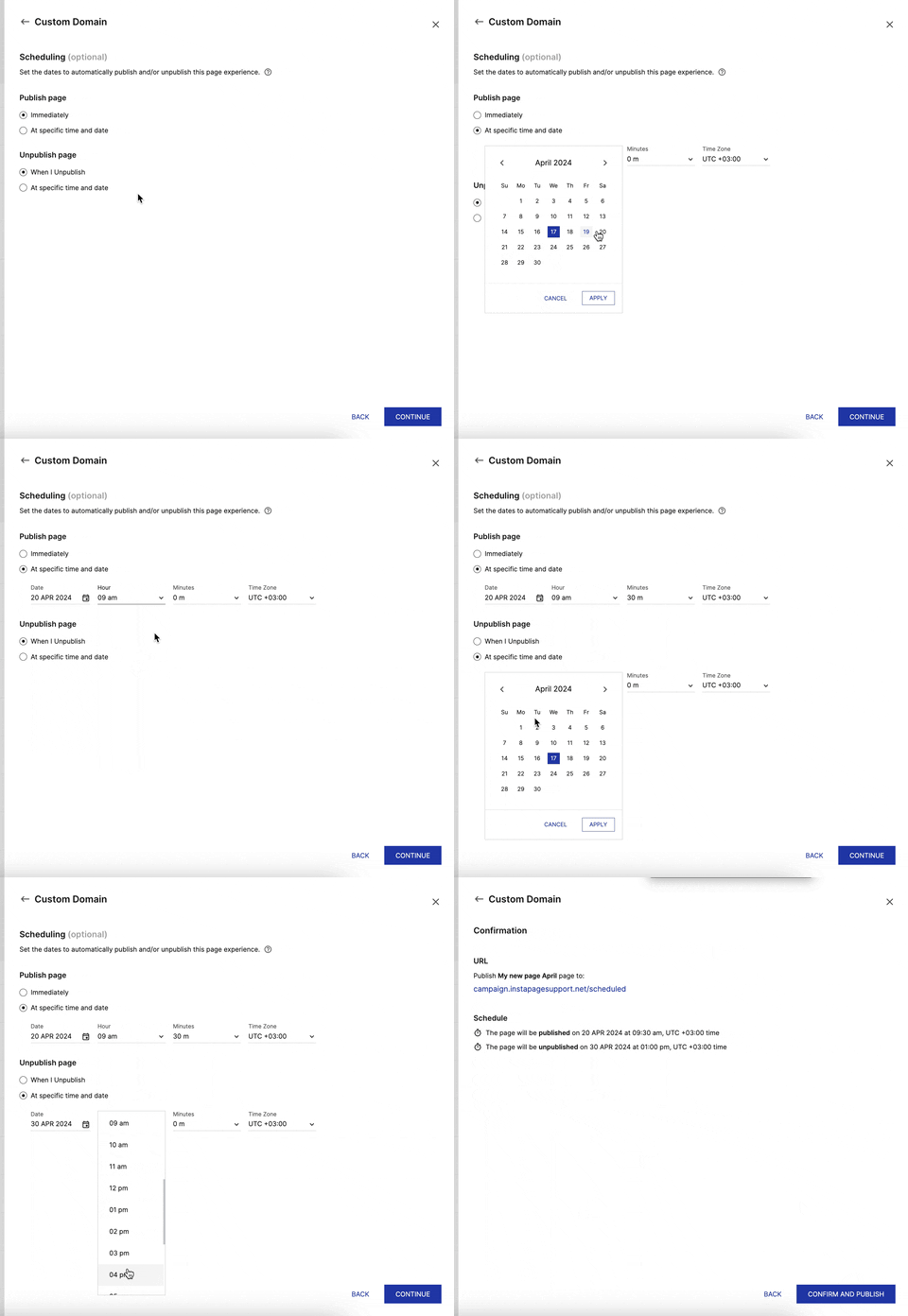
The introduction of the Scheduling feature addresses a long-standing pain point in the digital advertising industry: the manual labor required to synchronize page launches with ad campaign start times. Under the new system, users on select plans can pre-determine the exact dates and times for publishing, unpublishing, or updating landing pages. This level of automation is increasingly critical as global marketing teams operate across multiple time zones, often requiring campaign transitions during non-business hours. By removing the need for manual intervention at the moment of launch, Instapage is positioning itself as a tool for operational efficiency, allowing teams to focus on strategy and creative optimization rather than technical execution.
The Evolution of Campaign Management through Automation
The digital marketing landscape has undergone a radical transformation over the last decade. As the volume of data grows, the ability to segment audiences and deliver personalized experiences has become the primary driver of conversion rates. However, this granularity often comes at the cost of administrative overhead. Marketing professionals frequently report that "process friction"—the time spent on repetitive tasks—is the greatest barrier to scaling their efforts.
Instapage’s new Scheduling feature is a direct response to this friction. In a journalistic analysis of the current SaaS (Software as a Service) environment, it is evident that automation is no longer a luxury but a fundamental requirement. By allowing marketers to schedule updates ahead of time, the platform mitigates the risk of human error, such as a campaign going live with an outdated landing page or a promotional offer remaining active after its expiration date. This functionality is particularly vital for retail and e-commerce sectors, where flash sales and seasonal promotions require precision timing to maintain brand integrity and legal compliance.
Expanding the Scope of No-Code Website Creation
While Instapage has built its reputation as a premier landing page platform, the company has observed a growing trend among its user base: the utilization of its no-code builder to construct entire websites. To support this behavior, the company has released a new category of "Website Page Templates." This expansion signals Instapage’s recognition that the line between a high-converting landing page and a standard website page is blurring.
The new template library covers nine distinct industries, including Real Estate, Beauty, and Consumer Products. These templates are designed not just for aesthetic appeal but for conversion optimization, incorporating data-backed design principles that have been a hallmark of the Instapage ecosystem. For small to medium-sized businesses (SMBs) and boutique agencies, this feature provides a rapid deployment path for professional-grade web presences without the need for extensive web development budgets or coding expertise.
Industry data suggests that the no-code market is expected to grow at a compound annual growth rate (CAGR) of nearly 23% through 2030. Instapage’s investment in website-specific templates aligns with this trajectory, empowering non-technical users to manage complex digital architectures. By providing industry-specific layouts, the platform reduces the "blank canvas" paralysis that often slows down the creative process, enabling a faster time-to-market for new brands and products.
The Instapage Early Access Program: A Collaborative Development Model
In addition to the new functional tools, Instapage has launched its Early Access Program (EAP), a community-centric initiative aimed at fostering closer collaboration between the platform’s developers and its power users. The EAP allows members to test and influence new product features before they are made available to the general public. This move reflects a broader trend in software development where "user-led growth" and feedback loops are prioritized to ensure product-market fit.
Participants in the EAP will have the opportunity to provide direct feedback on upcoming features, effectively helping to shape the roadmap of the platform. This collaborative approach is intended to ensure that new tools solve real-world problems. Historically, software companies that engage their core audience in the development process see higher retention rates and more robust feature adoption. For Instapage, the EAP serves as a laboratory for innovation, allowing the company to iterate quickly on features like the recently released Carousels, Popups, and the overhauled Dashboard.
A Chronology of Recent Innovations
The current release is part of a broader, aggressive update cycle that Instapage has maintained throughout 2024. To understand the significance of the new Scheduling and Website Page features, it is necessary to look at the timeline of the platform’s recent enhancements:
- Q1 2024 – Dashboard Redesign: Instapage launched a completely new user dashboard designed to provide better visibility into campaign performance and streamline navigation between different projects.
- Q2 2024 – Interactive Elements: The introduction of Carousels and Popups provided users with more tools to engage visitors without increasing page load times or compromising mobile responsiveness.
- Mid-2024 – The Current Release: The integration of Scheduling and Website Page Templates marks the third major pillar of the year’s development strategy, focusing on operational scaling and broader web utility.
This timeline demonstrates a clear strategic pivot toward a holistic marketing environment. By building on the foundation of the new dashboard, Instapage is creating an ecosystem where planning (Scheduling), building (Templates), and optimizing (EAP/Analytics) are all interconnected.
Supporting Data: The Value of Conversion Rate Optimization (CRO)
The logic behind Instapage’s continuous feature rollout is supported by compelling industry statistics regarding conversion rate optimization. According to recent market research, businesses that use specialized landing page builders and automation tools see an average conversion rate increase of up to 25% compared to those using generic web builders. Furthermore, companies that utilize automation in their marketing workflows report a 14.5% increase in sales productivity and a 12.2% reduction in marketing overhead.
The Scheduling feature, in particular, addresses the "cost of delay." In digital advertising, every hour a campaign runs with a sub-optimal or incorrect landing page results in wasted ad spend. For a high-volume advertiser spending $50,000 a month on Google Ads, even a 5% inefficiency caused by manual scheduling errors can result in thousands of dollars in lost revenue. Instapage’s focus on precision scheduling is therefore a financial tool as much as it is a creative one.
Official Responses and Strategic Vision
While official executive statements often highlight the technical specifications of new features, the underlying message from the Instapage team emphasizes a commitment to the "marketer’s journey." Internal sources suggest that the development of the Website Page Templates was driven by direct user requests for more versatile design options that go beyond the traditional single-page "squeeze page" format.
"Our team spends countless hours understanding unique needs and providing solutions to marketing challenges," the company stated during the announcement. This sentiment reflects a customer-centric philosophy that is becoming the standard in the competitive SaaS landscape. By positioning the Early Access Program as a way to "influence" the product, Instapage is signaling to its enterprise and agency clients that their specific workflows are the primary drivers of the platform’s evolution.
Broader Impact and Market Implications
The release of these features has broader implications for the competitive landscape of digital marketing tools. As Instapage moves into the website template space, it enters more direct competition with established players like Squarespace or Wix, while maintaining its core advantage in deep-funnel conversion tracking and A/B testing—areas where traditional website builders often lag.
For marketing agencies, the ability to schedule page updates across dozens of client accounts simultaneously is a transformative capability. It allows for better resource allocation, as staff can prepare all campaign assets during standard working hours and trust the platform to execute the "go-live" sequence. This reduces the need for "on-call" staff during major shopping holidays like Black Friday or Cyber Monday, which are traditionally high-stress periods for digital teams.
Furthermore, the emphasis on industry-specific templates suggests a move toward vertical-specific marketing solutions. As digital advertising becomes more expensive, the "one-size-fits-all" approach to web design is failing. Instapage’s move to provide tailored experiences for Real Estate or Beauty sectors acknowledges that user behavior varies significantly across different industries.
In conclusion, Instapage’s latest update is a comprehensive attempt to solve the dual challenges of creative flexibility and operational efficiency. By combining the power of automated scheduling with the speed of industry-specific website templates and the collaborative potential of the Early Access Program, Instapage is reinforcing its position as a vital utility for performance marketers. As the platform continues to evolve, the focus remains clearly on turning "ad clicks into conversions" through a sophisticated, yet accessible, technological framework. Marketers looking to capitalize on these new tools can currently access them through the platform, with a 14-day free trial available for new users to explore the full range of enhanced features.