Artificial intelligence (AI) content creation tools are rapidly redefining the landscape of digital marketing, enabling teams to generate written, visual, audio, and video content with unprecedented speed and scale. This technological shift is not merely an incremental improvement but a fundamental transformation, with generative AI projected to become a colossal $394.66 billion market by 2026. The widespread adoption of these sophisticated platforms marks a pivotal moment, shaping social media trends and operational efficiencies across industries.

Defining the AI Content Revolution
AI content creation tools harness artificial intelligence algorithms to produce diverse content types based on user prompts. Initially, these tools were predominantly text-based, focusing on drafting copy and articles. However, the sector has evolved dramatically. By 2026, the dominant tools are multi-modal and workflow-aware, meaning they can draft text, design graphics, edit videos, and seamlessly integrate into existing content management systems and marketing workflows. This integration allows for a cohesive and streamlined production process, from ideation to publication.

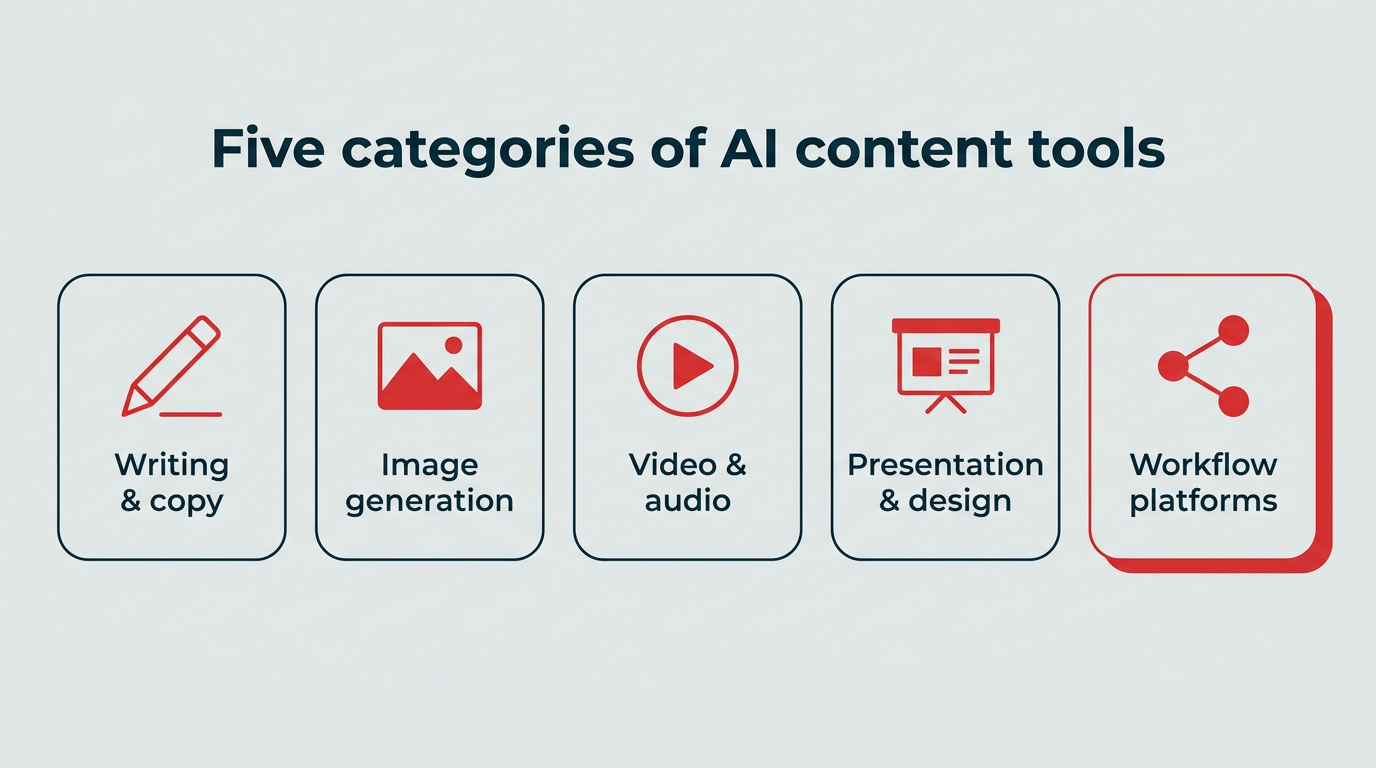
These tools typically fall into five main categories: writing and copy generation, image generation, video and audio production, presentation and design, and comprehensive workflow platforms that connect these disparate functions. Prominent examples include OpenAI’s ChatGPT, Midjourney, Jasper, Canva, Descript, and integrated solutions like Hootsuite’s AI writing tools, now part of Perch within Hootsuite Social OS. Their proliferation signals a broader industry embrace of AI as a critical component for competitive advantage.
A Rapid Evolution: From Niche to Mainstream
The journey of AI in content creation has been swift and impactful. For decades, AI research gradually progressed, but the public accessibility and sophistication of generative AI models exploded in the early 2020s. The launch of OpenAI’s ChatGPT in late 2022, for instance, democratized access to powerful language models, allowing millions to experiment with AI-driven text generation. This event served as a catalyst, accelerating development and adoption across various content modalities.
Following this, tools like Midjourney pushed the boundaries of AI-generated imagery, while platforms such as Descript revolutionized audio and video editing through transcript-based manipulation. The convergence of these capabilities within integrated platforms like Hootsuite Social OS represents the current frontier, where AI is not just a standalone tool but an embedded layer enhancing the entire content lifecycle. This rapid chronology underscores the dynamic nature of the AI market and its profound influence on content strategy.
Unlocking Efficiency: The Benefits of AI in Content Creation
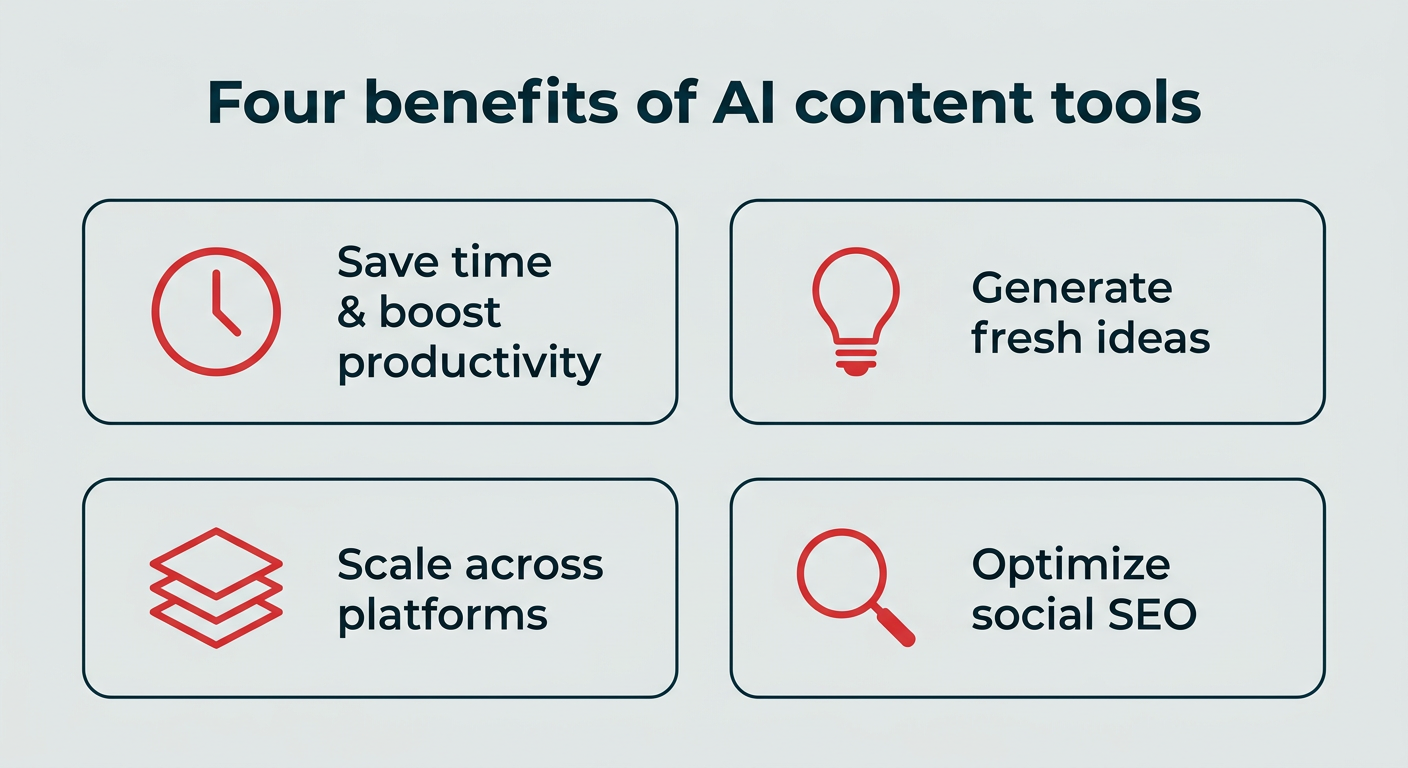
The primary allure of AI content creation tools lies in their ability to help marketers create, optimize, and scale content with significantly reduced manual effort. These tools are instrumental in accelerating brainstorming, drafting, and managing routine content tasks, thereby freeing up human talent for more strategic and creative endeavors.

- Time Savings and Productivity Boosts: A significant 51% of content professionals are already leveraging AI to expedite content production. AI can automate mundane, repetitive tasks such as generating social media captions, drafting email subject lines, creating product descriptions, or reformatting existing content. Chelse Hensley, a Social Media Strategist at Visme, highlights this, stating, "I use AI to help me batch tweets from my company’s blog articles. For a volume-based platform like X/Twitter or Threads, it’s extremely helpful to repurpose already-written (and approved by our team!) content into short-form tweets and threads.” Hensley further notes the utility of AI in formatting, transforming hours of manual work into swift, automated solutions.
- Overcoming Creative Blocks and Generating Ideas: Even seasoned creative professionals encounter mental blocks. AI tools can act as invaluable collaborators, jumpstarting the ideation process. By generating initial prompts, diverse angles, or a multitude of post ideas, AI provides a fertile ground for human creativity to flourish, often sparking concepts that might not have emerged otherwise.
- Scalability Across Platforms, Formats, and Regions: AI empowers teams to produce a higher volume of content without a proportional increase in workload. A single piece of content, such as a blog post, can be swiftly repurposed into an X (formerly Twitter) thread, a LinkedIn article, or a video script for TikTok. For global enterprises, AI’s ability to translate and localize content in minutes dramatically simplifies adapting campaigns for different languages and cultural nuances, eliminating the need for separate, costly production cycles for each region. As Hensley aptly puts it, for "one-person band" social media managers, AI is "crucial" for transforming "tedious, time-consuming tasks into fast solutions."
- Enhanced Social SEO and Discoverability: Social media platforms, much like traditional search engines, operate on specific algorithms that dictate content visibility. AI tools can assist marketers in navigating these complexities by suggesting relevant keywords, trending hashtags, and optimal caption structures. This optimization improves how social algorithms surface content in feeds and search results, ensuring that posts reach the intended audience more effectively.
Leading AI Tools Across Key Content Categories
The market for AI content creation tools is diverse, with specialized platforms catering to specific needs. Here’s a breakdown of some of the leading tools in 2026:
AI Writing and Copy Tools: These are the foundational workhorses for drafting, editing, and ensuring brand voice consistency.
- Hootsuite Social OS (Perch + Wisdom): Integrated within Hootsuite Social OS, Perch offers AI writing capabilities specifically trained on Hootsuite’s extensive social media playbook. This ensures that generated captions, post ideas, and content variations are not only linguistically sound but also strategically aligned with social marketing best practices. Wisdom, Hootsuite’s AI orchestration layer, further connects creation with approvals, scheduling, and analytics. It is ideal for social teams seeking an all-in-one platform for content creation, planning, and publishing.
- ChatGPT: As a general-purpose conversational AI assistant, ChatGPT excels at producing human-like text for social posts, articles, outlines, and scripts. Its newer models also generate images and support custom GPTs, allowing for tailored brand contexts. It serves as an excellent collaborator for rapid idea generation and initial drafts, though human editing and fact-checking remain essential.
- Claude: Developed by Anthropic, Claude is known for its "Constitutional AI" system, prioritizing safer and more reliable responses. It handles large context windows exceptionally well, making it suitable for synthesizing extensive research, working with long documents, and generating technical content.
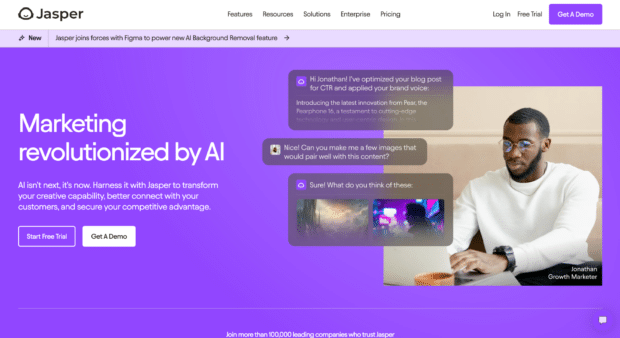
- Jasper: A prominent ChatGPT alternative, Jasper specializes in generating content while maintaining brand voice and tone. Its robust controls for brand guidelines make it a preferred choice for marketing teams producing high volumes of content across multiple writers, ensuring consistency at scale.
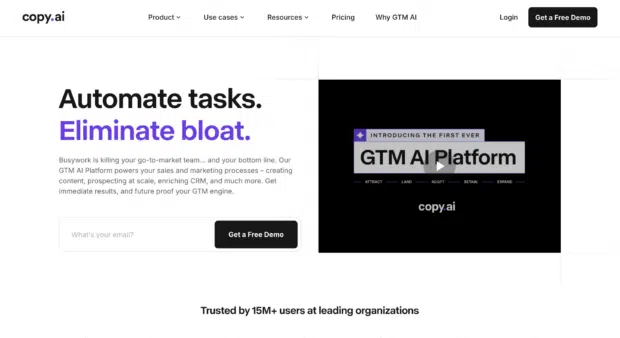
- Copy.ai: This platform is geared towards marketing and sales teams, extending beyond simple copy generation to support go-to-market workflows. It can assist in account research, outreach message generation, and sales data analysis, making it valuable for campaigns and account-based marketing strategies.
AI Image Generation Tools: These tools transform textual prompts into compelling visuals, from stylized art to ready-to-publish templates.
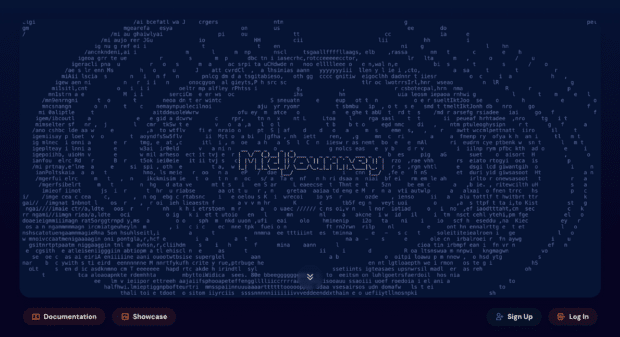
- Midjourney: Renowned for its distinctive artistic style, Midjourney is an AI image generation application that operates via a web app and previously as a Discord bot. It offers sophisticated control over art style, aspect ratio, and background transparency, making it ideal for stylized social graphics and conceptual campaign visuals.
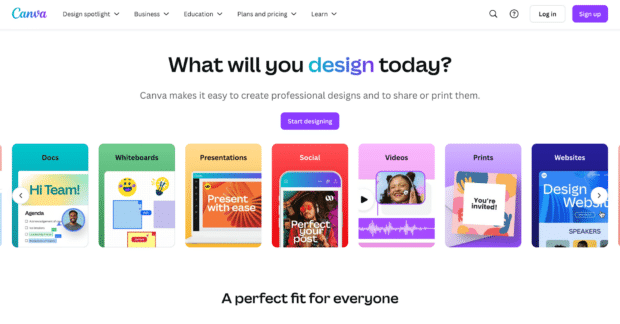
- Canva: A graphic design powerhouse, Canva integrates AI features under "Magic Design." Users can upload existing content or use text prompts to generate matching templates for social posts, infographics, and presentations, ensuring visual consistency across platforms. Its direct integration with Hootsuite streamlines design-to-publish workflows, making it highly practical for on-brand visuals produced by non-designers.
AI Video Creation Tools: Addressing the resource-intensive nature of video production, these tools significantly reduce creation time.
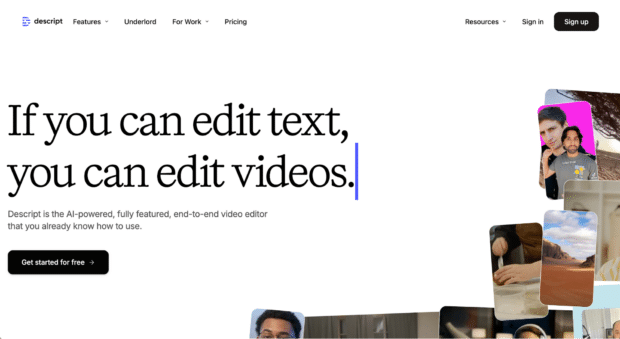
- Descript: This AI-powered audio and video editing tool stands out with its transcript-based editing feature. Users can edit video or podcast audio by simply editing the transcribed text, simplifying the process of removing filler words, tightening sections, or cutting clips. It’s excellent for transforming long-form content into social-ready clips.
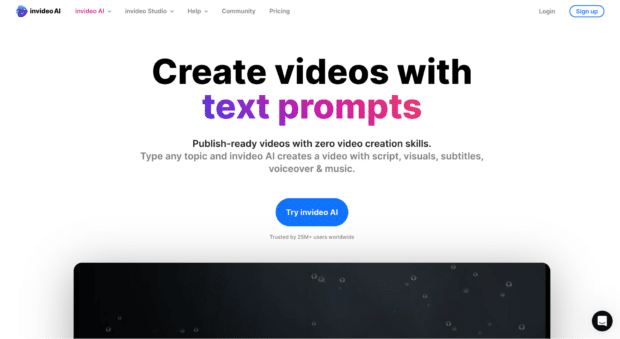
- InVideo: InVideo generates short-form videos from text prompts, making it an accessible option for small teams lacking extensive video production resources. Users can refine generated videos by adjusting language, visuals, and pacing, enabling quick content creation without the need for filming or traditional editing.
AI Presentation and Design Tools: These platforms automate the creation of polished reports and pitch decks, a common task for social marketers.
- Beautiful.ai: This AI-powered presentation tool helps users quickly build professional slides. It automates formatting and design, ensuring visual consistency. It’s particularly useful for social media reports, campaign pitches, and creating shareable PDF documents for platforms like LinkedIn.
Free AI Tools for Content Creation: For tasks that don’t warrant a full subscription, several free AI tools offer immediate utility. Hootsuite provides a suite of free tools, including a caption generator (tailored for specific platforms and supporting multiple languages), a hashtag generator (for Instagram, Facebook, TikTok, LinkedIn, Pinterest, and X), and a YouTube video description generator (optimizing descriptions with relevant keywords and CTAs). Other useful free generators include headline, slogan, and business name generators.
Navigating the Challenges and Limitations of AI Content Creation
While the benefits are substantial, AI content creation is not without its challenges and limitations. These tools operate on existing data, which means they often struggle to produce genuinely original research, nuanced insights, or truly creative judgments. Understanding these boundaries is crucial for effective and responsible AI integration.
- Information Accuracy and Hallucinations: AI models can sometimes generate incorrect, outdated, or entirely fabricated information, a phenomenon known as "hallucination." This necessitates rigorous human fact-checking against primary sources. As freelance writer Tracy Rawlinson notes, relying solely on AI for outlines can "leave out a whole heap of important info, like the latest research, expert insights, current trends/demographics, and recent industry case studies."
- Lack of Originality and Generic Output: Without specific, creative prompts and human oversight, AI-generated content can often sound generic, lacking a unique voice or perspective. True originality, deep analysis, and innovative storytelling still require human input.
- Brand Voice Drift: While some tools offer brand voice controls, maintaining consistent brand identity across all AI-generated content without human refinement can be challenging. AI might struggle with subtle nuances of tone, humor, or specific brand lexicon.
- Ethical Concerns and Bias: AI models are trained on vast datasets, which can inadvertently contain biases present in the original data. This can lead to AI-generated content perpetuating stereotypes or exhibiting unfair preferences. Ethical considerations also extend to data privacy, content ownership, and the potential impact on human employment.
- Intellectual Property and Copyright: The legal landscape surrounding AI-generated content, particularly concerning intellectual property and copyright, is still evolving. Brands must be mindful of the origins of the data used to train AI models and the potential implications for content ownership.
- Compliance and Regulation: In highly regulated industries, the use of AI for content creation introduces new compliance risks. Automated content must still adhere to strict legal and industry standards, requiring thorough human review.
Building an Effective AI Content Creation Workflow
Integrating AI effectively requires a structured workflow that complements existing processes. A well-designed AI workflow prioritizes human oversight and strategic direction.
- Define Content Goals and Audience: Begin by clearly articulating the purpose of the content (e.g., awareness, engagement, conversion) and the target audience. This context is vital for guiding AI prompts and evaluating output.
- Choose the Right Tool for Each Content Type: Avoid a "one-size-fits-all" approach. Select specialized AI tools for specific tasks—a writing assistant for captions, an image generator for visuals, a video editor for clips, and an integrated platform for overall management.
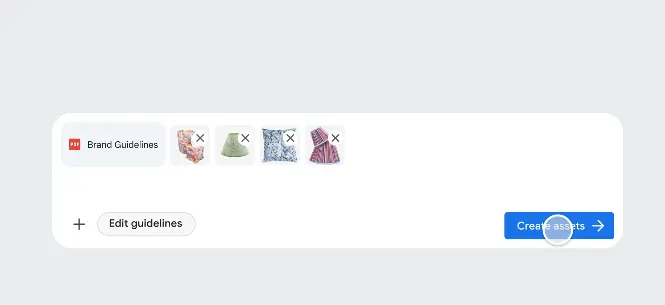
- Establish Brand Guidelines and AI Guardrails: This is a critical, often overlooked step. Document your brand voice, tone, banned phrases, and approval hierarchies. Crucially, define what AI is permitted to generate independently and what always requires human authorship and review. Load these guidelines into your AI tools to ensure consistency.
- Draft with AI, Edit with Humans: Utilize AI for initial drafts, outlines, content variations, and formatting. The subsequent, indispensable step is human editing to ensure accuracy, infuse original insights, and align the content with brand guidelines. Schedule dedicated review steps to prevent this crucial stage from being bypassed.
- Publish, Measure, and Iterate: Track the performance of AI-assisted content against human-created content. Analyze engagement, reach, and conversion metrics, then use these insights to refine AI prompts and templates, continuously optimizing the workflow. Platforms like Hootsuite Social OS simplify this comparative analysis.
Strategic Tool Selection for Enterprises
Choosing the right AI content creation tools for an enterprise involves more than just a feature comparison. It requires a strategic evaluation based on organizational needs and long-term objectives:
- Integration Capabilities: Assess how well the tool integrates with existing marketing technology stacks (CRM, CMS, social media management platforms).
- Governance and Compliance: For large organizations, features supporting legal, brand, and regulatory compliance are paramount.
- Brand Voice Controls: The ability to train the AI on specific brand guidelines and maintain consistent tone is crucial for brand integrity.
- Scalability: The tool should be able to scale with the team’s growing needs, accommodating multiple users, diverse content types, and global operations.
- Output Quality and Customization: Test the tool with real-world briefs and compare the quality of the output. Evaluate the ease of customization and refinement.
- User Experience and Training: Consider the learning curve for your team and the availability of support and training resources.
Most enterprises will likely adopt a "small stack" of AI tools rather than a single solution. Integrated platforms, such as Hootsuite Social OS, offer a comprehensive ecosystem for creation, planning, publishing, analytics, and governance, reducing the complexity of managing multiple disparate tools.
Maximizing AI’s Potential: Assistant, Not Replacement
The most effective use of AI in content creation positions it as an intelligent assistant, not a replacement for human creativity or strategic thinking. As Chelse Hensley advises, "Don’t use AI as an excuse to get lazy creatively." Instead, view AI as a powerful administrative aide that handles repetitive tasks—cleaning up meeting notes, formatting ideas, or repurposing content—thereby freeing up human marketers to focus their energy on core creative and strategic endeavors.
Emily K. Schwartz, Head of Content and Comms at Haus, emphasizes the importance of feeding AI tools with brand guidelines: "By feeding an AI tool our style guide, voice, tone, and verbiage that is unique to our industry, product, and business, AI makes it easy for our brand voice to come through clearly and consistently, no matter the writer, context, or medium." This proactive approach ensures that AI-generated content aligns perfectly with brand identity, catching subtle details and providing team members with confidence in their output.
In essence, marketers who leverage AI effectively are not relinquishing control; they are strategically offloading busywork to dedicate more energy to the innovative and impactful aspects of their roles. The future of content creation in 2026 and beyond is a synergistic partnership between human ingenuity and artificial intelligence, promising an era of unprecedented productivity and creative output for those who master its responsible implementation.