X, the platform formerly known as Twitter, has officially unveiled a new API designed to facilitate the creation of custom chatbots for its revamped X Chat messaging feature. This strategic move enables brands to develop their own automated response agents, providing customers with instant access to information and support whenever needed. The initiative marks a significant step in X’s evolution under Elon Musk’s leadership, aiming to transform the platform into an "everything app" that integrates diverse functionalities, including advanced customer service capabilities.
Driving Innovation in Customer Engagement
The core of this new offering is the X Chat API for automated task accounts, which allows developers to build dedicated bot accounts within the X ecosystem. These bots are distinct entities, much like regular user profiles, complete with a unique user ID, an @handle, and a display name. However, unlike human-operated accounts, they lack a password and login, operating solely through a bearer token for programmatic access. This framework empowers businesses to design sophisticated automated agents capable of interacting with users in X Chat.
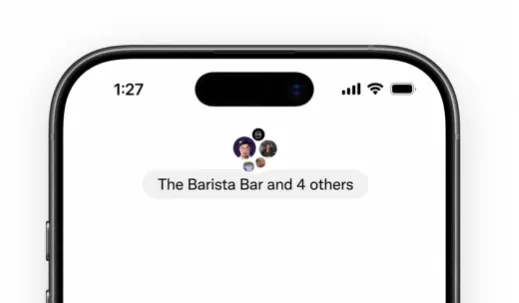
An illustrative example provided by X demonstrates the potential of this system. Imagine "The Barista Bar," a hypothetical bot account. A user could message this bot directly within X Chat to place an order for a coffee. The bot, leveraging the API, would then process this request, automatically submitting the order into the café’s workflow system, making it ready for customer pick-up. This seamless integration promises to streamline common customer interactions, from order placement and booking appointments to handling routine queries and providing service updates.
The Technical Underpinnings: How X Bots Work
As detailed by X’s developer documentation, a bot is fundamentally a programmatic X account tied to a specific project. Its identity is clear, featuring an @handle and a display name, but its operational control is entirely API-driven. To ensure transparency and maintain user trust, X has mandated that all bot profiles will include an "automated by @owner" tag. This tag directly links the bot account back to the primary business’s official X account, clarifying its nature and operational responsibility. This builds upon Twitter’s earlier initiative in 2022, when it introduced general bot labels to help users identify automated accounts within their feeds, a move aimed at distinguishing between legitimate automated services and potentially malicious or spam-generating bots.
The flexibility of the API extends to various applications. Beyond simple order processing, these bots can manage complex tasks such as booking reservations for restaurants or services, responding to frequently asked questions (FAQs) about products or policies, and delivering real-time updates, like delivery statuses or event notifications. X has also showcased the potential for integrating these bots with artificial intelligence (AI) systems, providing a framework for fully automated and intelligent conversational agents that can understand natural language and offer more dynamic, personalized interactions. This AI integration is critical for developing truly smart chatbots that can handle a wider range of queries without human intervention, moving beyond rule-based responses to more adaptive and learning-based interactions.
A Strategic Pivot for X’s "Everything App" Vision
The launch of the custom chatbot API is not an isolated development but rather a cornerstone in Elon Musk’s ambitious vision for X to become an "everything app." Since acquiring Twitter in October 2022 and subsequently rebranding it to X, Musk has consistently articulated a desire to transform the platform beyond a mere social media network. The "everything app" concept, inspired by platforms like WeChat in China, envisions a single application that integrates social networking, messaging, payments, e-commerce, and various utility services.
X Chat, which underwent a significant refresh earlier this year to enhance its messaging capabilities, is central to this strategy. By empowering brands to deploy sophisticated chatbots, X aims to make its direct messaging (DM) feature more functional and appealing. This move is designed to increase user engagement within the X Chat environment, giving people more reasons to use the platform for practical, day-to-day interactions beyond just consuming content. For X, a platform grappling with revenue diversification and user retention challenges post-acquisition, attracting businesses through enhanced utility is a critical strategic imperative. The success of this API could significantly bolster X’s standing as a viable business tool, competing with other platforms that have already established strong business-to-consumer (B2C) communication channels.
The Broader Landscape of Conversational AI
The introduction of X’s chatbot API comes at a time of explosive growth in the conversational AI market. The global chatbot market size, valued at approximately $6.8 billion in 2023, is projected to expand significantly, reaching an estimated $37.5 billion by 2032, according to various industry reports. This growth is driven by increasing consumer demand for instant customer support, the proliferation of messaging apps, and businesses’ continuous search for efficiency and cost savings.
Major tech players have long recognized the power of conversational AI. Meta, for instance, has heavily invested in its WhatsApp Business API, enabling millions of businesses worldwide to engage with customers through automated messages, support, and even transactions. Telegram boasts a robust bot platform that allows developers to create a wide array of bots for various purposes, from news delivery to gaming and e-commerce. Similarly, Apple Business Chat and Google’s Business Messages offer avenues for brands to interact with customers through native messaging applications.
X’s entry into this arena positions it as a direct competitor in the B2C communication space, leveraging its massive user base and existing brand presence. However, to truly carve out a significant share, X will need to demonstrate superior functionality, ease of integration, and a compelling value proposition compared to these established players. The platform’s ability to attract a vibrant developer community willing to build innovative bot experiences will be crucial for its long-term success in this competitive landscape.
Benefits for Businesses: Efficiency and Enhanced Service
For businesses, the potential advantages of adopting X’s custom chatbot API are manifold. Foremost among them is the ability to offer 24/7 customer support. In an increasingly globalized and always-on world, customers expect immediate responses, regardless of time zones or business hours. Chatbots can fill this gap, providing round-the-clock assistance for common queries, thereby significantly improving customer satisfaction and reducing response times.
Beyond availability, chatbots can dramatically enhance operational efficiency. By automating routine and repetitive tasks—such as answering FAQs, processing simple orders, tracking shipments, or providing basic troubleshooting—businesses can free up their human customer service agents to focus on more complex, nuanced, or high-value interactions. This shift can lead to substantial cost savings in staffing and operational overhead. Studies consistently show that chatbots can reduce customer service costs by 30% or more, while simultaneously handling a significant volume of inquiries that would otherwise require human intervention.

Furthermore, these automated agents can provide a consistent brand voice and ensure that information conveyed to customers is always accurate and up-to-date. They can also collect valuable data on customer interactions, identifying common pain points, popular queries, and trends, which can then inform business strategy and product development. For companies already utilizing existing automation flows or customer relationship management (CRM) systems, the X Chat API offers an opportunity to extend these functionalities to a new, widely used platform, providing customers with an additional, convenient touchpoint. This integration could create a more cohesive and accessible customer experience across various digital channels.
Challenges and Considerations for Adoption
Despite the promise, the adoption of X’s new chatbot API is not without its challenges. One significant limitation highlighted by X itself is that the platform does not provide a ready-made framework for bot functions. Instead, it offers examples and the underlying API, meaning that the creation of functional chatbots will still require considerable manual development effort. Businesses will need to invest in developer resources or partner with specialized agencies to build, integrate, and maintain these custom solutions. This contrasts with some platforms that offer more templated or low-code/no-code solutions for basic chatbot deployment, potentially raising the barrier to entry for smaller businesses with limited technical resources.
Moreover, integrating a new chatbot into a business’s existing IT infrastructure, including CRM systems, inventory management, and payment gateways, can be a complex undertaking. Ensuring data security, privacy compliance (such as GDPR or CCPA), and seamless data flow between X and internal systems will be paramount. Brands will also need to carefully design their chatbot interactions to be intuitive, helpful, and aligned with their brand identity, avoiding generic or frustrating automated responses that could detract from the customer experience. The quality of the chatbot’s AI and natural language processing (NLP) capabilities will directly impact its effectiveness and user acceptance.
The Irony of Bots: Reconciling Musk’s Stance
Perhaps one of the most striking aspects of this new API is the inherent irony it presents in light of Elon Musk’s past declarations. Upon acquiring Twitter, Musk famously vowed to eliminate bots from the platform, stating in April 2022 that he would get rid of them "or die trying." His focus on tackling "spam bots" and "fake accounts" was a cornerstone of his rationale for the acquisition and his vision for a more authentic digital public square.
Now, under his leadership, X is actively encouraging the creation of more bot profiles, albeit with a crucial distinction. These new bots are designed to be legitimate, transparent, and functional automated agents, clearly labeled as "automated by @owner," rather than deceptive or malicious entities. The goal is to enhance user utility and business efficiency, not to spread misinformation or spam. This shift underscores a pragmatic recognition that not all bots are detrimental; many can provide significant value. However, the juxtaposition of Musk’s strong anti-bot rhetoric with the current push for automated agents highlights the complex and evolving nature of digital platforms and the challenges in defining and managing automated presence.
The proliferation of these new functional bots also raises questions about platform metrics. It remains to be seen whether X will include these automated bot profiles in its reported active user counts. Traditionally, platforms aim to report human user engagement, and including automated accounts could artificially inflate these numbers, potentially misleading advertisers and investors. Clarity on this accounting will be important for maintaining transparency and trust in X’s performance metrics.
Potential Impact on User Experience and Platform Metrics
For the average X user, the introduction of custom chatbots could be a double-edged sword. On one hand, the prospect of instant, 24/7 customer service from their favorite brands within a familiar messaging interface is undeniably appealing. Faster answers, easier order placements, and quick access to information could significantly enhance their daily interactions and overall user experience on the platform. The convenience of not having to navigate to a separate website or app for simple tasks could drive greater engagement with X Chat.
On the other hand, the potential for a deluge of automated interactions might also lead to user fatigue or frustration if bots are poorly designed, overly simplistic, or difficult to navigate. Users might become wary of communicating with non-human entities, especially if the distinction between helpful service bots and intrusive spam bots becomes blurred. The success of this initiative will largely depend on the quality and utility of the bots developed by brands, as well as X’s ability to maintain clear guidelines and oversight to prevent misuse.
From X’s perspective, the success of this API could be measured not just in terms of brand adoption but also in the tangible increase in X Chat usage and the platform’s overall utility. If businesses find genuine value in connecting with customers through X bots, it could strengthen X’s position as a vital communication channel, attracting more advertising revenue and fostering a more vibrant ecosystem of developers and businesses. However, if adoption is slow or if the bots fail to deliver a superior experience, it could be perceived as another unfulfilled ambition in X’s ongoing transformation.
Looking Ahead: The Future of Automated Interaction on X
The launch of the custom chatbot API represents a bold strategic move by X to deepen its integration into the daily lives of its users and to solidify its position as a comprehensive "everything app." By empowering brands with robust tools for automated customer service, X is attempting to create a more dynamic and functional platform that extends beyond mere social networking. The success of this initiative will hinge on several factors: the creativity and technical expertise of developers in building compelling bot experiences, the willingness of brands to invest in this new channel, and X’s ongoing commitment to refining its API, providing supportive resources, and ensuring a secure and transparent environment for automated interactions.
As the digital landscape continues to evolve, conversational AI is becoming an indispensable component of customer engagement strategies. X’s entry into this space, while late compared to some competitors, offers a unique opportunity to leverage its massive global reach and established communication infrastructure. The coming months will reveal whether this strategic pivot will successfully transform X Chat into a powerful hub for automated business-to-consumer interactions, thereby solidifying X’s role as a multifaceted digital utility in the competitive tech arena. The journey to becoming an "everything app" is complex, but this new API signifies a concrete step towards realizing that ambitious vision, offering a glimpse into a future where automated agents play a more integral role in our interactions on the platform.