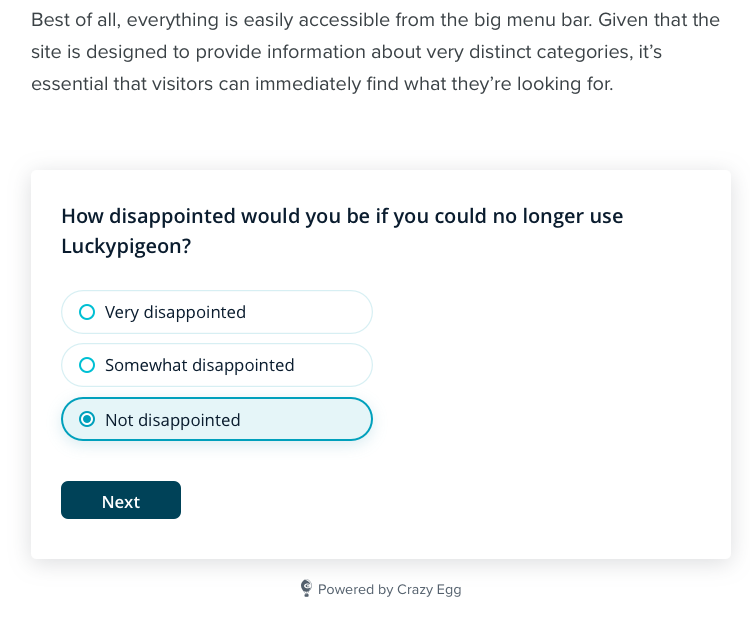
Crazy Egg, a pioneer in website optimization and user behavior analytics, has announced a significant update to its feedback collection capabilities by introducing inline embedded surveys to its platform. This new feature allows website owners and digital marketers to integrate feedback forms directly within their page content, moving beyond the traditional constraints of popup windows and external link formats. By transforming the survey tool into a native form widget, Crazy Egg aims to provide a more seamless user experience that reduces friction and encourages higher response rates from website visitors.
The Surveys tool, which is included as an unlimited feature across all Crazy Egg subscription tiers, has long been a staple for businesses seeking to gather qualitative data. Historically, these surveys were primarily deployed as overlays or "interstitials" that appeared based on user behavior, such as time spent on a page or exit intent. While effective, the shift toward inline embedding reflects a broader industry trend toward "native" interactions that do not disrupt the consumer’s browsing journey. According to industry experts, the ability to place a survey within the natural flow of an article, product page, or checkout sequence can significantly improve the quality of the data collected by capturing the user’s sentiment at the exact moment of engagement.
Evolution of the Crazy Egg Optimization Ecosystem
To understand the significance of this update, it is necessary to examine the trajectory of Crazy Egg as a company. Founded in 2005 by Hiten Shah and Neil Patel, Crazy Egg was one of the first tools to popularize heatmapping technology, allowing businesses to see exactly where users were clicking and scrolling. Over the last two decades, the platform has evolved from a single-feature utility into a comprehensive conversion rate optimization (CRO) suite.
The addition of the Surveys tool several years ago marked a pivot toward understanding the "why" behind user behavior, supplementing the "what" provided by heatmaps and session recordings. The introduction of inline embedding is the latest stage in this evolution. By allowing surveys to function as static content elements, Crazy Egg is positioning its tool as a competitor to dedicated form builders and lead generation widgets. This move suggests a strategic focus on versatility, enabling the tool to be used not just for feedback, but for active lead capture and customer support intake.
Technical Implementation and User Workflow
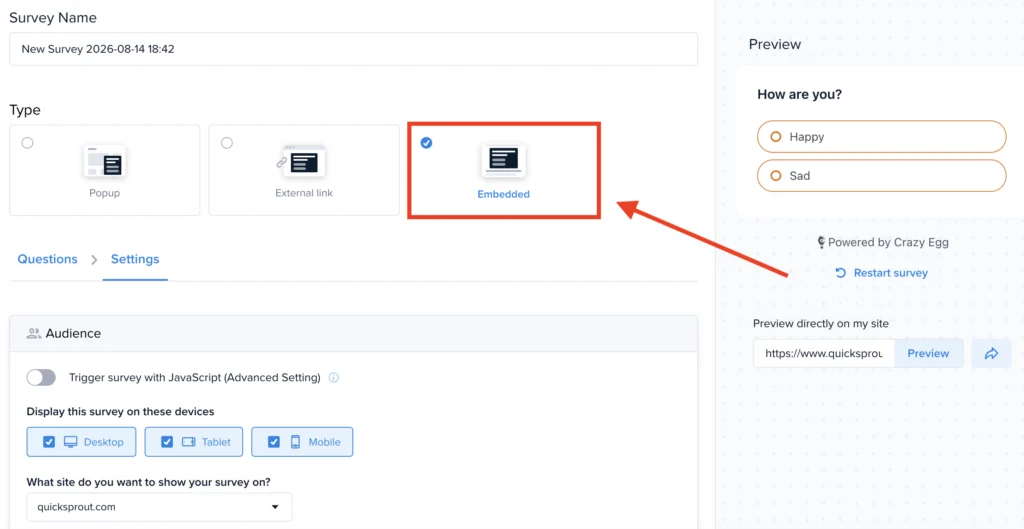
The process for deploying an embedded survey has been designed for accessibility, requiring no advanced coding knowledge. According to the updated documentation, the workflow follows a logical four-step progression:
- Selection: Users navigate to the "Surveys" section of their Crazy Egg dashboard and select the specific survey they wish to publish.
- Configuration: Within the survey settings, a new "Embedded" option is now available alongside the "Pop-up" and "Link" options.
- Integration: Upon selecting the embedded format, the system generates a unique snippet of code.
- Deployment: This code is then copied and pasted into the HTML of the target webpage at the exact location where the survey is intended to appear.
This "plug-and-play" approach ensures that the tool is compatible with major content management systems (CMS) such as WordPress, Shopify, and Wix. Furthermore, because the survey is hosted by Crazy Egg, the data is automatically aggregated and visualized within the platform’s existing reporting dashboard, allowing for immediate analysis alongside other behavioral metrics.
Market Context: The Rise of First-Party Data
The timing of this feature release coincides with a critical shift in the digital marketing landscape. As privacy regulations like GDPR and CCPA become more stringent and third-party cookies are phased out by major browsers, the value of first-party data has reached an all-time high. First-party data—information collected directly from the audience with their consent—is now the gold standard for personalizing marketing efforts and building customer profiles.
Inline surveys are an ideal vehicle for first-party data collection. Unlike popups, which some users find intrusive or associate with "ad-heavy" websites, inline forms are often perceived as part of the editorial or functional value of a page. Data from digital marketing studies suggest that users are more likely to share their email address, product preferences, or pain points when the request is contextualized within the content they are already consuming. For instance, a blog post discussing "how to choose the right software" can now include an embedded survey mid-way through the text asking readers what their primary budget constraints are.
Supporting Data on Survey Engagement
While specific metrics for the new Crazy Egg feature are still being gathered from early adopters, broader industry data supports the move toward embedded formats. Research indicates that "interruption fatigue" is a real phenomenon; up to 50% of users report feeling frustrated by popups that appear too quickly. Conversely, native forms that respect the user’s autonomy often see a 10% to 15% higher completion rate in B2B contexts.
By offering unlimited responses at no additional cost, Crazy Egg is also addressing a common pain point in the SaaS market: scalability. Many survey tools on the market charge based on the number of submissions received, which can penalize successful campaigns. Crazy Egg’s decision to keep the tool free and unlimited for its users suggests a commitment to lowering the barrier to entry for data-driven decision-making.
Analysis of Implications for Digital Marketers
The implications of this update for digital marketers and UX designers are multifaceted. Firstly, it allows for better A/B testing of feedback mechanisms. A marketing team can now test whether a popup survey or an inline survey yields more accurate data regarding user dissatisfaction.
Secondly, the "form widget" capability opens up new avenues for lead generation. By embedding a survey at the end of a high-performing blog post, a company can effectively turn that content into a lead capture machine without needing a separate landing page. This reduces the number of steps in the conversion funnel, a key principle in modern CRO.
Thirdly, the update enhances the "Support Request" use case. Instead of forcing a user to navigate to a dedicated "Contact Us" page, a support survey can be embedded directly into help documentation or FAQ sections. This localized feedback loop can help product teams identify confusing features in real-time, potentially reducing the volume of support tickets.
Reaction from the Industry
Initial reactions from the digital marketing community have been largely positive. Analysts note that while Crazy Egg is not the first to offer embedded forms, the integration of this feature into a platform that already handles heatmapping and A/B testing creates a powerful "all-in-one" ecosystem.
"The challenge for most marketers isn’t a lack of data, but the fragmentation of that data across five different tools," noted one independent CRO consultant. "By bringing inline surveys into the same dashboard where we see scroll maps and recordings, Crazy Egg is making it easier to connect the dots between what a user does and what they say."
Broader Impact on Website Design Trends
The move toward embedded surveys also reflects a shift in aesthetic trends in web design. Minimalist and user-centric design philosophies often discourage the use of overlays that obscure content. By providing an inline alternative, Crazy Egg is enabling its users to adhere to modern design standards while still achieving their data collection goals. This "silent" method of data gathering is expected to become the standard for high-end SaaS and e-commerce websites that prioritize brand reputation and user trust.
Chronology of Feature Rollout
The rollout of the inline embedding feature follows a series of updates to the Crazy Egg platform over the last 18 months.
- Early 2023: Crazy Egg overhauled its Surveys interface, adding new templates and customization options for branding.
- Late 2023: The platform introduced advanced targeting logic, allowing popups to be shown only to specific segments (e.g., returning visitors or users from a specific geographic location).
- Mid 2024: The "Embedded" functionality entered a beta testing phase with a select group of long-term users.
- Current Status: The feature is now fully integrated and available to all Crazy Egg account holders globally.
Conclusion and Future Outlook
The introduction of inline embedded surveys by Crazy Egg represents a strategic refinement of an already robust toolset. By recognizing the limitations of popups and the growing demand for native user experiences, Crazy Egg has provided its users with a more sophisticated way to engage with their audience.
As the digital landscape continues to move toward a privacy-first, first-party data model, tools that facilitate honest and non-intrusive communication between brands and consumers will become increasingly vital. Crazy Egg’s update is not merely a technical addition; it is a response to the changing psychology of the modern internet user. Moving forward, the industry will likely watch to see if Crazy Egg continues to expand its "form" capabilities, potentially moving into more complex logic-based surveys or deeper integrations with CRM platforms like Salesforce and HubSpot. For now, the ability to embed surveys directly into content stands as a significant win for marketers looking to optimize their sites with precision and empathy.