Instagram, the prominent short-form video platform owned by Meta Platforms, has significantly bolstered its artificial intelligence-powered language translation capabilities for its Reels content. The recent update introduces automatic translation for video audio and captions into five new languages: Japanese, Korean, French, German, and Italian. This expansion builds upon existing language options, which were not explicitly detailed in the announcement but form the foundation of Meta’s ongoing commitment to breaking down linguistic barriers in digital communication. This initiative allows content creators to produce videos that can be automatically translated, complete with synchronized mouth movements, making the translated output appear as if the original poster is speaking the new language, thereby dramatically broadening their potential audience base across diverse linguistic communities.
A Leap Towards Global Content Accessibility
The core functionality of this enhanced AI translation lies in its ability to process both spoken audio and on-screen captions within a Reel. The system employs advanced language models to not only accurately translate the semantic content but also to meticulously sync the creator’s mouth movements with the newly translated words. This sophisticated visual and auditory synchronization aims to create a seamless and natural viewing experience for international audiences, minimizing the cognitive dissonance often associated with poorly dubbed or subtitled content. The ultimate goal, as articulated by Instagram, is to empower creators to transcend geographical and linguistic limitations, enabling their content to resonate with a wider global viewership. This represents a significant step forward in making short-form video content truly universally accessible, fostering greater cross-cultural engagement and content discovery.
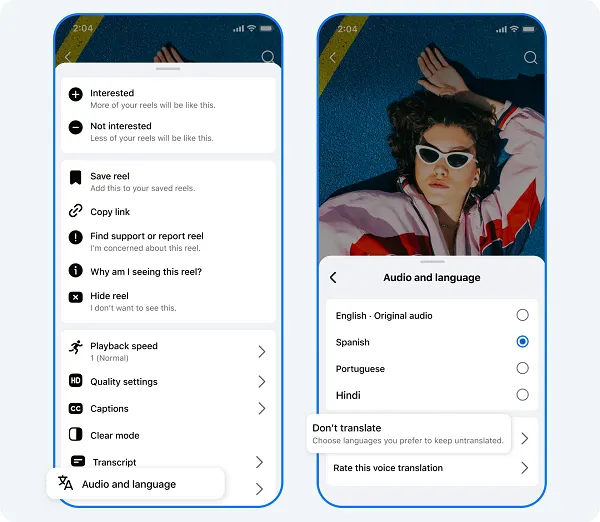
The platform’s interface is designed to facilitate this complex process, allowing creators to effortlessly manage captions and audio translation settings. This user-friendly approach is crucial for widespread adoption, ensuring that the technology is not only powerful but also practical for everyday use by the creator community. By offering a tool that makes translated content look and sound authentically spoken by the original creator, Instagram is addressing a key challenge in global content distribution: the demand for localized experiences that retain the authenticity and appeal of the original material.
The Mechanics of AI Translation and Lip-Sync
At the heart of Instagram’s advanced translation system lies a sophisticated interplay of several artificial intelligence disciplines. The process typically begins with speech-to-text (STT) transcription, where the original audio in the Reel is converted into written text. This transcription is then fed into a neural machine translation (NMT) engine, which translates the text into the target language. Following this, text-to-speech (TTS) synthesis generates audio in the new language, mimicking natural human speech patterns, intonation, and rhythm.
The most innovative and visually impactful component is the AI-powered lip synchronization. This technology analyzes the original video footage of the speaker’s face, specifically their mouth movements, and then generates new visual data to match the phonemes of the translated audio. This is achieved through generative AI models that can manipulate facial imagery to create realistic lip movements that align perfectly with the translated speech. The system must account for variations in language phonetics, facial structures, and speech rates to produce a convincing result. While highly advanced, such systems face inherent challenges, including the "uncanny valley" effect, where near-perfect but not quite flawless human-like animation can appear unsettling. Instagram acknowledges this, noting that AI syncing "can sometimes look a little off," highlighting the continuous refinement required in this nascent field. Despite these minor imperfections, the ability to offer a visually synchronized translation represents a significant leap from traditional subtitling or simple audio dubbing, providing a more immersive and less disruptive viewing experience.
A Strategic Rollout: Timeline and Expansion
Meta’s journey into AI-powered translations for Reels is not a sudden development but a strategic, incremental rollout that commenced last year. This phased approach allows the company to collect user feedback, refine its algorithms, and gradually expand language support and improve translation quality. The initial introduction of these features set the groundwork for the current expansion, demonstrating Meta’s long-term commitment to enhancing cross-lingual communication across its family of applications.
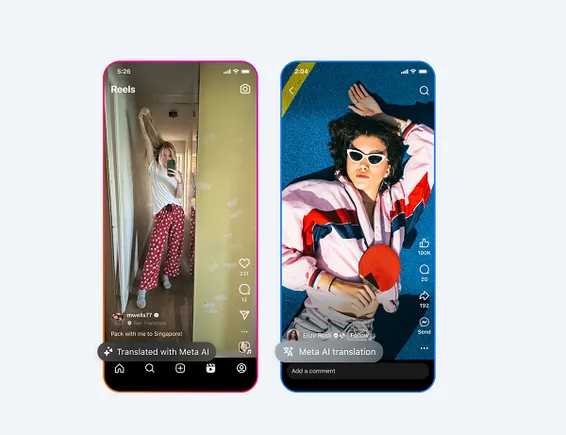
Adam Mosseri, Head of Instagram, stated that the platform’s AI translations for Reels now support 14 languages. However, a separate press release from Meta indicated that the total number of supported languages is actually 18. This slight discrepancy could be attributed to various factors, such as a staggered rollout schedule across different regions, specific language support for certain features, or an evolving definition of "full support" as the technology matures. Regardless of the exact count, the significant expansion underscores Meta’s ambition to cater to its vast global user base. Notably, the supported translation languages include several spoken in India, which holds the distinction of being Instagram’s largest user market. This strategic focus on high-growth, multilingual markets like India highlights the economic and cultural importance of inclusive language technologies for platform growth and user engagement.
Beyond Reels, Meta is concurrently extending its AI translation capabilities to Facebook, encompassing languages such as Bahasa, Indonesian, Arabic, French, Vietnamese, and Thai, with further additions planned. This broader cross-platform strategy signifies a holistic effort by Meta to integrate advanced AI translation across its entire ecosystem, reinforcing its vision of a seamlessly connected global community.
Meta’s Broader AI Vision and Competitive Landscape
The expansion of AI translation for Reels is deeply embedded within Meta’s overarching strategic vision for artificial intelligence and the future of digital interaction, particularly concerning the metaverse. Meta has heavily invested in AI research and development, viewing advanced AI as foundational to building immersive, interconnected virtual worlds where language barriers would be obsolete. Initiatives like the Universal Speech Translator project, aiming for real-time, universal speech-to-speech translation, exemplify Meta’s long-term aspirations. The current Reels feature can be seen as a practical application and a stepping stone towards achieving these more ambitious goals.
In the highly competitive landscape of short-form video, where platforms like TikTok and YouTube Shorts vie for creator and user attention, advanced features like AI translation offer a significant differentiator. TikTok, for instance, has also been experimenting with AI-powered caption and translation features, recognizing the global demand for accessible content. By enhancing its translation capabilities, Instagram aims to maintain and strengthen its competitive edge, providing creators with powerful tools that facilitate broader audience reach and potentially higher engagement. This battle for global content supremacy is increasingly being fought on the grounds of accessibility and localization, with AI playing a pivotal role in enabling these advancements.
Empowering the Creator Economy: Opportunities and Challenges
For the burgeoning creator economy, this development presents both immense opportunities and certain considerations. The most immediate benefit is the potential for significantly expanded audience reach. A creator producing content in English, for example, can now automatically have their Reels translated into Japanese, Korean, French, German, and Italian, opening up entirely new demographics for viewership, engagement, and potential monetization. This could lead to increased follower counts, higher content visibility, and new revenue streams through international sponsorships or ad revenue. The ability to connect with diverse cultures also fosters a more inclusive and globally minded content ecosystem.
However, creators must also navigate potential challenges. While the AI is sophisticated, the quality and nuance of machine translation can sometimes vary. Cultural context, idiomatic expressions, and humor can be difficult for AI to fully capture, potentially leading to misinterpretations or a loss of original meaning. Instagram provides creators with the crucial option to review any translations and switch off syncing before posting, or to abandon the translation entirely if they deem it unsatisfactory. This control mechanism is vital for maintaining content integrity and brand authenticity. It empowers creators to make informed decisions about how their content is presented to international audiences, allowing them to balance the benefits of expanded reach with the need for accurate and culturally sensitive communication.
The feature is currently available in the Reels composer for creators with more than 1,000 followers, indicating a focus on established or growing creators who are more likely to benefit from and properly utilize these advanced tools. Users are also able to select two languages per translation, offering flexibility in targeting specific linguistic groups. For creators hovering near this threshold, it provides an additional incentive to grow their audience, unlocking advanced tools that can further accelerate their reach.

Navigating the Nuances: Quality, Authenticity, and Ethical Considerations
While the technological strides are impressive, the deployment of such advanced AI translation and lip-syncing capabilities on a mass scale brings forth important discussions around quality, authenticity, and ethical implications. The core promise is to make content universally understandable, yet the subtle nuances of human language, humor, sarcasm, and cultural references are notoriously difficult for AI to perfectly replicate. A translation that is technically accurate might still lack the emotional resonance or intended subtext of the original, potentially leading to misunderstandings or diminishing the impact of the content.
The visual aspect of lip-syncing also raises questions about authenticity. While the aim is to make it "look and sound like the original poster is speaking," the technology borders on what is colloquially known as "deepfake" technology, even if used for benign purposes like translation. This highlights the ethical responsibility of platforms like Instagram to ensure transparent usage and to mitigate potential misuse. Clear labeling of AI-generated translations, which Instagram already does with its "This audio is auto-generated" disclaimer, is crucial for maintaining trust and informing users about the nature of the content they are consuming. As the technology evolves, the line between original and AI-modified content becomes increasingly blurred, necessitating robust ethical guidelines and user education.
Furthermore, the very act of universal translation, while beneficial, could inadvertently flatten cultural specificities if not handled with care. The richness of diverse linguistic expressions is part of what makes global content engaging. The balance lies in facilitating understanding without eroding the unique cultural fabric of original content.
The Future of Multilingual Social Media and the Metaverse
The expansion of AI translation on Instagram Reels is more than just a feature update; it is a glimpse into the future of social media and Meta’s ambitious plans for the metaverse. In a truly immersive and interconnected metaverse, real-time, seamless language translation will be indispensable for users from different linguistic backgrounds to interact naturally and effortlessly. The advancements made in Reels, particularly in audio and lip-sync synchronization, lay crucial groundwork for such future applications, potentially extending to real-time conversations within virtual environments.
As Meta continues to invest heavily in AI, we can anticipate further refinements in translation accuracy, naturalness of synthesized speech, and the realism of lip synchronization. The scope of supported languages is also likely to broaden significantly, aiming for truly comprehensive global coverage. This continuous evolution promises to make the digital world an even more inclusive space, where language is no longer a barrier but a bridge connecting people across continents and cultures. The implications extend beyond entertainment and social connection, potentially impacting global commerce, education, and cross-cultural collaboration on an unprecedented scale.
Conclusion: Bridging Divides Through Advanced AI
Instagram’s latest enhancement of AI-powered language translation for Reels represents a pivotal moment in the evolution of global digital communication. By adding support for Japanese, Korean, French, German, and Italian, and refining its lip-syncing technology, Meta is actively dismantling linguistic barriers, empowering creators to reach an exponentially larger audience, and fostering a more interconnected global community. While the technology presents ongoing challenges related to nuanced translation and ethical considerations, the benefits of increased accessibility and cross-cultural understanding are profound. As Meta continues to integrate these advanced AI capabilities across its platforms and towards its metaverse vision, the future of social media promises to be one where language is no longer a limitation but a fluid medium for universal connection, driven by the ever-advancing frontier of artificial intelligence.

 Lina Irawan
 Asep Darmawan